More detectives

detective.jpg

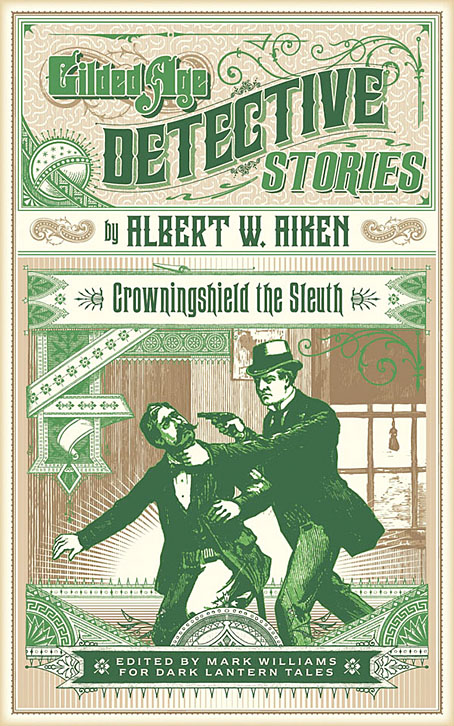
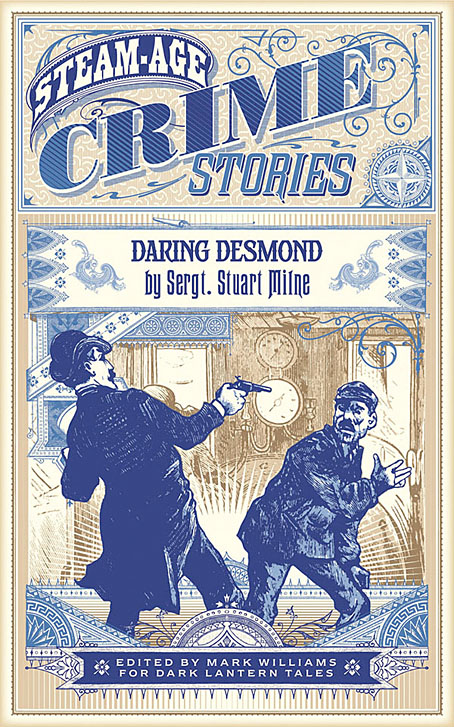
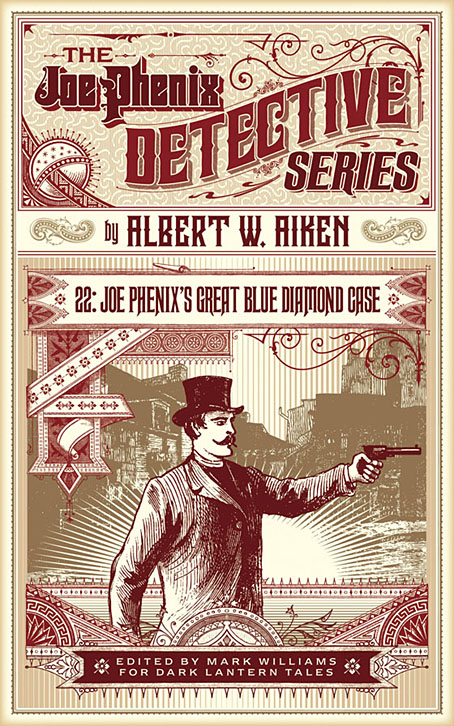
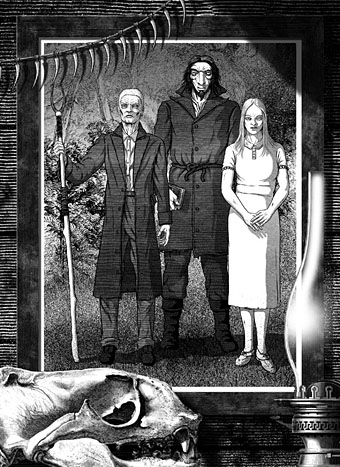
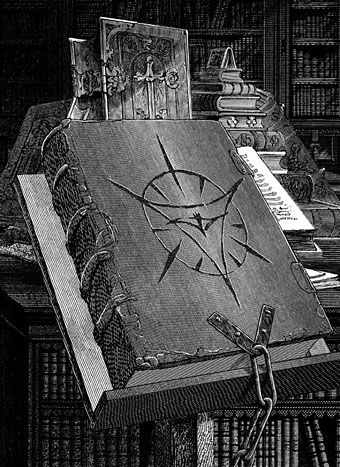
I was going to post these designs a couple of weeks ago but other things kept intervening. Gilded Age Detective Stories and Steam-Age Crime Stories follow my earlier design for the Joe Phenix Detective Series (below), with all three forming a colour-coded trilogy of books from Dark Lantern Tales reprinting late-Victorian crime fiction. My earlier post about the Joe Phenix series went into some detail about the lettering design so there’s no need to repeat that here. The new covers follow the template established by the first, the main deviation being the larger title box for Crime Stories, each title of which is by a different author. As before, the illustrations are adapted from the often crude wood engravings that ran with the original stories. The illustrations in pulp magazines of this period tend to lack the finesse of their counterparts in books and newspapers but then you could say the same about the stories; if you’re attracted to this material then the rough edges are part of the package.

crime.jpg

As before, all these books are currently available as ebooks only but plans are afoot for a series of paperback reprints. Any further news about this will be posted in due course.

joephenix.jpg

Previously on { feuilleton }
• The Joe Phenix Detective Series

The Ingenious by Darius Hinks

hinks.jpg

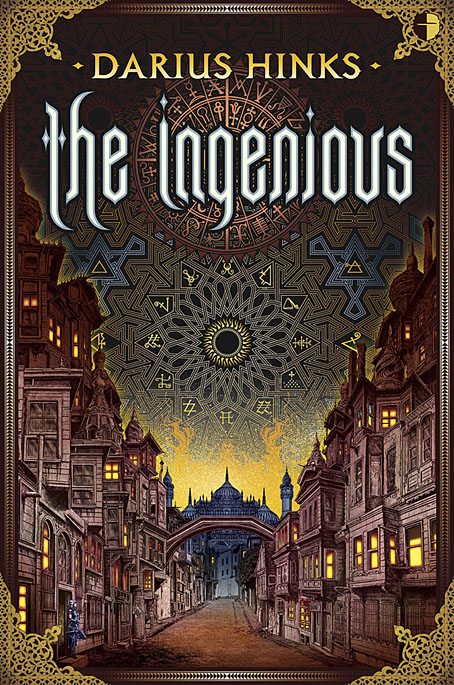
My latest cover for Angry Robot Books was revealed this week at the Barnes & Noble blog (where I talk a little about the design aspects) so here it is. The Ingenious is an alchemy-themed fantasy by Darius Hinks, the brief for which required a depiction of the city of Athanor, the central character, Isten, and some indication of the novel’s occult flavour:

Thousands of years ago, the city of Athanor was set adrift in time and space by alchemists called the “Curious Men.” Ever since, it has accumulated cultures, citizens and species into a vast, unmappable metropolis.

Isten and her gang of half-starved political exiles live off petty crime and gangland warfare in Athanor’s seediest alleys. Though they dream of returning home to lead a glorious revolution, Isten’s downward spiral drags them into a mire of addiction and violence. Isten must find a way to save the exiles and herself if they are ever to build a better, fairer world for the people of their distant homeland.

I was also asked to do something in the detailed drawing style of artists such as Philippe Druillet and Ian Miller, a challenge I was happy to accept with the proviso that both those artists are inimitable. As I say in the B&N post, I went in a Miller direction although I don’t know whether anyone would spot the influence. I was more overt years ago in some of my borrowings from Druillet whose aesthetics can be discerned in my poor artwork for Hawkwind and my much better artwork for The Call of Cthulhu. The background pattern was the kind of thing I often do where I spend hours working on something then cover it over, but more of the interlacing and symbolism (all genuine alchemical symbols) will be visible on the back of the book.

The Ingenious will be published on 9th February, 2019.

Previously on { feuilleton }
• De Sphaera
• Delineations
• Musaeum Hermeticum
• A triangular book about alchemy
• Alembic and Ligier Richier
• Atalanta Fugiens
• Splendor Solis revisited
• Laurie Lipton’s Splendor Solis
• The Arms of the Art
• Splendor Solis
• Amphitheatrum Sapientiae Aeternae
• Cabala, Speculum Artis Et Naturae In Alchymia
• Digital alchemy

Illustrating Lovecraft again

dunwich.jpg

The Dunwich Horror (1972). Art by Victor Valla.

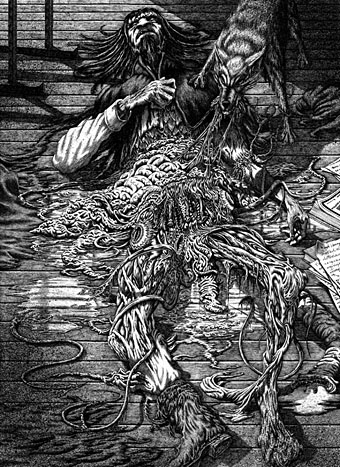
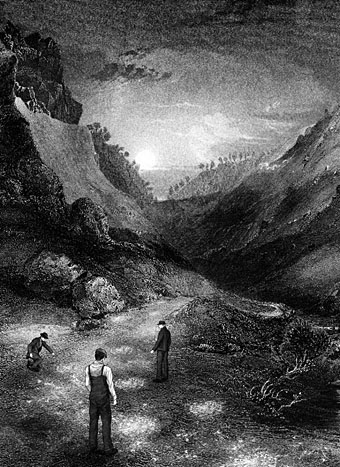
El horror de Dunwich y otros relatos is the last of the books I was working on earlier this year for Spanish publisher Editorial Alma. This was a more stimulating Lovecraft collection to work on than the previous two-story volume since three of the stories were ones I hadn’t dealt with before. The fourth story, The Dunwich Horror, I partly illustrated back in 1988/89, and I took the liberty of reusing the best of that set of pages showing Wilbur Whateley’s messy demise. This picture has been reprinted a few times elsewhere so I was reluctant to recycle it again, but the collision of deadlines earlier this year meant that once again I was pressed for time on this book, and having an illustration already done was a great help. It’s taken me 30 years to finally get round to depicting Wilbur’s monstrous brother.

hpl11.jpg

The Dunwich Horror 1.

hpl12.jpg

The Dunwich Horror 2.

hpl13.jpg

The Dunwich Horror 3.

hpl14.jpg

The Dunwich Horror 4.

Continue reading “Illustrating Lovecraft again”

Weekend links 429

holter.jpg

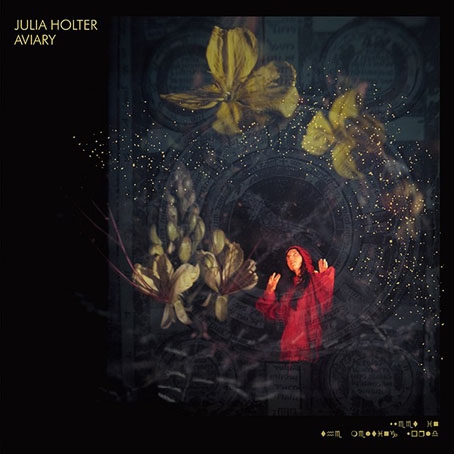
• Julia Holter’s next album, Aviary, will arrive next month with a cover design bearing astrological symbols (a cryptic message?) and what looks like a grimoire page in the background, although I may be reading too much into this. Whatever the esoterics signify, the album is a double, and going by the sound of new song I Shall Love 2 it’s going to be a good one. Aviary will be released on 26th October just in time for the witch season.

• Donna Ferguson talks to Oscar Wilde’s grandson, Merlin Holland, about the manuscript for The Picture of Dorian Gray which includes more openly homoerotic sentences than were included in the printed versions. A facsimile of the manuscript is now available in a limited, numbered edition from SP Books.

• The final single in the excellent Other Voices series from the Ghost Box label is released later this month. Something Out Of Nothing is by Sharron Kraus and Belbury Poly.

…we’re still trying to operate this new, paranoid society on what amounts to a psychedelic substrate—with little or no awareness of how our sets and settings are determining our results. The set and setting of the advertiser yield addictive behavioral design and persuasive technologies. The set and setting of the investor lead to algorithmic trading and winner-takes-all, extractive businesses. The set and setting of the military lead to drone warfare. The set and setting of the politician lead to targeted propaganda and digital fascism.

America is unconsciously living in a psychedelic landscape and having a bad trip. We don’t realize that we are living in a media environment that offers us an unprecedented capacity over reality. The world may have always been a consensual hallucination to some extent, but never before have we built our world so completely.

The internet is acid, and America is having a bad trip, says Douglas Rushkoff

• Photographia Erotica Historica is a tiny leatherbound collection of antique pornography from Goliath Books.

• Why is the Federal Government threatening an indie book publisher with $100,000 in fines?

• Undead, undead: my illustrations for Dracula are featured at Dangerous Minds. Thanks!

• The Vinyl Factory meets Japanese composer and musician Midori Takada.

• Exploring HP Lovecraft’s Gothic roots by Dr Xavier Aldana Reyes.

• From 2013: Dario Argento discussing his films with Alan Jones.

• Aurora Mitchell on Electro pioneer Doris Norton.

• Mix of the week: XLR8R Podcast 558 by DJ T.

• Aviator (1970) by Michael Chapman | Aviation (2000) by Fluxion | Aviation (2001) by Monolake
A view over Yuggoth

yuggoth2.jpg

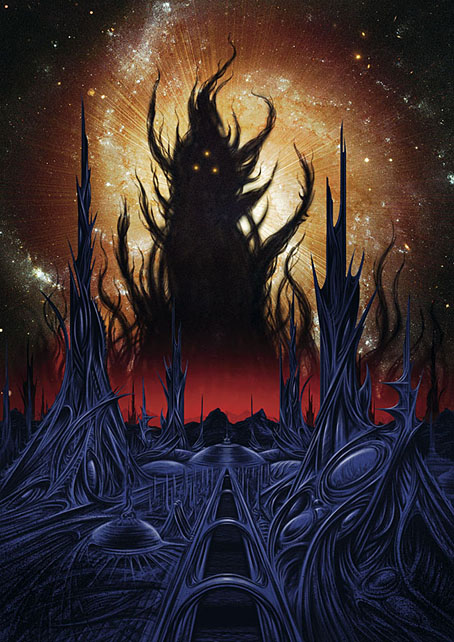
I mentioned in the post about the Sherlock Holmes illustrations that the next book from Editorial Alma featuring my work would be another Lovecraft collection. One of the illustrations in the new volume was of the planet Yuggoth, a world known to human beings as Pluto. In Lovecraft’s mythos Yuggoth has long been an outpost of advanced alien civilisations, particularly the fungoid crustaceans of The Whisperer in Darkness and the splendidly-titled sonnet sequence Fungi from Yuggoth. I’d broached this subject a couple of times in the past, first with a panel in my Haunter of the Dark comic strip (the Shining Trapezohedron is described as being brought to Earth from Yuggoth) then with a photocopy collage of Haeckel organisms for the first Starry Wisdom collection.

Yuggoth is one of several alien outposts in Lovecraft’s fiction, allied in its remoteness from humans with the underwater city of R’lyeh and the Antarctic city in At the Mountains of Madness. All these locations suggest exotic architecture so they’ve long been some of my favourite features in Lovecraft’s work, hence this new piece which I couldn’t resist doing after completing work on the Alma book. Since I acquired a Wacom tablet four years ago I’ve become so used to using it for line drawing that working with it now feels as natural as working with pens and inks. But digital painting was something I still didn’t feel happy with. This is mainly because the brush options in Photoshop are limitless, and one thing I’ve never liked with art materials is too much choice. When I was working with physical media I used to use a minimum of pens and brushes so what I really wanted from Photoshop was a single brush that would do what I wanted without having to swap tools all the time when working. This view of Yuggoth is the result of having finally settled (by chance, as it happened) on a brush that does everything I want without getting in the way. The drawing was completely improvised so as a composition it has some flaws; it could also have been developed a lot more to bring out highlights and details. But as an experimental piece it worked out well and also didn’t take too very long to do. When I have the time I’ll be doing more with this new brush.

Elsewhere on { feuilleton }
• The Lovecraft archive