Weekend links 165

smart.jpg

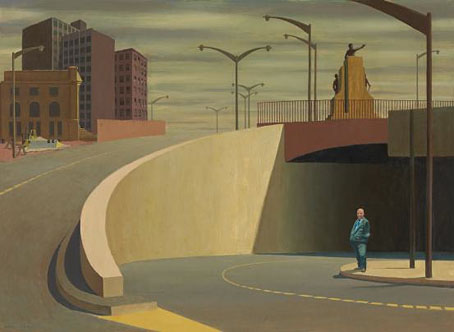
Cahill Expressway (1962) by Jeffrey Smart whose death was announced this week.

• “Russell Beale is awed by the beauty of the Roman silver Warren Cup showing men and youths making love, so startlingly erotic that the first time the British Museum was offered it in the 1950s, it turned it down flat. In 1999, when it came on the market again, the museum had to raise £1.8m to acquire it. ‘It’s just heaven, isn’t it?’ Russell Beale sighs.” Maev Kennedy on Same-Sex Desire and Gender Identity, a new exhibition at the British Museum.

• “The route to Tyburn Tree snaked through Holborn and St Giles, then went along Tyburn Road, today’s Oxford Street. It was dense with spectators.” Matthew Beaumont on the tiny memorial (Google view) for the estimated 50,000 people executed in the centre of London.

• Mixes of the Week: Bottoms Up by Staffan Lindberg for BUTT Magazine, and Electronic Ladyland, a collection of women with synths (and other instruments) from Bitch Media.

But the very thing that is valuable about diversity – the cultural and ideological clashes that it brings about – is precisely what many people fear. And that fear takes two forms. On the one hand you have the little Englander sentiment: immigration is undermining the national fabric, eroding our sense of British or Englishness, turning our cities into little Lahores or mini-Kingstons. And on the other you have the multicultural argument: that diversity is good, but it has to be policed to minimise the clashes and conflicts and frictions that diversity brings in its wake. And so we have to restrain speech, and police the giving of offence.

Kenan Malik on The Pleasures of Pluralism, The Pain of Offence.

L’Empire des Lumières is a great title for Anne Billson’s blog about Belgium. Tram-wire covered streets are one of my favourite things.

The Outer Church, 28 musical artists with an uncanny temperament collected by Joseph Stannard for Front & Follow.

His Heavy Heart, a film by Alan Moore & Mitch Jenkins, is looking for Kickstarter funding.

• In 1997 Quentin Crisp wrote about “Ten Wonderful Gangster Movies” for Neon magazine.

Raymond Chandler’s The Big Sleep redesigned for the Penguin Design Award, 2013.

• Out on DVD/Blu-Ray this month: The Curtis Harrington Short Film Collection.

A billion-pixel panoramic view of the planet Mars from the Curiosity Rover.

• In the TLS: Robert Craft on Stravinsky and The Rite of Spring.

Typophonic: Album cover typography.

The Owl Theremin is a thing.

LSD ABC

Spring Rounds From The Rite Of Spring (1975) by Alice Coltrane | Revenge Of The Black Regent (1999) by Add N To (X) | Sore Ga Afrirampo (2010) by Afrirampo
Weekend links 155

austin.jpg

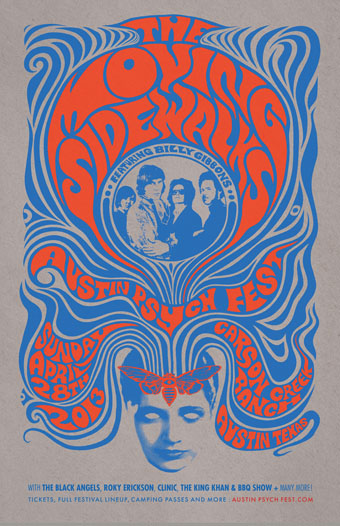
Poster design by Mishka Westell for this month’s Austin Psych Fest. Billy Gibbons’ pre-ZZ Top psychedelic outfit, The Moving Sidewalks, surprised everyone by reforming for a New York gig last month, their first performance together in 44 years.

• Pye Corner Audio played the Boiler Room, London, last week, and remixed a track from FC Judd’s Electronics Without Tears. Also on the latter is Chris Carter who talks about his own remix (and the “Radiophonic” Mr Judd) here.

Tom Bianchi’s Fire Island Pines, Polaroids of New York’s gay enclave from 1975–1983. Related: In Conversation with the Violet Quill: Andrew Holleran, Felice Picano, and Edmund White.

• From 2011: Sex, prison and lost ligatures: The story of Herb Lubalin’s Avant Garde typeface. Related: The ITC Avant Garde Gothic group at Flickr.

• Music reissues: Tape Works 1981–1982 by Laughing Hands is out now, and Scott Walker’s early solo albums will be reissued in the summer.

fraser.jpg

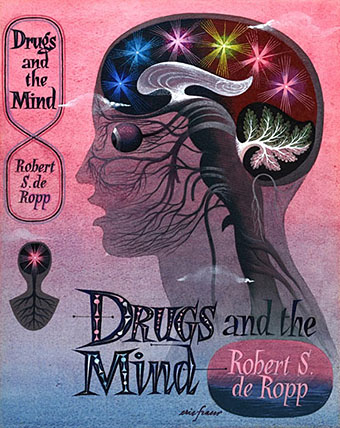
Drugs and the Mind (ii), a cover design from 1957 by Eric Fraser (1902–1983) whose illustrations and designs are in exhibition at the Chris Beetles gallery, London.

• At Ubuweb: William S. Burroughs + Brion Gysin + Genesis P-Orridge – Cold Spring Tape (1989).

The World According to John Coltrane, an hour-long documentary.

Neko Font: for when you need a word made of cats.

Fuck yeah, Sarah Bernhardt

Sordid Spheres!

99th Floor (1967) by The Moving Sidewalks | Over Fire Island (1975) by Brian Eno | Ledge (1980) by Laughing Hands

Escher and Schrofer

schrofer5.jpg

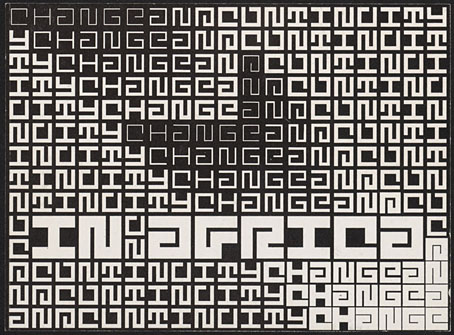
Design by Jurriaan Schrofer.

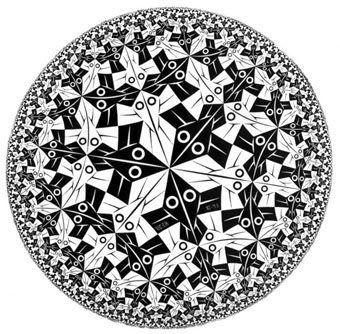
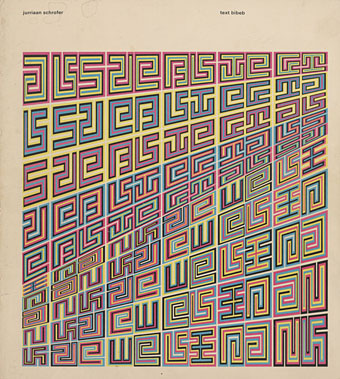
That’s Maurits Cornelis Escher (1898–1972), the Dutch artist, and Jurriaan Schrofer (1926–90), the Dutch typographer and graphic designer. Aside from a shared nationality the pair had a similar interest in periodicity and incremental metamorphosis, something that’s strikingly apparent when you compare their works. I don’t know much about Schrofer so I can’t say whether he was consciously following Escher’s example or whether this is coincidence. Some of the gradations and distortions also bear comparison with the Op Art paintings of Bridget Riley, Victor Vasarely and others.

escher8.jpg

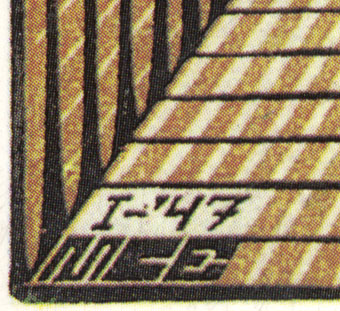
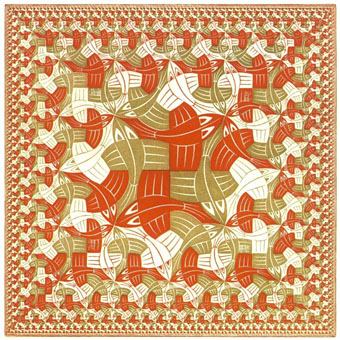
MC Escher signed most of his works with three square “MCE” letters which are remarkably similar to Schrofer’s type designs.

There’s an opportunity to find out more about Schrofer’s distinctive approach to graphic design in a forthcoming book from Unit Editions (currently available at a reduced pre-order price). More of his work can be seen at But Does It Float and scattered around Tumblr. MC Escher is well-represented on the web; I’d suggest starting at WikiPaintings.

escher1.jpg

Circle Limit I (1958) by MC Escher.

schrofer1.jpg

Design by Jurriaan Schrofer.

escher2.jpg

Square Limit (colour, 1964) by MC Escher.

Continue reading “Escher and Schrofer”

Covering Joyce

joyce1.jpg

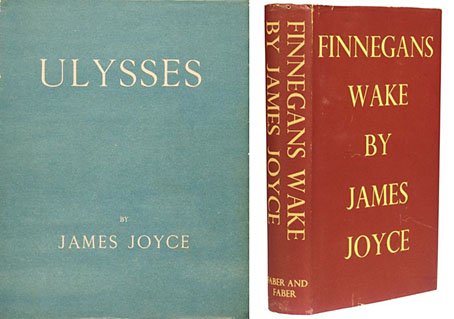
First editions of Ulysses (1922) and Finnegans Wake (1939).

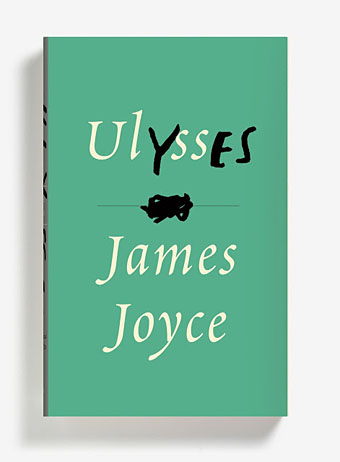
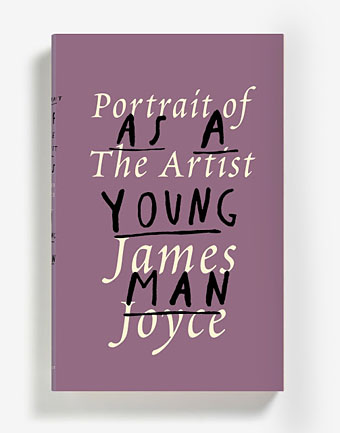
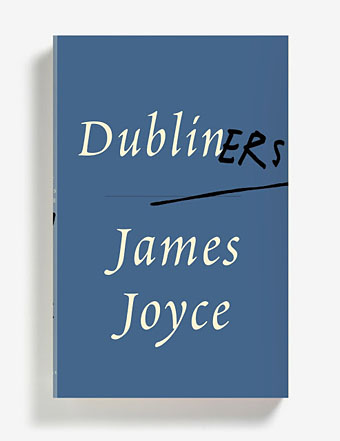
I like Peter Mendelsund’s book cover designs so it’s good to find the designer given the opportunity to provide new covers for James Joyce. Mendelsund’s blog post announcing the news mentions nothing about his intentions, instead we have a reminiscence about Ireland à la Molly Bloom, and pictures of the three covers below.

joyce2.jpg

I’ve never felt a pictorial treatment works with Joyce; his books, especially the Big Two, concentrate so much on words and the labyrinths made by language that anything other than a purely typographic treatment seems superfluous. Art directors going the pictorial route generally end up using familiar photos of the author or views of Dublin circa 1900. The first editions of Ulysses and Finnegans Wake set the pattern for many later editions, and I’ll guess it’s that pattern which Peter Mendelsund has followed here. The typeface used is Poetica, a Robert Slimbach design from 1992, completed by what may be Joyce’s own hand (I’m guessing again) in the manner of the author’s corrected typescripts. The amendments for Dubliners and Portrait of the Artist don’t require explanation but what about the title of Ulysses? I’d read this (so to speak) as representing the novel’s two main characters—Stephen Dedalus: the cold and precise man of letters, and Leopold Bloom: the all-too-human Everyman—who in their circumambulation and eventual meeting comprise the twin poles of the story. There’s also a subtle and clever allusion to Molly Bloom but I’ll let you find that…

The three new books will be published by Vintage but I’ve not managed to find a publication date.

joyce3.jpg

In other Joyce news, the first Chinese translation of Finnegans Wake has proved to be a surprising bestseller. And I ought to mention that Lord Horror: Reverbstorm, my own Joycean excursion (among other things) with David Britton, is now available at Amazon. You can, of course, still buy the book direct from the publishers.

joyce4.jpg

Elsewhere on { feuilleton }
The book covers archive

Previously on { feuilleton }
James Joyce in Reverbstorm
Joyce in Time
Happy Bloomsday
Passages from James Joyce’s Finnegans Wake
Books for Bloomsday

Early Venetian Printing Illustrated

earlyvenetianpri00onga_01.jpg

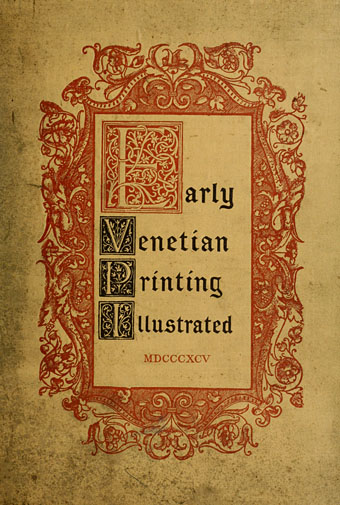
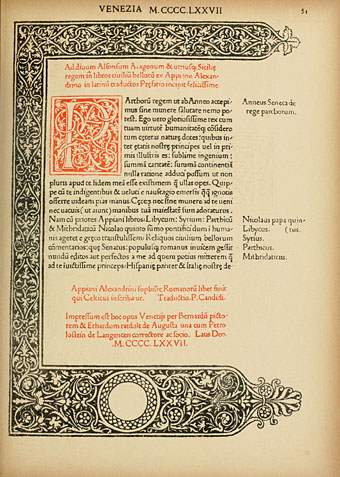
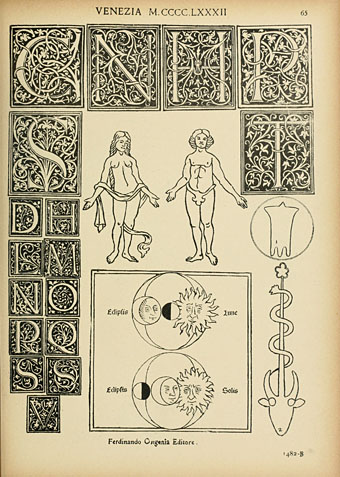
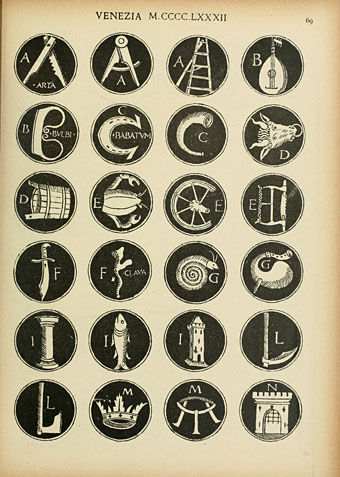
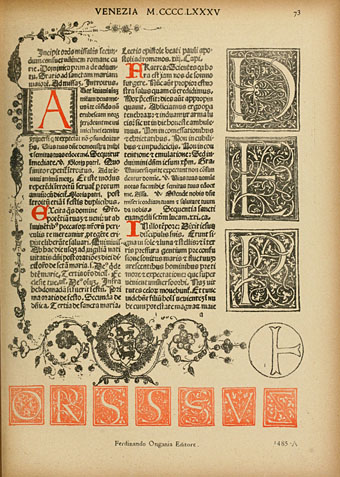
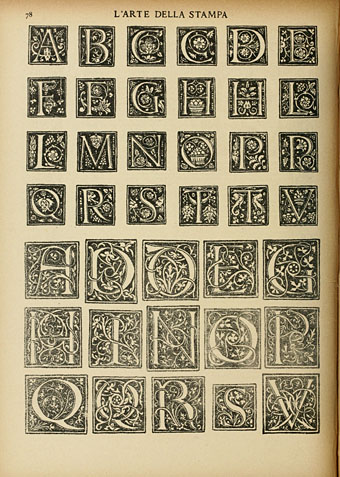
THE HISTORY OF THE ART OF PRINTING, studied in its most valuable examples, shows clearly how the work of the early printers took, from the very commencement, a national and also a personal character. These are recognised by the modern student in the special forms of type which they employed, and in the character of the ornaments and vignettes with which they decorated their editions; which thus formed, as it were, a species of art-work countersigned by the particular conditions of date, place and genius. Every early edition, with its various characteristics of size, type and ornamentation, is thus, not merely a trade specimen, but also an historical and artistic document, agreeing in character with the arts of design, the social customs and the literary tastes in vogue at the period in question. The early German printing, with its rigid and angular types and its Gothic ornaments, is perfectly suited to an age and to a country still mediaeval, and the Italic type of Aldus Manutius is equally suited to the calm and elegant classical character of the art of the Renaissance. Volumes with wide margins, large type and eccentric engravings tell of the pompous magnificence which found favour in the seventeenth century and of which that century has left so many specimens in our libraries.

Thus Ferdinando Ongania in Early Venetian Printing Illustrated, a tremendous collection of early print decorations, ornamental capitals, engraved illustrations and printers’ emblems. Ongania’s book was published in 1895, and once again the late 19th century is shown to be a fruitful period for this kind of early graphic history. A frequent frustration when searching through the thousands of scanned volumes at the Internet Archive is to locate plenty of books from a given period only to find that the illustrations or decorative material are sparse. Ongania’s collection dispenses with the text of the original volumes to present over 230 pages of graphics. Browse it here or download it here.

earlyvenetianpri00onga_02.jpg

earlyvenetianpri00onga_03.jpg

earlyvenetianpri00onga_04.jpg

earlyvenetianpri00onga_05.jpg

earlyvenetianpri00onga_06.jpg

Continue reading “Early Venetian Printing Illustrated”