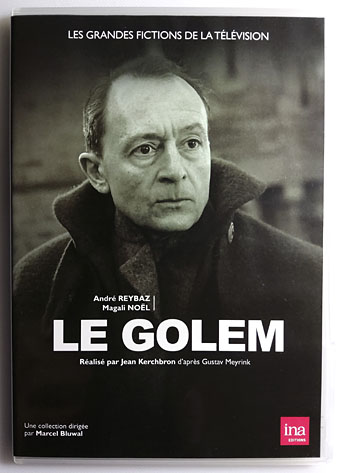
Le Golem, 1967

golem01.jpg

There are always more Golems…

Le Golem is a 110-minute film based on Gustav Meyrink’s novel which hasn’t received as much attention as you’d expect considering the dearth of Meyrink adaptations. The production was for French TV so its obscurity may be a result of unavailability as much as anything else, television being a medium notorious for burying its own history. The DVD I was watching is an official release from INA with no subtitles (merci!), but English subs may be found online.
golem02.jpg

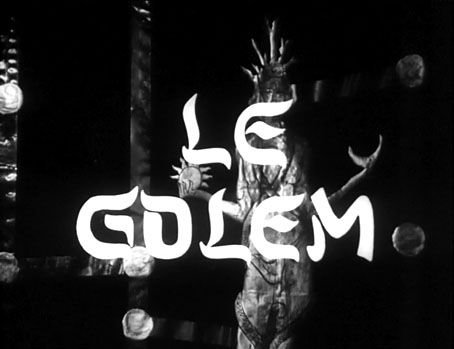
Meyrink’s novel isn’t an obvious choice for film or television adaptation despite the popularity of the Golem theme. His story is an uneven blend of mysticism and melodrama related via many digressions and rambling conversations. The title and the Prague setting suggest Paul Wegener’s Der Golem (1920), with the ghetto monster dominating the proceedings, but Meyrink’s Golem remains in the shadows (if it exists at all), being more of a symbol for the mystical and psychological challenges that beset Athanasius Pernath, the novel’s protagonist. Given all this I’m curious to know who decided to adapt the story when there’s so much about the film that would confuse an audience who hadn’t read the novel. The opening scenes move rapidly from a stylised city of the 1960s to the Prague ghetto of the past while omitting the attempts of Meyrink’s narrator to make sense of his situation. A note on the DVD states that the film was broadcast at 8:30pm on the national channel, ORTF, which makes its peculiarities even more surprising.
golem03.jpg

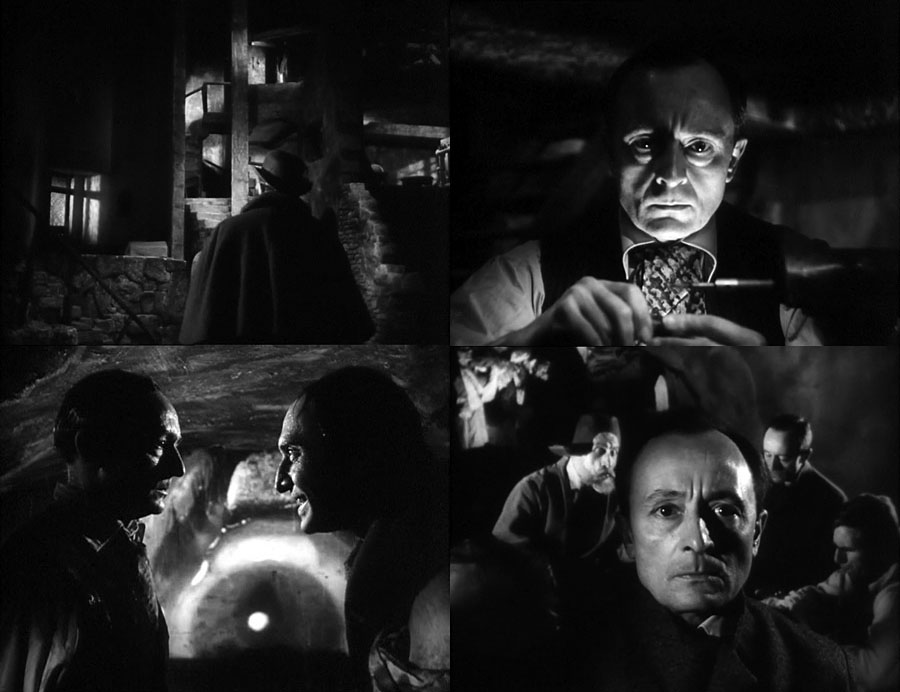
The director, Jean Kerchbron, spent much of his career filming adaptations of classic plays and stories for French television, ranging from adventure serials to Molière and Shakespeare. Writer Louis Pauwels was co-editor with Jacques Bergier of the popular Planète magazine, a journal of fantasy, science fiction and scientific speculation, but had little experience in the film world; Le Golem was his first feature for which he supplied the dialogue and adapted the story with Kerchbron. Pauwels and Bergier are names familiar to Anglophone readers of Fortean literature for The Morning of the Magicians (1960), their discursive treatise on “Fantastic Realism” whose success launched Planète and later gave David Bowie some ideas for lyrics. The pair refer to Meyrink in their book as a “neglected genius” prior to running an extract from one of the author’s later novels, The Green Face. Pauwels and Kerchbron manage to condense the work of the neglected genius without doing too much harm to his story, compressing some sections (a request for an explanation in a later scene is wisely rejected as “too complicated”) while omitting the overly mystical episodes that might have posed problems for a limited budget. Pauwels moves what’s left of the mysticism to Pernath’s philosophical voiceovers. Kerchbron’s direction is lively and much more elliptical than is usual for the plodding television medium. Novel and film only depart near the end when various plot threads are hastily tied together.
Continue reading “Le Golem, 1967”

Ennio Morricone, 1995

em1.jpg

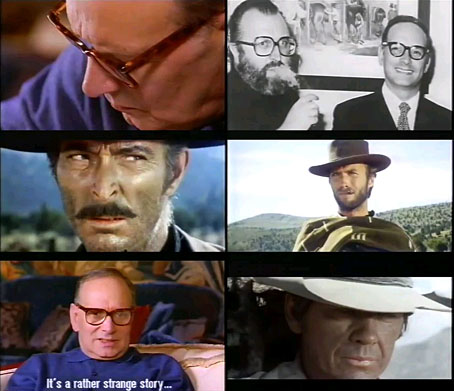
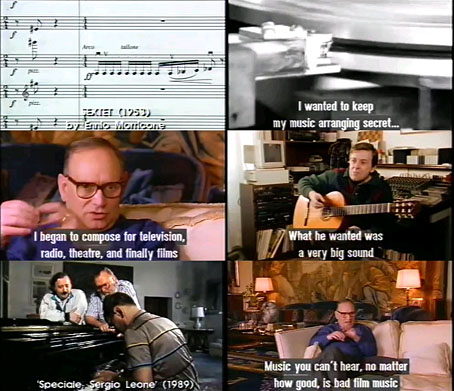
David Thompson made this 40-minute Ennio Morricone documentary for the BBC in 1995. I taped it at the time but haven’t watched it since so it was good to find again. The highlight is the lengthy interview with the man himself but there are also contributions from Christopher Frayling, Brian de Palma, Bernardo Bertolucci, Gillo Pontecorvo and others.

em2.jpg

Weekend links 523

miller.jpg

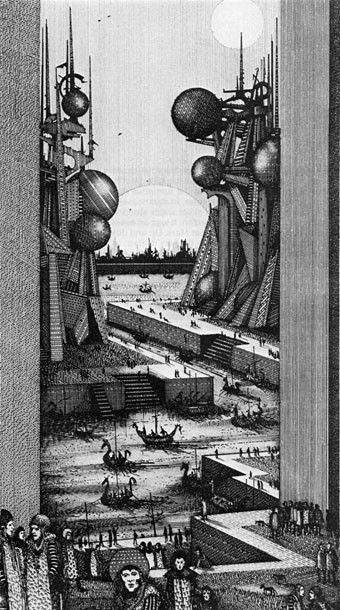
One of Ian Miller‘s drawings from the illustrated edition of Ray Bradbury’s The Martian Chronicles, 1979.

• “I always said we were kind of an electronic punk band, really. We were never New Romantics, I don’t like it when we get lumped in with that.” Dave Ball of Soft Cell and The Grid talking to Duncan Seaman about his autobiography, Electronic Boy: My Life In and Out of Soft Cell. I’ll now be waiting impatiently for the unreleased Robert Fripp/Grid album to appear.

• “[Patricia] Highsmith’s writing—often eviscerating, always uncomfortable—has never been more relevant,” says Sarah Hilary.

• Ron Peck’s debut feature, Nighthawks (1978), is “a nuanced look at gay life in London,” says Melissa Anderson.

And then there are those figures who seem to flit around the edges of movements without ever being fully involved in any of them, who pursue their own eccentric paths no matter what is going on around them. These are the writers who make up the secret history of literature, the hidden history that’s not easily reduced to movements or trends, and who always waver on the verge of invisibility until you stumble by accident onto one of their books and realize how good they actually are, and wonder, Why wasn’t I told to read this before? But of course you already know the answer: You were not told because it doesn’t fit smoothly into the story those in authority made up about what literature is—it disrupts, it can’t be reduced to the literary equivalent of a meme.

That’s the kind of writer Pierre Klossowski (1905–2001) is. He is not a joiner. He has his own particular and often peculiar concerns, and pursues them. He does not particularly welcome you in. The content of his writing, too, has the feel of a gnostic text, as if you are reading something that, if only you were properly initiated, you would understand in a different way. In that sense his work has an esoteric or occult quality to it—and likewise in the sense that it returns again and again to the intersection of religion and pornography, the sacred and the profane.

Brian Evenson on The Suspended Vocation by Pierre Klossowski

• Chad Van Gaalen creates a psychedelic animation for Seductive Fantasy by the Sun Ra Arkestra.

• More sneak peeks from the forthcoming The Art Of The Occult by S. Elizabeth.

• More Robert Fripp: Richard Metzger on Fripp’s sui generis solo album, Exposure.

Pamela Hutchinson on the pleasures of David Lynch’s YouTube channel.

• Mix of the week: a second Jon Hassell tribute mix by Dave Maier.

• At Dennis Cooper’s: Ferdinand presents…Dark Entries Day.

15 fascinating art documentaries to watch now.

Soft Power by Patten.

• RIP Milton Glaser.

hauntología

Aquarium (1992) by The Grid (with Robert Fripp) | Soft Power (2005) by Ladytron | The Martian Chronicles (2007) by Dimension X

The Marvellous

melly.jpg

The marvellous is always beautiful. Anything marvellous is beautiful. In fact only the marvellous is beautiful.

George Melly (above) quoting André Breton’s declaration from the first Surrealist Manifesto, 1924

Two posts in one week—quelle surprise. This is partly because I’m trying to get WordPress to post updates to Twitter, something that hasn’t been possible for many years without going through the long-winded process of signing up as a Twitter developer. Anything that limits my involvement with Twitter’s burning café feels like a positive thing at the moment, so thoughts that I previously cast into the flames may find their expression here instead.

svankmajer.jpg

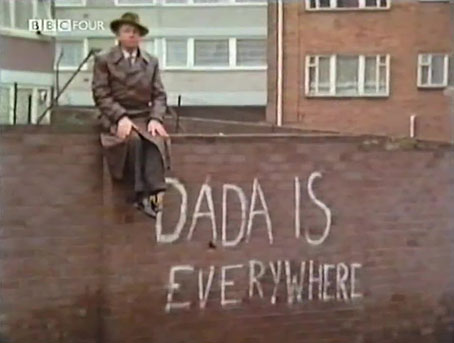
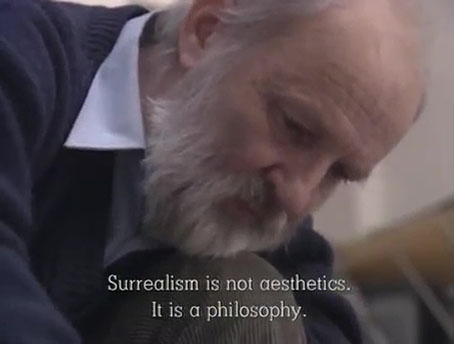
The two screengrabs are from recent re-viewings. George Melly’s short guide to Surrealism for the BBC’s Arena, and Jan Švankmajer’s equally short BBC profile have both been featured here in the past, but my recent purchase of a box of blu-rays from Švankmajer’s shop has prompted a journey back into the Surrealist praxis via whatever books and videos I have to hand. It’s been interesting looking again at René Passeron’s Encyclopedia of Surrealism (1975), a book which for many years was more interesting for the 24-page section devoted to the precursors of Surrealism, all the artist-eccentrics, architects, illustrators, Mannerists, and (especially) the Symbolists whose works I spent most of the 1980s pursuing. Today there are more threads to be followed in the Surrealist section of Passeron’s study so I’m looking forward to seeing where they lead. As for The Marvellous, the Švankmajer discs are this with and without the capital “M”. I recommend them.

Update: And the post didn’t announce itself at Twitter which isn’t so surprising; I’ll keep working at this behind the scenes. Social media is the anti-Marvellous.

Weekend links 519

minotaure.jpg

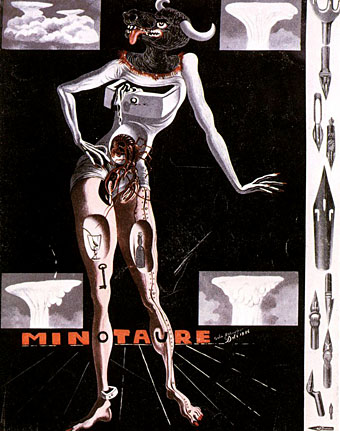
Cover of Minotaure no. 8 (1936) by Salvador Dalí.

• At Dangerous Minds: Irmin Schmidt talks to Oliver Hall about his new album of prepared piano, Nocturne, and also reveals more about the planned release of live recordings by Can.

• “Even the most zealous fan of the genre can learn something new from this book,” says Geeta Dayal in a review of Bring That Beat Back: How Sampling Built Hip-Hop, by Nate Patrin.

• The subject of a previous post but the video was later removed: Italo Calvino in a rare documentary feature for an English audience, on the BBC’s Bookmark in 1985.

• On 9th May, carillonneur Malgosia Fiebig played The Model by Kraftwerk on the bells of the Dom Tower in Utrecht as a tribute to the late Florian Schneider.

• Film footage of Alice Coltrane in her prime is a rare thing so even 17 minutes of TV from 1970 is something special.

Dan Reynolds on the fantastic alphabets designed by Jean Midolle. See also Luc Devroye’s page.

• Mix of the week: Jon Hassell tribute, part 1: Jon and his collaborators, by Dave Maier.

Nicolas Winding Refn on some of the films he’s been watching during lockdown.

• At Haute Macabre: Surrealist décor and tiny secret drawers.

HP Lovecraft dreams of a Providence trolley car in 1927.

The Museum of Ridiculously Interesting Things

Xerrox Voyage, a new recording by Alva Noto.

• At Dennis Cooper’s: Jean-Pierre Léaud Day.

The Model (1979) by Snakefinger | Model (1992) by The Balanescu Quartet | Das Modell (1997) by Rammstein