Weekend links 51

narcissus.jpg

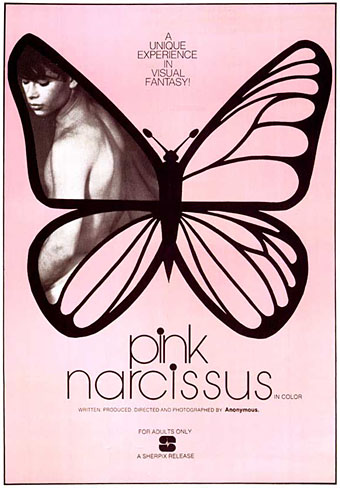
James Bidgood’s luscious and erotic micro-budget masterpiece Pink Narcissus (1971) receives a screening at the IFC Center Queer/Art/Film festival, NYC, on Monday. The film is presented by Jonathan Katz, curator of the Hide/Seek gay art show whose controversial history was recounted here in December. The NYT ran a short piece about Bidgood, now 77 and not the first artist to be disappointed by his past work; they also have a Bidgood slideshow. Hide/Seek, meanwhile, is now a touring exhibition.

• Related: the delightful Drew Daniel of Matmos (and Soft Pink Truth) posing in a jockstrap at the Club Uranus, San Francisco circa 1990; he also used to go-go dance wearing a fish.

• The Isle of Man may have one of the oldest parliaments in the world but its laws have often been out of step with its neighbour across the Irish Sea. This week the island joined the rest of the UK in granting civil partnerships to its citizens. Now the name whose punning appeal so delighted James Joyce doesn’t seem as inappropriate.

Howard Jacobson: “The novelist Yukio Mishima posed pointing a Samurai sword to his chest and ultimately had himself beheaded in public. This is what’s called taking your art seriously.”

hutter.jpg

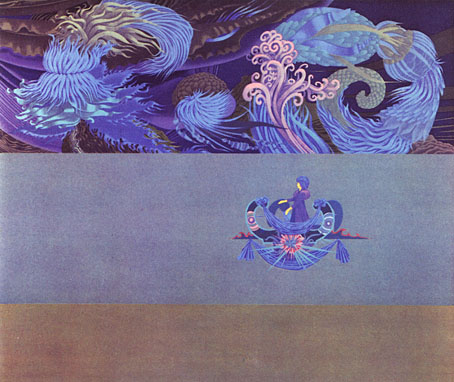
The Realm of the Queen of the Night (1974) by Wolfgang Hutter from Zauberflote at 50 Watts.

The revelatory operations of the chance encounter lie at the heart of le merveilleux (“the marvelous”)—the Surrealist conception of beauty. You find something marvelous in the world (an object, an image, a person, a place) that corresponds, like a piece clicking into a puzzle, to a deep inner need.

Slicing Open the Eyeball: Rick Poynor on Surrealism and the Visual Unconscious by Mark Dery.

Boy from the Boroughs: Alan Moore interviewed by Pádraig Ó Méalóid; Michael Moorcock interviewed at Suicide Girls.

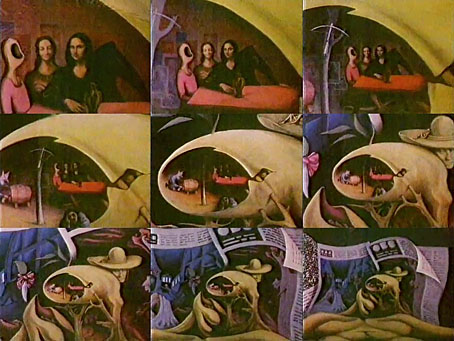
• Illustrations from Quark, the anthology of speculative fiction edited by Samuel Delany & Marilyn Hacker in 1970.

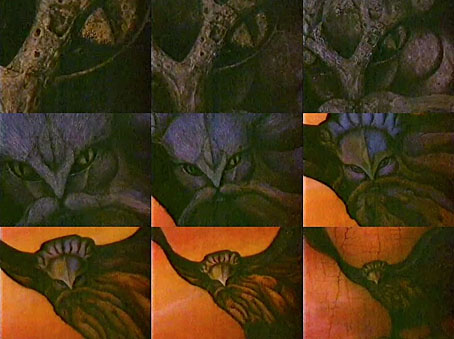
The Residents, sans masks, filmed at their San Francisco home in the 1970s.

• Bach’s Toccata and Fugue in D minor played on a glass harp.

What art can do for science (and vice versa).

• You can never have too much Virgil Finlay.

• Lydia Kiesling reviews Lolita.

Alain Resnais film posters.

Red Mug, Blue Linen.

No GDM (dub version) (1979) by Gina X | L. Voag’s Kitchen (2004) by Soft Pink Truth.

John Martin: Heaven & Hell

martin1.jpg

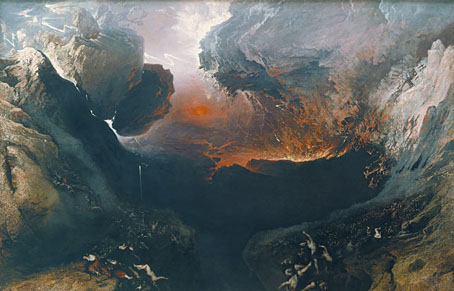
The Great Day of His Wrath (1851) by John Martin.

I’ve written on a couple of occasions about having been a precocious youth when it came to art appreciation. My first visit to the Tate Gallery (now Tate Britain) when I was 13 was of my own volition during one of our annual school visits to London. I wanted to see Modern Art (capital M and capital A), and especially my favourite Surrealist and Pop artists. Those works were present, of course, and it was a thrill to discover artists I hadn’t heard of such as Brâncusi and Moholy-Nagy, but the greatest shock came in the room reserved for the enormous canvases filled with apocalyptic scenes by Francis Danby and John Martin.
martin2.jpg

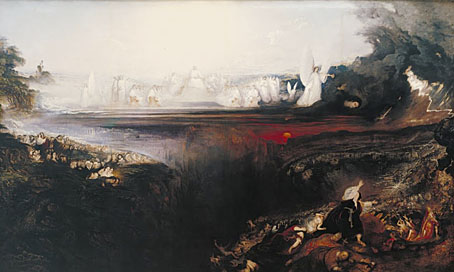
The Last Judgement (1853) by John Martin.

Some of these paintings have become more visible over the years, especially Martin’s startling chef-d’oeuvre, The Great Day of His Wrath, which has found a new lease of life decorating various music releases. Yet for a long time these works were never seen in art histories, being dismissed as a kind of religious kitsch, interesting perhaps for their Romantic connections (he also depicted scenes from Milton and Byron) but with Martin regarded as deeply inferior compared to his contemporary JMW Turner. If you only look at painting as being about the surface of the canvas then Martin is inferior to Turner whose nebulous works contain the seeds of Impressionism and much 20th century art. But there’s more to art than the surface. What I saw was an astonishing audacity—this artist had dared to paint the end of the world!—and three deeply strange paintings, two of which feature deliberately confused perspectives which are almost Surrealist in their effect and quite unlike any other work produced in the 19th century.
martin3.jpg

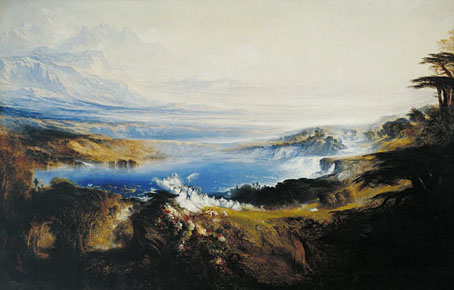
The Plains of Heaven (1851) by John Martin.

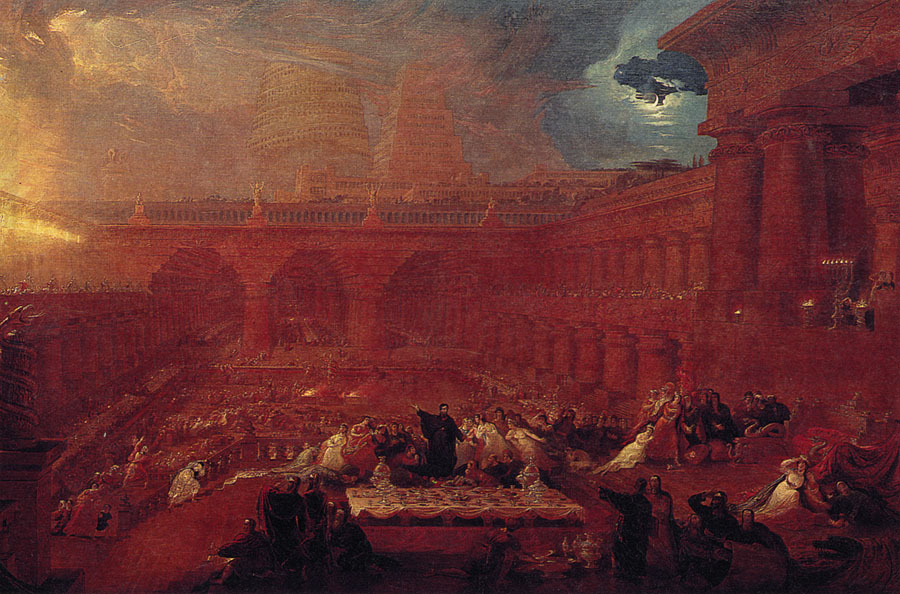
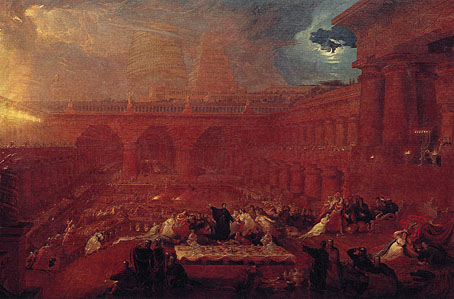
Well things change, not least critical opinion, and with the emergence in recent years of (for want of a better term) Pop Surrealism, and also the current vogue for crappy disaster movies and apocalyptic chatter, Martin’s paintings have been deemed interesting enough to warrant an exhibition at the Laing Art Gallery, Newcastle, which has been the permanent home of other Martin works for many years. The show will run there until June then travel to Sheffield (where I may pay it a visit) and Tate Britain. Of note for Martin enthusiasts will be the emergence from a private collection of the vast and lurid Belshazzar’s Feast, the painting which inspired some of the set designs in DW Griffith’s Intolerance. I once read that if the insanely huge banqueting hall in that picture had been a real construction it would have extended for at least a mile. Visitors to the new exhibition will be able to judge for themselves in close-up. And speaking of close-ups, Google’s Art Project has the three paintings above in their Tate collection; click the pictures for links.
martin4.jpg

Belshazzar’s Feast (1820) by John Martin.

Derided painter John Martin makes a dramatic comeback

Previously on { feuilleton }
Darkness visible
Death from above
The apocalyptic art of Francis Danby
Vultures Await

vultures-await.jpg

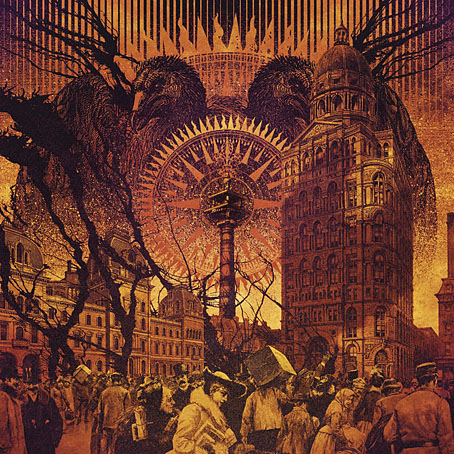
From a Void City to what might be a Vulture City, this is an illustration I produced last September for San Jose psych rock band Vultures Await. I would have mentioned it sooner but the following months were very busy and I was also waiting for the band to make the artwork public. Stylistically, this is another piece of collage Surrealism à la Wilfried Sätty, an illustration approach I’d like to keep developing for a while yet. The forthcoming Thackery T. Lambshead Cabinet of Curiosities will have more Sätty-inspired pieces, although my contributions there tend towards the decorative. There is, however, a connection between this piece and the Cephalopod Bride.

Elsewhere on { feuilleton }
The album covers archive

Previously on { feuilleton }
Wilfried Sätty: Artist of the occult
Nyarlathotep: the Crawling Chaos

The writhing on the wall

hands9.jpg

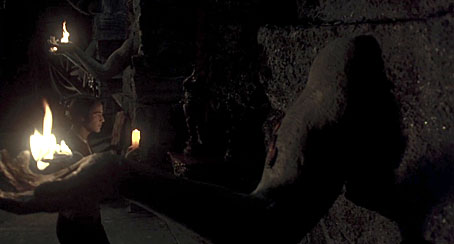
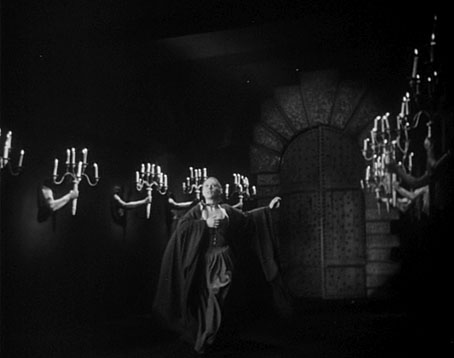
Dracula (1992).

This is the closest you’ll get to a guest post here even though it’s been done remotely and I’ve changed things around a little. Following my mention yesterday of the Cocteau-derived lantern-arms in Francis Coppola’s Dracula, Jescie sent me an abandoned blog post which collected similar examples of the arms-through-the-walls motif. I’ve done this kind of thing here in the past so it’s good {feuilleton} material. Almost all these examples are fantasy- and horror-related which isn’t too surprising, and I’m sure there’ll be other examples in films I haven’t seen. If anyone has any suggestions just remember that hands grasping through doors and windows don’t count with this, it’s through the wall or not at all.

hands1.jpg

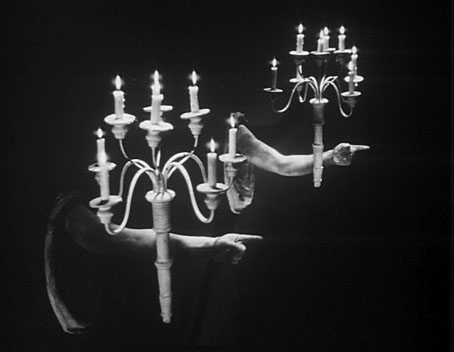
La Belle et la Bête (1946).

Jean Cocteau sets things off in 1946, a perfect piece of fairytale Surrealism and one of the many memorable aspects of this film.

hands2.jpg

La Belle et la Bête (1946).

Continue reading “The writhing on the wall”

The art of Gustav Adolf Mossa, 1883–1971

mossa1.jpg

Self-portrait.

A French artist and another late Symbolist painter whose idiosyncracies point to Surrealism but whose obsession with femmes fatales looks back to the preoccupations of the fin de siècle. If you don’t mind the implicit misogyny there’s a lot more to be seen here and here.

mossa2.jpg

Elle (1906).

mossa3.jpg

Le baiser d’Hélène (1905).

mossa4.jpg

Bruges-la-morte (1911).

Previously on { feuilleton }
Le Sphinx Mystérieux
La belle sans nom
The Feminine Sphinx
Le Monstre
Carlos Schwabe’s Fleurs du Mal
Empusa
Bruges-la-Morte