Weekend links 311

vasconcelos.jpg

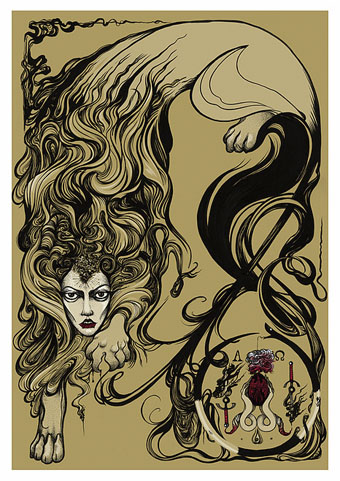
Sphinx (2015) by Lupe Vasconcelos.

• I’ve been reading my way through Patricia Highsmith’s Ripley novels for the past couple of weeks, and may well progress to some of her other books once I’m finished. Highsmith had a long career so there’s a lot to read on the web. Catching my eye this week were 10 Best Patricia Highsmith Books recommended by her biographer, Joan Schenkar; The Patricia Highsmith Recommendation Engine; Highsmith on Desert Island Discs in 1979 (the book she said she’d take, Moby-Dick, is the same one chosen by JG Ballard, albeit for different reasons); and a prickly interview late in her life with Naim Attalah.

Discovering 20th-century literature: books, manuscripts and other documents in the collection of the British Library.

• Signed copies of Paul Gorman’s Barney Bubbles monograph, Reasons To Be Cheerful, may be ordered from the author.

• How a mysterious ghost ship brought cosmic disco to Cape Verde. Related: Quirino Do Canto by Mino Di Mama.

• Zombi drummer AE Paterra and composer Paul Lawler make prog-synth epics as Contact.

• Mix of the week: Secret Thirteen Mix 185, a locked-groove mix by Massimo Carozzi.

• In London next weekend: Alchemy and Magic at Brompton Cemetery.

Die or DIY?: scarcities from the post-punk outer limits.

• More Penda’s Fen: a lengthy appraisal by Jerry Whyte.

Dennis Cooper salutes James Coburn

Bandcamp is good for musicians.

Vladimir Nabokov’s butterfly art.

• This Heat: Rimp Ramp Romp (1977) | 24 Track Loop (1979) | Health And Efficiency (1980) | Makeshift Swahili (1981)

Weekend links 310

monogenis.jpg

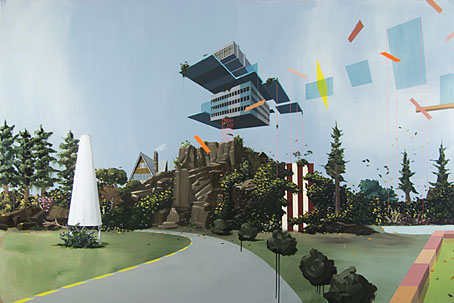
Parkland (2012) by Dean Monogenis.

• “The Story Behind the Planet’s Most Influential Road Map of ‘Weird Music’“. Gustavo Turner investigates the enduring influence of The Nurse With Wound List. Related: A Discogs list of links to all the NWWL discographies, and a recommended listening guide by Ultima Thule.

Tokyo Melody: Un film sur Ryuichi Sakamoto (1985) by Elizabeth Lennard features Sakamoto at work on Illustrated Musical Encyclopedia, together with Akiko Yano, Haruomi Hosono and Yukihiro Takahashi.

• “We wanted to fuse the aesthetics, histories and values of witchcraft, the traditional ideas with a contemporary edge,” says editor and creative director of Sabat magazine, Elisabeth Krohn.

There is a very seductive and very dangerous demon: the demon of generalities. He captivates man’s thought by marking every phenomenon with a little label, and punctiliously placing it together with another, similarly carefully wrapped and numbered phenomenon. Through him a field of human knowledge as changeable as history is turned into a neat little office, where this many wars and that many revolutions sleep in folders – and where we can pore over bygone ages in complete comfort. This demon is fond of words such as “idea”, “tendency”, “influence”, “period”, and “era”. In the historian’s study this demon reductively combines in hindsight the phenomena, influences and tendencies of past ages. With this demon comes appalling tedium – the knowledge (utterly mistaken, by the way) that, however humanity plays its hand or fights back, it follows an implacable course. This demon should be feared. He is a fraud. He is a salesman of centuries, pushing his historical price list.

Vladimir Nabokov in a previously unpublished lecture, On Generalities

• More Tom Phillips: 20 Sites n Years, a film by Jake Auerbach & David Thorp about the artist’s long-term urban photography project, is showing at Camberwell College of Arts next month.

• Mixes of the week: Sass In Pocket by Abigail Ward, Near Mint, 17th May 2016 by Robin the Fog & Hannah Brown, and Secret Thirteen Mix 184 by Andi Stecher.

• Grey Dog Tales talks to Brian J Showers of Swan River Press about horror and supernatural fiction.

• “Magic mushrooms lift severe depression in clinical trial.” But their use is still illegal in the UK.

• “Your brain does not process information, and it is not a computer,” says Robert Epstein.

Cliff Martinez’s theme for Nicolas Winding Refn’s forthcoming The Neon Demon.

Diamanda Galás, Still Wild and Primal, Returns to the New York Stage.

Janae Corrado on the photography of Joel-Peter Witkin.

Alastair Gee on gay home movies from the 1940s on.

People Laugh At Me (Coz I Like Weird Music) (1980) by The Instant Automatons | Weird Caravan (1980) by Klaus Schulze | Call It Weird (1983) by Xymox

Weekend links 304

stamp.jpg

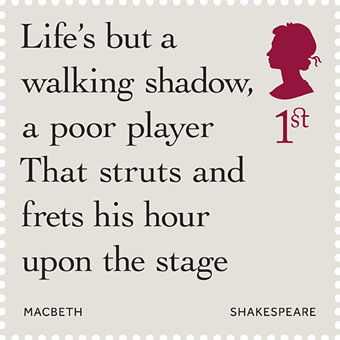
One of ten new stamps designed by The Chase for the Royal Mail’s Shakespeare celebrations.

• “I basically had this problem with bombast and intensity. And I started to feel like it was a nuclear arms race.” Tim Hecker talking to Rick Moody about loud sounds, Icelandic elves and Minimalism. Hecker’s new album, Love Streams, features contributions from Ben Frost and Jóhann Jóhannsson.

• “He joked in a letter to Edmund Wilson that he had ‘managed to get into Harvard with a butterfly as my sole backer.'” Laura Marsh on Nabokov the lepidopterist.

• The brutal musical legacy of JG Ballard by Tim Noakes. Ballard’s own musical taste, as revealed in his choice for Desert Island Discs, was mostly nostalgic.

One outcome of this sense that homosexual people existed in large numbers while still remaining more or less invisible to the naked eye was the suspicion that when they got together they were likely to engage in something more, something even worse than the indulging of a perversion. Notoriously, the networks of homosexuality seemed to transcend many more formal social and political boundaries, reifying crossovers not only between national and ethnic cultures, but between high society and the demi-mondes of bohemian artists, and so forth. The Homintern certainly helped cross-fertilise the arts.

Gregory Woods on the gay artists and writers who changed the world

• Mixes of the week: FACT Mix 544 by Tim Gane, Abs’s Cornerhouse Classics by Abigail Ward, and Secret Thirteen Mix 181 by Broken Bone.

I Can’t Give Everything Away: Jonathan Barnbrook’s text-and graphics video for the song by David Bowie.

• “Chernobyl is spooky, in the manner of all disowned places.” Simon Parkin enters the Zone.

Osman Ahmed on why Doreen Valiente is “the mother of modern witchcraft”.

• The camera obscura art of Abelardo Morell.

An oral history of Taxi Driver.

Swiss graphic design in CSS

• RIP Tony Conrad

Lady Macbeth (1972) by Third Ear Band | In The Back Of A Taxi (1984) by Penguin Cafe Orchestra | Butterfly Mornings (2001) by Hope Sandoval & The Warm Vibrations

Weekend links 298

liu-wong.jpg

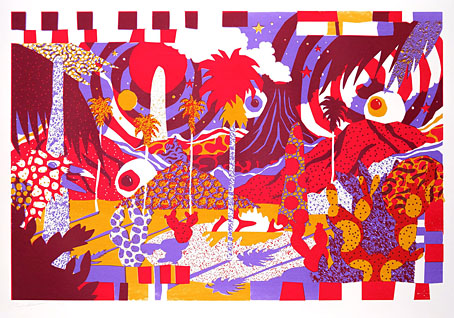
The Gathering (2015) by Kristen Liu-Wong.

• Tom of Finland’s house in Echo Park, Los Angeles, “is a trove of homoerotic masterpieces“. The house and its former owner are celebrated in Tom House, a book by Michael Reynolds with photos by Martyn Thompson. Related: Tom House exposed by Rizzoli.

• “Underlying the heightened nature of the films was a deep, questioning soulfulness related to literary antecedents coupled with a vision of cinema open to shifting levels of perception and fantasy.” David Thompson on Andrzej Żuławski.

• Memories of the Space Age: Photos by Roland Miller of the ruins of NASA’s old launch pads, bunkhouses and research facilities. A British equivalent (and a much more modest affair) is the Highdown Rocket Site on the Isle of Wight.

• Statues allegedly made for the John Huston film of The Maltese Falcon are among the most expensive props in cinema history even though there’s still dispute about their authenticity. Bryan Burrough investigates.

• Mixes of the week: The Solar Gate: Female Private Press New-Age Music – Vol.1 by Michael Tanner, and an “alchemical” Bowie selection by The Ephemeral Man.

• “What Does It Take To Be A ‘Bestselling Author’? $3 and 5 Minutes.” Brent Underwood on why Amazon ratings can’t be trusted.

Edward Gorey/Derek Lamb title sequences from the PBS/WGBH show Mystery! (1981).

• A Painter Possessed: Kate Kellaway on the occult abstractions of Hilma af Klint.

Invertebrate Harmonics: a new composition by Chris Watson.

• Frozen in time: Inside Bangkok’s first ever department store.

Roly Porter’s Favourite Space Records

• Space-Age Couple (1970) by Captain Beefheart & His Magic Band | Space Age Batchelor Pad Music (Mellow) (1993) by Stereolab | Space Age Ballad (2001) by Acid Mothers Temple & The Melting Paraiso U.F.O.

Weekend links 296

invisiblecreature.jpg

Mars (variant design): one of three new posters for NASA by Invisible Creature.

• “If the point of Sade’s work was to marry sexual frustration and release to the practice of interpersonal violence, he could confidently gaze out on the landscape of our popular culture and declare it a fait accompli.” Hussein Ibish on The United Sades of America.

• Gravitational Waves Exist: The Inside Story of How Scientists Finally Found Them by Nicola Twilley. Sean Carroll explains the importance of the discovery.

• Another This Heat interview: Bruce Tantum interrogates Charles Bullen and Charles Hayward about being a group ahead of their time.

The English word comes ultimately from Greek magike (in which the original Persian word is spliced with tekhne, “art”), while the Persian magos “one of the members of the learned and priestly class” ultimately derives from magush, “to be able, to have power”, from which we may also derive the word “machine”. So my social hierarchy is your magic, and my magic might be your craft—or even your machinery. My religion is your magic. Your religion is my fairy lore. Or your religions might be a mass of fakery and trickery and foolery. Hence in making magic into an intellectual discipline, I theorize based on my observations, which might not be mine but those of others, heritable observations. But because what I do looks very like empiricism, as I examine materials for the tricks or fooleries, or for the real alterations, checking my results against descriptions of previous experiments, what I do feels like science, feels like the template for Baconian empiricism and its great instauration.

Diane Purkiss reviewing The Book of Magic: From Antiquity to the Enlightenment, edited by Brian Copenhaver

• The Strange World Of…The Residents: Sean Kitching talks to The Residents’ resident artist, Homer Flynn.

• At Strange Flowers: film of Natalie Barney in 1962 reminiscing about Oscar Wilde and Marcel Proust.

• From Battleship Potemkin to Baker Street: Ian Christie on Sergei Eisenstein’s trip to London.

• Mixes of the week: Krautrock Mix by Tarotplane, and Mix #15 (Transversales) by Jon Brooks.

• From Rock en Stock (France, 1973): Can and Agitation Free in live performance.

• Twenty classic British folk-horror stories: a selection by Kai Roberts.

Immemory: a Flash version of Chris Marker’s CD-ROM.

Cronenberg Valentines

Static Gravity (1980) by Chrome | Zero Gravity (2001) by Monolake | Gravity (2013) by Roly Porter