Weekend links 544

wright.jpg

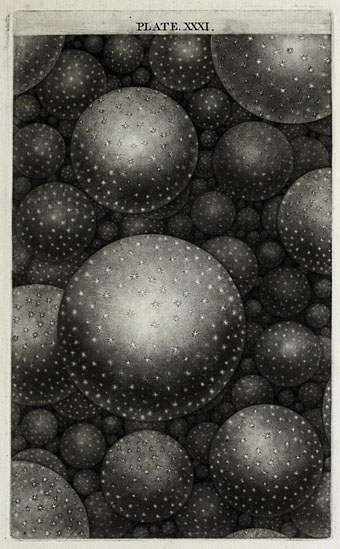
“You may if you please, call a partial View of Immensity, or without much Impropriety perhaps, a finite View of Infinity.” An illustration from Thomas Wright’s An Original Theory or New Hypothesis of the Universe (1750).

• If you read about electronic music for any length of time today you’ll eventually come across the term “pad”, referring to a feature of the music itself not the instrumentation. I’ve noticed increasing instances of this with no accompanying explanation of what the term actually refers to. Rob Wreglesworth has the answer.

• At Dangerous Minds: Richard H. Kirk talks to Oliver Hall about Cabaret Voltaire and Shadow Of Fear. No comment from Kirk as to why the new album warrants the CV name when the music is indistinguishable from his many solo works.

• Eyeball Fodder: The Art of the Occult Edition. S. Elizabeth presents artwork featured in her new book, together with links to artist interviews, including one to the interview we did for Coilhouse magazine a few years ago.

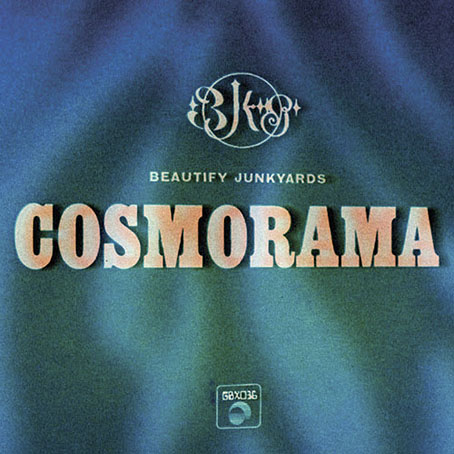
• More electronica: Music From Patch Cord Productions is a new compilation of music by Mort Garson that features some previously unreleased pieces. Great cover art by Robert Beatty as well.

• A trailer for Fireball: Visitors from Darker Worlds, a documentary film about meteorites by Werner Herzog and Clive Oppenheimer.

• From 2019: John Waters and Lynn Tillman in conversation. “The pair discussed Waters’s recent exhibitions and art career.”

Harlan Ellison’s The Last Dangerous Visions may finally be published, after a five-decade wait.

Turn your feline into a god with this cardboard Shinto shrine for cats.

• Mix of the week: XLR8R Podcast 670 by Dadub.

• At Dennis Cooper’s: Harry Dean Stanton Day.

John Cooper Clarke‘s favourite songs.

Meteor Storm (1994) by FFWD | The Third Chamber: Part 5 – 7pm Tokyo Shrine (1994) by Loop Guru | Fireball (1994) by Sun Dial

Weekend links 542

gysbrechts.jpg

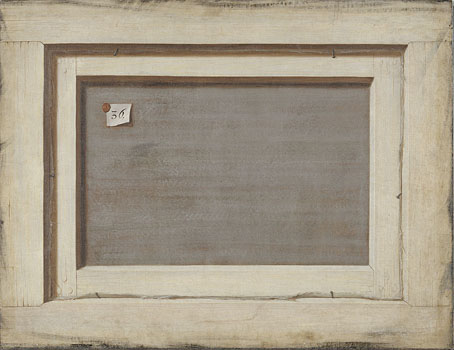
The Reverse of a Framed Painting (between 1668 and 1672) by Cornelis Norbertus Gysbrechts.

• New music with a cinematic flavour: Disciples Of The Scorpion (Main Theme) Heavy Mix by The Rowan Amber Mill is a taster for the group’s forthcoming imaginary soundtrack, Disciples Of The Scorpion (also a sequel of sorts to The Book Of The Lost); The Quietened Dream Palace is this year’s final themed compilation from A Year In The Country. The subject this time is abandoned cinemas, past and present.

San Francisco Moog: 1968–72 by Doug McKechnie, a collection of early synthesizer music using a modular instrument that was later bought by Tangerine Dream. “The quiescent, meditative pulse of the music has much more in common with what would come to be known as the Berlin school of German electronic music than anything coming out of the US at the time,” says Geeta Dayal.

• Sarah Davachi released a new album recently, Cantus, Descant, so The Quietus asked her to discuss her favourite albums. Related: XLR8R has a mix of the music that Davachi regards as influences. Kudos for the choice of Why Do I Still Sleep by Popol Vuh, an overlooked piece from the end of the group’s career.

When I use relevance as a filter for determining what books to read, I’m failing to make myself available for an authentic encounter with otherness, something genuine art always offers. I’m presuming that I can guess, from the barest plot summary, whether a book will be useful in my life. But how can I know what I will find relevant about a work before I have submitted myself to the experience? I don’t think we are likely to be transformed by art if we try to determine that encounter in advance. Part of the vulnerability necessary for transformation is the recognition that I am, to a great extent, a mystery to myself. How could I know what I need?

Garth Greenwell on the idea that a novel is only worthwhile if it is somehow “relevant”

• “For a long time I had been encouraged by the world of fine art to remove references to the spiritual from my work,” says Penny Slinger in a piece by Hettie Judah exploring the resurgence of interest in occult art. Good to see S. Elizabeth and her book on the subject receiving a mention.

• Arriving on Region B blu-ray later this month is Spring (2014) by Justin Benson & Aaron Moorhead, which 101 Films describes as Richard Linklater channeling HP Lovecraft. I enjoyed Benson & Moorhead’s Resolution (2012) and The Endless (2017) so this one is on pre-order.

• Topical books dept: The Man in the High Chair and Other Tyrannies by Kurt Fawver, a benefit publication for the California Coalition for Women Prisoners.

• We never know exactly where we’re going in outer space: Caleb Scharf on the difficulties of aiming for distant objects in an ever-changing universe.

• Submissions open soon for the contemporary Dada journal Maintenant 15, with a theme of “Humanity: The Reboot”. Details here.

• At Dennis Cooper’s: Harry Smith, Filmmaker Day.

Pandemonium – Spring (1985) by Peter Principle | Silent Spring (2006) by Massive Attack feat. Elizabeth Fraser | Spring Stars (2009) by Simon Scott

Weekend links 540

wildboys.jpg

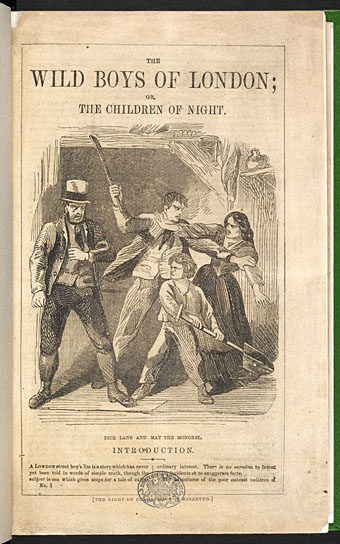
A century before William Burroughs: The Wild Boys of London (1866). No author credited.

• “Acid, nudity and sci-fi nightmares: why Hawkwind were the radicals of 1970s rock.” I like a headline guaranteed to upset old punks, even though many old punks had been Hawkwind fans. As noted last week, Joe Banks’ Hawkwind: Days of the Underground is now officially in print, hence this substantial Guardian feature in which the author reprises his core thesis. Mathew Lyons reviewed the book for The Quietus.

• “Roy Ayers and Fela Kuti each explored Pan-Africanism and diasporic solidarity their own way before their meeting in 1979.” John Morrison on the Roy Ayers and Fela Kuti collaboration, Music Of Many Colours.

• “In 1938, Joan Harrison read a galley of Daphne Du Maurier’s masterpiece. She wouldn’t rest until she had the rights to adapt it.” Christina Lane on Rebecca at 80, and the women behind the Hitchcock classic.

Each page features a distinct moment, seen from one perspective on the front, and from a diametrically opposed angle on the back, occasionally pivoting, for instance, between interior and exterior spaces. This organizing principle is complicated by the fact that a given image might be a depiction of the physical environment surrounding the camera or, at other times, a photograph of a photograph. Midway through, the scene is inverted such that the volume must be turned upside-down to be looked at right-side up. The result is an elegant, disorienting study in simultaneity that allows the viewer to enter the work from either end.

Cover to Cover (1975), a book by Michael Snow, has been republished by Light Industry and Primary Information

• At Public Domain Review: The Uncertain Heavens—Christiaan Huygens’ Ideas of Extraterrestrial Life by Hugh Aldersey-Williams.

• Penny Dreadfuls and Murder Broadsides: John Boardley explores the early days of pulp fiction and what he calls “murder fonts”.

• The lesbian partnership that changed literature: Emma Garman on Jane Heap, Margaret C. Anderson and The Little Review.

The 10th Tom of Finland Emerging Artist Competition is now open to entries. (Titter ye not.)

• Death Barge Life: Colin Fleming on Gericault’s grim masterpiece, The Raft of the Medusa.

• At Dennis Cooper’s: Spotlight on…The Grand Grimoire: The Red Dragon (1702).

Music To Be Murdered By (1958) Jeff Alexander With Alfred Hitchcock | Murder Boy (1991) by Rain Parade | Murder In The Red Barn (1992) by Tom Waits

The écorché saint

bartholomew1.jpg

An addendum to the previous post after Daniel in the comments reminded me of Saint Bartholomew who is often depicted in paintings and sculptures carrying his flayed skin. Having suffered considerable torture, Bartholomew spends eternity as the patron saint of tanners and leatherworkers. This sounds like a cruel joke on the part of medieval martyrologists but the history of the Christian church contains many such ironies, along with some equally surprising imagery. The luckier saints, like Lucy and Agatha of Sicily, are shown in paintings with their gouged eyes and lopped breasts restored in Heaven, the original (miraculously unbloody) articles being proffered to the viewer on plates; Peter of Verona, meanwhile, offers benedictions to the faithful with the hatchet that killed him still protruding from his head. The sculpture of Bartholomew by Marco d’Agrate in Milan Cathedral dates from 1562, and is more écorché than saint, a marvellous exercise in anatomical fidelity that just happens to double as a religious icon.

bartholomew2.jpg

Previously on { feuilleton }
Écorché
Cephalophores

Écorché

ecorche01.jpg

Engraving by Philip Galle.

Écorché, from the French verb to flay, was the traditional term applied to depictions of the skinless man found in anatomical studies, and the musculature models made for the use of artists and sculptors. This is almost always a male figure. Women tend to feature in the anatomical works of previous centuries in order to illustrate the conditions of pregnancy, the male body being considered the default for the usual sexist reasons.

I’ve been revisiting the history of these figures while working on a new book design so what follows are a few choice examples, some of which carry a pleasantly Surrealist charge. In the years that followed the pioneering studies by Vesalius and co. there was a period of playfulness in anatomical illustration during which time the figures are shown peeling away their flesh to reveal the muscles or even the organs beneath, a striptease where the substance of the body itself is removed. As William Burroughs was fond of quoting: “‘T ain’t no sin to take off your skin, and dance around in your bones.”

ecorche07.jpg

Valverde de Hamusco (1556).

ecorche06.jpg

Engraving by G. Bonasone (15–).

ecorche02.jpg

Engraving by Philip Galle.

Continue reading “Écorché”