Eco calls on Cthulhu

eco2.jpg

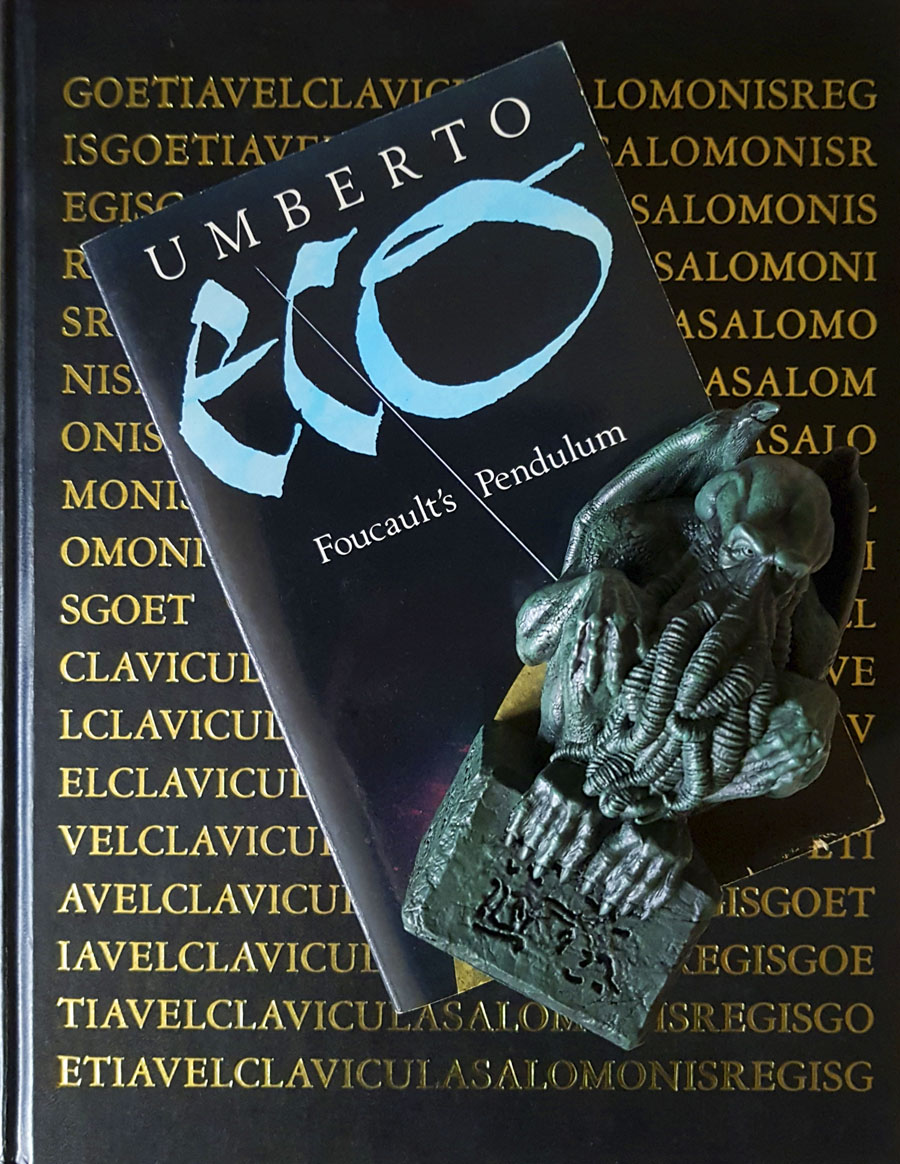
In which Umberto Eco nods fleetingly to the Cthulhu Mythos near the end of his second novel, Foucault’s Pendulum. I’d show you more of the relevant passage (below) but it’s rather spoilerish if you haven’t read the book. This turned up during a re-reading, my first since the novel appeared in paperback in 1990. A reference like this doesn’t stand out as much as it might elsewhere, not when the text that precedes it is stuffed to the gills with esoterica. Several hundred pages of occult history made me forget that Eco had hauled Lovecraft into his compendious fabulation along with everything else.

eco1.jpg

Ishmael Reed was responsible for returning me to Eco’s novel as a result of an earlier re-read of Mumbo Jumbo, Reed’s fictional account of voodoo, jazz, politics and many other things in the America of the 1920s. Eco was already in mind prior to this since I’d been working my way through his essays and lectures. (As I still am. He wrote a lot of the things.) Mumbo Jumbo‘s exploration of occult knowledge and occult conspiracy summoned vague memories of Foucault’s Pendulum, which made me realise that I didn’t remember very much at all about Eco’s novel even though both books share an interest in the tangled history of the Knights Templar. To the top of the pile it went.

It’s been interesting reading Eco’s novel again. For a start, it was funnier than I remembered, although this may be a result of my being much more familiar with the publishing business than I was in 1990. The story concerns a trio of men who work for a small publishing house in Milan, a division of which is devoted to the works of self-financing authors or “SFAs”. A vanity press in other words. A potential SFA turns up with a crank book rather similar to The Holy Blood and the Holy Grail, then abruptly disappears without collecting his manuscript. Curiosity, idleness and invention inspire the trio to improve upon the manuscript’s occult conspiracy in a manner that knits together just about every aspect of Western mysticism there is, and even some of the Eastern ones: Rosicrucianism, alchemy, the Kabbalah, Atlantis, the Illuminati, ley lines, the Hollow Earth, Stonehenge, etc, etc; it’s all in there. This is the thing they eventually call “the Plan”, a kind of Unified Field Theory of esoteric knowledge, and a contrivance whose fabrication is assisted by further SFA manuscripts arriving as candidates for a new line of “Hermetic” books. Problems arise for the publishers when their elaborate intellectual game ends up being taken for a serious revelation by a group of fanatical mystics. Eco’s novel demonstrates the pleasures of creative apophenia—the trio are continually challenging each other to fit a new piece of historical data into their scheme—while also acting as a warning that any halfway plausible Plan has the potential to be taken seriously by credulous cranks. As Lia, the novel’s voice of reason, says:

People are starved for plans. If you offer them one, they fall on it like a pack of wolves. You invent, and they’ll believe. It’s wrong to add to the inventings that already exist.

Eco explored this phenomenon more seriously in a later novel, The Prague Cemetery, which invents an author for the notorious Protocols of the Elders of Zion, a Plan whose conspiratorial claims continue to fuel anti-Semitism the world over. The internet has only accelerated Plan-construction, and I imagine Eco would have been simultaneously fascinated and appalled by the feeble imaginings of that ex-football player with the lizard obsession, and the shambling, frothing Q-mob with their Very Important jpegs. (What is it the latter are always saying? “Trust the Plan”… And having mentioned Mr Icke, I just put his name into Google only to find that the latest extract from his Twitter feed has him talking about the Holy Grail. Welcome to the Crank Zone.)

Continue reading “Eco calls on Cthulhu”

Weekend links 668

escher.jpg

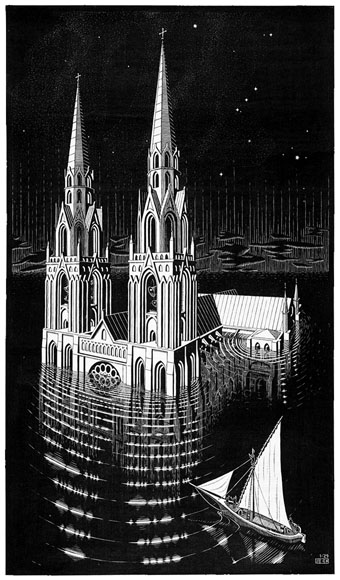
The Drowned Cathedral (1929) by MC Escher.

• “All Saints’ was the last of the seven parish churches to fall headlong into the waves. The drowned church was doomed to lie in a gulley not far out to sea, a habitat for sponges and crabs, and yet it lives on, unvanquishable; for—as the story of Britain’s lost cities, ghost towns, and vanished villages tells us—what has disappeared beneath the sea can rebuild itself in the mind.” Matthew Green explores the history of Dunwich, Suffolk.

• “Why do certain artists endure and become (dread word) ‘iconic’, while some are forgotten or sidelined or only grudgingly acknowledged?” Ian Penman talking to Jeremy Allen about his new book, Fassbinder Thousands of Mirrors.

• Coming soon from Strange Attractor: A new edition of England’s Hidden Reverse, David Keenan’s study of the lives and music of Coil, Nurse With Wound and Current 93.

• “What is electronic music?” Daphne Oram, Desmond Briscoe and David Cain of the BBC Radiophonic Workshop are here to explain.

• “Direct evidence of the use of multiple drugs in Bronze Age Menorca (Western Mediterranean) from human hair analysis.”

• New music: Timespan by Majeure, and Microdosing by African Head Charge.

• “Future of Borges estate in limbo as widow doesn’t leave will.”

Arooj Aftab’s favourite albums.

Paperback Covers on Tumblr.

The Engulfed Cathedral (1974) by Tomita | Engulfed Cathedral (1981) by John Carpenter | La Cathédrale Engloutie (2003) by Sora

New Wave Strangeness: Hawkwind’s Calvert years

days.jpg

Antique badges not included.

My weekend has been spent immersed in Days Of The Underground, the latest box of Hawkwind albums from Cherry Red Records. I’d avoided many of the earlier sets but this one was irresistible for being a 10-disc collection (8 CDs and 2 blu-rays), the core of which is three of the four albums recorded by the group for the Charisma label–Quark, Strangeness And Charm (1977), 25 Years On (credited to Hawklords, 1978), and PXR 5 (1979)–with all three albums being given the Steven Wilson remix treatment. The studio material is complemented by further Wilson mixes of live recordings and alternate takes, plus demo tracks (previously available but I didn’t have them). You also get three bonus video clips: Hawkwind (minus Dave Brock) playing the Quark single on Marc Bolan’s TV show in 1977, together with two promo films from the 1978 Hawklords concert at Brunel University. Absent from the set is the group’s first album for Charisma, Astounding Sounds, Amazing Music (1976), also the two singles that were released that year. I’ve not seen any explanation for these omissions but reasons may include the uneven quality of the music (recorded shortly before the group imploded), and Dave Brock’s lasting dislike of the album.

quark.jpg

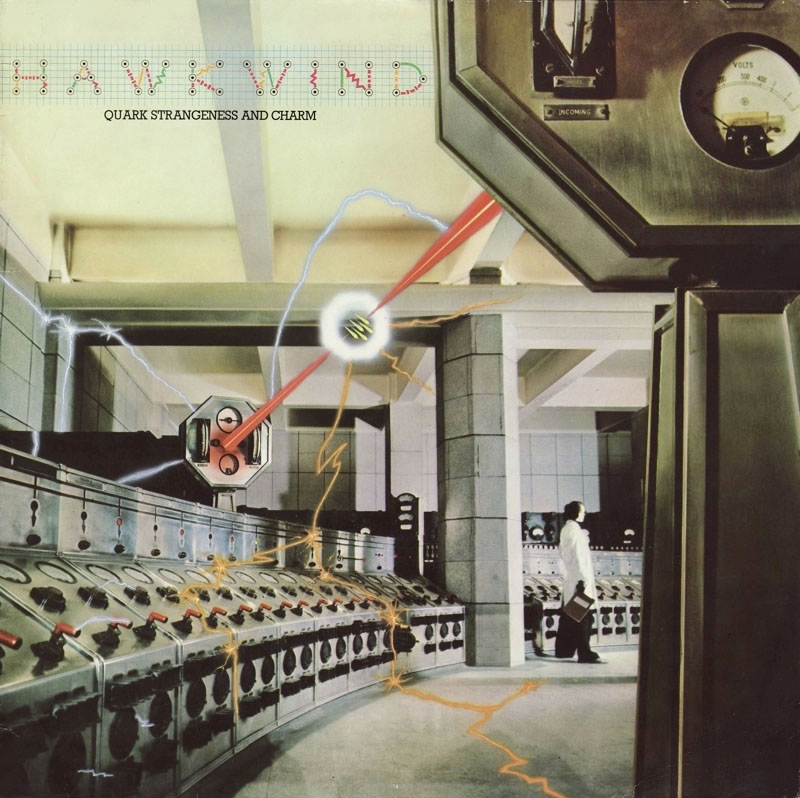
Cover design by Hipgnosis; photography by Peter Christopherson with graphics by Geoff Halpin. Aubrey Powell says that Robert Calvert commissioned this one after the pair met each other at a party. The photography made use of the interior of Battersea Power Station in the same year that Hipgnosis used the building for a rather more famous album cover.

Steven Wilson did a great job of remixing the Warrior On The Edge Of Time album so I had high hopes for this set, hopes that have been substantially fulfilled. Many of the adjustments are individually minor–boosted bass, more prominent keyboards, some extended intros–but taken together they offer a refreshed experience of three very familiar albums. The packaging has been well-designed by the estimable Phil Smee with a booklet that presents a snapshot of the graphics produced for the group during this period, not only album artwork but also posters, ads and pages from the tour programmes. As a bonus there’s a small reproduction of the 1977 tour poster, a welcome inclusion since I used to own an original one of these which I’ve either misplaced or lost altogether. The attention to detail extends to the animated graphics of the blu-ray interface; when the Quark album is playing you can watch sparks dancing around the control room. The Marc Bolan TV appearance was something I’d seen many times before (including its original broadcast) but the live Hawklords films are revelatory when there’s so little footage of the band from the 1970s with synched sound. The performances of PSI Power and 25 Years offer a frustratingly brief taste of Robert Calvert’s magnetic stage presence, and make me hope that a video of the entire concert may be released eventually.

pxr5.jpg

Cover art by Philip Tonkyn.

Robert Calvert is the key figure here, to a degree that Hawkwind’s Charisma years are also known as the Calvert years, this being the period when the group’s part-time lyricist, occasional singer and conceptual contributor graduated to lead vocalist and songwriter. Calvert’s new role as front man changed Hawkwind from an ensemble of underground freaks into a more typical rock group, albeit one with a very theatrical singer prone to changing outfits to suit the songs, and with props that included a loudhailer, a machine-gun (fake) and a sabre (real). The songs became shorter and, in places, poppier, although none of the singles managed to repeat the chart success of the Calvert-penned Silver Machine. Nevertheless, Brock and Calvert were a great song-writing team, and the lyrics that Calvert wrote from 1976 to 1978 are better than anything else in the discography: witty, alliterative, and filled with clever rhymes that range widely in their subject matter, from the usual science-fiction fare to Calvert’s own obsessions, especially aircraft and flying. Calvert’s approach to science fiction was more sophisticated than the freaks-in-space approach of the group’s UA years. You get a sense of this from his contributions to the Space Ritual album (only Calvert would have known what an orgone accumulator was), but his Charisma songs go much further, condensing whole novels—Roger Zelazny’s Damnation Alley and Jack of Shadows, Ray Bradbury’s Fahrenheit 451—while maintaining the spirit of the New Wave of SF, where the emphasis was as much on inner as outer space.

Continue reading “New Wave Strangeness: Hawkwind’s Calvert years”

Weekend links 667

kamekura.jpg

Design by Yusaku Kamekura.

• “Music and intoxication have gone hand in hand since prehistory, but the relationship of music and cannabis is particularly strong and complex, says Jono Podmore, a former habitual smoker, as he investigates a groundbreaking new study which may get us closer to understanding these links.”

• “[There] have been many instances of persons, who thought themselves metamorphosed into lanterns, and who complained of having lost their thighs.” Public Domain Review offers words to the wise from An Essay on Diseases Incidental to Literary and Sedentary Persons (1768).

• “Mathematicians have finally discovered an elusive ‘einstein’ tile.” Emily Conover explains. I thought Roger Penrose had already discovered these but none of his aperiodic patterns are created by a single tile.

Wes Anderson does science fiction…maybe. After watching The French Dispatch last month I’d caught up with the Anderson oeuvre so it’s good to have something new to look forward to.

20th century Japanese poster art. Related: Jason Booher on creating a cover for a book by Carlo Rovelli.

The Winners of Smithsonian Magazine’s 20th Annual Photo Contest.

• New music: Ghost Town Burning by The Lonely Bell.

Anthony “Surgeon” Child’s favourite music.

• RIP Raoul Servais, animator.

East Of Asteroid (1976) by 801 | Asteroide (1978) by Joël Fajerman & Jan Yrssen | Asteroid Witch (2022) by Ghost Power

Shusei Nagaoka album covers

nagaoka01.jpg

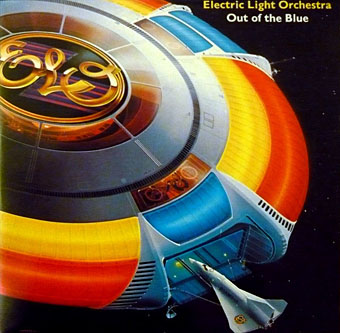
Out Of The Blue (1977) by Electric Light Orchestra.

Many different labels may be attached to the 1970s but it was definitely the science-fiction decade as much as anything else, a time when the use of SF imagery became a widespread trend, often superficially applied but there all the same. You see this in the music packaging of the period, and not only in the obvious enclaves of progressive rock. Here’s Motown Chartbusters Vol. 6 (1971) with a spaceship cover by Roger Dean; here’s Herbie Hancock on the cover of Thrust (1974) piloting his keyboard-driven craft over Machu Picchu while an alarmingly swollen Moon seems ready to crash into the Earth.

nagaoka02.jpg

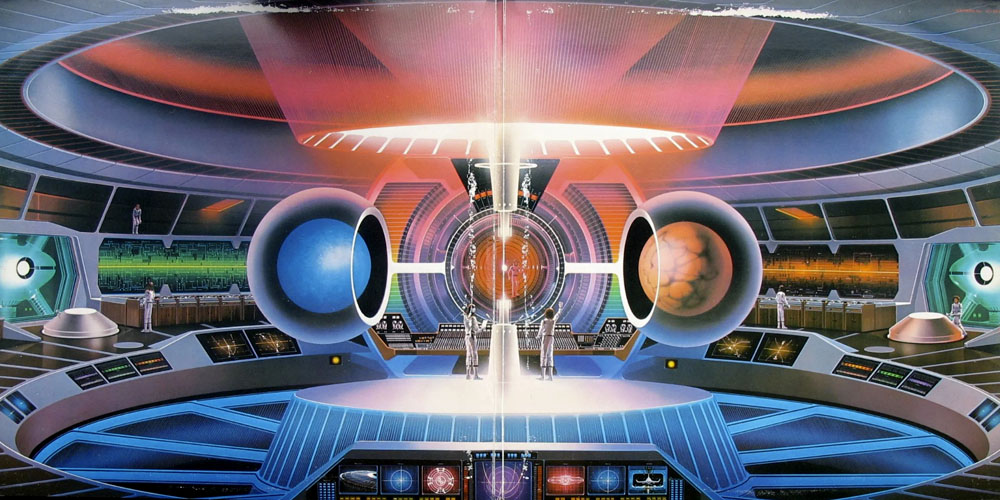
Out Of The Blue gatefold interior.

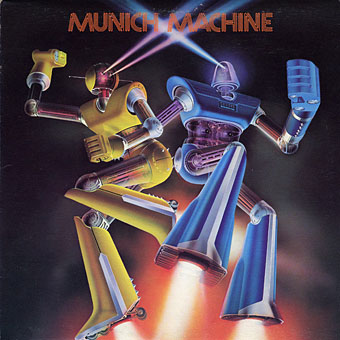
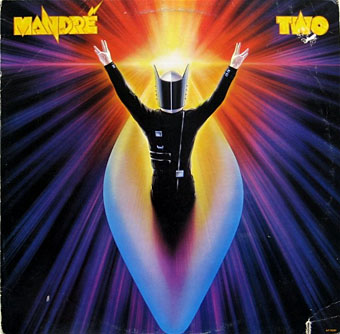
The exploitation of SF imagery on the covers of funk, soul and disco albums was much more widespread than the jazz world, and lasted long enough to join up with the emergence of synth-pop and electro in the early 1980s. The meticulous airbrush paintings of Shusei Nagaoka dominate this era and idiom, thanks in part to his covers for two of the biggest albums of 1977: Out Of The Blue by Electric Light Orchestra, and All ’n All by Earth, Wind & Fire.

nagaoka03.jpg

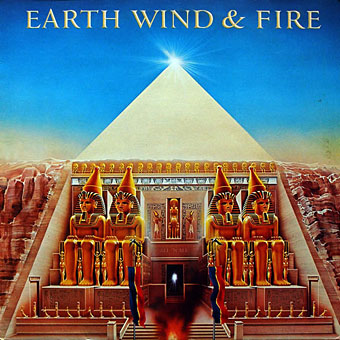
All ’n All (1977) by Earth, Wind & Fire.

nagaoka04.jpg

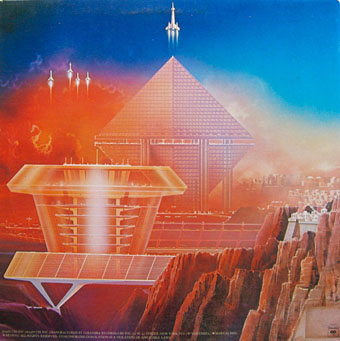
The latter doesn’t look especially science-fictional until you flip it over and its Egyptian scene morphs into a futuristic cityscape with a fleet of rockets heading for the stars. (That pyramidal building is based on one of Paolo Soleri’s hexahedron megastructures.) Many of the albums that followed this pair were jumping on the post-Star Wars/Close Encounters SF bandwagon but there were other reasons for funk and disco artists to embrace the Space Age, as Jon Savage has noted: “Disco’s stateless, relentlessly technological focus lent itself to space/alien fantasies which are a very good way for minorities to express and deflect alienation: if you’re weird, it’s because you’re from another world. And this world cannot touch you.”

nagaoka05.jpg

Munich Machine (1977) by Munich Machine. (A Giorgio Moroder production.)

Nagaoka was in demand for his cover art even before hitching a ride to the top of the album charts so what you see here is a limited selection. As usual, there’s more to be seen at Discogs although I often wish they’d allow larger image uploads. Future Life magazine ran a feature about Nagaoka in October 1978 which includes a brief interview with the artist together with some biographical details.

nagaoka06.jpg

Mandré Two (1978) by Mandré.

Continue reading “Shusei Nagaoka album covers”