Weekend links 446

pca.jpg

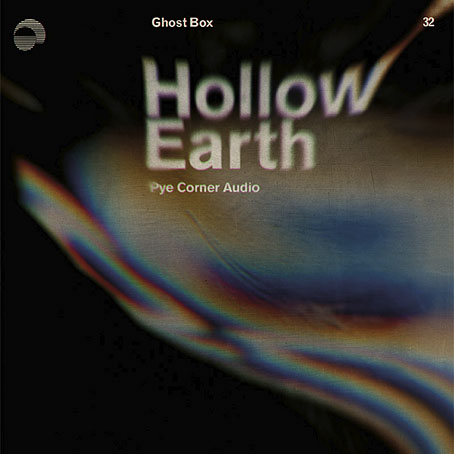
The Ghost Box label releases a new album by the excellent Pye Corner Audio in February (previews are here). The spectral design, as ever, is by Julian House.

• “In October 1966, Phyllis Willner arrived on motorcycle in San Francisco as a teenage Jewish runaway from Jamaica, Queens. She quickly fell in with the Hell’s Angels, the San Francisco Mime Troupe and, most crucially, the Diggers, who were just getting their street radical thing together in the Haight-Ashbury. The next two years would be eventful: many extraordinary highs, some really terrible lows.” Jay Babcock talks to Phyllis Willner about her involvement with “the executive branch of the hippie movement”, the Diggers.

• At Expanding Mind: Erik Davis talks with religious scholar Diana Pasulka about UFOs, scientific believers, book encounters, elite cabals, studying weirdness, and her new book American Cosmic: UFOs, Religion, Technology.

• Kenneth Anger is now 91 but he still appears hale, and looks even more magus-like than ever. This short film by Floria Sigismondi finds him reminiscing in the antiquated confines of the Chateau Marmont hotel on Sunset Boulevard.

David Wojnarowicz did not write dark fantasy. He wrote real life. In The Waterfront Journals he brilliantly captures electric tales from the mouths of strangers, those he described as “junkies, prostitutes, male hustlers, truck drivers, hobos, young outlaws, runaway kids, criminal types”, whose lives echo his own ostracized existence. He was thirteen when he was first paid for sex and sixteen when he started “turning tricks” regularly. His mother kicked him out of the house. By the time Wojnarowicz came out to friends in New York, he was in his early twenties. He was on the cusp of finding his voice as a writer and his confidence as an artist. It was the mid-1970s. AIDS was about to tear through the gay community.

Lara Pawson reviews three books by artist and writer David Wojnarowicz

John Banville reviews Kafka’s Last Trial by Benjamin Balint: “A scrupulous study of the squabble between Germany and Israel over Kafka’s papers, and the two women caught in the middle.”

• A sitting with the diva of the diode: electronic musician Suzanne Ciani in conversation with Christine Kakaire.

• Mixes of the week: Secret Thirteen Mix 076 by KK Null, and XLR8R Podcast 574 by SHXCXCHCXSH.

Cassie Packard on the colorful and clairvoyant history of aura photography.

Edward Gorey’s Children’s Books Illustrations, Revisited.

Alison Flood on the fascination of miniature books.

Magic Hollow (1967) by The Beau Brummels | Hollow Stone (1972) by Khan | Through Hollow Lands (For Harold Budd) (1977) by Brian Eno
Weekend links 442

buzzcocks.jpg

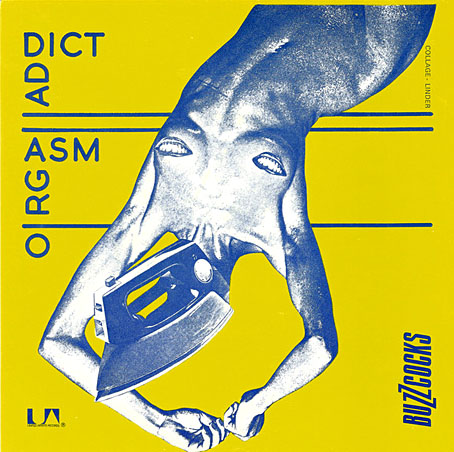
Orgasm Addict (1977). Design by Malcolm Garrett; collage by Linder.

• RIP Pete Shelley, Buzzcock and Homosapien. Shelley is celebrated for being in the vanguard of Britain’s punk movement, of course. (Buzzcocks’ Spiral Scratch was the UK’s first independent single.) But he also loved Can, recorded an album of electronic drones (Sky Yen), and in 1983 successfully blended home-computer graphics with his own brand of superior electronic pop music. Related: Malcolm Garrett’s Buzzcocks band logo at Fonts In Use; B’dum, B’dum: Tony Wilson in 1978 talking to Pete Shelley and Howard Devoto about Buzzcocks and Magazine.

• Winter demands ghost stories so Adam Scovell suggests 10 great winter ghost films. Related: Alexandra Heller-Nicholas presents an A–Z of Women’s Horror Filmmaking.

Carey Dunne on the rise of underground LSD guides for psychotherapy. Related: “Psychedelics change the perception of time,” says Shayla Love.

• Ex-Neu! guitarist Michael Rother receives the box-set treatment early next year when the Groenland label reissues his early solo albums.

Jodorowsky, an exhibition devoted to the writer and director, will be staged at El Museo del Barrio, New York, from February next year.

• “From Georges Méliès to Bill and Ted, movie hells remain seriously in hock to the Judeo-Christian playbook,” says Anne Billson.

The Owl’s Legacy, Chris Marker’s 13-part documentary series on Greek culture, receives its debut DVD release.

Topic II (1989), a short film by Pascal Baes of pixilated dancers in the night streets of Prague.

• Mix of the week: Secret Thirteen Mix 274 by Koray Kantarcioglu.

• We are the first humans to hear the winds of the planet Mars.

• Patrick Magee reads The Third Policeman by Flann O’Brien.

• At Dennis Cooper’s: Jean-Louis Trintignant Day.

• Mongolian biker rock: Wolf Totem by The HU.

The Quietus albums of the year.

Hell (2001) by Techno Animal ft. Dälek | Hell’s Winter (2011) by Earth | Hell A (2017) by The Bug vs. Earth

Weekend links 422

kolosimo.jpg

Wu Ming, a communist writing collective known for its historical fiction, sees Kolosimo as using pseudohistory as a tool to shake people from their belief that capitalist society is natural and transhistorical, opening minds to other possibilities for how humans can live. They regret that popular proponents of his theories today, like Graham Hancock and Erich von Däniken, are unable to recognize the political motivations behind his project: “Nothing of his radicality survives in today’s copycats… Every corner has been blunted, the heresy has become telegenic, but we know that the revolution will not be televised.”

The secret history of Marxist alien hunters by AM Gittlitz

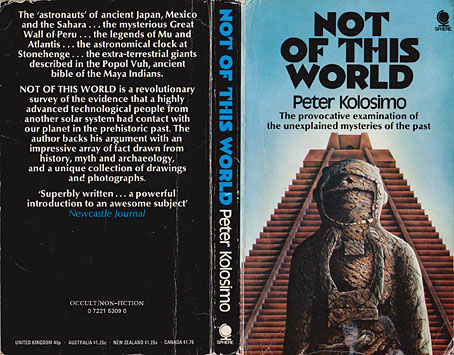
I received the Sphere edition of Peter Kolosimo’s book as a Christmas present in 1974, and being 12 years old at the time took its theories fairly seriously. As a work of pseudohistory it’s as poor as the books of Erich von Däniken but I always liked the title, and it happens to be the place I first encountered the mysterious words “Popol Vuh”, a name that would acquire a very different significance a few years later. Kolosimo also joins Kenneth Grant in taking HP Lovecraft’s work as a thin fictionalisation of supposed fact. For a serious dismantling of Not of This World see this review (the first of three parts) by “skeptical xenoarchaelogist” Jason Colavito.

• The Archons are back: Erik Davis talks with Gnostic scholar Matthew Dillon about religious mourning, the Nag Hammadi library, sex-magick Jesus, the Gnostic Eden, David Icke’s lizards, and the power of the Archons as an allegory of contemporary technological and political power.

Crystal Voyager (1973) is a surfing film by David Elfick that ends with a 23-minute sequence of slow-motion waves set to Echoes by Pink Floyd. Some of the same footage later appeared in the final scenes of Peter Weir’s The Last Wave (1977).

• Sweet artifice: “Dandies in the age of decadence favoured synthetics over nature, nowhere more so than in perfumery’s fabulous counterfeits,” says Catherine Maxwell.

• Now for a lampshade solo: Pascal Wyse on how the Radiophonic Workshop built the future of sound.

• Wilde about Paris: Alex Dean on the sex, drink and liberation of Oscar Wilde’s “lost” years.

Bee in the City: the vanguard of an invading army from Planet Bee.

• Five books that most inspired Alexander McQueen.

Colin Newman‘s favourite albums.

Echoes (1969) by Leon Thomas | Echo Waves (1974) by Ash Ra Tempel | Not Of This World (1988) by Danzig

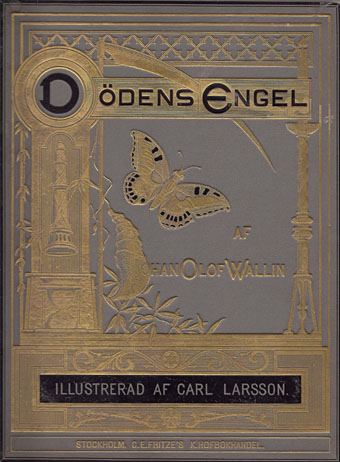
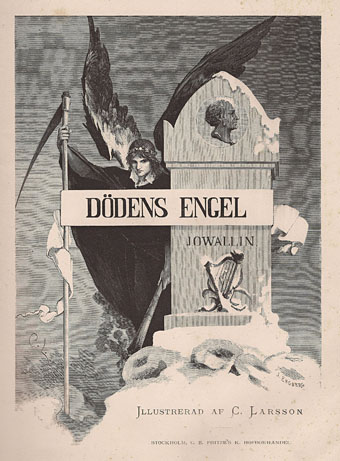
Carl Larsson’s Angel of Death

larsson01.jpg

I’ve known the work of Swedish artist Carl Larsson (1853–1919) for many years via a collection of drawings and paintings of the artist’s family and home life, light works created between bouts of more serious painting. The interiors in the At Home series are especially good, meticulously rendered watercolours which today resemble the kinds of delineations found in Continental comic books. Less familiar is the work Larsson created prior to these drawings.

larsson02.jpg

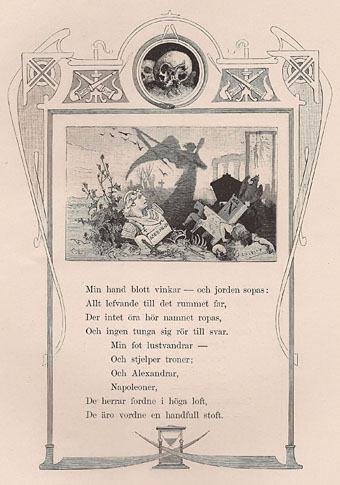
Dödens Engel (The Angel of the Death) is a book-length religious poem by Johan Olof Wallin inspired by the cholera epidemic of the 1830s, the same epidemic that Poe writes about in The Sphinx. Larsson illustrates every page of this edition from 1880, deploying the full range of traditional death symbolism: skulls, hourglasses, scythes, extinguished torches and so on.The sombre imagery makes a striking contrast with the pictures of Larsson’s home life yet the painting for which he hoped to be remembered, Midvinterblot (1915), is equally doom-laden, a huge canvas that depicts a king preparing to sacrifice himself to spare his people from famine.

larsson03.jpg

Continue reading “Carl Larsson’s Angel of Death”

John Aarts’ Lucifer

aarts01.jpg

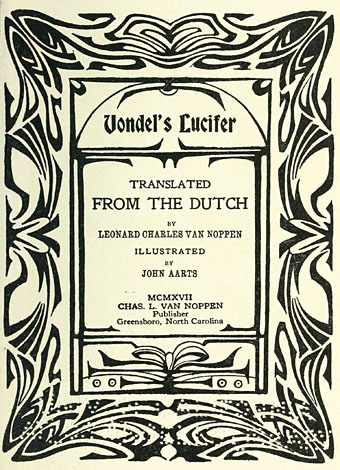
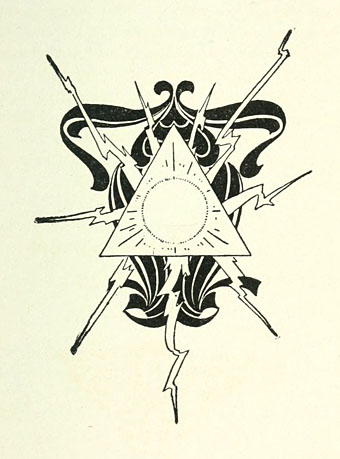
The Lucifer in question being the principal character in a play of the same name by Dutch poet and playwright Joost van den Vondel (1587–1679). I confess that I hadn’t heard of this work before even though it’s well-known in the Netherlands, and may also have influenced Paradise Lost. The version linked here is an American reprint of an earlier edition from 1898 that was the first English translation of the play. The graphics by John Aarts appear to be wood engravings but I’m not certain of that, matters not being helped by the present invisibility of Mr Aarts. In addition to a suite of full-page illustrations there are many embellishments in the nascent Dutch Art Nouveau style. And unlike many books that repeat the same two or three vignettes there’s a lot of variation throughout so it’s worth seeing the book as a whole.

aarts02.jpg

aarts03.jpg

aarts04.jpg

Continue reading “John Aarts’ Lucifer”