Weekend links 426

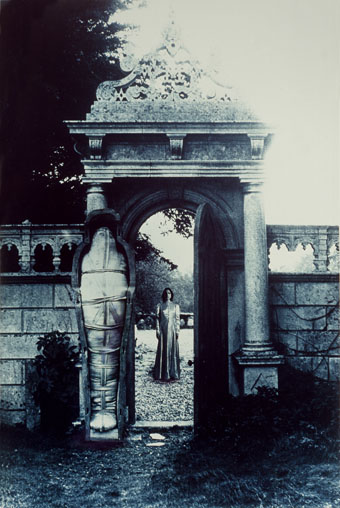
slinger.jpg

Self Preservation (1970–77), a collage by Penny Slinger from the series An Exorcism.

• RIP John Calder, one of the most important British publishers of the last century whose death was acknowledged in the Washington Post (and in the Telegraph, a paper that would have given him no support during his censorship battles) but at the time of writing hasn’t been mentioned at all in the increasingly useless Guardian. The omission in the latter seems even more surprising when Calder himself wrote obituaries for the paper, and they ran an archive piece two weeks ago for the 50th anniversary of Calder & Boyars’ successful court defence of Last Exit to Brooklyn. “Publishing is an industry run by capitalists now.

• Another 50th anniversary: David Bushman asked Alan Moore for his memories of Patrick McGoohan’s superb TV series The Prisoner.

Michael Moorcock in conversation with Hari Kunzru at Shakespeare and Company, Paris.

Stephen O’Malley presents Acid Quarry Paris – In Session with Richard Pinhas (Heldon).

• When a rock is a stone: Louise Steinman on finding Robert Smithson’s Spiral Jetty.

• Victorians, Vaults, and Violet Water: a profusion of links at Greydogtales.

• Mix of the week: FACT mix 666 by Róisín Murphy.

• The amazing adventures of Melinda Gebbie.

Starbirthed

Exorcism (1971) by Lucifer | The Final Calling (Physical Exorcism) (1984) by CTI | Exorcism Of The Hippies (2010) by Mater Suspiria Vision

Weekend links 425

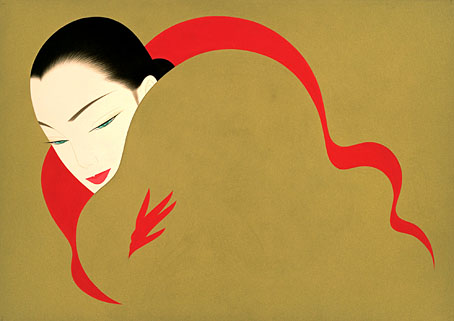
tsuruta.jpg

Art by Ichiro Tsuruta.

• “Writing is so much about subverting dogmatisms of all kinds, above all the ones that insist you cannot go there! You must not say that! Writers need to go anywhere, to take anything on. And the only rule is to do it well.” Rikki Ducornet in a feature at Dennis Cooper’s which has been linked here before but was previously on DC’s old (now deleted) blog.

• “This book-cover trend is turning bookstores into flower shops,” says Kenzie Bryant. “How publishing’s floral-print trend came to rule the world’s bookshelves.” (Where “the world” means the USA, as usual…)

• The third edition of Wyrd Daze—”The multimedia zine of speculative fiction + extra-ordinary music, art & writing”—is out now.

For this listener, Nardis has become a full-on musical obsession. I have more than ninety official and bootleg recordings of the tune stored in the cloud, ranked in a fluid and continually updated order of preference, so they follow me wherever I go. In my travels as a writer, I use Nardis as a litmus test of musical competence: if I see a jazz band in a bar or a busker taking requests, I inevitably suggest it. (If they’ve never heard of it, I understand that they must be new at this game.) By now I’ve heard so many different interpretations, in such a far-flung variety of settings, that a Platonic ideal of the melody resides in my mind untethered to any actual performance. It’s as if Nardis were always going on somewhere, with players dropping in and out of a musical conversation beyond space and time.

Steve Silberman on the obsession that he and pianist Bill Evans share with Nardis, a Miles Davis composition that Davis himself never recorded

• Mixes of the week: Secret Thirteen Mix 263 by Jung An Tagen, and XLR8R Podcast 554 by Tutu.

• “René Magritte still has the power to surprise,” says Sophie Haigney.

Ishmael Reed at the Brockport Writers Forum, 1st May, 1974.

• The On-U Sound label is now at Bandcamp.

Brian Eno talks music, global politics, etc.

Faded Flowers (1985) by Shriekback | Other Flowers (2003) by Harold Budd | White Flowers (2014) by Lutine

Weekend links 424

calder.jpg

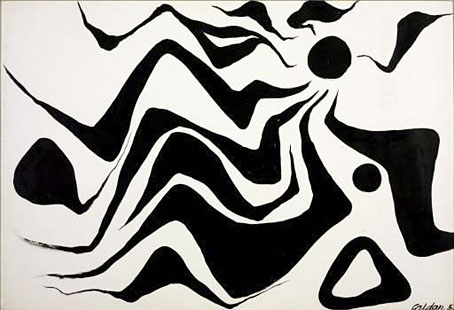
Black Sun (1953) by Alexander Calder.

• “But Berlin Alexanderplatz transcends its genre elements, largely because of Döblin’s deep lack of hope about what can be expected of human beings.” Adam Kirsch on Alfred Döblin’s Berlin.

• “I occasionally dream of finding books that do not seem to exist (yet), and sometimes remember their titles,” says Mark Valentine.

• “I don’t read fiction.” He does, however, own 11,000 books. Alan Garner on writing a memoir of his wartime childhood.

What is it that I really like? I mean that’s the question that I think every musician and artists and everybody actually, is asking themselves; what they really like. And that means the emphasis is on REALLY like, meaning how do you push aside what you’ve been told, what you’ve been taught, what your friends like, and how much you like something because your friends like it or because it’s socially popular at the moment, or your girlfriend likes it or any of those ideas.

Jon Hassell (again) in an interview at Ableton

• How Alexander Calder sparked a modern fascination with mobiles (sculptures, that is, not telephones).

• Deep in Italy, one man’s Surrealist mini-city sleeps: Francky Knapp on Tomaso Buzzi’s La Scarzuola.

• “Even before electricity, robots freaked people out”: Lisa Hix on the history of clockwork automata.

Nicolas Winding Refn’s website devoted to neglected/abandoned films was launched this week.

• Mixes of the week: FACT Mix 664 by Lucy, and XLR8R Podcast 552 by Thomas Fehlmann.

Jean-Paul Goude‘s best photograph: an androgynous Grace Jones.

Marquis de Sade: 112 pages, 100 erotic illustrations.

The world’s most beautiful libraries

Sade Masoch (1968) by Bobby Callender | I’ve Seen That Face Before (Libertango) (1981) by Grace Jones | Black Sun (2011) by Demdike Stare

Weekend links 423

howe.jpg

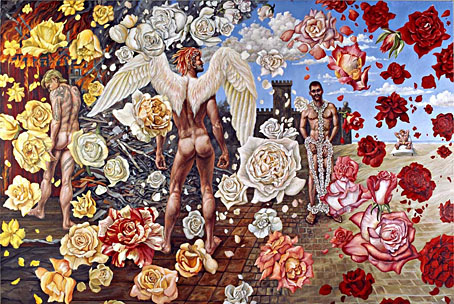
The Miracle (Genet’s Dream) (2001) by Delmas Howe.

• “Zachary Lipton, an assistant professor at the machine learning department at Carnegie Mellon University, watched with frustration as this story transformed from ‘interesting-ish research’ to ‘sensationalized crap’.” Oscar Schwartz on how the media gets AI alarmingly wrong.

• The Aesthetics of Science Fiction: what does SF look like after cyberpunk? Very Brutalist if you ask Rick Liebling, although the first example shown in his piece—the Brunel University Lecture Centre—appears briefly as future architecture in A Clockwork Orange.

• At Expanding Mind: Erik Davis talks with philosopher and religious studies professor Dustin Atlas about ancient skepticism, Madhyamaka Buddhism, the taste of honey, Montaigne, Robert Anton Wilson, and the path of doubt.

• At Muddy Colors: Part 1 of their choices for best fantasy book covers of the year so far, a list which includes my cover for Moonshine by Jasmine Gower. Thanks!

• Soundtracking with Edith Bowman, episode 84: director Todd Haynes on the music of Wonderstruck, I’m Not There, Carol and Far From Heaven.

• Mixes of the week: FACT mix 663 by Space Afrika, Secret Thirteen Mix 262 by Mieko Suzuki, and Black Minimalism, a playlist by David Toop.

• Two minutes, eight barrels: drone and GoPro footage of surfer Koa Smith riding the waves of the Namibia shoreline.

• David Lynch’s Sacred Clay: Shehryar Fazli reviews Room to Dream by David Lynch and Kristine McKenna.

Charlotte Higgins on myths, monsters and the maze: how writers fell in love with the labyrinth.

• Monstrous Geometries in the Fiction of HP Lovecraft by Moritz Ingwersen.

Listen to the mournful wails of planets and moons.

• A Peel Session by Laika

Surf Ride (1956) by Art Pepper | Surf (1976) by Tim Blake | Surfside Sex (1982) by Patrick Cowley

The art of Antoon van Welie, 1866–1956

vanwelie1.jpg

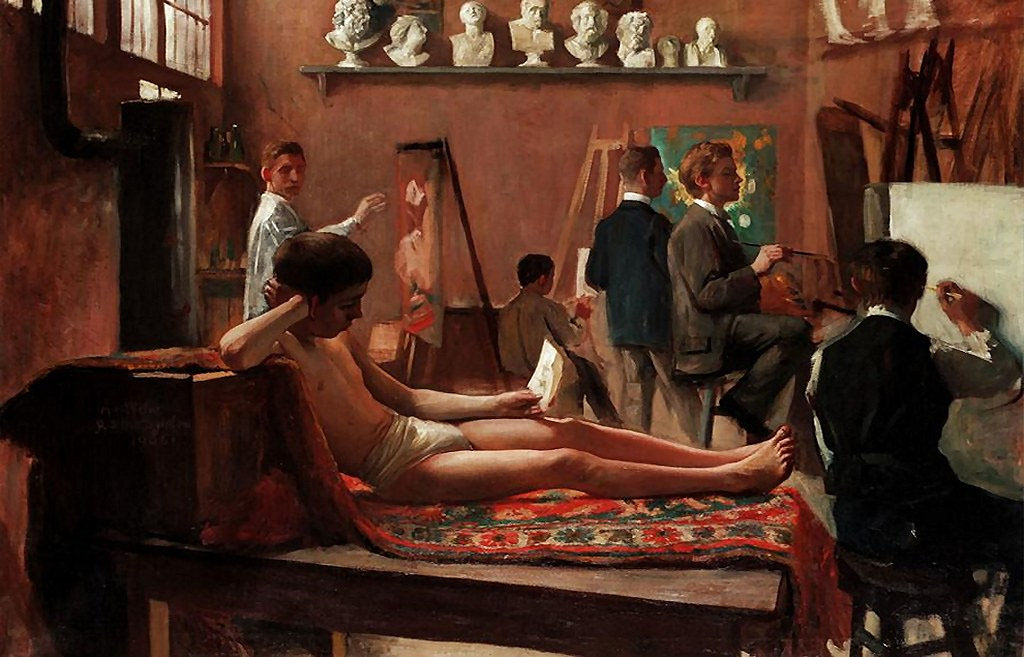
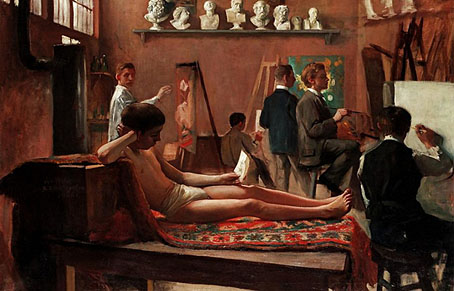
The Artists’ Studio (1906).

This week’s post is another by Sander Bink about a neglected artist of the Dutch fin de siècle. There’s no need for me to add a great deal to Sander’s appraisal below other than to point out the evident debt that Antoon Van Welie seems to owe to the Pre-Raphaelites for whom Ophelia was a popular subject. British artists of the 19th century have often been criticised for adding little to the evolution of Continental art but the influence of the Pre-Raphaelites and the Arts and Crafts movement pervades European Symbolism. My thanks again to Sander for the post.

* * *

Antoon van Welie (Dutch Wikipedia only) was a Dutch painter known mainly for his portraits of the rich and famous. Around 1900 his work was praised by writers and critics such as Camille Mauclair, Jean Lorrain and Anatole France. He had studios in The Hague, London, Paris and The Vatican. There’s not much information about him in English, and for a long time there wasn’t a great deal in Dutch either, since during his lifetime he was already more or less forgotten. His being openly gay could have been one of the reasons. Male beauty is one of his subjects, as illustrated by The Artists’ Studio. His preference for depicting Catholic priests and flamboyant society ladies might also have been a little too extravagant for Dutch artistic standards of the period. The influence of Symbolism and mysticism on his work sets him a little apart from the crowd as well. All this does make him somewhat of a “decadent” or fin de siècle artist. What surely did not help his posthumous fame was a portrait of Mussolini he painted in 1921, and apparently he later also made one of Hitler. But in 2003 he was rescued from art-historical oblivion by the good people of the Louis Couperus Museum in The Hague. An exhibition there was followed in 2007 by a larger one at Museum Het Valkhoff in Nijmegen: The Last Decadent Painter. The book published for the occasion gives an extensive overview of Van Welie’s life and oeuvre but is unfortunately only available in Dutch.

The portraits which made him famous in his day are, in my opinion, technically not that great and sometimes tend toward kitsch. More subtle and beautiful are his early Symbolist works which, like those by Simon Moulijn, are strongly influenced by Maeterlinck’s neo-mystical writings.
vanwelie2.jpg

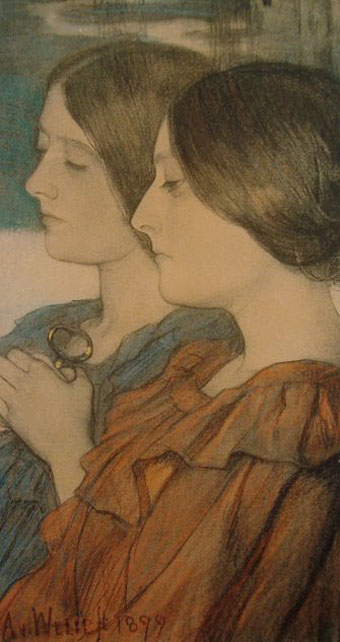
Aglavaine en Sélysette (1899).

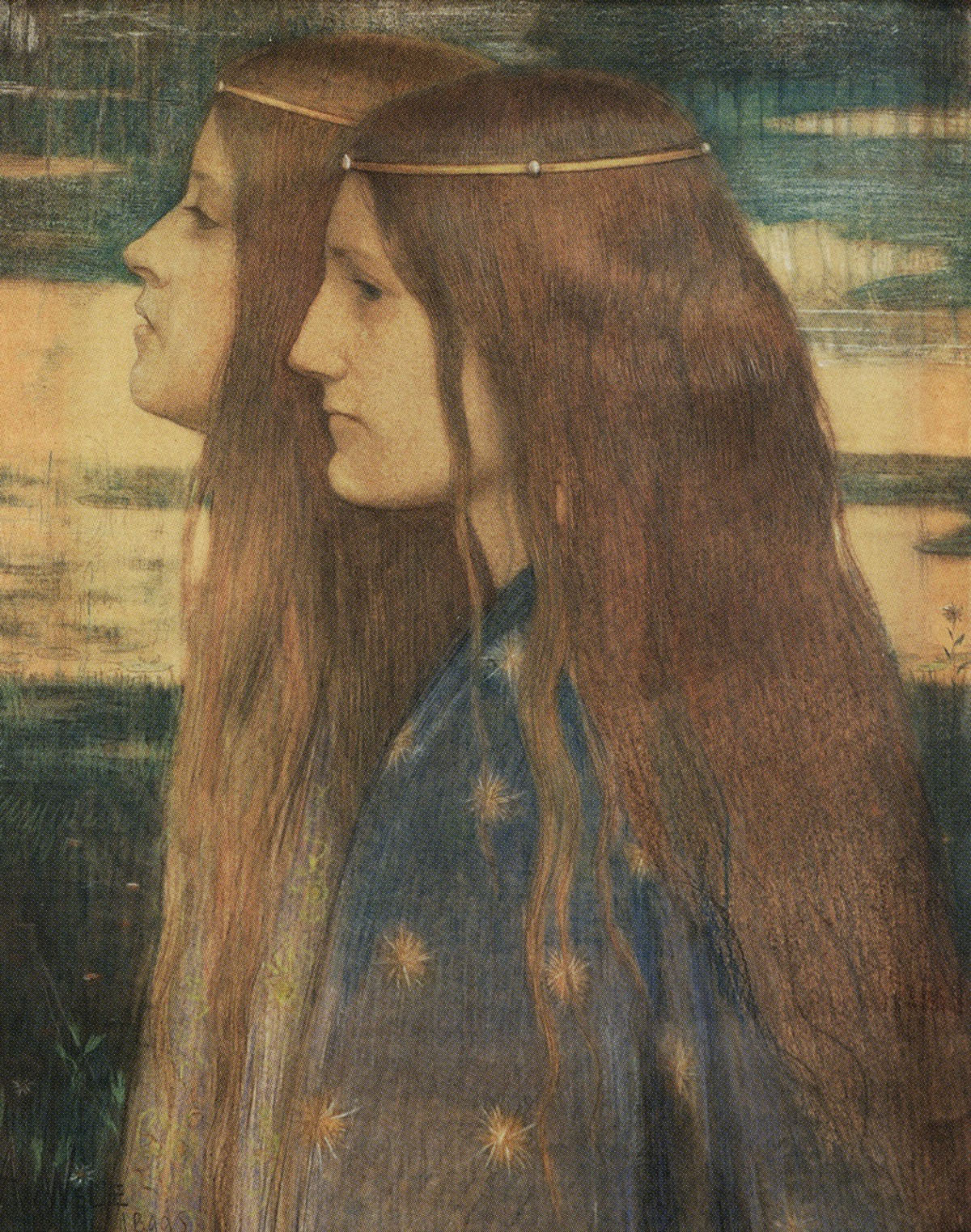
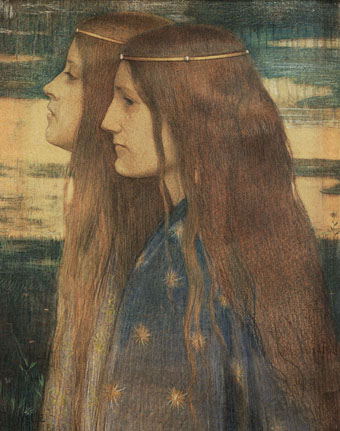
Some quite refined examples are the lithograph Aglavaine en Sélysette and the pastel Les Princesses de Légende, both directly inspired by Maeterlinck’s plays.
vanwelie3.jpg

Les Princesses de Légende (1899).

vanwelie4.jpg

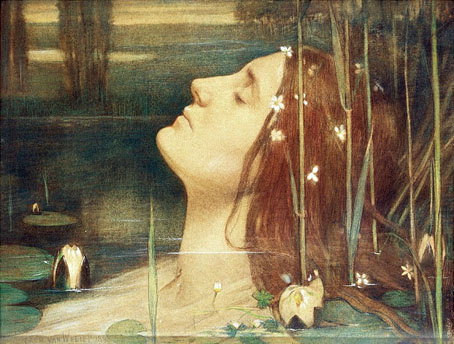
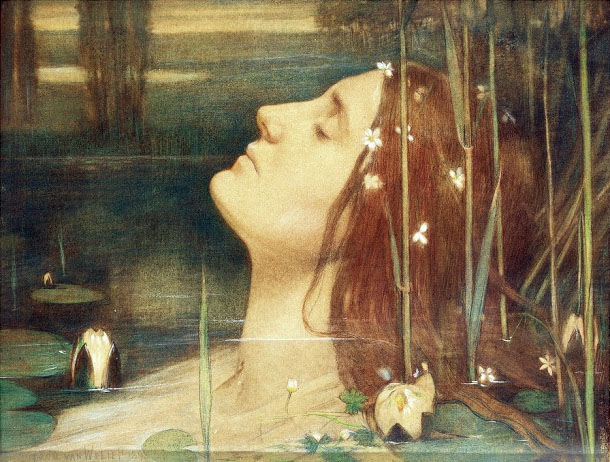
Ophelia.

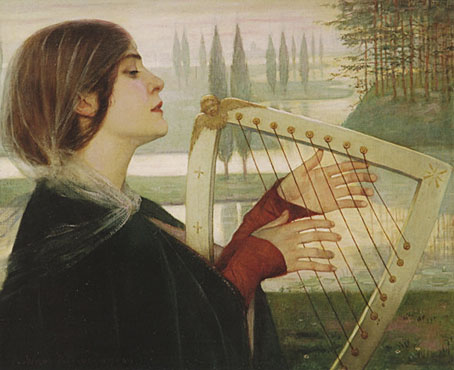
Literature was an important influence, as it was for many other Symbolist painters, and Van Welie duly produced the pastel Ophelia in 1898–’99. The same goes for musical themes, an example of which is the serene pastel Holy Cecilia with Lyre.
vanwelie5.jpg

Holy Cecilia with Lyre (1899).

vanwelie6.jpg

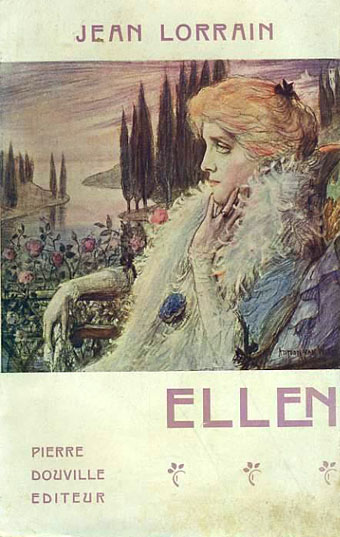
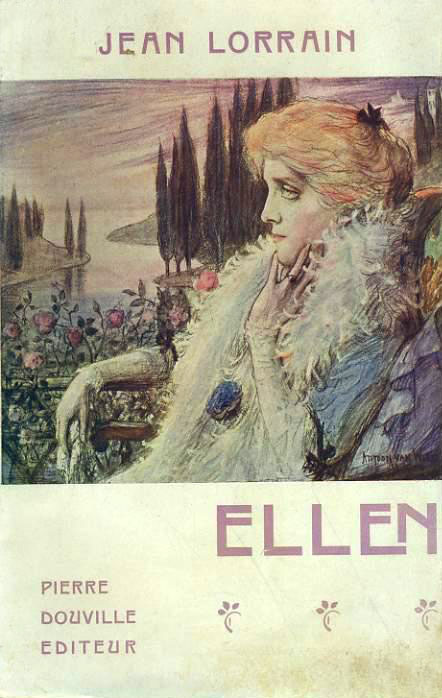
He also designed book covers like the one for Jean Lorrain’s novel Ellen from 1906.
vanwelie7.jpg

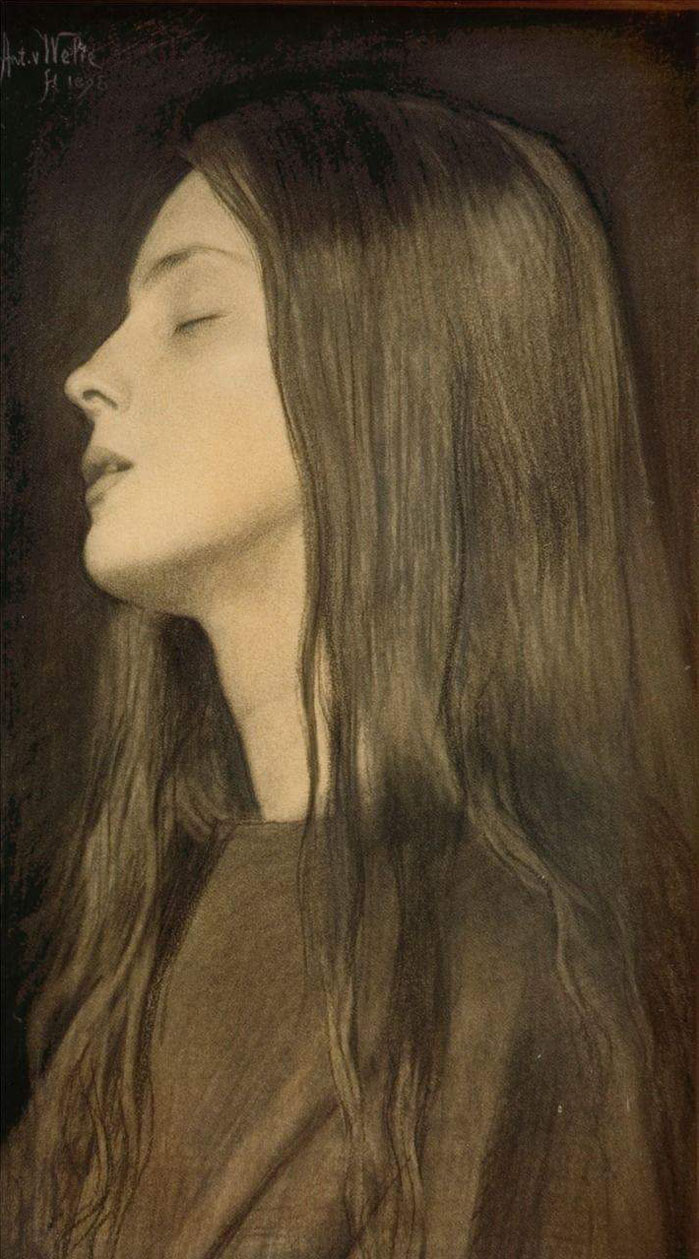
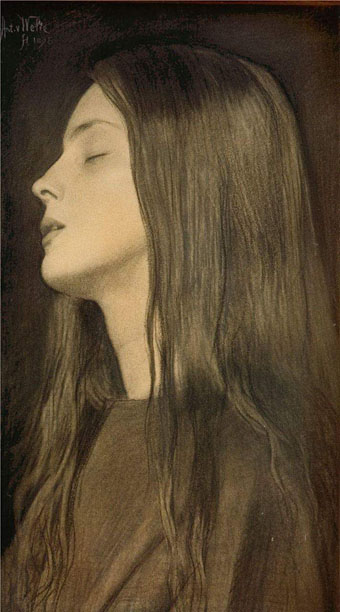
La Douleur (1895).

But his most attractive work and as far as I am concerned one of the finest works of 1890s Dutch art is the chalk drawing La Douleur. Although the title emphasizes the young lady’s suffering, she also seems to be in a (sexual) ecstasy. A paradoxical beauty like Baudelaire’s femmes damnées: “de terribles plaisirs et d’affreuses douceurs”.

Sander Bink

Elsewhere on { feuilleton }
The gay artists archive

Previously on { feuilleton }
The art of Simon Moulijn, 1866–1948
René Gockinga revisited
Gockinga’s Bacchanal and an unknown portrait of Fritz Klein
More from the Decadent Dutch