Weekend links 847

magritte.jpg

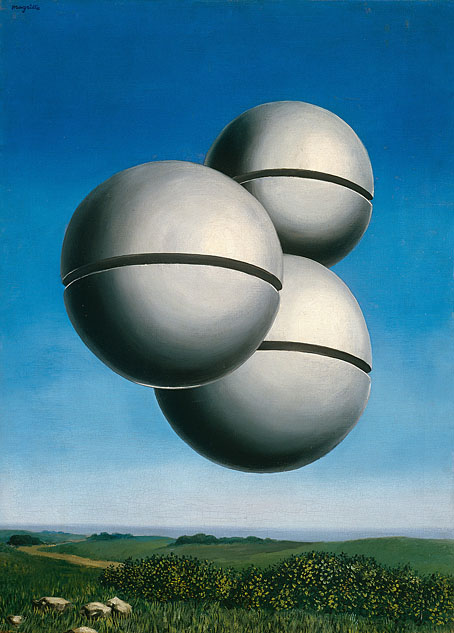
La voix des airs (1931) by René Magritte.

• “Gangsters is to the 1970s what The Prisoner was to the 1960s—a playful, knowing and mildly crazed production but today it bears an important warning from the past to us.” John Quin on the extraordinary vitality of Philip Martin’s Play For Today and the BBC drama serial spun-off from it.

• New music: Juxtapositions by Boddy | Scanner; Embodied Shadow Of Thy Secret Mind by Philippe Blache; Light on Water by Modern Apartments.

• At Public Domain Review: Metamorphosis: Transformations in the Early Modern Flap Book (early 19th century).

Maeterlinck would write of [The Great God Pan], “it is, I believe, the attempt had been made to combine the traditional, or diabolical Fantasy with the new scientific kind, and that such a mixture has produced the most disturbing work I have ever come across”. Maeterlinck’s description of Machen serves as a tidy introduction to the crux of Ray’s writings too. A writer equally perplexed, intrigued, and possessed by the “the terrifying, hypergeometric, fourth dimension”. Ray’s works span the thin fabric of reality, piercing through into other eternal worlds and abducted by its eternal horror. Ray’s worlds are numerous realities battling one another, overlapping, mimicking, and distorting; it is an evocation of time and space as a battle-field of alternativities, governed by strange supernatural forces, notably angels or the occult.

The London of the Imagination, an examination of the fictional metropolis as it manifests in the stories of Belgian writer, Jean Ray

• Mixes of the week: A Slomo mix for The Invisible College, and DreamScenes – September 2026 at Ambientblog.

• At Colossal: “Spanning 200+ works, a new book celebrates the world of fungi“.

• The Electric Music Machine: Five Days at the BBC Radiophonic Workshop (1988).

• Steven Heller’s font of the month is Ege Basalt.

• Matt Cargill’s favourite albums.

• RIP Jeremy Thomas.

• Metamorphosis (1970) by Ananda Shankar | Metamorphosis (1995) by Pet Shop Boys | Metamorphosis (2012) by Demdike Stare
The art of Antoon van Welie, 1866–1956

vanwelie1.jpg

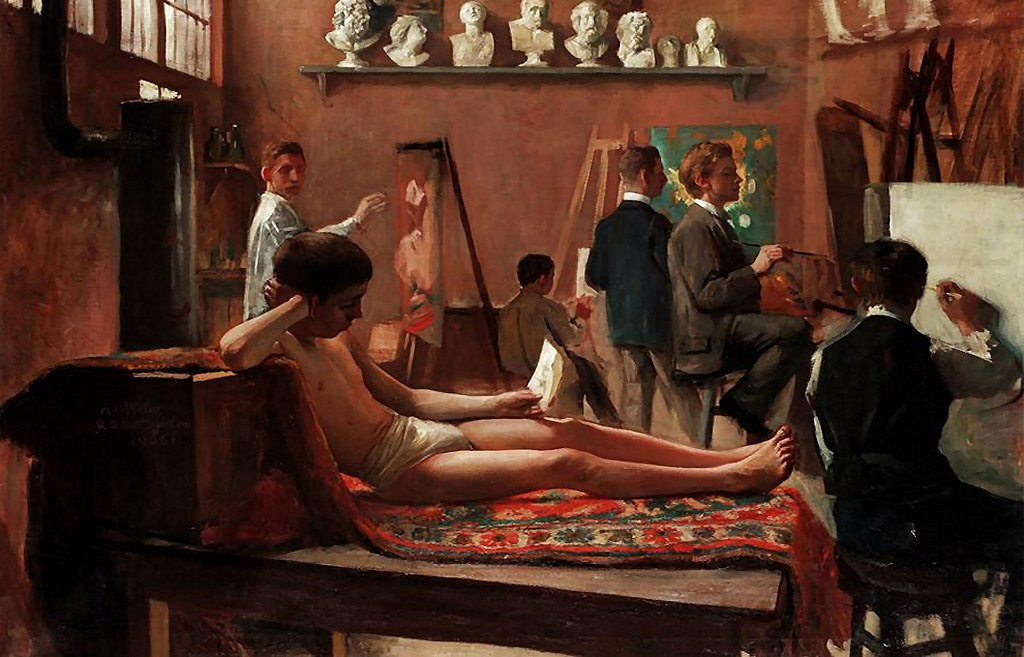
The Artists’ Studio (1906).

This week’s post is another by Sander Bink about a neglected artist of the Dutch fin de siècle. There’s no need for me to add a great deal to Sander’s appraisal below other than to point out the evident debt that Antoon Van Welie seems to owe to the Pre-Raphaelites for whom Ophelia was a popular subject. British artists of the 19th century have often been criticised for adding little to the evolution of Continental art but the influence of the Pre-Raphaelites and the Arts and Crafts movement pervades European Symbolism. My thanks again to Sander for the post.

* * *

Antoon van Welie (Dutch Wikipedia only) was a Dutch painter known mainly for his portraits of the rich and famous. Around 1900 his work was praised by writers and critics such as Camille Mauclair, Jean Lorrain and Anatole France. He had studios in The Hague, London, Paris and The Vatican. There’s not much information about him in English, and for a long time there wasn’t a great deal in Dutch either, since during his lifetime he was already more or less forgotten. His being openly gay could have been one of the reasons. Male beauty is one of his subjects, as illustrated by The Artists’ Studio. His preference for depicting Catholic priests and flamboyant society ladies might also have been a little too extravagant for Dutch artistic standards of the period. The influence of Symbolism and mysticism on his work sets him a little apart from the crowd as well. All this does make him somewhat of a “decadent” or fin de siècle artist. What surely did not help his posthumous fame was a portrait of Mussolini he painted in 1921, and apparently he later also made one of Hitler. But in 2003 he was rescued from art-historical oblivion by the good people of the Louis Couperus Museum in The Hague. An exhibition there was followed in 2007 by a larger one at Museum Het Valkhoff in Nijmegen: The Last Decadent Painter. The book published for the occasion gives an extensive overview of Van Welie’s life and oeuvre but is unfortunately only available in Dutch.

The portraits which made him famous in his day are, in my opinion, technically not that great and sometimes tend toward kitsch. More subtle and beautiful are his early Symbolist works which, like those by Simon Moulijn, are strongly influenced by Maeterlinck’s neo-mystical writings.

vanwelie2.jpg

Aglavaine en Sélysette (1899).

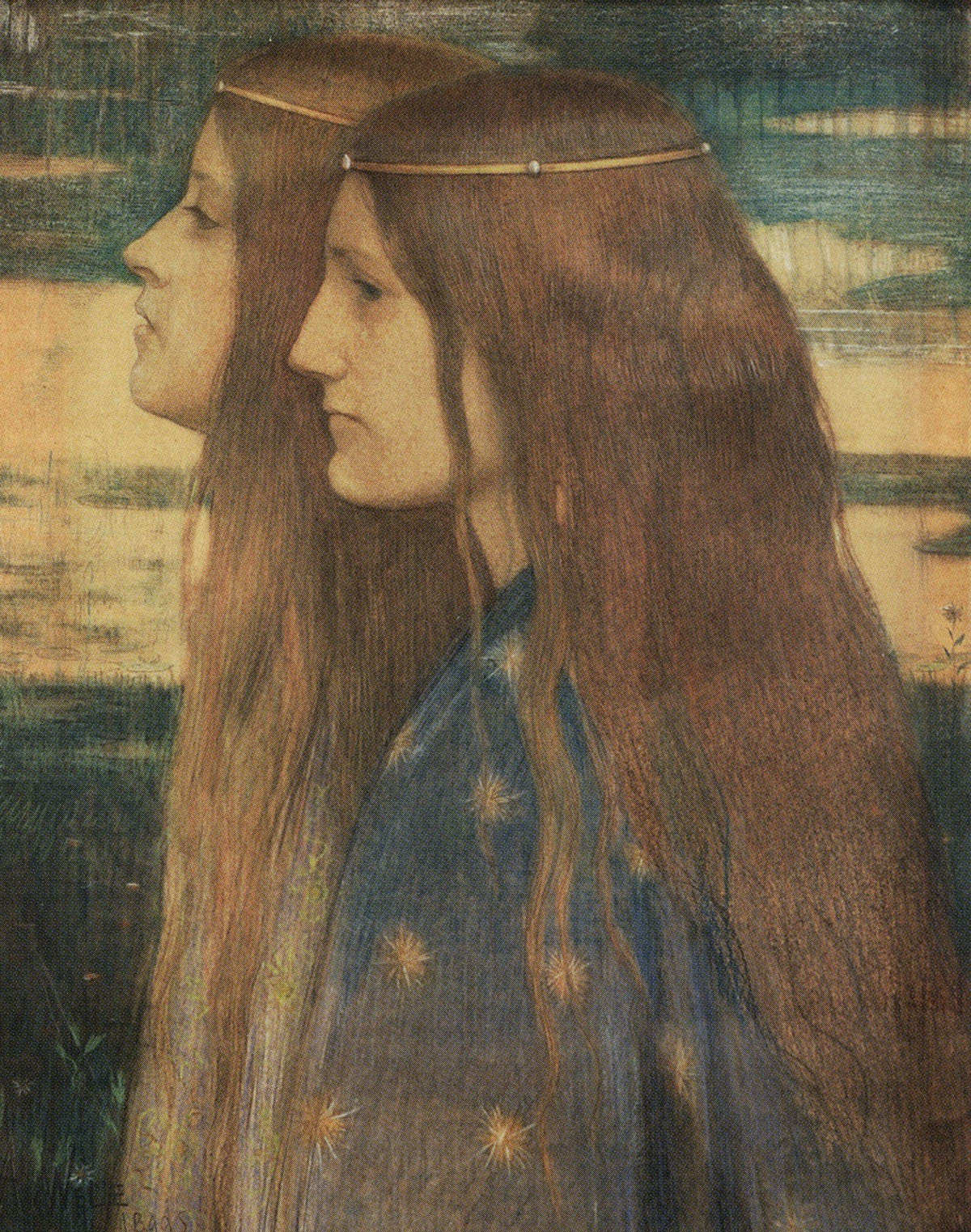
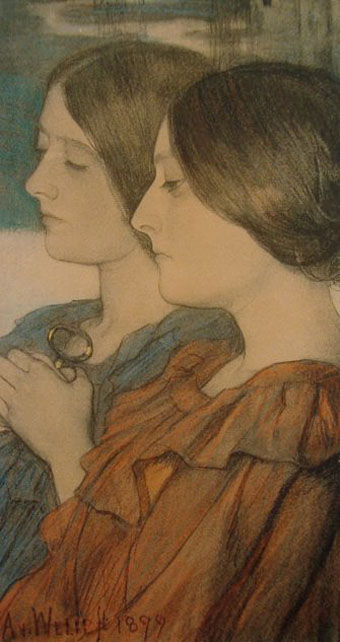
Some quite refined examples are the lithograph Aglavaine en Sélysette and the pastel Les Princesses de Légende, both directly inspired by Maeterlinck’s plays.

vanwelie3.jpg

Les Princesses de Légende (1899).

vanwelie4.jpg

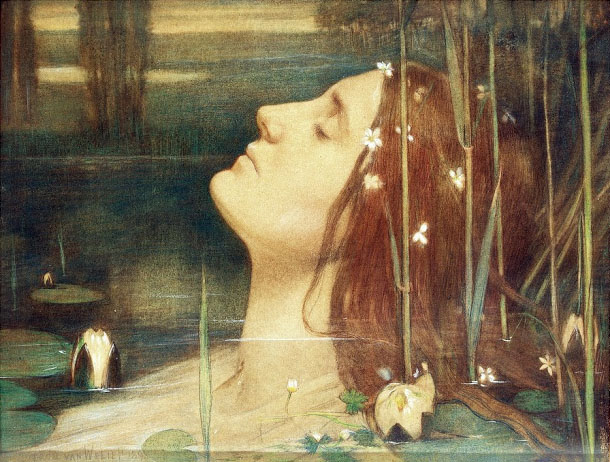
Ophelia.

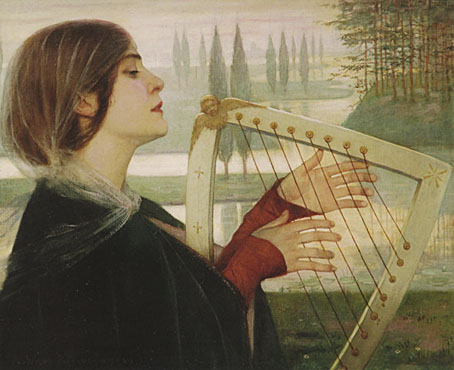
Literature was an important influence, as it was for many other Symbolist painters, and Van Welie duly produced the pastel Ophelia in 1898–’99. The same goes for musical themes, an example of which is the serene pastel Holy Cecilia with Lyre.

vanwelie5.jpg

Holy Cecilia with Lyre (1899).

vanwelie6.jpg

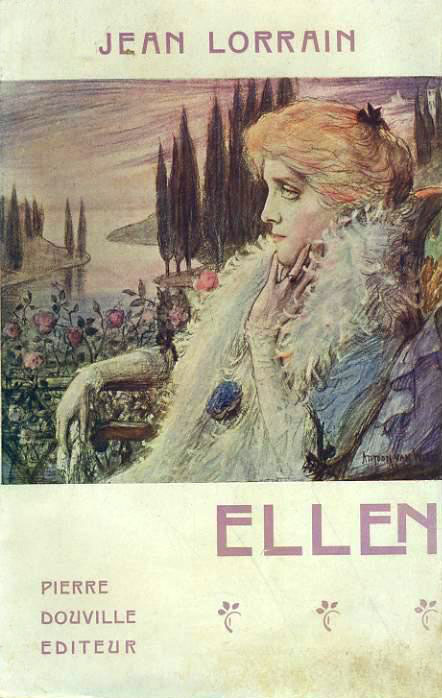
He also designed book covers like the one for Jean Lorrain’s novel Ellen from 1906.

vanwelie7.jpg

La Douleur (1895).

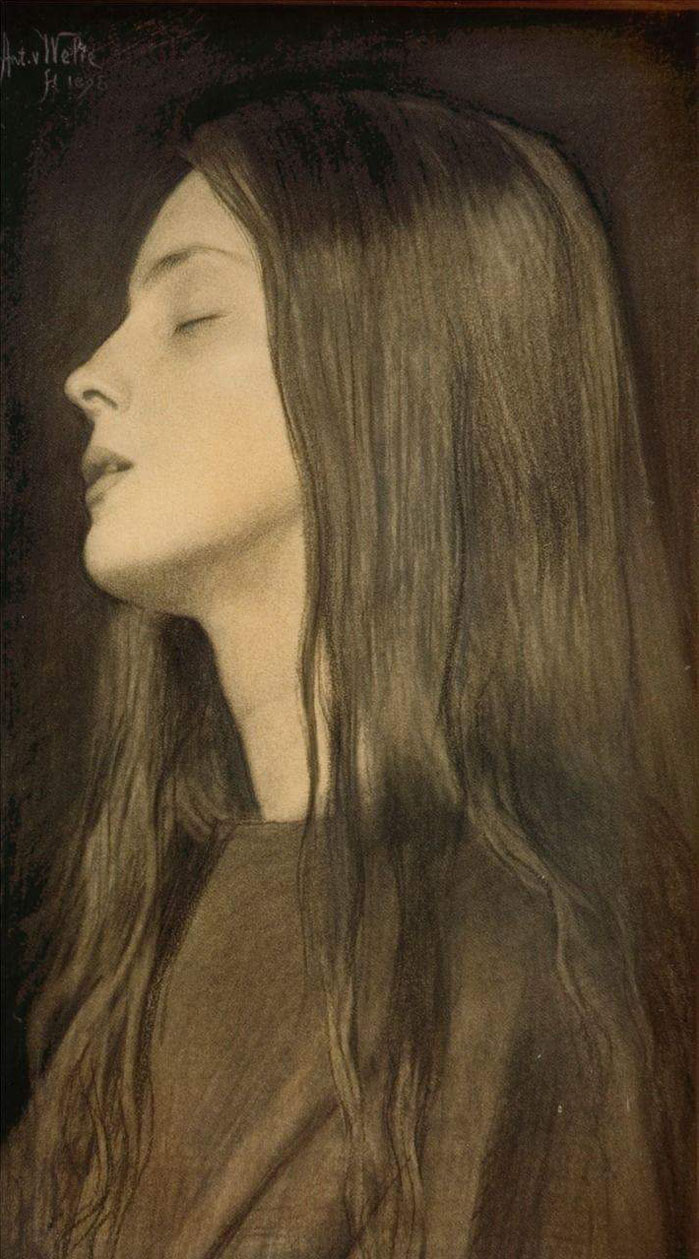
But his most attractive work and as far as I am concerned one of the finest works of 1890s Dutch art is the chalk drawing La Douleur. Although the title emphasizes the young lady’s suffering, she also seems to be in a (sexual) ecstasy. A paradoxical beauty like Baudelaire’s femmes damnées: “de terribles plaisirs et d’affreuses douceurs”.

Sander Bink

Elsewhere on { feuilleton }
• The gay artists archive

Previously on { feuilleton }
• The art of Simon Moulijn, 1866–1948
• René Gockinga revisited
• Gockinga’s Bacchanal and an unknown portrait of Fritz Klein
• More from the Decadent Dutch