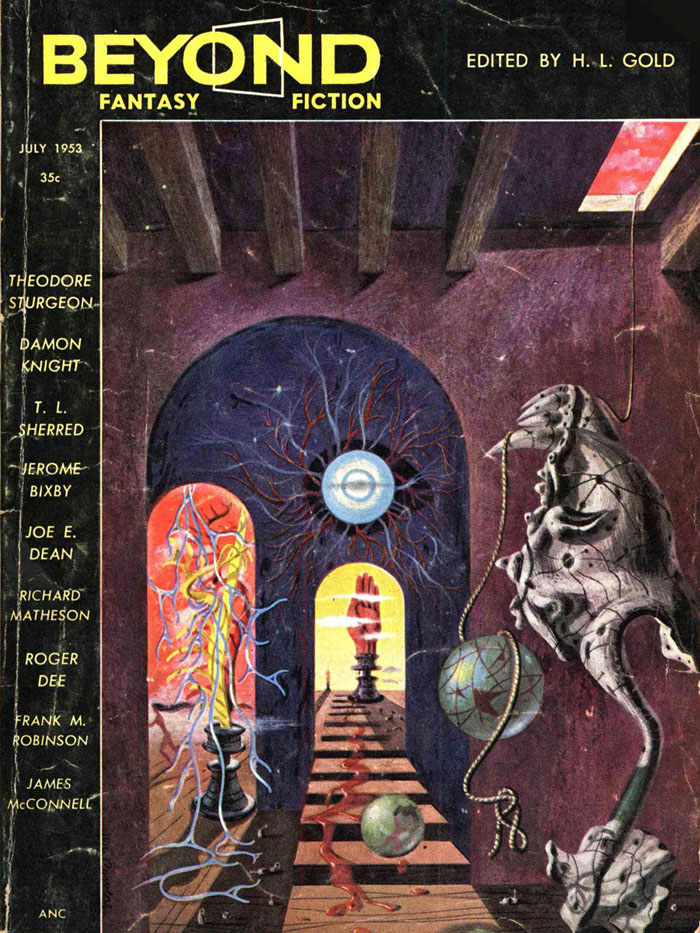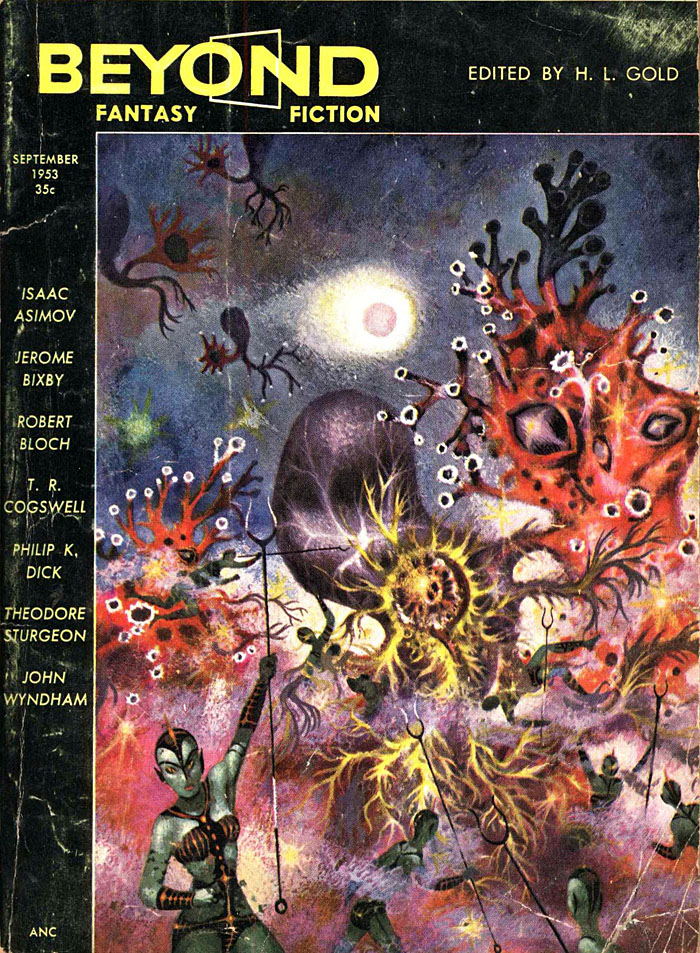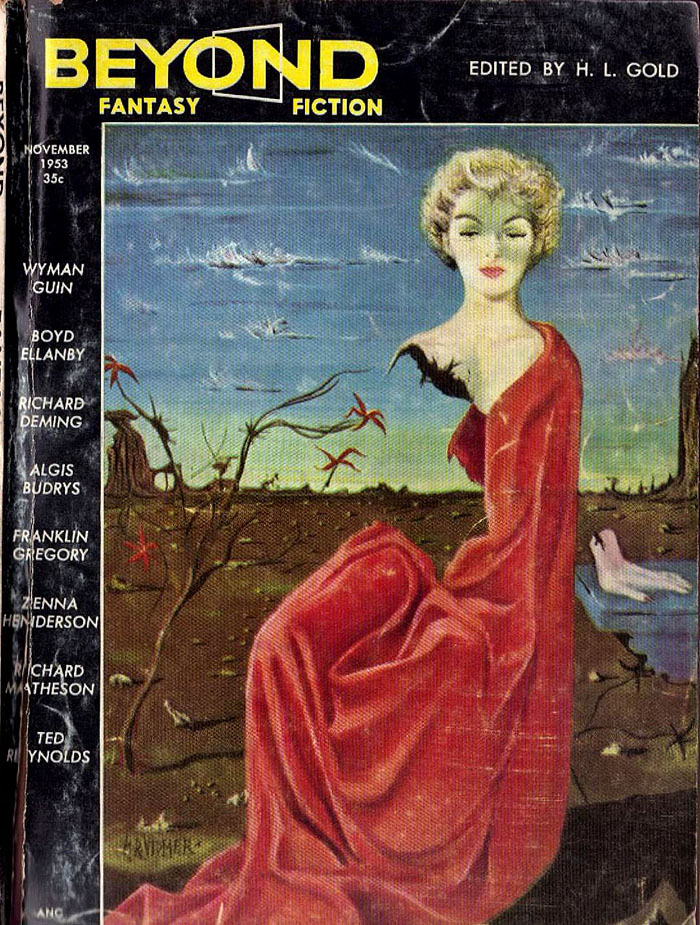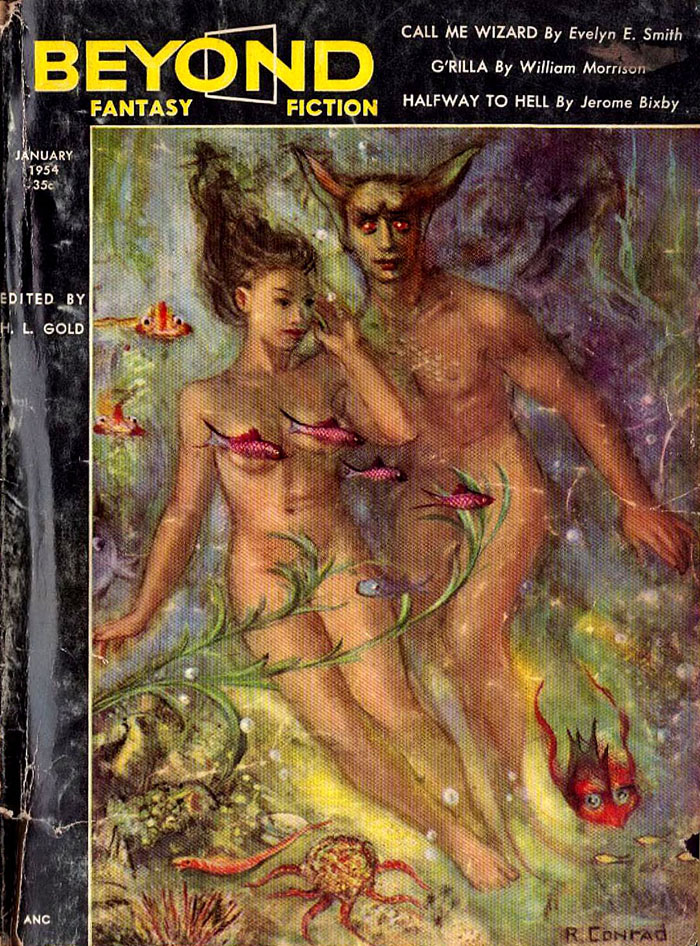
Covers for Beyond Fantasy Fiction

Beyond01.jpg

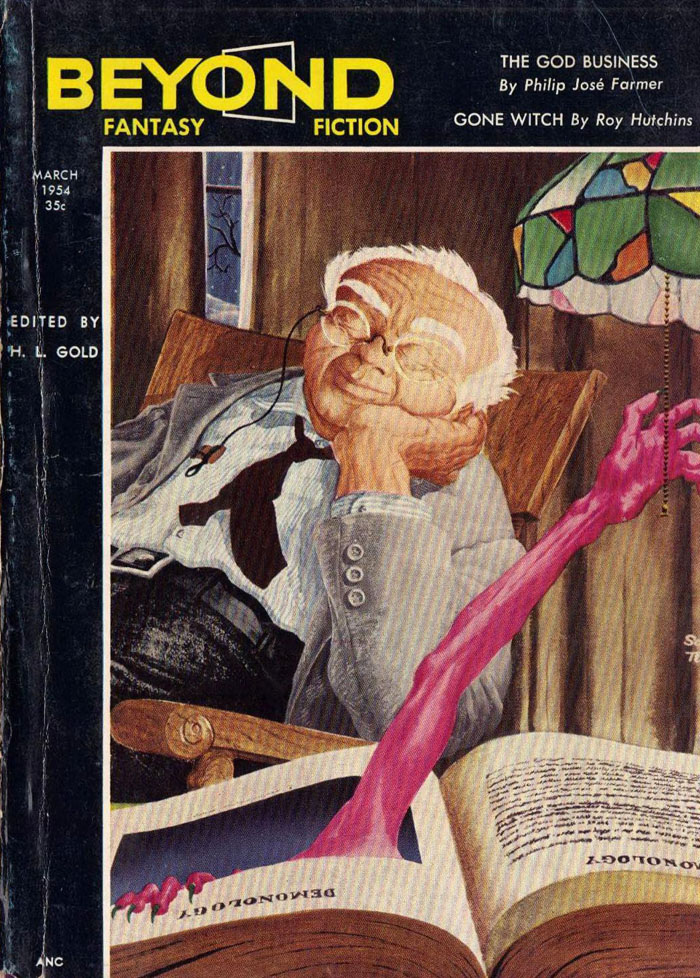
Cover by Richard Powers.

Beyond Fantasy Fiction was an American magazine edited by HL Gold that ran for only 10 issues, from July 1953 to January 1955. The title was intended to be a fantasy-oriented companion to Gold’s Galaxy Science Fiction, and with a similar design to its cover layouts. Beyond differed from Galaxy, however, by leaving its cover art consistently free of text, and it differed from other genre magazines by offering a range of art styles that were a little more adventurous than its contemporaries. Richard Powers could get away with semi-abstract weirdness on his book covers but the magazines forced him to be much more conventional. A few months before the first issue of Beyond, a very uncharacteristic painting by Powers appeared on the cover of Fantastic showing a naked woman being pawed by giant insects.

Beyond02.jpg

Cover by Richard Powers.

A couple of the other Beyond covers approach the diluted Surrealism that was still percolating through the US media in the 1950s, while the cover for July 1954 wouldn’t be out of place in a fashion magazine, at least until you notice all the witchy details. The cover by Arthur Krusz for May 1954 features the same combination of disjunctive perspectives you find in Hollywood dream sequences and Paul Julian’s designs for the 1953 animated version of The Tell-Tale Heart. If the magazine had lasted longer we might have seen more like this.

Beyond03.jpg

Cover by René Vidmer.

Beyond04.jpg

Cover by Rupert Conrad.

Beyond05.jpg

Cover by Scott Templar.

Continue reading “Covers for Beyond Fantasy Fiction”

Weekend links 591

entangled.jpg

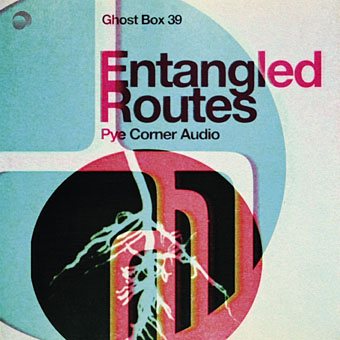
Ghost Box 39. Design, as always, is by Julian House.

Entangled Routes by Pye Corner Audio will be the next album on the Ghost Box label, due for release on 26th November. This will be Pye Corner Audio’s fourth album for Ghost Box, and one which forms the final part of a trilogy of imaginary soundtracks for science-fiction scenarios, “the latest installment of which plays with the idea of mycorrhizal networks and attempts by humans to listen in and communicate”.

• “…for every ten projects I start, nine will probably fall by the way side—they just don’t get made. Nothing happens, you can’t find the tapes, you can’t find the rights holders, the tapes were destroyed, no one’s interested.” Jonny Trunk interviewed at Aquarium Drunkard.

• At Unquiet Things: S. Elizabeth is celebrating the first anniversary of The Art Of The Occult (previously) by giving away a signed copy of her book to one of the commenters on this post.

• “Sand is not only temporary, it is also the most temporised form of matter.” Steven Connor on the dust that measures all our time.

• Mixes of the week: Autumn Hymnal: A Mixtape by Aquarium Drunkard, and In Estonia with Bart de Paepe by David Colohan.

• “Touched by the hand of Ithell: my fascination with a forgotten surrealist.” Stewart Lee on Ithell Colquhoun.

• Skin trade: a playlist of percussion at the outer limits; Valentina Magaletti surveys alternatives to the conventional kit.

• At Wormwoodiana: Mark Valentine reviews The Devil At Saxon Wall by Gladys Mitchell.

• “The Show: Alan Moore brings vaudevillian dazzle to Northampton noir,” says Phil Hoad.

• At Bandcamp: A Guide to the Eclectic Funk Music of Bernie Worrell by John Morrison.

• At Dennis Cooper’s: Spotlight on…Octave Mirbeau The Torture Garden (1899).

• At Spine: Vera Drmanovski on redesigning the novels of Hermann Hesse.

• New music: Music For Psychedelic Therapy by Jon Hopkins.

South To The Dust (1990) by Ginger Baker | Into Dust (1993) by Mazzy Star | Photon Dust (2020) by Pye Corner Audio

Weekend links 589

mackintosh.jpg

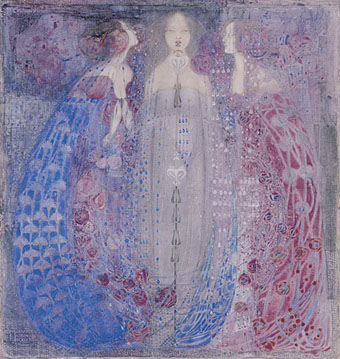
The Three Perfumes (1912) by Margaret Macdonald Mackintosh.

• “…we have empowered this monopoly to strike fear into the hearts of authors. And that may be unprecedented in history. Through our own complicity as consumers, their market share only grows.” Dave Eggers talking to Rachel Krantz about the dominance of Amazon, and his new novel, The Every.

• “People will readily flock to yoga and Pilates classes, but how many show up for soundscape therapy or take a sound-walk?” Bernie Krause on the healing powers of quietude, the Ba’Aka tribe, and Japanese forest bathing.

• “Difficulty is my drug of choice, I guess.” Dennis Cooper (again) talking to Troy James Weaver about his new novel, I Wished.

• At Wormwoodiana: Mark Valentine reviews Shadows of London by Jonathan Wood.

• Robert Fripp’s drive to 1981: Joe Banks on Discipline and the return of King Crimson.

• End times and rapture: Ken Hollings remembers Richard H. Kirk.

• Daniel Spicer on The Strange (Parallel) World of Miles Davis.

• Mix of the week: XLR8R Podcast 715 by Uffe.

• Steven Heller’s font of the month is Oposta.

Perfumed Metal (1981) by Chrome | Ode To Perfume (1982) by Holger Czukay | Perfume (2006) by Sparks

The art of Alexander Cañedo, 1902–1978

canedo15.jpg

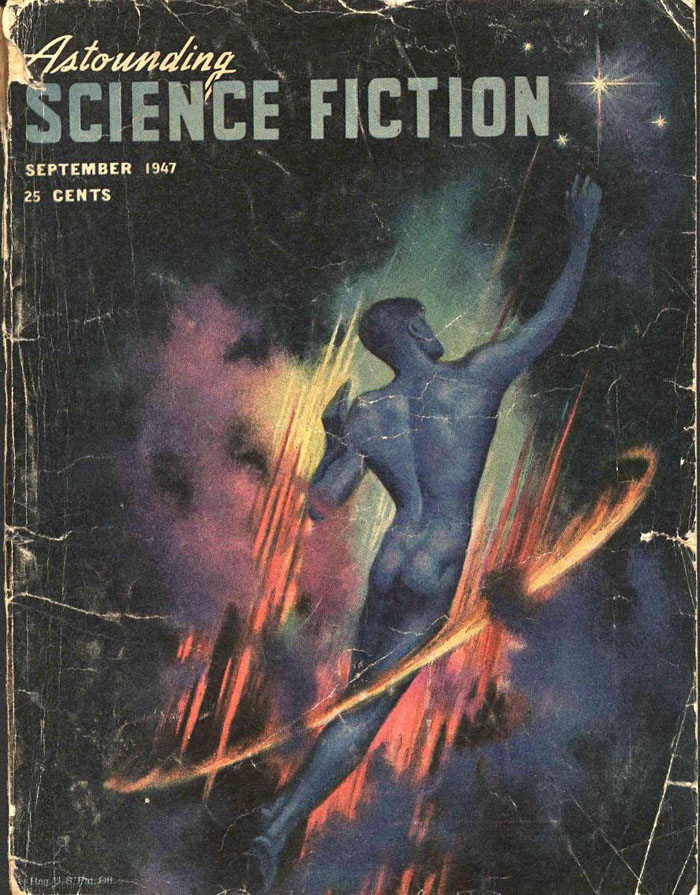
September, 1947.

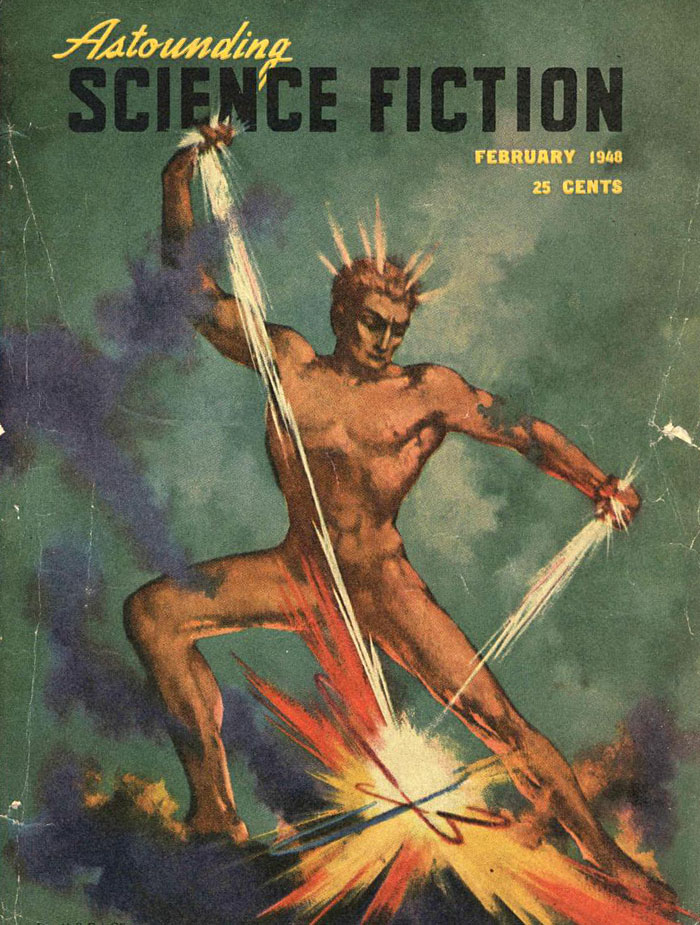
Harry Harrison used to enjoy referring to the “sexual dimorphism” of the cover art on pulp science-fiction magazines, by which he meant that male astronauts would usually be depicted wearing sturdy spacesuits or functional attire while their female counterparts would be given spray-on outfits with plunging necklines, if they were given any clothes at all. Sexism was still thriving in the future, in other words, with visible male flesh in short supply. This makes the handful of cover paintings produced by Alexander Cañedo for Astounding Science Fiction uncommon enough to be almost unique.

canedo16.jpg

February, 1948.

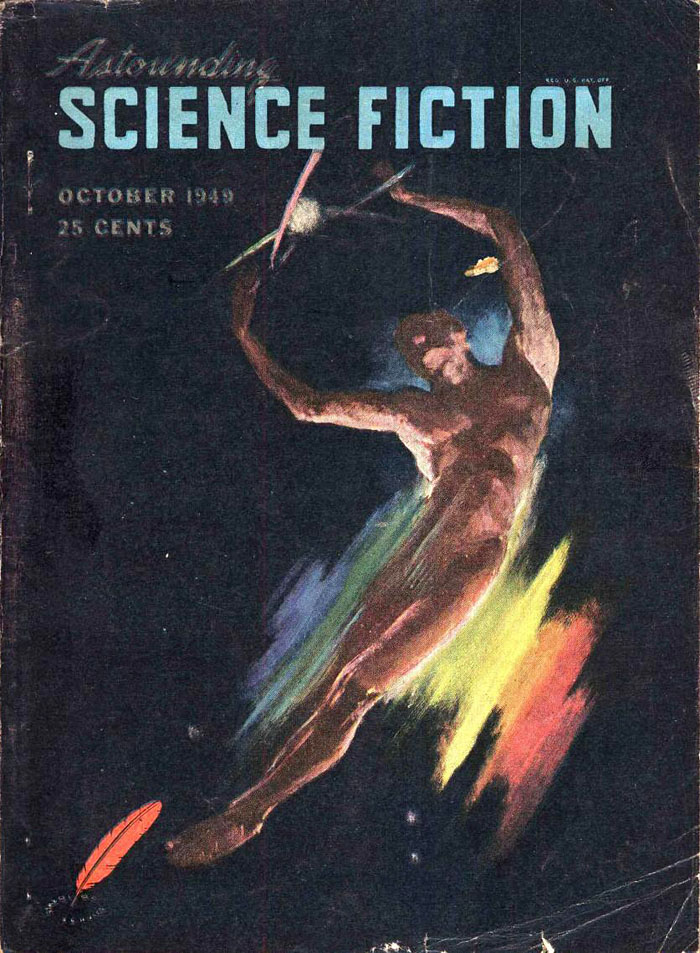
Cañedo was a Mexican-American, born Alejandro de Cañedo, whose covers for Astounding were simply credited to “Alejandro”. The editorial policy at the magazine favoured hard-headed, technology-oriented science fiction, with cover art that avoided the scantily-clad women (and, to be fair, shirtless men…) seen each month on the covers of swashbuckling rival, Planet Stories. Robots and rocket ships were still required at Astounding, however, and half the covers produced by Cañedo feature more predictable imagery. The first of the cosmic nudes appeared after editor John W. Campbell spotted an unsold painting during a visit to Cañedo’s studio. Campbell and his readership regarded the naked males as purely symbolic, which they are up to a point, and Cañedo was praised for his art in the magazine’s letters section. When seen in the context of his overtly homoerotic work the pictures evidently reflect more personal proclivities.

canedo17.jpg

October, 1949.

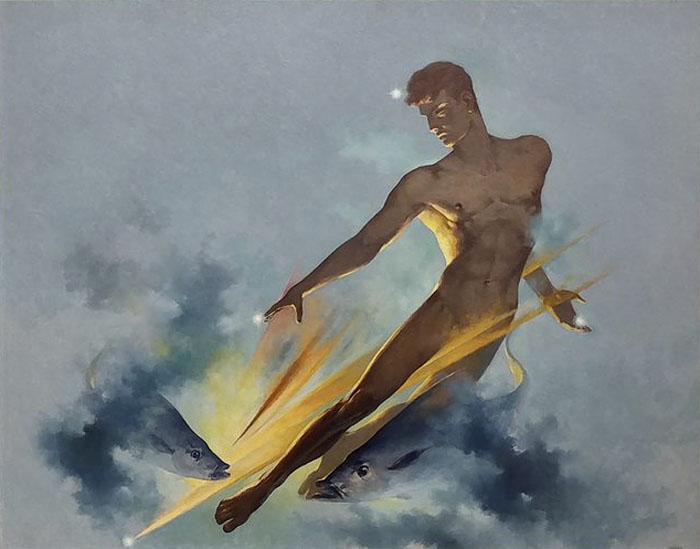
Cañedo is described today as a gay artist, a claim that can’t easily be verified when the available biographical details repeat the same few facts. But his art away from Astounding returned continually to the human body, a subject where his mastery was sufficient to warrant the publication in 1954 of a short guide for artists, How Cañedo Draws the Human Figure. Most of his drawings and paintings listed on auction sites are nude (or semi-nude) studies, with lovingly rendered male figures predominating. Several of his later paintings could easily have served as additional magazine covers. The manipulation of light and colour in these pictures is outstanding, unlike any treatment of male nudes that I’ve seen before, and by an artist worthy of greater attention.

(Note: Most of these pictures are untitled and undated. I’m also not an art dealer so please don’t ask for valuations.)

canedo18.jpg

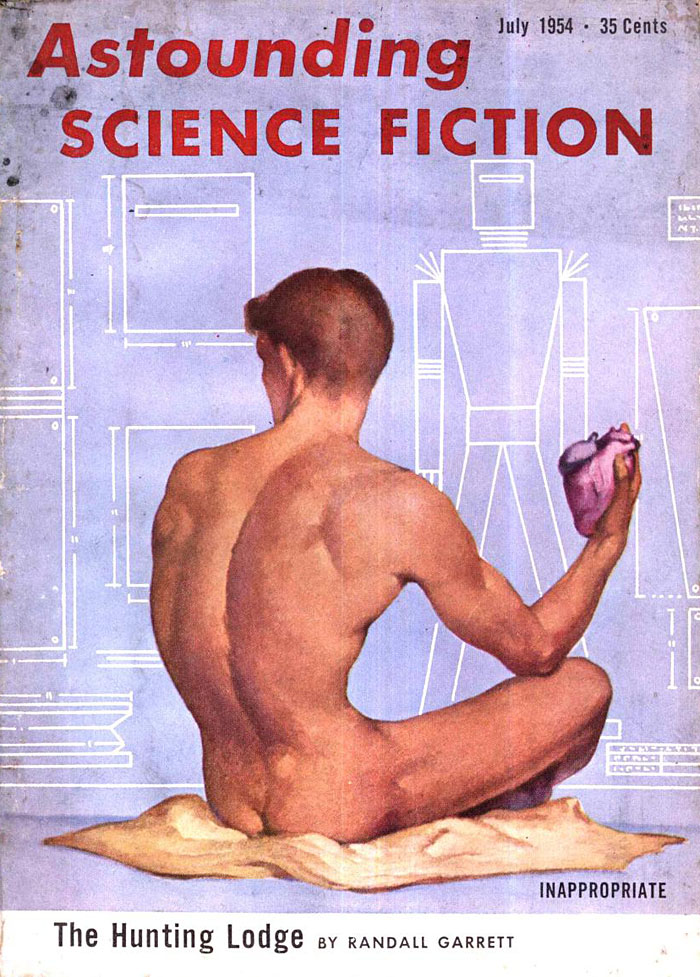
July, 1954. “Inappropriate” is the title of the picture which doesn’t relate to anything inside the magazine.

canedo09.jpg

Continue reading “The art of Alexander Cañedo, 1902–1978”

Esoterica 49

L49-01.jpg

“What is especially needed is great sensitivity: to look upon everything in the world as enigma….To live in the world as in an immense museum of strange things.” —Giorgio de Chirico

A few weeks ago I made a list of feature films that might be regarded as having the characteristics of a Thomas Pynchon novel without being based on any of Pynchon’s books. The post prompted several suggestions for other candidates, including recommendations to watch Jim Gavin’s TV series, Lodge 49, an American production that ran for two seasons from 2018 to 2019 before being cancelled due to low ratings. Having now watched the series I can say that I enjoyed it very much, and it is very Pynchonian, unsurprisingly when it not only gestures to the title of Pynchon’s second novel, The Crying of Lot 49, but also borrows from its storyline.
L49-02.jpg

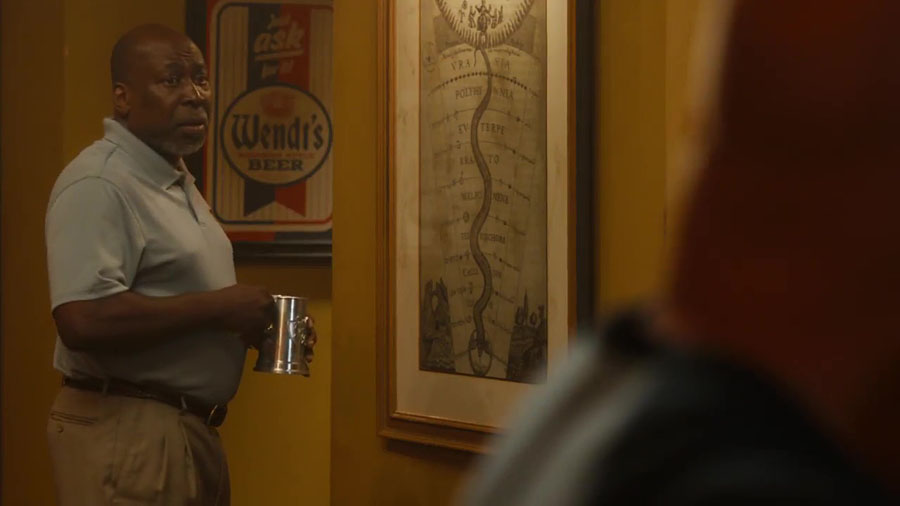
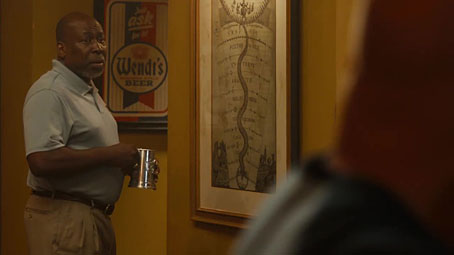
Ernie (Brent Jennings) has just been contemplating a print from the Ars Magna Lucis (1665) by Athanasius Kircher. Near the end of the second series he leaps through an image from the same book.

Lodge 49 presents a unique mélange of alchemy, surfing, secret societies, aerospace engineering, pool cleaning and cryptocurrency, with the added bonus of songs by the much-missed Broadcast being woven into the narrative. The series is consistently funny, humour being another essential Pynchonian ingredient, while the episodes are littered with references to (or correspondences with) Pynchon’s oeuvre: two of the main characters are an ex-surfer and an ex-sailor; the defunct aerospace company, Orbis, is modelled on Pynchon’s Yoyodyne from V. and Lot 49; there’s a trip to Mexico, a visit to an auction, and mention of a Remedios Varo exhibition (Lot 49 again); there are even references to Antarctic mysteries (V.), the Hollow Earth (Mason and Dixon) and the V-2 rocket (Gravity’s Rainbow). And those are only a few of the things I happened to catch as a first-time viewer. This is unusual territory for a small-scale television series, even if American TV has loosened up in recent years to allow a more eclectic range of material.
L49-03.jpg

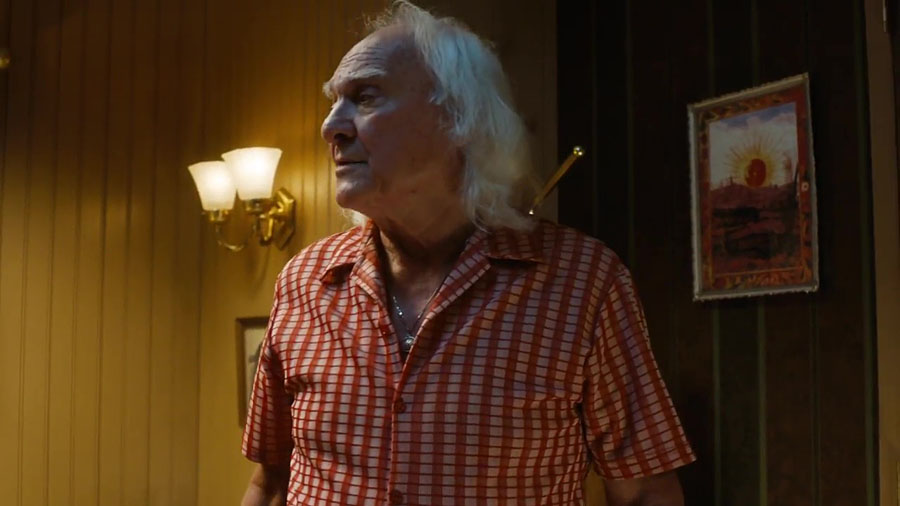
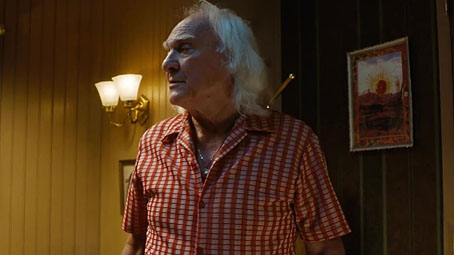
Larry (Kenneth Welsh) in the Sanctum Sanctorum with a plate from the Splendor Solis on the wall.

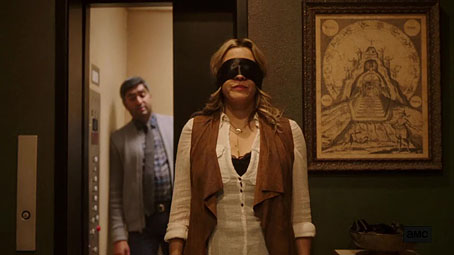
The Lodge 49 of the title is part of a global network of lodges that form the Ancient & Benevolent Order of the Lynx, a cross between a Masonic order and an occult cabal, founded by one Harwood Fritz Merrill, a Scottish alchemist, writer and explorer. (Merrill’s biography and the history of the Order of the Lynx is detailed here [PDF].) Alchemy is a persistent theme in the series but remains in the background for the most part, literally so inside Lodge 49 (Long Beach, California) and Lodge 1 (London) where the walls are decorated with prints of alchemical engravings. It would have been tempting to identify all of these pictures but most of them can be found in Taschen’s excellent Alchemy and Mysticism picture book so it’s easier to direct the curious to the Taschen volume. The prints also seemed to be there more to provide suitable set decoration rather than be significant in themselves, with one notable exception (see below).
L49-04.jpg

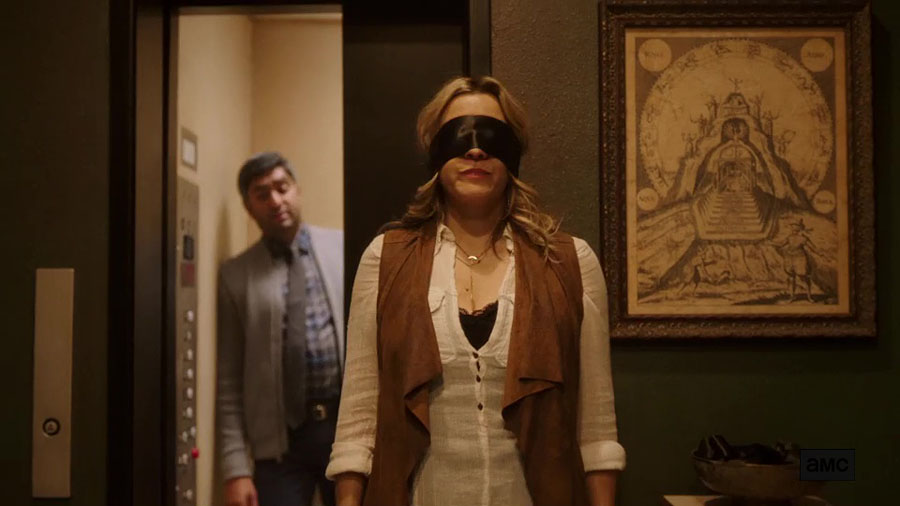
Connie (Linda Edmond) going deeper into the mysteries of Lodge 1. The print is from Cabala, Spiegel der Kunst und Natur: in Alchymia (1615) by Stephan Michelspacher.

More intriguing was the appearance of several paintings which did seem significant although they might equally have been there to generate audience speculation. Film and TV drama is made today in the full awareness that every detail is liable to be screen-grabbed and scrutinised by obsessive viewers, a situation that offers the potential for directors and designers to incorporate details that may have no special significance but are simply there to fuel online chatter. It’s difficult to tell if this is what Gavin and co. were doing, especially when the prematurely truncated series contains so many loose ends and unexplained moments. But paranoia is in part the search for a significance that may not exist outside the mind of the paranoiac so a small degree of concern about being gamed by the creators of Lodge 49 seems warranted here, as well as adding to the general Pynchon factor. Despite all the Pynchoniana mentioned above the series is light on the paranoia that’s a constant in Pynchon’s novels so why not cultivate a little paranoia in the audience itself?

Continue reading “Esoterica 49”