Babel details

babel01.jpg

The Tower of Babel (c. 1563) by Pieter Bruegel the Elder. Kunsthistorisches Museum, Vienna.

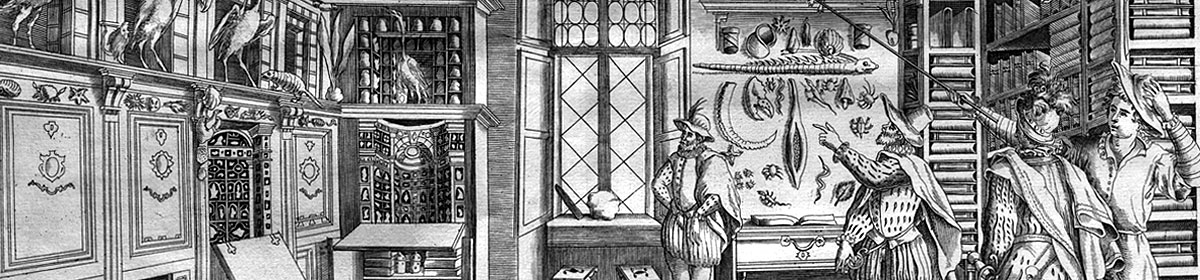
Seeing as how I have a fetish for Towers of Babel I ought to have examined this one sooner, the copy at the Google Art Project being one which allows you to explore the surface of the picture in greater detail than the artist himself would have seen unless he was using a magnifying glass. I still find the Art Project interface awkward so the grabs here were taken from a massive jpeg at Wikipedia: 30,000 pixels across, or 243 MB, scaling up to around 1.84 GB in Photoshop which means it’ll make older machines grind in complaint.

babel02.jpg

The detail is astonishing even by Bruegel’s standards. I’d never realised before how much care is given to the individual actions of every single worker on the tower, however small. Bruegel’s close observation of the working habits of the people around him is here reflected in the myriad figures, all of whom are doing something purposeful. At this resolution you’re able to see that the workers have taken their wives and children up the tower with them—there’s the familiar line of washing hung out to dry—while various beasts of burden haul building materials up the spiral roadway. You could spend a long time exploring the details of the tower before even looking at the background where tiny boats are sailing the sea and the rivers, and more fortunate animals have been left to graze in fields.

Wikipedia has several more of these enormous images. It’s a shame there aren’t many more of Bruegel’s works available at this size, his other crowded paintings deserve equal scrutiny.

babel03.jpg

One of the builders on his lunch break.

babel04.jpg

A jug on a window sill.

Continue reading “Babel details”

Paul Delvaux: The Sleepwalker of Saint-Idesbald

delvaux.jpg

Saint-Idesbald is a small, unremarkable seaside town on the Belgian coast situated between Ostend and the border with France. I spent a week there on a school camping holiday in the 1970s unaware that it was the home of the great Surrealist painter Paul Delvaux (1897–1994). I suppose you could make the argument that the location of Dalí’s home in Cadaqués was equally unremarkable, but Dalí’s house was well-known, and that area of the Spanish coast is familiar from many of his paintings. The surprise in later discovering that Delvaux lived in Saint-Idesbald, rather than Brussels or Bruges, or even Ostend, is that the town is quite unlike the tram-haunted, cobblestoned, moonlit vistas of his paintings. It’s appropriate that JG Ballard thought highly enough of Delvaux to mention his paintings in some of his stories, and also commission reproductions of two lost canvases; Ballard’s Shepperton was an equally unlikely home for such a vivid imagination.

Paul Delvaux: The Sleepwalker of Saint-Idesbald is a film from the Naxos record label that lasts all of three minutes, but which happens to feature the first footage I’ve seen of Paul Delvaux as a working artist. Despite Ballard’s attention, Delvaux has often been passed over as a subject of Surrealist documentaries in favour of the usual trinity of Dalí, Magritte and Max Ernst. There are older documentaries in existence, however, so I’ll continue to hope they may turn up eventually. For anyone who happens to journey near Saint-Idesbald, many of Delvaux’s paintings can be seen in the museum there.

Previously on { feuilleton }
The Public Voice by Lejf Marcussen
Ballard and the painters
Taxandria, or Raoul Servais meets Paul Delvaux

Weekend links 148

lanna.jpg

Quantum Entanglement by Duda Lanna.

An hour-long electronica mix (with the Düül rocking out at the end) by Chris Carter for Ninja Tune’s Solid Steel Radio Show.

• “…a clothes-optional Rosicrucian jamboree.”: Strange Flowers on the paintings of Elisàr von Kupffer.

• A Paste review of volume 2 of The Graphic Canon has some favourable words for my contribution.

It is an entertaining thought to remember that Orlando, all sex-change, cross-dressing and transgressive desire, appeared in the same year as Radclyffe Hall’s sapphic romance The Well of Loneliness. The two novels are different solar systems. The Well is gloomy, beaten, defensive, where women who love women have only suffering and misunderstanding in their lonely lives. The theme is as depressing as the writing, which is terrible. Orlando is a joyful and passionate declaration of love as life, regardless of gender. The Well was banned and declared obscene. Orlando became a bestseller.

Jeanette Winterson on Virginia Woolf’s androgynous fantasia.

Jim Jupp discovers the mystical novels of Charles Williams.

Michael Andre-Driussi on The Politics of Roadside Picnic.

Les Softs Machines: 25 August 1968, Ce Soir On Danse.

• At 50 Watts: Illustrations and comics by Pierre Ferrero.

Soviet posters: 1469 examples at Flickr.

Oliver Sacks on drugs (again).

• At Pinterest: Altered States.

• Farewell, Kevin Ayers.

Darkest London

Why Are We Sleeping? (1969) by The Soft Machine | Lady Rachel (1969) by Kevin Ayers | Decadence (1973) by Kevin Ayers

Fabulous harbours

leonardo1.jpg

The Annunciation (c. 1472).

One pleasure of seeing paintings in an art gallery is the ability to scrutinise details. I like to be able to see that, yes, Picasso did indeed use a single stroke of the brush beginning here and ending here. Backgrounds are a recurrent source of interest if you’ve ever tried any kind of pictorial painting yourself. I always have a greater sense of the artist’s presence in the background details since that’s the area of a picture which few viewers will pay any attention to. In the foreground the artist is always aware of the viewer’s gaze; in the background the artist has a sense of being left alone. It’s there that the mind is most liable to wander when you’re at work.

leonardo2.jpg

The trouble with very famous paintings is that they’re almost always preserved from this kind of close scrutiny either because they’re too popular—so you have a few seconds to stand there before having to make room for others—or they’re being monitored by gallery staff who don’t want you getting too close, or—as in the case of Leonardo da Vinci’s few paintings—they’re imprisoned behind sheets of glass. Few art books outside the weighty monographs ever show you actual brushstrokes or give you a close view of the background details, so once again it’s thanks to the Google Art Project that we can examine two of Leonardo’s paintings in a manner that wouldn’t be allowed unless you were an art historian.

leonardo3.jpg

The Annunciation originated in Andrea del Verrocchio’s studio where Leonardo was apprenticed. Leonardo is believed to have painted the angel—which certainly looks like his work—and the background which includes a fantastic harbour and, in the vaporous distance, some colossal mountain peaks. I’ve always liked this painting for the composition and sense of stillness, those trees standing outside the garden like vertical plumes of smoke. We’re told that a later hand extended the angel’s wings which I can easily believe since their termination clashes with the disposition of the trees; you’d never do that deliberately when everything else in the picture is so carefully arranged.

leonardo4.jpg

Continue reading “Fabulous harbours”

The art of Konstantin Somov, 1869–1939

somov01.jpg

Naked Young Man (1937).

The work of Russian painter Konstantin Somov has a decent presence on the web, albeit separated into his public works which comprised portraits, landscapes and illustrations, and his more private, homoerotic studies of voluptuous Russian men. The former can be seen at WikiPaintings or The Atheneum where there’s a recurrent theme of rococo fantasy similar to that being explored by Rex Whistler in Britain between the wars. (Whistler’s work was recently featured at Little Augury.) It is, of course, the other side of Somov’s work that concerns us here. This gives me an opportunity to put titles and dates to some of the paintings circulating on gay art sites with no details at all.

Somov was friends with Sergei Diaghilev, and provided illustrations and designs for Diaghilev’s Mir Iskusstva arts magazine. This year is the centenary of the first performance of The Rite of Spring so expect to hear more about the great Sergei and company in the coming months.

somov02.jpg

The Boxer (1933).

somov03.jpg

Portrait of A Man (1933).

somov04.jpg

A Reclining Man (1936).

Continue reading “The art of Konstantin Somov, 1869–1939”