Tarotism and Fergus Hall

gille.jpg

Gille Lettmann pictured in 1973 flourishing some of Fergus Hall’s Tarot cards. At the time Ms Lettmann was helping run partner Rolf-Ulrich Kaiser’s Kosmische Musik, Pilz and Ohr record labels, and thus oversaw the release of many fine albums—and a few dubious ones—before Kaiser’s empire imploded amid much bad feeling. It’s a fascinating saga, detailed at length here. Gille’s photo stood out for me in a week when I’ve been working on some new Tarot designs (about which more later) whilst listening to the latest Deutsche Elektronische Musik compilation from Soul Jazz Records which includes among its tracks a couple of Kosmische and Pilz recordings. Gille’s Tarot cards will have been a result of Kaiser’s most ambitious project, a double-disc concept album entitled Tarot (1973), and credited to Swiss artist Walter Wegmüller whose narration is backed by Ash Ra Tempel and members of Wallenstein. The album came in a lavish metallic silver box with a sheet of cut-out-and-keep Tarot trumps of Wegmüller’s own design, not the Fergus Hall cards Gille is holding. Wegmüller’s Major Arcana was expanded into a deck he calls the Gipsy Tarot. (I have the later CD box which included a complete deck of the Tarot cards.)

hall1.jpg

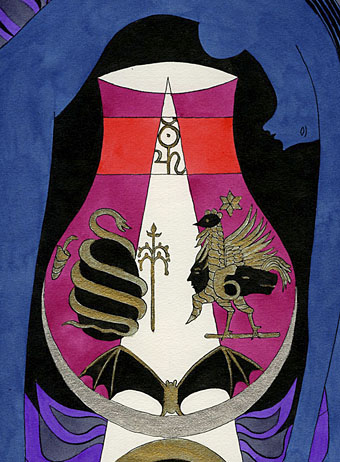
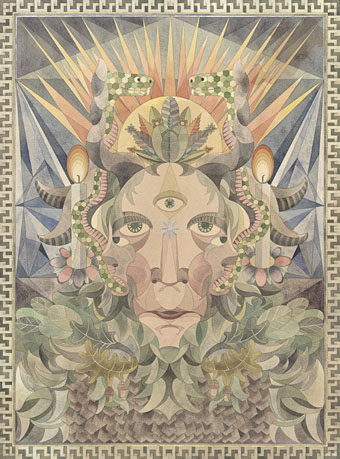
The Tarot of the Witches by Fergus Hall.

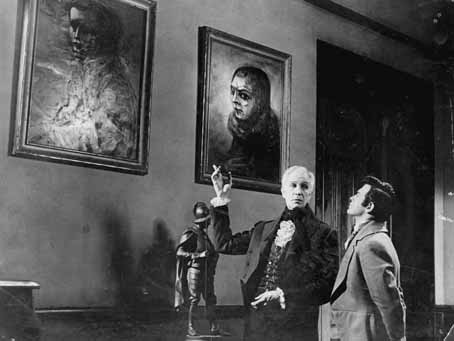
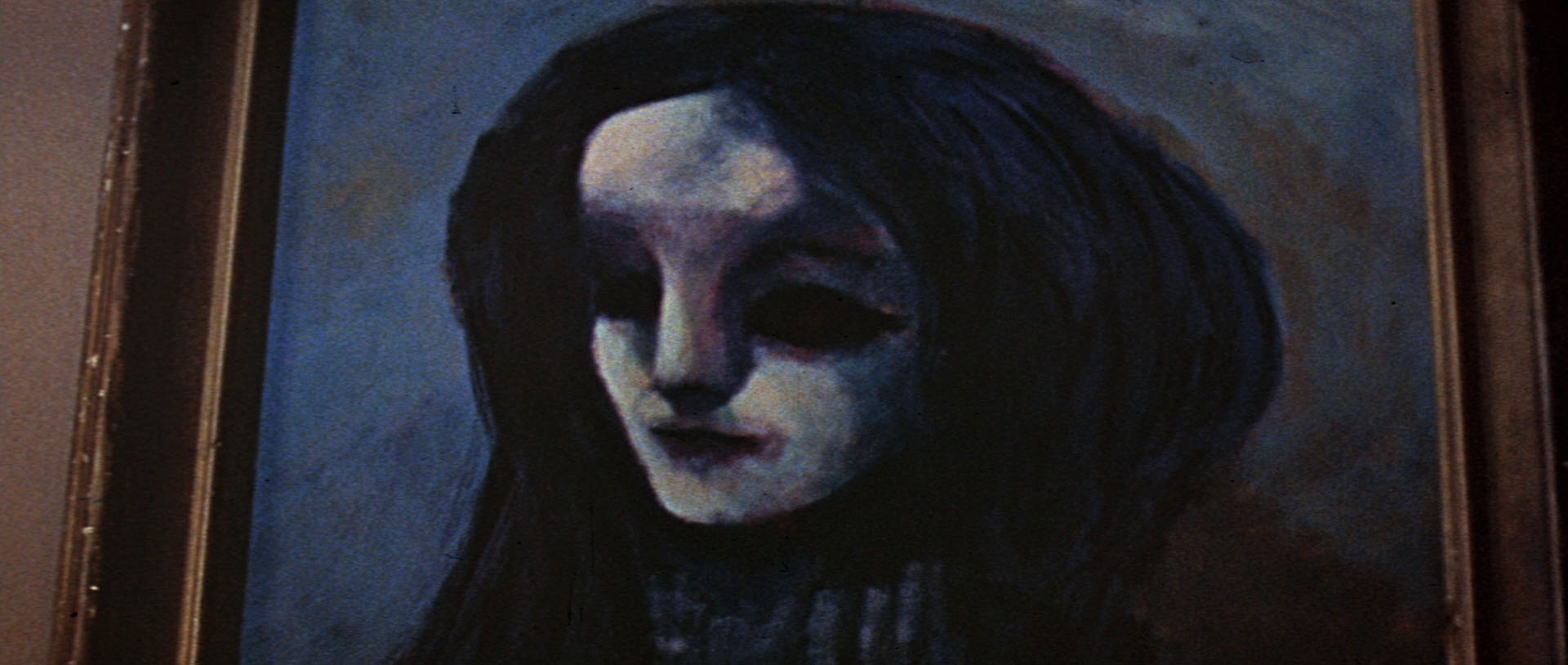
All of which gives me the opportunity to draw attention to Fergus Hall, an idiosyncratic Scottish artist who achieved worldwide prominence in 1973 when his Tarot designs were used on the cards seen in the James Bond film Live and Let Die. A complete deck called The Tarot of the Witches was later published as a spin-off from the film. I like his naive painting style which seemed a surprising choice for a blustering Bond movie; the production people could easily have used the Waite deck or something which suited the film’s vague Voodoo theme.

hall2.jpg

hall3.jpg

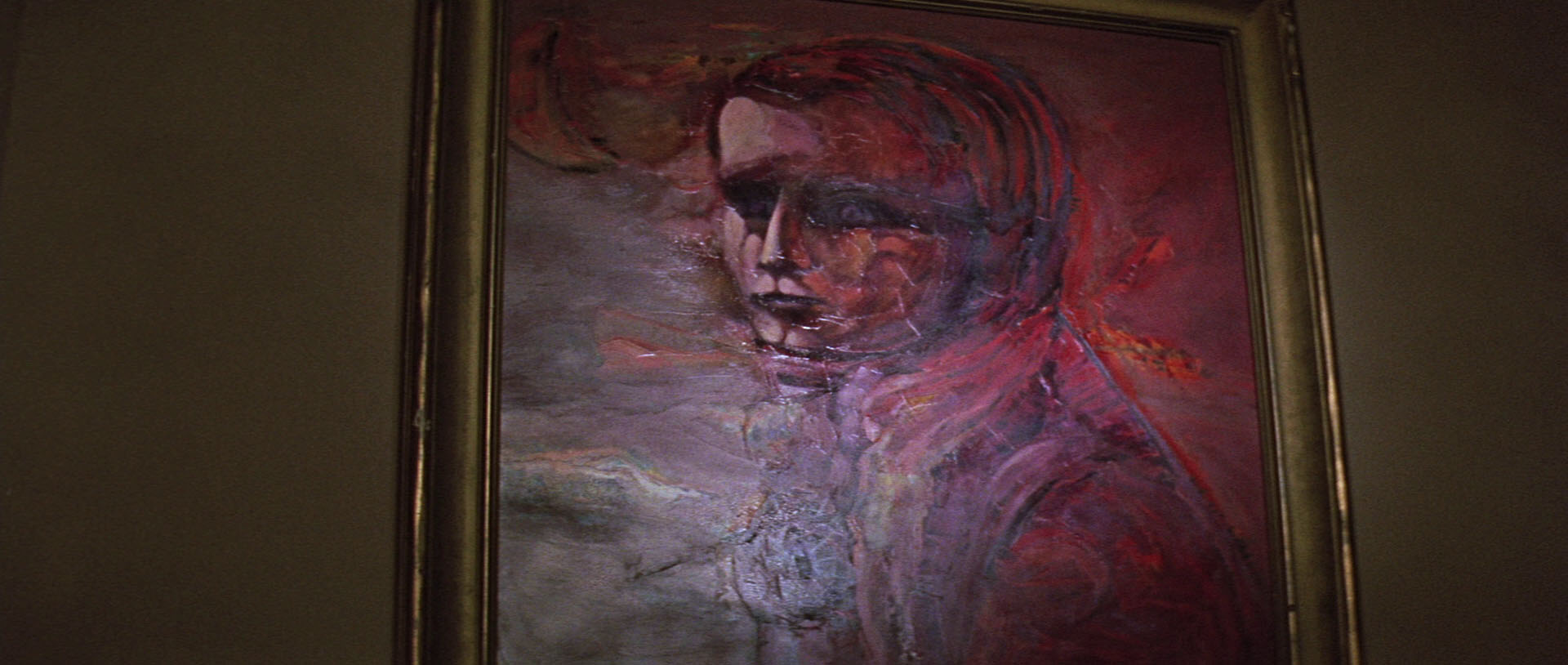
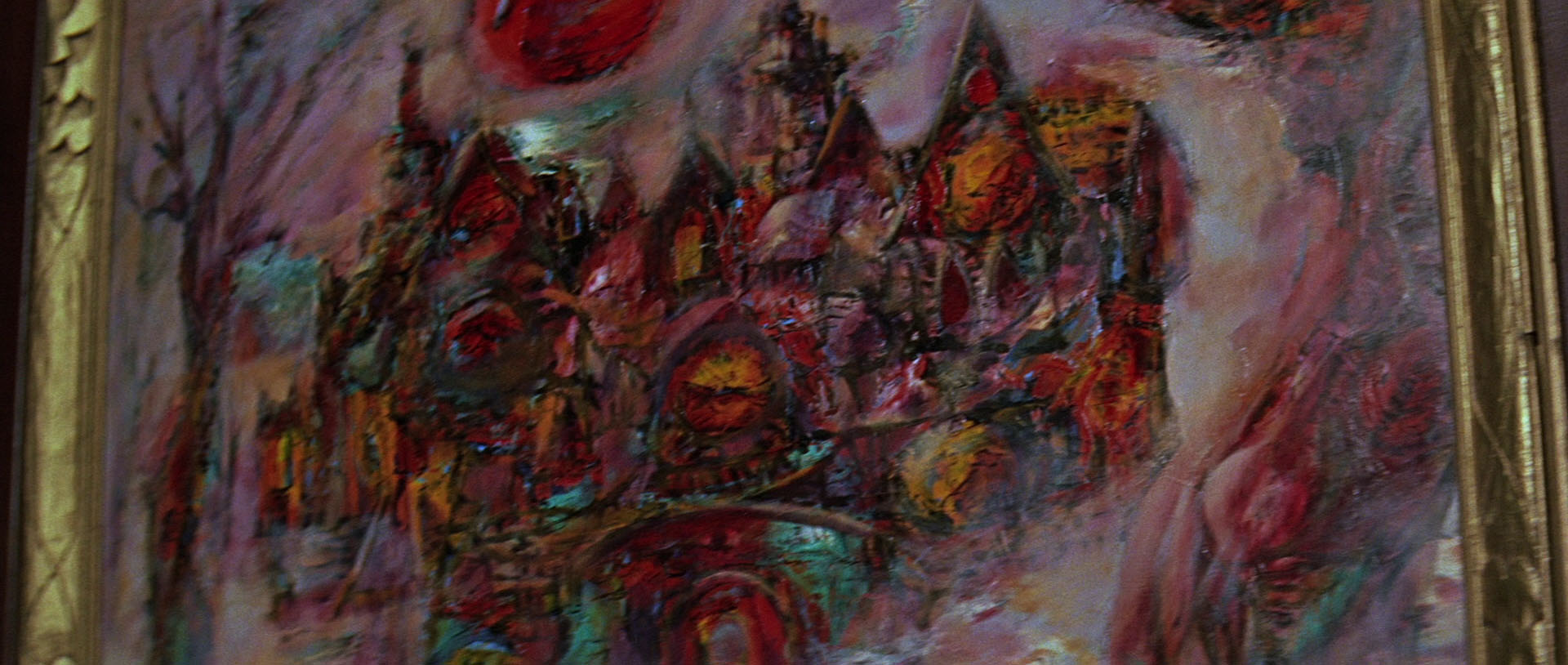
Robert Fripp liked Fergus Hall’s paintings enough to buy some of them. Two of these can be seen on the sleeve of the vinyl-only compilation A Young Person’s Guide to King Crimson (1975), while a third appeared a decade later on a King Crimson tape compilation. Despite this attention the artist’s only other major work is a book for children, Groundsel (1982), which features many more of his strange paintings. The compilations and the children’s book are all long out of print but decks of the Tarot of the Witches are still being published. As for Hall himself, his Wikipedia page says he’s now a Buddhist monk.

kc1.jpg

A Young Person’s Guide to King Crimson (front).

kc2.jpg

A Young Person’s Guide to King Crimson (back).

kc3.jpg

The Compact King Crimson (1986).

Elsewhere on { feuilleton }
The album covers archive

Previously on { feuilleton }
Giger’s Tarot
The Major Arcana by Jak Flash
The art of Pamela Colman Smith, 1878–1951
The Major Arcana

The art of Naomichi Okutsu

okutsu1.jpg

Hatsuyume – one’s first dream of the New Year – (2005).

Naomichi Okutsu’s variation on the amorous octopus theme is understandably popular in the Tumblr world, but it often appears uncredited while his other work is far less visible. That seems unfortunate when there’s a lot more to his beautiful paintings than tentacle sex. His work applies homoerotic twists to Japanese iconography, with many of the paintings using gold leaf for the backing. Japanese Gay Art has many more examples, all of which are currently for sale.

okutsu2.jpg

Title unknown.

okutsu3.jpg

Bozu ni hanakanzashi.

Elsewhere on { feuilleton }
The gay artists archive

The art of Joanna Chrobak

chrobak1.jpg

Pageant III (2005–2006).

A Polish artist whose paintings have that combination of technical virtuosity and strange imagination I always like to see. She also explores traditional themes such as those below. Her website is in Polish but can be translated easily enough via Google.

chrobak2.jpg

Saint Sebastian (2007–2008).

chrobak3.jpg

Salomé (2007–2008).

Elsewhere on { feuilleton }
The fantastic art archive
The Salomé archive

Brush of Baphomet by Kenneth Anger

anger2.jpg

Another recent piece of Angeriana, and another short video sketch, Brush of Baphomet (2009) is a kind of addendum to Anger’s The Man We Want to Hang (2002), being a further look at Aleister Crowley’s paintings. The title refers to one of Crowley’s many occult names. As a painter Crowley’s technical ability was almost nil but that never dissuaded him from trying, and I’m sure I’m not alone in finding his work to have a naive malevolence. Anger has had a lifelong interest in Crowley’s paintings, famously journeying in 1955 to the abandoned villa in Cefalù, Sicily, where he cleaned whitewash from the walls to reveal the remains of the murals Crowley had painted there.

anger3.jpg

The music in Brush of Baphomet is a surprising choice, an extract from the second part of Morton Subotnick’s Silver Apples of the Moon (1967). Anger’s musical selections have never been random ones so you have to wonder why this particular score. Was it because the electronics are reminiscent of the Moog drones Mick Jagger supplied for Invocation of My Demon Brother (1969)? Subotnick’s title is borrowed from The Song of Wandering Aengus by WB Yeats, a poet for whom Crowley (also a poet) had little affection. In Crowley’s occult novel Moonchild, Yeats appears as “Gates”, a mediocre painter (yes, well…), who ends up being killed in an act of magical revenge. Crowley must have been mortified a few years later when Yeats was awarded a Nobel Prize.

Previously on { feuilleton }
Anger Sees Red
Kenneth Anger’s Hollywood Babylon
Lucifer Rising posters
Externsteine panoramas
Missoni by Kenneth Anger
Anger in London
Arabesque for Kenneth Anger by Marie Menken
Edmund Teske
Kenneth Anger on DVD again
Mouse Heaven by Kenneth Anger
The Man We Want to Hang by Kenneth Anger
Relighting the Magick Lantern
Kenneth Anger on DVD…finally

The art of Ferenc Helbing, 1870–1958

helbing1.jpg

Beautiful Century drew my attention to this Hungarian artist and designer, one of many Eastern Europeans passed over in fin de siècle art books by virtue of working too far from Paris, Munich or Vienna. Helbing’s work would have been most visible to Hungarians in the designs he produced for the nation’s banknotes but on the evidence of these lavish and exotic examples he’s a match for his contemporaries elsewhere in Europe. Of the Seherezade (sic) depictions I prefer the black-and-white version over the painting. There’s more at Flickr.

helbing3.jpg

helbing2.jpg

helbing4.jpg

Seherezade (1918).

helbing5.jpg

Édenkert (1936).