Weekend links 166

foxxbelbury.jpg

The Julian House cover art for the forthcoming collaboration between John Foxx and Belbury Poly (here renamed) has been revealed. Single no. 9 in the Ghost Box Listening Centre Study Series is now available.

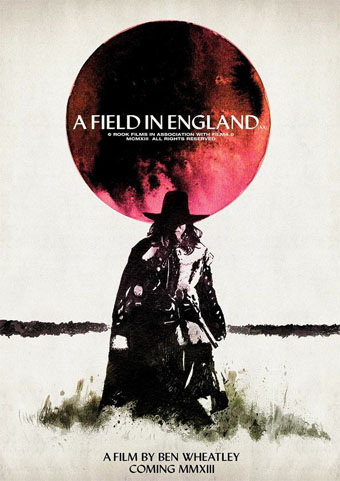
• In addition to new Ghost Box records there’s more Hauntological (for want of a better term) cinema on the way this summer with the DVD/BR release of Ben Wheatley’s A Field in England. The potted description at Movie Mail is “a monochrome psychedelic trip into magic and madness set during the English Civil War”. Julian House has made a trailer. Meanwhile at Fangoria, there’s a PIF mixtape from The Advisory Circle. This accompanies an interview with John Krish, director of the most bizarre of the UK’s many strange and alarming public information films from the 1970s.

• More mixes: The hour-long OH/EX/OH show for The Geography Trip on Chorlton FM. “Expect slumber / tension / euphoria in almost equal measures.” It’s marvellous. At Self-Titled mag there’s DJ Food with O Is For Orange: Boards of Canada, Broadcast, The Books, etc.

Tangiers is a computer game based on the fiction of William Burroughs. Jim Rossignol talked to Alex Harvey about the development of the project.

walpurgisnacht.jpg

Walpurgisnacht (1917) by Amadeus. A drawing that could easily be from the late 1960s. If anyone knows the full name of the artist, please leave a comment. Via Beautiful Century.

Rebecca J. Rosen asks “What would the night sky look like if the other planets were as close as the moon?”

• The mystery of Charles Dellschau and the Sonora Aero Club.

The Surreal Cave Paintings Of Stockholm’s Metro Stations.

• At 50 Watts: More strange art from Marcus Behmer.

Ry Cooder in 1970. Directed by Van Dyke Parks!

The Post Office Tower: now you see it…

• At Little Augury: 99 Meninas.

Sartori In Tangier (1982) by King Crimson | City Of Mirage (2010) by John Foxx

Proverbial details

bruegel06.jpg

More Google Art Project details from the amazing Pieter Bruegel the Elder. The Netherlandish Proverbs (1559) is one of Bruegel’s many paintings which are crammed with curious incident; it’s also one of the more bizarre examples. In a crowded scene the artist depicts in a literal manner one hundred different proverbs or figures of speech. Wikipedia has a guide to the details but if you ignore that you can treat the whole thing as another example of Surrealism before its time. In addition to the usual complement of medieval grotesques there’s a fair amount of earthy humour of a kind which pretty much vanished from painting until the 20th century.

bruegel01.jpg

bruegel02.jpg

bruegel03.jpg

Continue reading “Proverbial details”

Weekend links 165

smart.jpg

Cahill Expressway (1962) by Jeffrey Smart whose death was announced this week.

• “Russell Beale is awed by the beauty of the Roman silver Warren Cup showing men and youths making love, so startlingly erotic that the first time the British Museum was offered it in the 1950s, it turned it down flat. In 1999, when it came on the market again, the museum had to raise £1.8m to acquire it. ‘It’s just heaven, isn’t it?’ Russell Beale sighs.” Maev Kennedy on Same-Sex Desire and Gender Identity, a new exhibition at the British Museum.

• “The route to Tyburn Tree snaked through Holborn and St Giles, then went along Tyburn Road, today’s Oxford Street. It was dense with spectators.” Matthew Beaumont on the tiny memorial (Google view) for the estimated 50,000 people executed in the centre of London.

• Mixes of the Week: Bottoms Up by Staffan Lindberg for BUTT Magazine, and Electronic Ladyland, a collection of women with synths (and other instruments) from Bitch Media.

But the very thing that is valuable about diversity – the cultural and ideological clashes that it brings about – is precisely what many people fear. And that fear takes two forms. On the one hand you have the little Englander sentiment: immigration is undermining the national fabric, eroding our sense of British or Englishness, turning our cities into little Lahores or mini-Kingstons. And on the other you have the multicultural argument: that diversity is good, but it has to be policed to minimise the clashes and conflicts and frictions that diversity brings in its wake. And so we have to restrain speech, and police the giving of offence.

Kenan Malik on The Pleasures of Pluralism, The Pain of Offence.

L’Empire des Lumières is a great title for Anne Billson’s blog about Belgium. Tram-wire covered streets are one of my favourite things.

The Outer Church, 28 musical artists with an uncanny temperament collected by Joseph Stannard for Front & Follow.

His Heavy Heart, a film by Alan Moore & Mitch Jenkins, is looking for Kickstarter funding.

• In 1997 Quentin Crisp wrote about “Ten Wonderful Gangster Movies” for Neon magazine.

Raymond Chandler’s The Big Sleep redesigned for the Penguin Design Award, 2013.

• Out on DVD/Blu-Ray this month: The Curtis Harrington Short Film Collection.

A billion-pixel panoramic view of the planet Mars from the Curiosity Rover.

• In the TLS: Robert Craft on Stravinsky and The Rite of Spring.

Typophonic: Album cover typography.

The Owl Theremin is a thing.

LSD ABC

Spring Rounds From The Rite Of Spring (1975) by Alice Coltrane | Revenge Of The Black Regent (1999) by Add N To (X) | Sore Ga Afrirampo (2010) by Afrirampo

Nocturnes

night1.jpg

KOBAYASHI, Eijiro–”A High Bridge by Night”

The Night Scenes is a series of 21 woodcut prints by Japanese artists published by Hasegawa/Nishinomiya in the early 1900s. Gorgeous work, and apparently popular enough for the prints to have been reissued many times since. These examples are from a print-selling site with several extensive galleries of 20th-century Japanese prints.

The High Bridge at Night struck me for being remarkably similar to Whistler’s famous painting of Old Battersea Bridge, Nocturne: Blue and Gold (1872–75). Whistler, of course, developed his mature style through looking at Japanese prints, and the Tate’s note for his painting says it may have been derived from a Hiroshige print. The Hiroshige looks nothing like the High Bridge at Night, however; was the latter based on an earlier print which Whistler had seen, or is the High Bridge (which post-dates Whistler’s painting) an example of the Japanese stealing back some of their influence from the West?

(Thanks to Wood s Lot for the prints tip.)

night2.jpg

ARAI, Yoshimune II–”A Ferry Boat”

night3.jpg

KOBAYASHI, Eijiro–”A Pagoda by Moonlight”

Continue reading “Nocturnes”

Sidney Sime paintings

sime1.jpg

Painting of Waves.

Most of the art for which Sidney Sime (1867–1941) is remembered is black-and-white or monochrome work, in part because he was engaged as a magazine illustrator at a time prior to widespread colour reproduction. All of the reproductions in Sidney Sime—Master of the Mysterious (1980) by Simon Heneage & Henry Ford are monochrome, so it’s good to find 188 of Sime’s paintings on the BBC’s British paintings website. Or it’s good up to a point… Most of the works are small oil sketches and landscape studies which would be of little interest if the artist’s name was unfamiliar. The examples here are some of the few which match the unique imagination which people still value today. Heneage & Ford refer to his painting throughout his career but it seems the best of that work must now be in private collections. All of the paintings on the BBC pages are from the collection at the Sidney H. Sime Memorial Gallery at Worplesdon near Guildford, Surrey, where there’s more of his art to be seen.

sime2.jpg

Woods and Dark Animals.

sime3.jpg

Illustrative.

Continue reading “Sidney Sime paintings”