De Sphaera

sphaera01.jpg

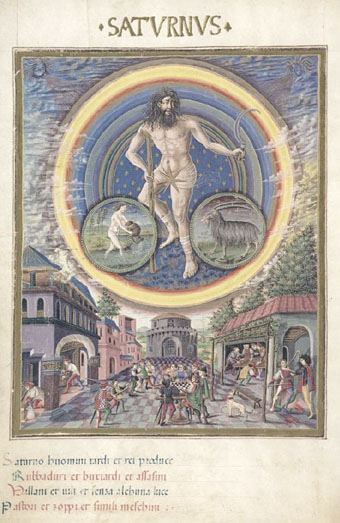
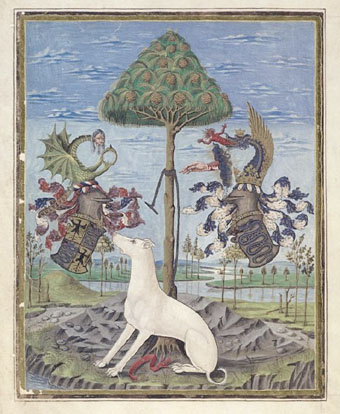
De Sphaera aka Sphaerae coelestis et planetarum descriptio is a collection of astrological plates and diagrams showing the symbolic attributes of the planets, and also their relations in the heavens according to the beliefs of 1470. There’s an obvious similarity to the celebrated (and much imitated) plates from the Splendor Solis (1582) plates although De Sphaera lacks the alchemical dimension of that work. I’ve omitted the diagrams from this post but a facsimile of the entire book may be downloaded from the Biblioteca Estense (see the Collegamenti esterni links here). Wikimedia Commons has some of the plates in better quality.

sphaera02.jpg

sphaera03.jpg

Continue reading “De Sphaera”

Delineations

hall01.jpg

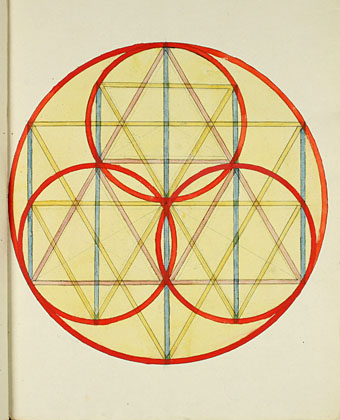
The recent upgrading of the Internet Archive website has made visual browsing somewhat easier than before: areas visited in the past now offer up items that might have been overlooked. This is one such result, one of the many mysterious documents in the Manly Palmer Hall collection of occult manuscripts. Unlike the handwritten texts in Hall’s archive, this one is a bound miscellany of esoteric diagrams. No details are given so it’s anyone’s guess as to the origin, meaning or the date of the work. The three-dimensional figures towards the end look like something that might date from the 19th century.

hall02.jpg

hall03.jpg

Continue reading “Delineations”

Weekend links 262

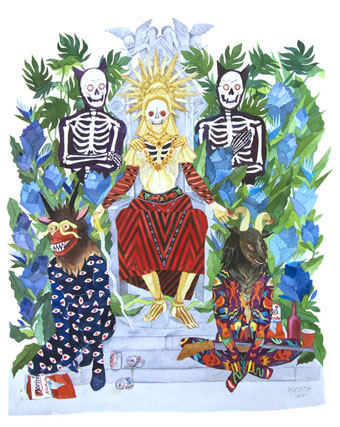
rozich.jpg

You’ll Never Be Alone, Even In Death (2014) by Stacey Rozich.

• “But the CD-R format, which eventually replaced the mix tape, turned out to be a technological letdown. ‘CD-Rs are just such an unstable format,’ Margolis says. ‘When you made 10 cassettes, the 10 cassettes generally played. If you made 10 CD-Rs, 8 of them played and 2 of ’em skipped. So that partially explains why people are going back to cassettes—it’s a cheap format that actually works.'” A huge article by Lisa Hix on the history and resilience of cassette tapes.

• “The word speculative comes from speculum, or mirror, and with speculative music the goal is to mirror the hidden processes of nature in sound.” David Metcalfe on Hawthonn, Coil and imaginal landscapes.

• Mixes of the week: FACT Mix 498 by The Cyclist, and Adventures In Sound And Music 28 May 2015 compiled by Joseph Stannard.

Nabokov was an intimate writer. His reticences, his formal estrangements, his denial of interest in any reality beyond the text all need to be measured against that. Maximum closeness: not the closeness of ostentatious empathy but the closeness of one mind addressing another in the most thrilling terms. He speaks into the ear, sometimes dripping a little poison. He contrives to have a reader identify intimately with a protagonist or narrator, but even that is not enough; the reader receives secret handshakes from the author himself, behind a narrator’s back.

Michael Dirda quoting from Nabokov in America by Robert Roper

• Books old and new: The Encyclopedia of the Dead by Danilo Kis, and Stranger Days by Rachel Kendall.

• At Dangerous Minds: Il caso Valdemar (1936), a short Italian adaptation of the Edgar Allan Poe story.

Lustpiel is “a new online magazine for gay, lustful literature”. And a fair amount of art and porn.

• “Q: Is there any subject that is never acceptable to joke about?” No, says Curtis Brown.

Machines Are Obsolete, a new piece by Pye Corner Audio for the Ghost Box label.

• Ishbelle Bee (see yesterday’s post) is interviewed at SFFWorld and Book Swoon.

Laura June on the life of Djuna Barnes, stunt reporter and shocking modernist.

• Stream the debut LP from Ghost Harmonic, a new John Foxx project.

• Portraits of the BDSM community by Natasha Gornik.

Rainer Werner Fassbinder: 10 essential films

Loplop

Mirrorball (2009) by John Foxx & Robin Guthrie | Mirror (2012) by Emptyset | Mirrored (2013) by Silje Nes

Weekend links 260

burgher.jpg

Bachelor with “demons” (Sleezy) [sic] (2015) by Elijah Burgher. One of a new series of artworks by Burgher showing at Zieher Smith & Horton, NYC.

• The week in HR Giger: Belinda Sallin on her documentary, Dark Star: HR Giger’s World; Ron Kretsch on the unseen cinema of HR Giger; Matthew Cheney thinks the Gigeresque has become too familiar. I can see his point but originality is always in short supply; asking for something new means setting yourself up for a long wait.

Pwdre ser, or Star jelly, is “a pale, foul-smelling jelly traditionally associated with meteorite falls”. The Rot of the Stars at the ICA, London, is an audio-visual art collaboration between Jo Fisher and Mark Pilkington dealing with the mysterious substance.

• Mixes of the week: A Tri Angle Records birthday DJ set by Björk; OreCast 196 mix by Ilius; Secret Thirteen Mix 153 by M!R!M.

To assume that a given group of people would be similar because of birthdate, Ryder thought, was to risk committing a fallacy. “The burden of proof is on those who insist that the cohort acquires the organised characteristics of some kind of temporal community,” he wrote. “This may be a fruitful hypothesis in the study of small groups of coevals in artistic or political movements but it scarcely applies to more than a small minority of the cohort in a mass society.”

Generational thinking is a bogus way to understand the world says Rebecca Onion

The plan for an airport above the streets of Manhattan. Related: Charles Glover‘s similar plan for London.

Errol Morris on how typography shapes our perception of truth.

Michael Moorcock enjoyed The Vorrh, a novel by Brian Catling.

Clive Barker on almost dying, hustling, and killing Pinhead.

• A new Penguin Books website for Angela Carter.

• Callum James on artist Philip Core.

A Beginner’s Guide to King Tubby

King Tubby Meets Rockers Uptown (1976) by Augustus Pablo | Star Cannibal (1982) by Hawkwind | Sleazy (1983) by Jah Wobble, The Edge, Holger Czukay

More trip texts

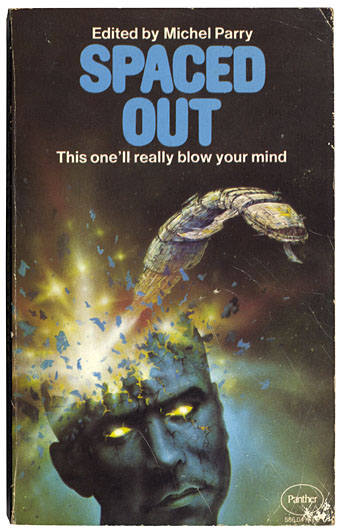
parry1.jpg

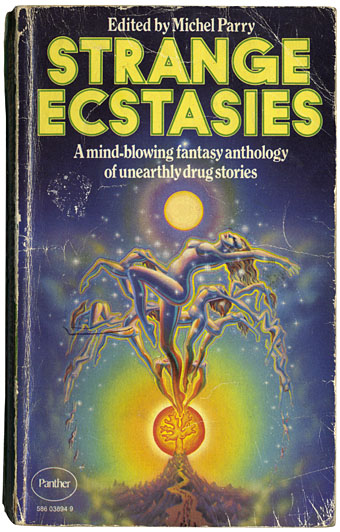
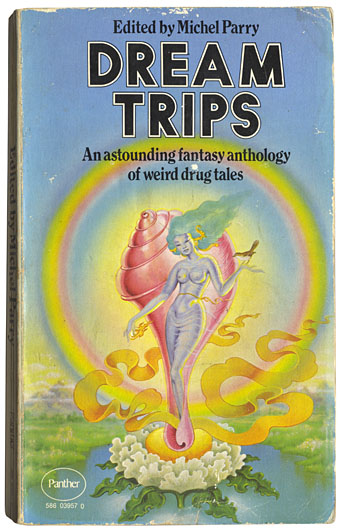
More psychedelia of a sort. Anthologist Michel Parry, who died last year, was a familiar name to British readers of fantasy, horror and science fiction for his themed collections: Beware of the Cat (1972; horror stories about cats), The Devil’s Children (1974; horror stories about children), The Hounds of Hell (1974; horror stories about dogs), Jack the Knife (1975; Jack the Ripper stories), The Supernatural Solution (1976; occult investigators), Sex in the 21st Century (1979), and so on.

Parry also compiled multi-volume anthologies throughout the 1970s, two of which have always stood out for me: the Mayflower Books of Black Magic Stories ran to six volumes presenting a wide range of occult fiction that included a number of obscure tales from Victorian and Edwardian writers; for Panther Books he compiled three collections of drug-related fantasy and SF stories that are just as varied, and may even be unique for the way they place authors as such as Lord Dunsany and Norman Spinrad together in the same volume. Both series are very much of their time—occult psychedelia!—and are worth seeking out, if you can find them. I emphasise the last point because it’s taken me a while to find a copy of Strange Ecstasies that wasn’t being offered for bizarrely inflated prices; my paperback habit has its limits… None of these anthologies have been reprinted so they’ll become increasingly scarce. For more invented drugs, there’s a good list at Wikipedia.

parry2.jpg

Cover art by Bob Haberfield.

Strange Ecstasies (1973)
The Plutonian Drug (1934) by Clark Ashton Smith
The Dream Pills (1920) by FH Davis
The White Powder (1895) by Arthur Machen
The New Accelerator (1901) by HG Wells
The Big Fix (1956) by Richard Wilson
The Secret Songs (1962) by Fritz Leiber
The Hounds of Tindalos (1929) by Frank Belknap Long
Subjectivity (1964) by Norman Spinrad
What to Do Until the Analyst Comes (1956) by Frederik Pohl
Pipe Dream (1972) by Chris Miller

parry3.jpg

Cover art by Bob Haberfield.

Dream Trips (1974)
The Hashish Man (1910) by Lord Dunsany
As Dreams Are Made On (1973) by Joseph F. Pumilia
The Adventure of the Pipe (1898) by Richard Marsh
Dream-Dust from Mars (1938) by Manly Wade Wellman
The Life Serum (1926) by Paul S. Powers
Morning After (1957) by Robert Sheckley
Under the Knife (1896) by HG Wells
The Good Trip (1970) by Ursula K. Le Guin
No Direction Home (1971) by Norman Spinrad
The Phantom Drug (1926) by AW Kapfer

parry4.jpg

Cover art by Brian Froud.

Spaced Out (1977)
The Deep Fix (1964) by Michael Moorcock
All the Weed in the World (1961) by Fritz Leiber
The Roger Bacon Formula (1929) by Fletcher Pratt
Smoke of the Snake (1934) by Carl Jacobi
Melodramine (1965) by Henry Slesar
My Head’s in a Different Place, Now (1972) by Grania Davis
Sky (1971) by RA Lafferty
All of Them Were Empty— (1972) by David Gerrold

Previously on { feuilleton }
Trip texts
Acid albums
Acid covers
Lyrical Substance Deliberated
The Art of Tripping, a documentary by Storm Thorgerson
Enter the Void
In the Land of Retinal Delights
Haschisch Hallucinations by HE Gowers
The art of LSD
Hep cats