The art of Pamela Colman Smith, 1878–1951

smith_tarot.jpg

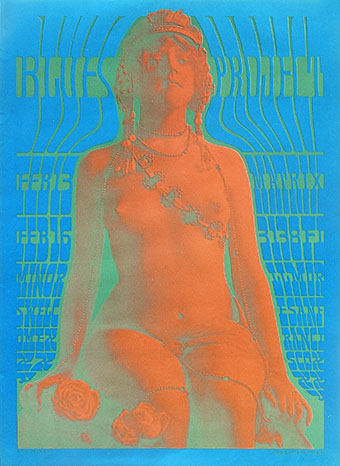
Following yesterday’s post about Frieda Harris’s Tarot designs, it only seems right to acknowledge the other major Tarot artist of the 20th century. Pamela Colman Smith has been overshadowed by her male mentor, Golden Dawn scholar AE Waite, even more than Frieda Harris whose name at least gets mentioned as much as Crowley’s in discussion of her paintings. US Games lists Smith and Waite’s so-called Rider-Waite Tarot of 1909 as “the world’s most popular tarot deck” and uses a silhouette of Smith’s design for The Fool as the company logo, yet it was years before I saw a credit for Smith as artist of this deck, her personal presence being reduced to a tiny monogram in the corner of each picture.

crane.jpg

The Absurd ABC by Walter Crane (1874).

I’ve often thought of Smith’s deck as “the Art Nouveau Tarot” which it isn’t really—it’s more late Victorian in style, if anything—but it was created when Art Nouveau was at its height and has some of the character of the poster art of the period. Smith’s designs are incredibly striking in places, with the clarity of drawn archetypes, and her style possibly owes something to the books Walter Crane created for children in the 1870s and 1880s; the clean lines and bright colouring are very similar. In that respect, Smith’s deck might be more fittingly labelled “the Arts and Crafts Tarot.”

hermit.jpg

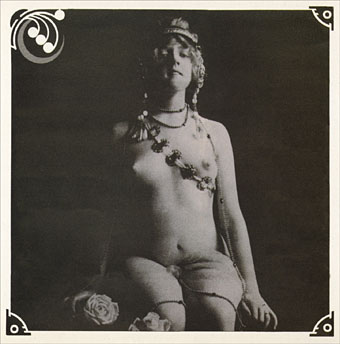
left: Pamela Colman Smith’s Hermit; right: Barrington Colby’s inner sleeve for Led Zeppelin IV.

Pamela Colman Smith also worked as a book illustrator but her other work is overshadowed completely by the popularity of the Rider-Waite cards. Her design for The Hermit was famously borrowed by Crowley obsessive Jimmy Page in 1971 for a gatefold illustration, View in Half or Varying Light by Barrington Colby, on Led Zeppelin IV. This use alone makes it possibly the most famous Tarot card in history (there was even a statue made of it for the now defunct Hard Rock Park Led Zeppelin roller coaster) but I doubt many people familiar with the image could name the original artist.

Happily, Ms Smith’s obscurity is gradually diminishing. US Games recently produced the Pamela Colman Smith Commemorative set for the 100th anniversary of the Rider-Waite deck, a package featuring a book of her artwork (including non-Tarot drawings), prints, postcards and a reprinted set of cards. A long overdue reappraisal but, as is always the case, it’s better late than never.

Mary K Greer’s Tarot blog has some excellent postings devoted to Pamela Colman Smith including this page which gathers links to sites containing further information about the artist’s life and work.

Elsewhere on { feuilleton }
The illustrators archive

Previously on { feuilleton }
Layered Orders: Crowley’s Thoth Deck and the Tarot
William Rimmer’s Evening Swan Song
The art of Cameron, 1922–1995

Design as virus 9: Mondrian fashions

mondrian1.jpg

Elly Jackson of La Roux in the recent video for Bulletproof. I’ve been enjoying La Roux’s debut album a great deal in the past week. The jacket she’s wearing is designed by Jean-Charles de Castelbajac and features the black stripes and primary colours used by Piet Mondrian (1874–1942) in his Neo-plasticist paintings of the 1920s.

Continue reading “Design as virus 9: Mondrian fashions”

Miasmah in Manchester

miasmah.jpg

Out again to Trinity Church in Salford for an evening of musical performance from the Miasmah label. “Miasma” was a fitting word for this event since all three artists proved very adept at filling the humid air with great clouds of treated guitar chords, loops and electronic noise.

The aural miasms created by The Sight Below, aka Rafael Anton Irisarri and Simon Scott, reminded me of favourites Main whose Hz album I’d been playing earlier in the day. Main were among the first musicians in the 1990s to extend the sound of the electric guitar through samples and other processing, and everyone at the Trinity tonight was following a similar path, albeit with very distinctive, individual styles. The Sight Below add a pulse of heavy rhythm to their sheets of distortion. Svarte Greiner (Erik Skodvin of Deaf Center) meanwhile, played some great bowed Stratocaster then some even better squalls of Strat feedback. Very impressive all round and the combination of volume plus environment (old church carefully lit and perfumed by clouds of incense) showed again why these kind of intimate performances often trump their recorded equivalents; sometimes you just have to be there.

Previously on { feuilleton }
Deaf Center in Manchester
Machinefabriek in Manchester
Trinity rendezvous
Main

In the Shadow of the Sun by Derek Jarman

shadow_sun.jpg

Extending the recent pagan theme, Ubuweb posts Derek Jarman’s determinedly occult and oneiric film, In the Shadow of the Sun (1980), notable for its soundtrack by Throbbing Gristle. This was the longest of Jarman’s films derived from Super-8 which he made throughout the 1970s between work as a production designer and his feature films. He never saw the low resolution, grain and scratches of Super-8 as a deficiency; on the contrary, for a painter it was a means to achieve with film stock some of the texture of painting. Michael O’Pray described the process and intent behind the film in Afterimage 12 (1985):

In 1973, Jarman shot the central sequences for his first lengthy film, and most ambitious to date, In the Shadow of the Sun, which in fact was not shown publicly until 1980, at the Berlin Film Festival. In the film he incorporated two early films, A Journey to Avebury a romantic landscape film, and The Magician (a.k.a. Tarot). The final sequences were shot on Fire Island in the following year. Fire Island survives as a separate film. In this period, Jarman had begun to express a mythology which he felt underpinned the film. He writes in Dancing Ledge of discovering “the key to the imagery that I had created quite unconsciously in the preceding months”, namely Jung’s Alchemical Studies and Seven Sermons to the Dead. He also states that these books “gave me the confidence to allow my dream-images to drift and collide at random”. The themes and ideas found in Jubilee, The Angelic Conversation, The Tempest and to some extent in Imagining October are powerfully distilled in In the Shadow of the Sun. Jarman’s obsession with the sun, fire and gold (which spilled over in the paintings he exhibited at the ICA in 1984) and an ancient mythology and poetics are compressed in In the Shadow of the Sun with its rich superimposition and painterly textures achieved through the degeneration “caused by the refilming of multiple images”. Jarman describes some of the ideas behind In the Shadow of the Sun:

“This is the way the Super-8s are structured from writing: the buried word-signs emphasize the fact that they convey a language. There is the image and the word, and the image of the word. The ‘poetry of fire’ relies on a treatment of word and object as equivalent: both are signs; both are luminous and opaque. The pleasure of Super-8 is the pleasure of seeing language put through the magic lantern.” Dancing Ledge p.129

Ubuweb also has some of the short films which were used as raw material for the longer work: Journey to Avebury (1971) (with an uncredited soundtrack by Coil), the Kenneth Anger-esque Garden of Luxor (1972), and Ashden’s Walk on Møn (1973).

Update: The Ubuweb films have been removed so I’ve taken out the links. The one for In the Shadow of the Sun now goes to a copy at YouTube.

Previously on { feuilleton }
Derek Jarman at the Serpentine
The Angelic Conversation
The life and work of Derek Jarman