Mayuri lute

lute.jpg

Mayuri means “peacock” and although this splendid instrument doesn’t look like a European lute, a lute it is, albeit styled for Indian court performances. Via Wunderkammer.

Popular at nineteenth-century Indian courts, this bowed lute borrows features of other Indian stringed instruments, such as the body shape of the sarangi and the frets and neck of the sitar. There are four melody strings and fifteen sympathetic strings, which sound when the instrument is played to accompany popular religious song. The peacock is the vehicle of Sarasvati, the goddess of music, and it appears in Indian poetry as a metaphor for courtship. (More.)

peacock-crane.jpg

As a complement, here’s something I’m still hoping to find in a good colour reproduction, all one usually sees are details. The Peacock Garden (1889) was one of a number of wallpaper designs created for William Morris by Walter Crane. This copy showing the full pattern is from an 1897 issue of the German arts periodical Pan, part of a section highlighting arts and crafts in England. Walter liked his peacocks, here’s Juno and her birds from The Baby’s Own Aesop (1887).

Previously on { feuilleton }
Jaipur peacocks
Maruyama Okyo’s peacocks
Louis Rhead’s peacocks
The White Peacock
Peacocks
Whistler’s Peacock Room
Beardsley’s Salomé

Storm Thorgerson: Right But Wrong

storm.jpg

Storm Thorgerson, he of the great design partnership Hipgnosis, has some of his album covers and other work in exhibition this month at the Idea Generation Gallery, London. The exhibition runs to May 2nd. This Sunday (April 11th) he’ll be signing copies of his books at the gallery from 2pm.

Alongside some of the most iconic images from his seminal career, the exhibition will include previously unseen sculptures, sketches and writings from the artist. Right But Wrong will provide an in-depth account of the artist and the processes behind some of the artist’s most acclaimed works. Especially for Idea Generation Gallery, Storm will also present a number of brand new site-specific installations, including ambitious reinterpretations of a few his most renowned pieces. (More.)

xtc.jpg

Go 2 by XTC (1978).

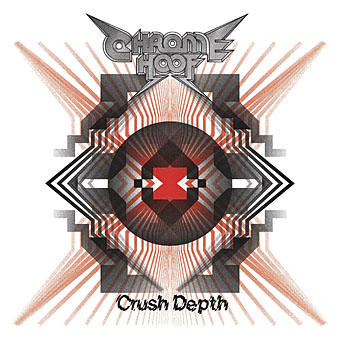
News of the exhibition inspired the BBC news site to create a slideshow featuring Hipgnosis covers and examples of Thorgerson’s post-Hipgnosis work. Everyone invariably throws up a Pink Floyd cover when discussing Hipgnosis. Rather than do that, allow me to point you to XTC’s Go 2 album from 1978, the last word (so to speak) in self-referential album design.

Elsewhere on { feuilleton }
The album covers archive

Dorothea Tanning: Early Designs for the Stage

tanning1.jpg

Monstre from The Witch (1950).

If this squid-headed costume design by Surrealist artist Dorothea Tanning isn’t a unique creation in the history of ballet then I’d like to know what challenges it. These paintings form part of an exhibition of Tanning’s designs for ballet companies which go on display at The Drawing Center, New York from April 23–July 23, 2010. The press release mentions her collaborations as being with George Balanchine but The Witch was choreographed by John Cranko after a score by Maurice Ravel.

Dating from 1945–1953, the designs will be shown together for the first time, and will be accompanied by archival photographs and ephemera related to the staged productions.  This series explores the dynamic intersections of dance, performance, visual art, and costume, while drawing important parallels to Tanning’s early discoveries in both painting and sculpture. (More.)

tanning2.jpg

The Butlers from The Witch (1950).

Via BibliOdyssey.

Previously on { feuilleton }
Angels of Anarchy: Women Artists and Surrealism
Surrealist women

The Oscar Wilde Galop

wilde_galop.jpg

When Oscar Wilde arrived in America to begin his lecture tour in 1882 the excursion provoked considerable comment on both sides of the Atlantic. Wilde was there in his capacity as an ambassador for Aestheticism, a position which had already made him a figure of fun in the pages of Punch magazine while the Aesthetes generally and Wilde in particular had been caricatured the year before by Gilbert & Sullivan in their opera, Patience. The Oscar Wilde Galop was one of a number of topical dance pieces which capitalised on Wilde’s arrival in America, the full score of which can be seen in the Levy Sheet Music Collection at Johns Hopkins University. No one seems to give the name of the composer of these works for some reason, but this piece and others like it can be found on a CD, To Oscar: A Collection of Aesthetic Melodies.

I suspect Oscar would have been flattered by his portrayal on the sheet music, it’s milder than the Punch cartoons and gives him a wasp waist he never possessed even in his youth. Wilde enjoyed his lecture tour, and was always happy to be the centre of attention, of course, but America (and others) paid the price for the ribbing later on, as in this exchange from The Picture of Dorian Gray:

“I am told, on excellent authority, that her father keeps an American dry-goods store,” said Sir Thomas Burdon, looking supercilious.

“My uncle has already suggested pork-packing Sir Thomas.”

“Dry-goods! What are American dry-goods?” asked the duchess, raising her large hands in wonder and accentuating the verb.

“American novels,” answered Lord Henry, helping himself to some quail.

The duchess looked puzzled.

“Don’t mind him, my dear,” whispered Lady Agatha. “He never means anything that he says.”

“When America was discovered,” said the Radical member—and he began to give some wearisome facts. Like all people who try to exhaust a subject, he exhausted his listeners. The duchess sighed and exercised her privilege of interruption. “I wish to goodness it never had been discovered at all!” she exclaimed. “Really, our girls have no chance nowadays. It is most unfair.”

“Perhaps, after all, America never has been discovered,” said Mr. Erskine; “I myself would say that it had merely been detected.”

“Oh! but I have seen specimens of the inhabitants,” answered the duchess vaguely. “I must confess that most of them are extremely pretty. And they dress well, too. They get all their dresses in Paris. I wish I could afford to do the same.”

“They say that when good Americans die they go to Paris,” chuckled Sir Thomas, who had a large wardrobe of Humour’s cast-off clothes.

“Really! And where do bad Americans go to when they die?” inquired the duchess.

“They go to America,” murmured Lord Henry.

Elsewhere on { feuilleton }
The Oscar Wilde archive

Weekend links 9

arthur7.jpg

Own a copy of Arthur #7 (October 2003) with my swirling cover pic featuring cosmic jazz maestro Sun Ra. Lots of good stuff inside, details here.

Spinetingler Magazine announced their nominees the 2010 Spinetingler Award this week. Jeff VanderMeer’s Finch is one of the titles in the Best Novel category while my cover for Jeff’s book is in the Best Cover category.

• A Journey Round My Skull posted the results of the Raymond Roussel illustration contest. Entrants were asked to read Roussel’s story Bertha, The Child-Flower then create a picture based on that.

Has Dottie got legs? The New Criterion on the poetry of Dorothy Parker.

• The gays: Fuck Yeah Hot Weird Guys, more from the Tumblr hall of mirrors; Simon Callow reviews Gay Icons Through the Ages by Tom Ambrose; Wessel + O’Connor Fine Art is open again with a new exhibition at a new location in Lambertville, NJ; some things never change: “Secret tape reveals Tory backing for ban on gays.”

• “Make the inaccessible exciting.” Colin Marshall interviews Chris Bohn, editor of music magazine The Wire.

• More music: Jon Savage’s brief history of Krautrock. The new Soul Jazz compilation, Deutsche Elektronische Musik, is released next week.

Sage of the Apocalypse; Samuel R Delany’s Dhalgren comes to the stage in New York.

• Further Penguin fetishism: “Penguin Decades bring you the novels that helped shape modern Britain.”

• Yes, they’re out there, the Clients From Hell. For a palliative there’s Herbert W Kapitzki’s elegant poster designs from the 1960s.

• Song of the week: House of Glass (1967) by The Glass Family.