Weekend links 730

beardsley.jpg

Cover Design for ‘The Yellow Book’ Vol.I (1894) by Aubrey Beardsley.

• “[Dorian Gray’s] version of Decadence filled the popular imagination when Decadence became an ostentatiously stylish zeitgeist—stylish being the operative word. For Decadent style encapsulated the attitude of being hellbent on thrilling experiences.” The danger of Decadence is also its value. We need more of it, says Kate Hext.

• At Swan River Press: Of Wraiths, Spooks and Spectres. Robert Lloyd Parry, in an interview with John Kenny, talks about the researches that led to the compiling of his latest ghost-story collection, Friends and Spectres.

• The latest pictorial accumulation from DJ Food is a collection of late-60s concert posters by Jim Michaelson, an artist whose designs look like Mad magazine going fully psychedelic.

• Old music: Future Travel by David Rosenboom; new music: Taking Shasta Mountain (By Strategy) by John Von Seggern & Dean DeBenedictis.

• At Public Domain Review: Hunter Dukes on Rückenfiguren, views of the human back as a subject in the history of art.

• In a week when Adobe has been in the news for pissing off its users, a list of alternatives for Adobe software.

• At Spoon & Tamago: Hokusai-inspired erasers reveal Mt. Fuji the more they get used.

• At Unquiet Things: A celebration of Annie Stegg Gerard’s enchanting worlds.

• Mix of the week: DreamScenes – June 2024 by Ambientblog.

• At The Quietus: The Strange World of…Diamanda Galás.

Wraith (2002) by Redshift | El Wraith (2002) by Amon Tobin | Wraith (2015) by John Carpenter

Weekend links 729

demorgan.jpg

Phosphorus and Hesperus (1881) by Evelyn De Morgan.

• Mix of the week, or possibly the entire year: The Deep Ark, 167 tracks (over 8 hours of music), most of which are from the electronic deluge of the early 1990s. The download link may not work for all browsers—it didn’t for one of mine—but it is active. Via Simon Reynolds who has more about the Deep Ark project.

• At Nautilus: Betsy Mason on the use of stage magic to investigate animal behaviour. “By performing tricks for birds, monkeys, and other creatures, researchers hope to learn how they perceive and think about their world.”

• At The Daily Heller: Mad and the Usual Gang of Idiots. Meanwhile, Mr Heller’s font of the month may prove useful for this election season, a Jonathan Barnbrook design named Moron.

Looking back, you can see a pattern in those eras in which interest in telepathy boomed. Coined by Myers and his fellow psychical researchers in the 1880s, telepathy gained traction because it was formulated inside a moment of scientific and technological revolution, where uncanny transmissions proliferated across the visible and invisible spectrum, seeming to collapse the natural and the supernatural together. In the 1970s, telepathy returned, if under different names, as part of another moment of crisis. The Cold War arms race was an essential part of this, feeding a strange supplemental world of fantasy technologies, from mind control to brainwashing, and playing on an all-too-widespread psychological paranoia around being seen, infiltrated and manipulated by invisible agents.

Roger Luckhurst looks back at a century of psychic research

• New music: Portable Reality Generator by Field Lines Cartographer, and Sublime Eternal Love by Chrystabell and David Lynch.

• Coffee and Chocolates for Two Guitars: Robert Fripp interviewing John McLaughlin in July, 1982.

• Paintings by Ithell Colquhoun currently showing at the Ben Hunter gallery, London.

• At Public Domain Review: Eye Miniatures (ca. 1790–1810).

ESP (1965) by Miles Davis | ESP (1990) by Deee-lite | ESP (2002) by Comets On Fire

Weekend links 728

wadsworth.jpg

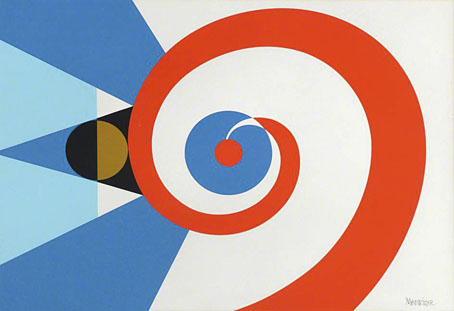
Composition: Cones and Spirals (1929) by Edward Alexander Wadsworth.

• “Repeating items over and over, called maintenance rehearsal, is not the most effective strategy for remembering. Instead, actors engage in elaborative rehearsal, focusing their attention on the meaning of the material and associating it with information they already know.” John Seamon on the vicissitudes of memory, and how actors remember their lines.

• “Mary McCarthy described it as ‘Fabergé gem, a clockwork toy, a chess problem, an infernal machine, a trap to catch reviewers, a cat-and-mouse game, and do-it-yourself novel’, among other things.” Mary Gaitskill on the pleasures and difficulties of Nabokov’s greatest novel, Pale Fire. Also a reminder that I ought to read it again.

• New music: Movement, Before All Flowers by Max Richter; A Thread, Silvered And Trembling by Drew McDowall; Unspeakable Visions by Michel Banabila.

• Among the new titles at Standard Ebooks, the home of free, high-quality, public-domain texts: Ulysses by James Joyce.

• The latest cartographical design from Herb Lester Associates is Facts Concerning HP Lovecraft and His Environs.

• At the Daily Heller: A look back at the craze for poster stamps.

• Mix of the week: A tuning mix for The Wire by Tashi Wada.

• At Dennis Cooper’s: Michael Lonsdale Day.

Annie Hogan’s favourite music.

Clockworks (1975) by Laurie Spiegel | Tin Toy Clockwork Train (1985) by The Dukes Of Stratosphear | Clockwork Horoscope (2008) by Belbury Poly

Weekend links 723

manrique.jpg

Flags of the Undiscovered Planets: 3 (1985) by César Manrique.

• “That mysterious font is Festive, not Stymie.” Ray Newman goes looking for a typeface that immediately says “Britain in the 1950s”. I used to refer to one of its relatives as “the launderette font”, although it was also a common sight on shopfronts, public buildings and other mid-century signage. Today I know it as the slab serif named Profil (aka Decorated 035), although as Newman demonstrates, this is only one of several slab-serif variants popular in the 1950s and 60s.

The Man Who Killed Google Search is a deep dive by Ed Zitron into why Google’s search has turned to shit. I recently changed the search option for all the browsers on my machines to DuckDuckGo. It’s not perfect but it’ll do for now.

• New music: Daddy’s Gonna Tell You No Lie, music by Sun Ra performed by Laraaji and the Kronos Quartet; Chroma by Loscil / Lawrence English; Homage To Hennix (The Electric Harpsichord Reinterpreted) by Dave Seidel.

• At Colossal: Tune into your own brain waves with Steve Parker’s suspended constellations of salvaged brass.

• At Bajo el Signo de Libra: Caspar David Friedrich (1774–1840): Icono del Romanticismo Alemán.

• At Public Domain Review: Maria Catharina Prestel’s Printed Cabinet of Drawings (ca. 1780s).

• At Unquiet Things: The teeming, tumbling, tangled cosmos of Madeline Von Foerster.

• Mix of the week: A mix for The Wire by FUJI||||||||||TA.

• At Dennis Cooper’s: 77 planetariums.

Planet D (Portishead Remix) (1994) by The Sabres Of Paradise | Planet Munich (1998) by Add N To (X) | Planet Vega (2000) by Air

Weekend links 722

robinson.jpg

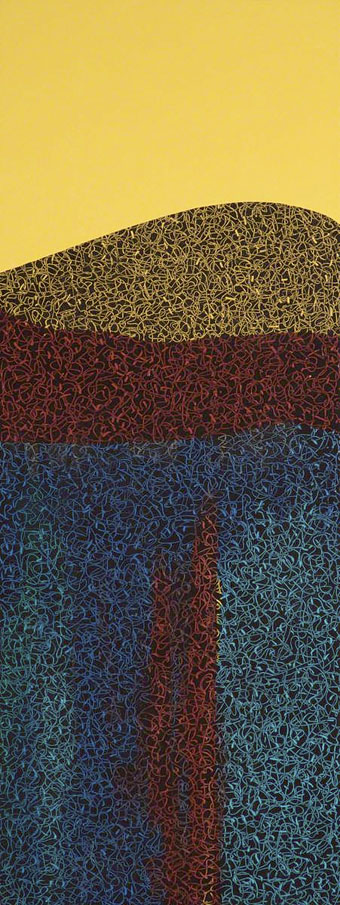
Desert Sunrise (no date) by Kay Robinson.

• RIP Richard Horowitz, a composer and musician whose soundtrack work makes the headlines but who I’ve always known best via his appearances on albums by Jon Hassell and others, and his collaborations with his partner, Sussan Deyhim. Majoun (1996) is my favourite among the Horowitz and Deyhim albums but it’s one of those releases that received little attention at the time and hasn’t been reissued since. Related: Revisiting Morocco, Magic, Majoun, Horowitz and Deyhim: Robert Phoenix talks to Horowitz and Deyhim for the final issue of Mondo 2000. | Desert Equations (For Brion Gysin) (1986).

• “A typeface is like an orchestra, and the type designer is its conductor.” Dr Nadine Chahine on the music of type design.

• At Colossal: Flip through more than 5,000 pages of this sprawling 19th-century atlas of natural history.

• At Unquiet Things: Become one with the moss, mushrooms, and magic in the art of Brett Manning.

• At Public Domain Review: Annie Besant and Charles Leadbeater’s Occult Chemistry (1908).

• New music: Reality Engine by 36, and Transformation Sonor by Hannes Strobl.

Photos of undersea life for the Smithsonian Magazine Photo Contest.

• Mix of the week: DreamScenes – April 2024 at Ambientblog.

• At Dennis Cooper’s: Book.

The Blue Flame (1981) by David Byrne (with Richard Horowitz) | Ravinia/Vancouver (1987) by Jon Hassell (with Richard Horowitz) | Bade Saba (The Wind Of Saba) (2000) by Sussan Deyhim (with Richard Horowitz)