Electronic Music Review

emr01.jpg

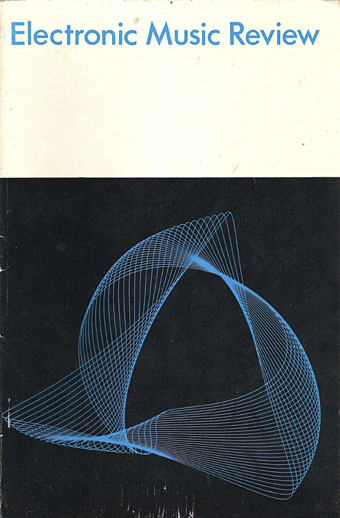
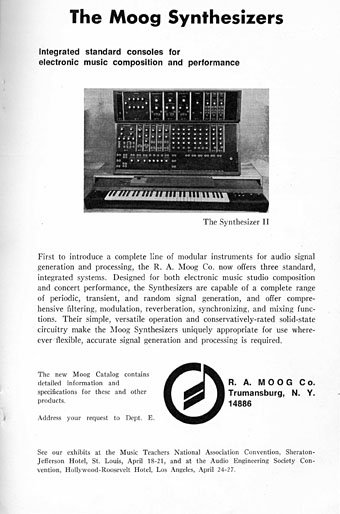
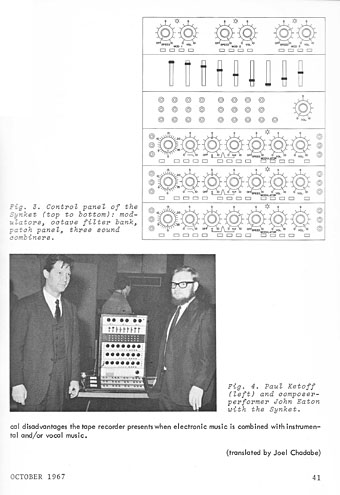
A new addition at the Ubuweb archives that’s catnip for anyone interested in the history of electronic music. Electronic Music Review was Reynold Weidenaar & Robert Moog’s short-lived journal devoted to the world of electronic music at a time when the field was rapidly growing away from the academic, “serious” side of musical composition and being taken up by the pop world.

All seven issues are present, running from January 1967 to July 1968. Pages of VCF circuit diagrams aren’t so interesting unless you’re an electronic engineer but the magazines also feature unique articles from composers who are now very well known, including Luciano Berio, Frederic Rzewski, Tod Dockstader, Henri Pousseur, Alvin Lucier and Jon Appleton. Despite the many women working in the field they evidently didn’t go looking for any to write for them. Granted, Wendy Carlos is among the contributors but in the late 60s she was still using the name Walter. In the later issues, Dockstader, Carlos and others review the recent electronic music releases. It’s especially fascinating to see an early reaction to albums such as Morton Subotnik’s Silver Apples of the Moon, and the debut from The United States of America, a cult favourite of mine for many years.
emr02.jpg

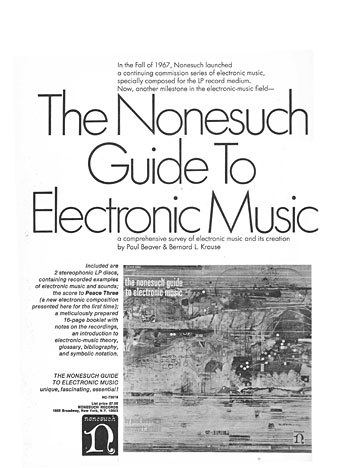
Scattered throughout the issues are ads for the latest studio gear and new album releases. One of these, The Nonesuch Guide to Electronic Music, was compiled by Paul Beaver and Bernard Krause. The latter is still recording, and happens to be interviewed in the current issue of Arthur Magazine.
emr03.jpg

emr04.jpg

Continue reading “Electronic Music Review”

Weekend links 175

maeda.jpg

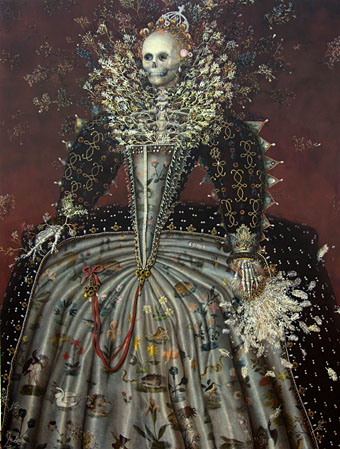
Heartbeat of the Death – Queen Elizabeth the First (2013) by Haruko Maeda.

• “The casual mixing of people from across the world at The Garden broke down many barriers. Its rich, beautiful, smart, and successful people were confident enough to exercise the kind of sexual freedom that would land you in jail elsewhere in the country.” Kate Webb on Alla Nazimova’s Hollywood estate, The Garden of Alla.

• “…from 1956 to 1970 Borges taught English literature at the University of Buenos Aires, and now, over half a century later, one of his courses is finally available in English in a slim, delightful volume.” Will Glovinsky on Professor Borges. Related: Jacob Mikanowski says “To Tlön: Let’s Invade Reality”.

• Mixes of the week: Secret Thirteen Mix 084 by Koen Holtkamp—Alice Coltrane, Alan Watts, John Cage, Popol Vuh, Faust and others—and Sequenze E Frequenze, “the rarefied outer limits of ‘stare at the sun, outsider peaked’ Italian music”.

Consider the fate of the concept of ‘futuristic’ music. The ‘futuristic’ in music has long since ceased to refer to any future that we expect to be different; it has become an established style, much like a particular typographical font. Invited to think of the futuristic, we will still come up with something like the music of Kraftwerk, even though this is now as antique as Glenn Miller’s big band jazz was when the German group began experimenting with synthesizers in the early 1970s.

Where is the 21st-century equivalent of Kraftwerk? If Kraftwerk’s music came out of a casual intolerance of the already-established, then the present moment is marked by its extraordinary accommodation towards the past. More than that, the very distinction between past and present is breaking down. In 1981, the 1960s seemed much further away than they do today. Since then, cultural time has folded back on itself, and the impression of linear development has given way to a strange simultaneity.

Mark Fisher on the present cultural moment, and the weirdness of Sapphire and Steel.

• At Front Free Endpaper: A Gay Library Thing and French Line Gay Pulp Cover Designs. Callum is also giving away books by Frederick Rolfe/Baron Corvo to anyone who asks. The proviso is you write a short review for his blog.

• Film director Ben Wheatley on Don’t Look Now: “I felt a great panic come over me”. Elsewhere it was announced this week that Wheatley is planning a film of JG Ballard’s High Rise.

• Brits may remember the wonderful Laurie Pike from the Manhattan Cable TV show in the early 1990s. These days she’s writing an online guide to the city of Paris.

Ben Frost has made three previously unreleased recordings available at Bandcamp.

The Media History Digital Library: 800,000 pages of film and radio periodicals.

• The results of three derives in London by Christina Scholz here, here and here.

• The late Seamus Heaney reads his own translation of Beowulf here and here.

High Rise (1979) by Hawkwind | Pop Sicle (1994) by High Rise | High Rise (2005) by Ladytron

Weekend links 174

ikuma.jpg

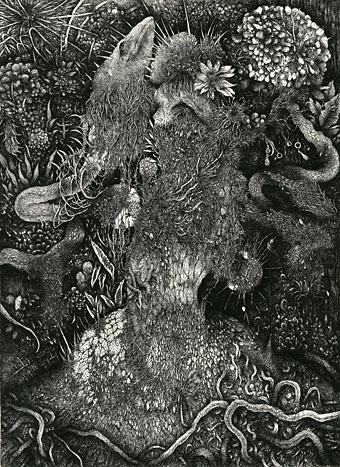
Dress (2012) by Nao Ikuma.

• Two of my Cthulhu artworks can currently be seen in the Ars Necronomica exhibition at the Cohen Gallery, Brown University, Providence, RI. The exhibition is part of NecronomiCon, and runs to September 13th. In related news, my steampunk illustration has been nominated in the Visual category of this year’s Airship Awards. Winners will be announced at Steamcon V in October.

• “…the story of how a small cabal of British jazz obsessives conducting a besotted affair with the style arcana of Europe and America somehow became an army of scooter-borne rock fans…” Ian Penman looks back at the culture of Mod for the LRB.

• “What is it about the writer in the First World that wants the Third World writer to be nakedly political, a blunt instrument bludgeoning his world’s ills?” Gina Apostol on Borges, Politics, and the Postcolonial.

If someone had designed a work regime perfectly suited to maintaining the power of finance capital, it’s hard to see how they could have done a better job. Real, productive workers are relentlessly squeezed and exploited. The remainder are divided between a terrorised stratum of the, universally reviled, unemployed and a larger stratum who are basically paid to do nothing, in positions designed to make them identify with the perspectives and sensibilities of the ruling class (managers, administrators, etc) – and particularly its financial avatars – but, at the same time, foster a simmering resentment against anyone whose work has clear and undeniable social value. Clearly, the system was never consciously designed. It emerged from almost a century of trial and error. But it is the only explanation for why, despite our technological capacities, we are not all working 3–4 hour days.

On the Phenomenon of Bullshit Jobs by David Graeber

Ron Rosenbaum talks to Al Pacino about all the usual stuff, and reveals some detail about the actor’s obsessive interest in Oscar Wilde’s Salomé.

• More queer history: The Brixton Fairies and the South London Gay Community Centre, Brixton 1974–6.

• At Dangerous Minds: Anthony Burgess and the Top Secret Code in A Clockwork Orange

• Every day for 100 days, Jessica Svendsen redesigned a Josef Müller-Brockmann poster.

LondonTypographica: Mapping the typographic landscape of London.

• Mix of the week: Secret Thirteen Mix 083 by Demdike Stare.

• At Strange Flowers: Alfred Kubin the writer.

Derek Jarman’s sketchbooks.

Rick Poynor on Collage Now.

• Thomas Leer: Private Plane (1978) | Tight As A Drum (1981) | Heartbeat (1985)

Doublevision Presents Cabaret Voltaire

cvdv1.jpg

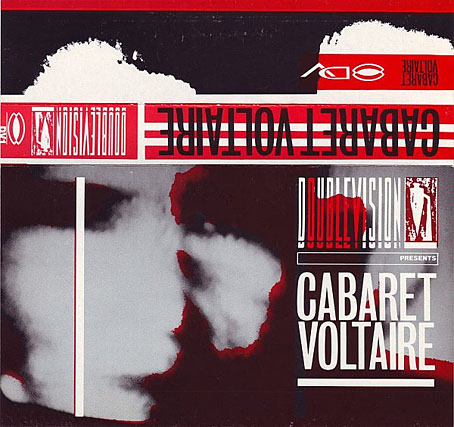
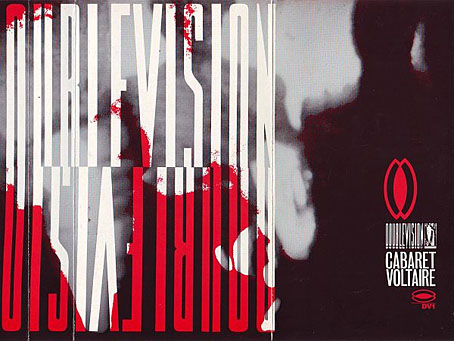
Videocassette box insert. Design by Neville Brody.

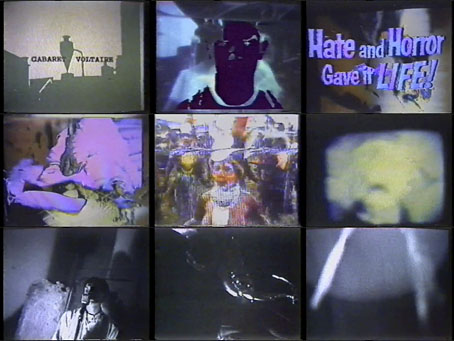
A couple of years back I tracked down some of the releases on Cabaret Voltaire’s Doublevision video label, the early titles of which have never been reissued on DVD. The first Doublevision release was the Cabs’ collection of their own music videos which Mute Records reissued on DVD 2004. That reissue seems to be deleted for the moment so it’s good to find a copy of the original tape release on YouTube. As with the other Doublevision releases I was well aware of this but didn’t have a VHS player at the time so wasn’t eager to buy anything I couldn’t watch. Unlike the other releases I did get to see several of the tracks during the Cabs’ Doublevision video night at the Haçienda in 1983, an evening that ended with the group performing for an hour.

cvdv2.jpg

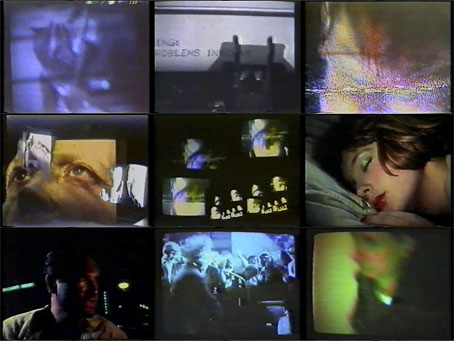
It’s good to be reminded of these videos, however crude they appear today. As with any early use of technology you need to bear in mind the limitations of the time. The tape was released in 1982 but the group had been experimenting with video equipment from about 1979 onwards. At that time commercial music video was just getting started but most of the examples on TV were paid for by the big record companies. Cabaret Voltaire and some of their associates in the UK Industrial scene—notably Throbbing Gristle and 23 Skidoo—were ahead of the game in acquiring equipment to make their own video recordings and promos. These videos were seldom shown on mainstream TV; I recall being thrilled to see a clip from the Nag, Nag, Nag promo on a pop programme but that was a rare one-off moment. The music industry was being forced to accommodate the awkward DIY merchants but the gates of broadcast television remained heavily policed.

cvdv3.jpg

And speaking of heavy policing, you get some of that here, the Cabs’ obsessions with coercion and control being illustrated by footage of riot squads, together with religious mania, medical surgery, psychotronic films and much else, all of it processed, fragmented and distorted. Direction was by the group and by St. John Walker, with an extract from Johnny YesNo (recently reissued by Mute) directed by Peter Care. I’ve been listening to Seconds Too Late a lot this week so it’s great to see a video for that song. There’s also a slight conundrum in the tracklisting: if you’re familiar with the free four-track single that came with The Crackdown album it seems that Badge of Evil and Moscow have had their titles swapped. The Moscow video track, however, includes a shot of an Aeroflot passenger plane so it’s more likely that the tracks on one side of the single were mis-labelled when they appeared a year later, an error carried over to the CD release.

Tracklist: Diskono / Obsession / Trash (Part 1) / Badge Of Evil / Nag, Nag, Nag / Eddie’s Out / Landslide / Photophobia / Trash (Part 2) / Seconds Too Late / Extract From Johnny YesNo / Walls Of Jericho / This Is Entertainment / Moscow

cvdv4.jpg

Previously on { feuilleton }
Just the ticket: Cabaret Voltaire
European Rendezvous by CTI
TV Wipeout
Seven Songs by 23 Skidoo
Elemental 7 by CTI
The Crackdown by Cabaret Voltaire
Network 21 TV

Just the ticket: Cabaret Voltaire

cv01.jpg

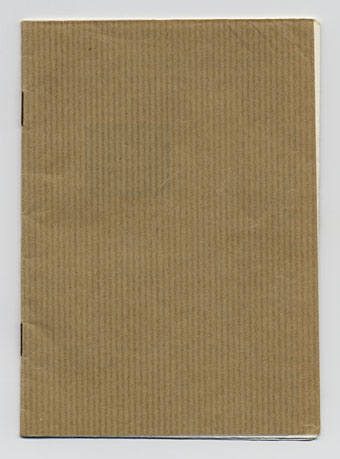
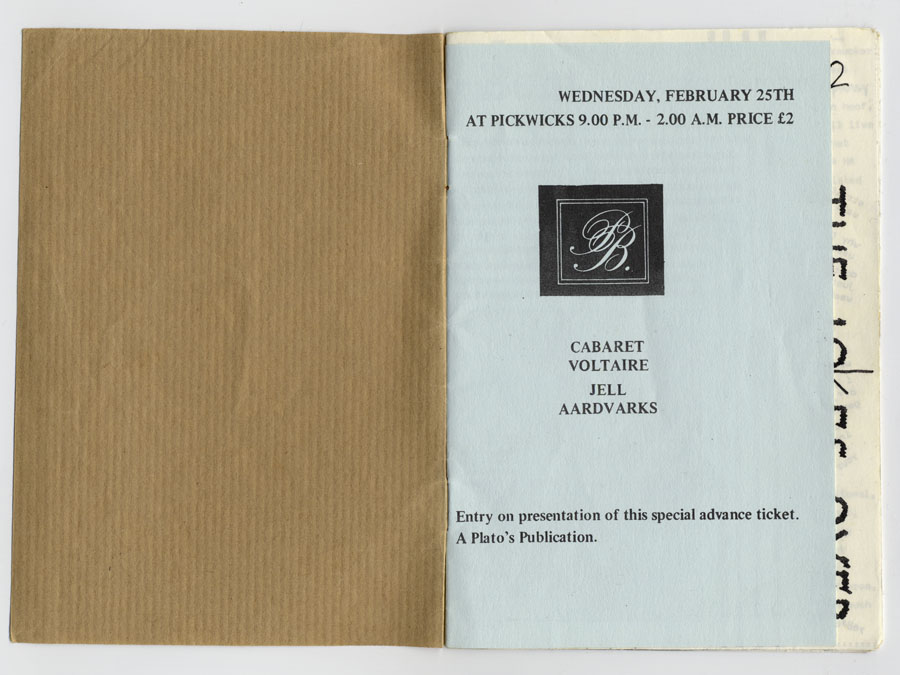
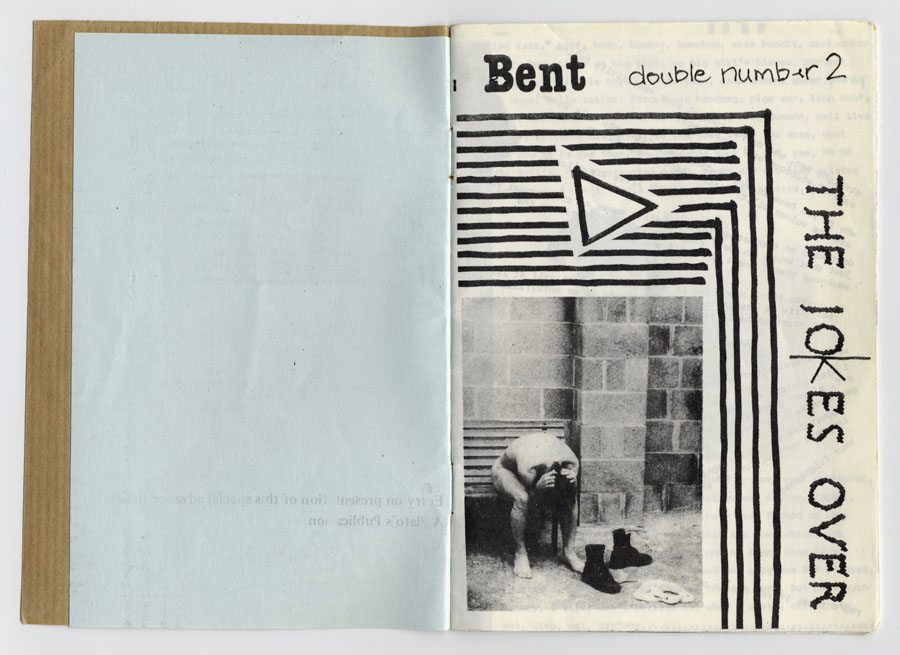
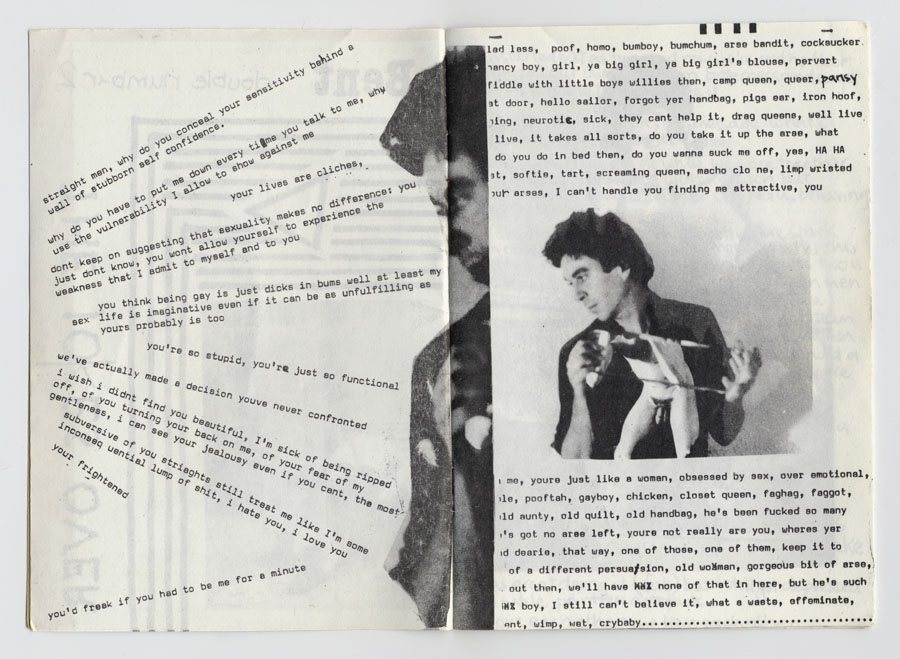
The current issue of The Wire has a great appraisal by Keith Moliné of the musical history of Cabaret Voltaire, a well-timed piece given the recent announcement of forthcoming reissues from Mute Records. Having been a Cabophile from the start I’m rather biased, but the Wire piece has had me listening to the early albums and singles this week (between bouts of Zdenek Liska), and finding the passage of time has made those early recordings seem increasingly strange. Cabaret Voltaire were one of the few groups I liked obsessively enough to collect ephemera from newspapers and magazines. Knowing this, a friend gave me this curious fanzine/ticket from a gig the group played in Liverpool in February, 1981. The venue was Plato’s Ballroom at Pickwicks, and judging by the wording inside—”A Plato’s Publication”—it seems it was the venue’s idea to make the ticket a small (10.5 x 15 cm) booklet.

cv02.jpg

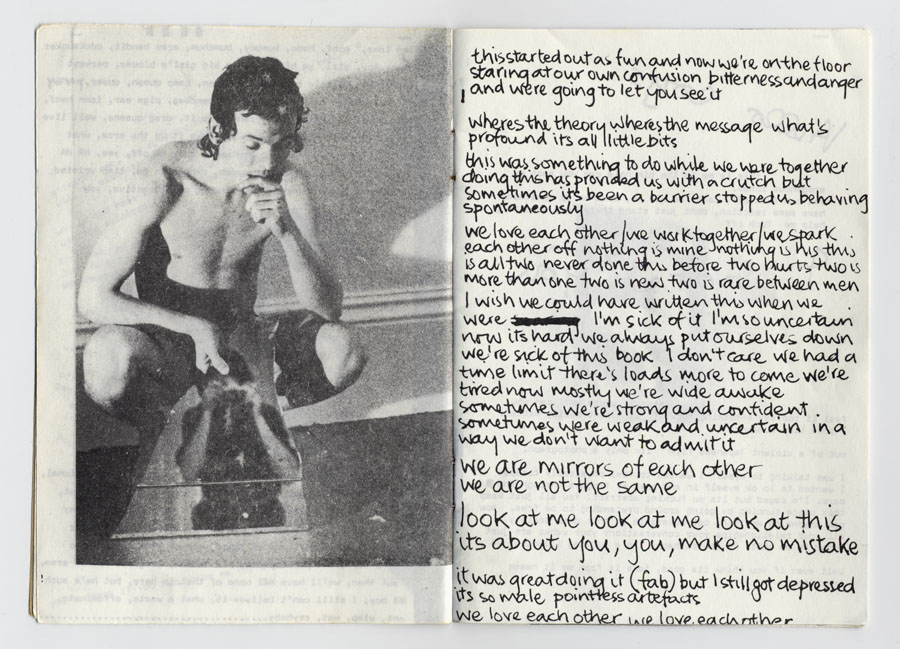
What’s surprising about this is that the fanzine the ticket is bundled with has nothing at all to do with music (or that other perennial of 80s post-punk culture, left-wing politics) but is a glimpse of life as a gay man in Liverpool. I’ve always found this fascinating for the daring it took to foist the thing on a bunch of unwitting Cabs fans, most of whom would have been straight men and not especially sympathetic to the subject matter. In the context of 1981 forcing people to look at grainy shots of naked men with accompanying text (by another man) declaring them to be a turn-on was a transgressive act. The only representations of anything gay in the popular media were a few camp (and therefore safe) comedians; Derek Jarman was still an underground figure, and as late as 1984 a BBC play about gay men was prefaced with a warning about its “contentious” subject.

cv03.jpg

I’ve no idea who was responsible for the fanzine, there are no credits, and it’s possible that the people involved didn’t want to be too easily identified. If the tone of the writing seems rather dramatic then, again, it’s important to see it in context of a country which wasn’t much more amenable to gay people than Russia is today. Saying things in public that most people didn’t want to hear was a challenging act; emotions often ran high.

cv04.jpg

Looking for information about the gig turned up this newspaper ad. (Who were Jell and Aardvarks, I wonder?) By an odd coincidence only the day before I’d found this upload from the same person of a very scarce compilation tape that happens to be from the same year, and which features contributions from Cabaret Voltaire’s Chris Watson and Richard Kirk. The Men With The Deadly Dreams was compiled by Geoff Rushton, aka John Balance of Coil, and was apparently limited to 200 copies. Among the other highlights there’s a track from Eyeless in Gaza, whose early work I like a great deal, and an electronic piece by Throbbing Gristle’s Chris Carter which I think is exclusive to this collection. Two artefacts—fanzine and tape—with brown paper covers that give a snapshot of Britain’s underground culture in 1981.

cv05.jpg

Continue reading “Just the ticket: Cabaret Voltaire”