La tête de Robert

montesquiou.jpg

I’m working against a deadline this week so I’ll apologise in advance if posts tend to be brief.

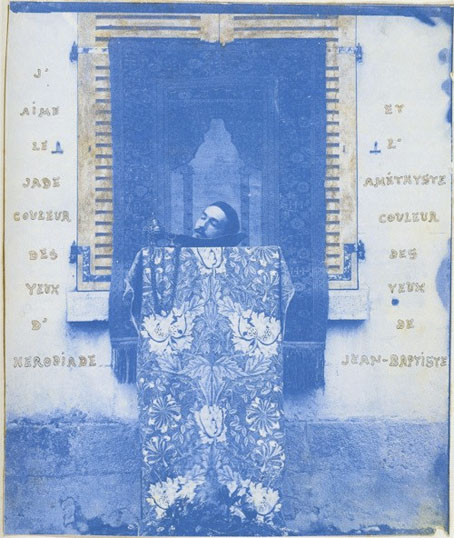
I’ve had this picture hanging around for a couple of months, something that good friend Thom sent me (thanks Thom!) to add to the apparently limitless catalogue of Salomé-related pictures. The subject is everyone’s favourite fin de siècle aristocrat Robert de Montesquiou—eccentric poet, waspish aesthete and chiroptophile—posing as the head of John the Baptist in a cyanotype from circa 1885 which may be embellished in the Comte’s own hand.

Meanwhile, Michelangelo writes to inform me of a feature-length Super-8 film on the Salomé theme by Mexican filmmaker Téo Hernandez (1939–1993) which will receive a screening at the Pleasure Dome, Toronto, in February. Sound very Jarmanesque so naturally I’d love to see it. Details here.

Elsewhere on { feuilleton }
The Salomé archive

Previously on { feuilleton }
Philippe Jullian, connoisseur of the exotic

Weekend links 144

thomas.jpg

Ruins 3 by Rachel Thomas and Dan Tobin Smith.

“Dan wanted to do something on a really large scale and was looking at a lot of Piranesi and started talking to me about ruins. I then started looking at modern interpretations of this idea, I was obsessed with the post modern architecture of SITE, Disney fantasy settings, Busby Berkeley, Sotsass ceramics, Art Deco motifs in general, Giorgio de Chirico’s paintings, Arabic temples and on and on…” Rachel Thomas talks to Daisy Woodward about Imaginary View, an exhibition currently showing at Somerset House, London.

• A brief description of The Yokel’s Preceptor (1855), a guide to Victorian London’s gay underworld by William Dugdale. When do we get to see a facsimile of this document? The slang is a treat.

• Mix of the week: Secret Thirteen Mix 054, a great selection by Biosphere of doomy ambience from the Post Punk/early Industrial era, 1979–1981.
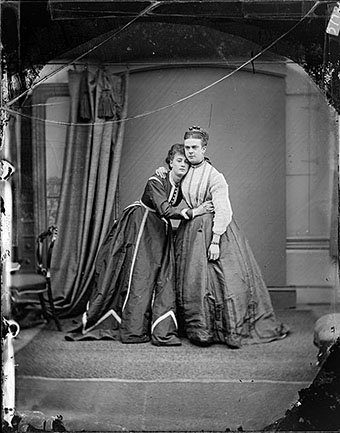
fannyandstella.jpg

Stella (Ernest Boulton) with Fanny (Frederick Park) (c. 1860–1870).

While Stella and Fanny might be the most terrible show-offs, not to mention industrious sex workers, even they drew the line at coupling in public places. Over the course of the subsequent trial, and despite bribing witnesses, the prosecution failed to prove that sodomy had ever occurred, either between the two young men themselves, or within their circle of genteel “sisters”, or even in a dark corner behind the Haymarket with a passing guardsman. Eventually, and only after a second trial a year later, the young men were found not guilty and allowed to slip back into their lives of pro-am theatricals, touring together and separately in such limp pieces as A Comical Countess and A Morning Call.

Kathryn Hughes reviews Fanny and Stella: The Young Men Who Shocked Victorian England by Neil McKenna. Related: photographs of the pair.

The Twilight Language of Nigel Kneale, a book of essays and a cassette tape dedicated to the television dramatist.

Sheltered and Safe from Sorrow: “Victorian mourning rituals, tombstones, epitaphs, and other creepy things”.

Crate digging and the resurgence of vinyl. Related: Men & Vinyl, a Tumblr devoted to men and their discs.

• Designer Shirley Tucker talks about her cover for the first edition of The Bell Jar by Sylvia Plath.

• More Will Bradley at The Golden Age (formerly Golden Age Comic Book Stories).

The Mirror Reflecting (Part 2), a new track by The Haxan Cloak.

Psychedelic Press UK | Related: Catnip: Egress to Oblivion?

Paris in colour circa 1900.

Twilight (1983) by Pete Shelley | Twilight (2000) by Antony and the Johnsons | Twilight (2005) by Robin Guthrie & Harold Budd

Kenneth Anger’s Hollywood Babylon

anger1.jpg

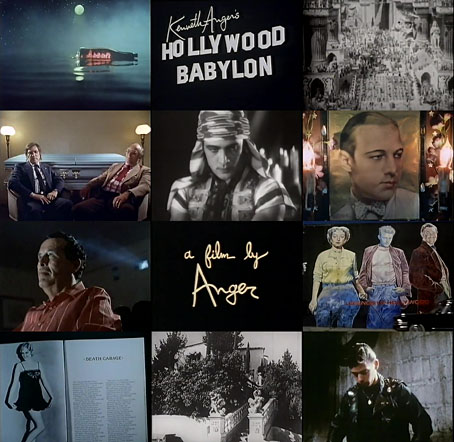
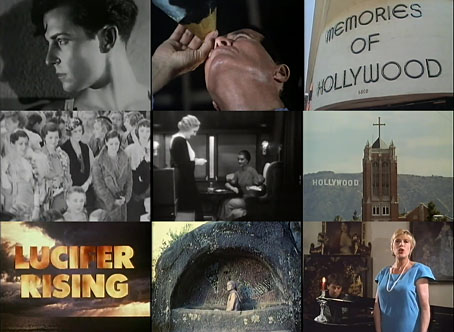
Nigel Finch was a key member of the team of producers and directors working on the BBC’s Arena arts documentaries throughout their golden run during the 1980s and 1990s. The films he directed himself—among them studies of Robert Mapplethorpe’s photography, and a history of the Chelsea Hotel in New York—gave him an opportunity to push some gay content into the TV schedules at a time when Britain’s gay population were seen as enough of a public threat to be legislated against. Some of that proselytising impulse can be found in Kenneth Anger’s Hollywood Babylon (1991), an hour-long documentary which alternates the life and work of the filmmaker with readings and enactments of the lurid episodes recounted in Anger’s scandal anthologies, Hollywood Babylon and Hollywood Babylon II. Finch at one point asks whether Fireworks, the first film in Anger’s Magick Lantern Cycle, should be regarded as a pioneering piece of gay cinema; Anger’s says he’s happy if people take it that way but says little else about its evident homoerotic atmosphere. He remains as resistant to identity politics as he’s always been. (See the unauthorised biography by Bill Landis for details.)

anger2.jpg

Between the readings and interview sections Finch shows Anger being chauffeured around Beverly Hills in a hearse which stops occasionally at some locus of bygone scandal. Most of the Anger anecdotes are familiar ones from subsequent interviews but there is a bonus for Angerphiles with the appearance at the end of Marianne Faithfull who talks a little about their relationship before singing Boulevard Of Broken Dreams. The picture quality of this YouTube copy could be better but it’s watchable enough.

Update: That YouTube link went private so I’ve updated the links to a better copy at the Internet Archive.

Previously on { feuilleton }
Lucifer Rising posters
Externsteine panoramas
Missoni by Kenneth Anger
Anger in London
Arabesque for Kenneth Anger by Marie Menken
Edmund Teske
Kenneth Anger on DVD again
Mouse Heaven by Kenneth Anger
The Man We Want to Hang by Kenneth Anger
Relighting the Magick Lantern
Kenneth Anger on DVD…finally

Weekend links 143

empire.jpg

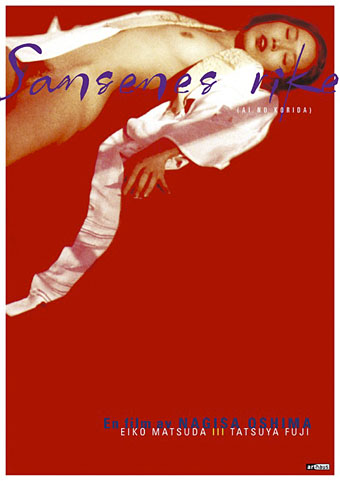
Ai No Corrida poster design by Egil Haraldsen (2001).

• “Back then, publishing an interview with Félix Guattari alongside little chats with rough trade and street walkers was unheard of — it still is for the most part.” BUTT on Kraximo, a gay Greek magazine of the 1980s.

13 books for 2013: A selection of forthcoming titles at Strange Flowers which so closely aligns with my preoccupations that I worry he’s reading my mind.

• “The Macaulay Library is the world’s largest and oldest scientific archive of biodiversity audio and video recordings.”

• A free BitTorrent Robert Anton Wilson audio and video pack. See also the RAW files at the Internet Archive.

beijing.jpg

The Pangu Building, Beijing, January 12th, 2013. Blade Runner arrives six years early.

Wired celebrates 100 years of Edward Johnston’s typeface for the London Underground.

Borges’ translation of Ulysses. Or of the last page of Ulysses as a translation of Ulysses.

0181, a new album by Four Tet, can be heard in full at SoundCloud.

• The Edge question for 2013: “What should we be worried about?

JG Ballard documentaries at Ubuweb.

Unlocking Dockstader.

• RIP Nagisa Oshima.

Ai No Corrida (1980) by Quincy Jones | Empire Of The Senses (1982) by Bill Nelson | Forbidden Colours (1983) by David Sylvian & Riuichi Sakamoto

Jean Genet, 1981

genet.jpg

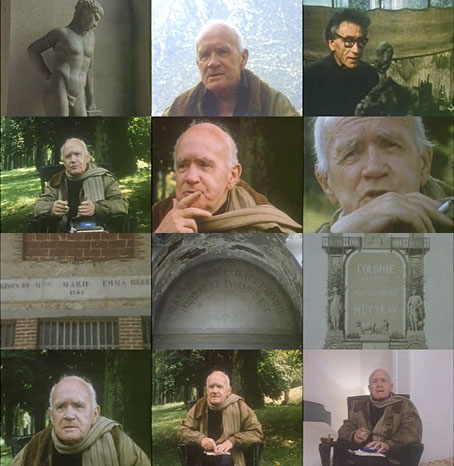
Until watching Antoine Bourseiller’s film, the only interview I’d seen with Jean Genet was the one filmed by the BBC in 1985 in which a tetchy and evidently irritated Genet made a fool of interviewer Nigel Williams, and compared the whole experience to a police interrogation. (Williams and his interview are memorialised in Iain Sinclair’s Downriver with the words “Is he the one who made a cunt of himself with Genet?”)

Bourseiller’s 52-minute film is very different, presenting a warm and effusive writer who talks at length about lovers, friends (including Alberto Giacometti), posterity (which he dismisses), and his prison experiences. Between the interview sections there are readings from some of his texts. That this is as good as BBC films used to be shows what a wasted opportunity the actual BBC interview was. At the time it was impossible to tell whether Genet was simply a prickly character or whether Williams and company had severely pissed him off. Judged against Bourseiller’s film I’d bet on the latter.

(Note: The YouTube copy is in French but includes optional subtitles.)

Previously on { feuilleton }
Un Chant d’Amour (nouveau)
Jean Genet… ‘The Courtesy of Objects’
Querelle again
Saint Genet
Emil Cadoo
Exterface
Penguin Labyrinths and the Thief’s Journal
Un Chant D’Amour by Jean Genet