Weekend links 490

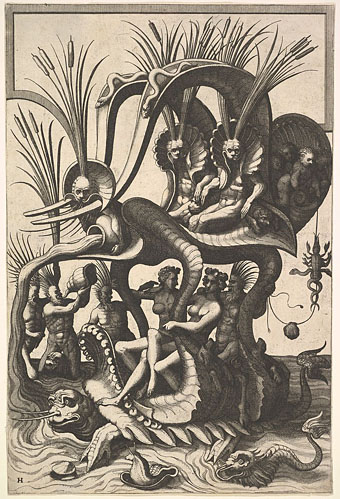
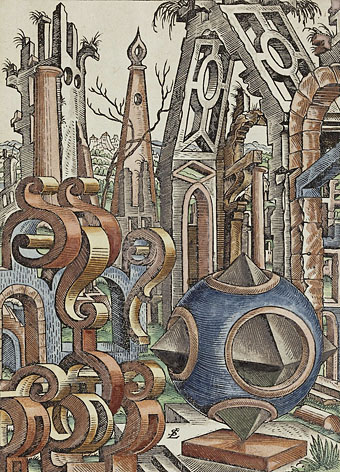
stoer.jpg

An engraving from The Geometric Landscapes of Lorenz Stoer (1567).

• Curtis Harrington’s cult horror film, Night Tide (1961), receives a lavish blu-ray reissue from Powerhouse in January. The limited edition will include an extra disc of Harrington’s early short films which encompass Poe adaptations and also Wormwood Star, his portrait of occult artist (and actor in Night Tide) Marjorie Cameron.

• “He was the first American representative of an electronic sound that was largely coming from Europe, from bands like Kraftwerk, or producers like Giorgio Moroder and Pete Bellotte…” Jude Rogers on Patrick Cowley.

Clive Hicks-Jenkins examines Hans Poelzig’s and Marlene Moeschke’s work on Paul Wegener’s 1920 film of The Golem. Wegener’s film is released this month in a restored blu-ray edition by Eureka.

• “Conrad was uncompromising in his beliefs until the end, sticking to his ideals with tenacious fervor.” Geeta Dayal on Tony Conrad: Writings, edited by Constance DeJong and
Andrew Lampert.

• At Dennis Cooper’s: 47 dead films. One of the films, Hu-Man (1975), a French science-fiction drama starring Terence Stamp, isn’t as dead as was assumed.

• The Danske Filminstitut has made a collection of Danish silent films available to watch for free online.

• The Last Time I Saw John Giorno, an Extraordinary Performance Poet by Mark Dery.

• “Like looking through butterfly wings”: Ira Cohen’s Mylar chamber—in pictures.

Callum James reviews the Early Poetical Works of Aleister Crowley.

• Drawing the Gaze: Revisiting Don’t Look Now by Jesse Miksic.

• Mix of the week: FACT Mix 745 by Visible Cloaks.

Mind Warp (1982) by Patrick Cowley | Go-Go Golem (1986) by Golem Orchestra | Night Tide (1995) by Scorn
Weekend links 487

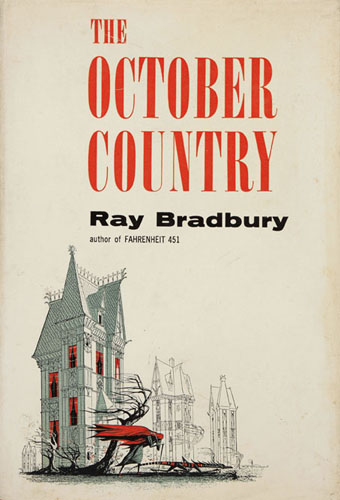
october.jpg

Art by Joe Mugnaini (1955).

• Mixes of the week: The Ivy-Strangled Path Vol. XIX by David Colohan, and The Ephemeral Man’s Teapot 2—Atmosphere insomniac by The Ephemeral Man.

• Patrick Clarke talks to Morton Subotnick and Lillevan about Subotnick’s pioneering synthesizer composition, Silver Apples Of The Moon (1967).

• A second volume of London’s Lost Rivers, a walker’s guide by Tom Bolton with photography by SF Said, is published by Strange Attractor next month.

“That country where it is always turning late in the year. That country where the hills are fog and the rivers are mist; where noons go quickly, dusks and twilights linger, and midnights stay. That country composed in the main of cellars, sub-cellars, coal-bins, closets, attics, and pantries faced away from the sun. That country whose people are autumn people, thinking only autumn thoughts. Whose people passing at night on the empty walks sound like rain.”

Ray Bradbury quoted by Sam Weller in an examination of Bradbury’s dark tales and autumnal horror stories

Lumberjacks In Heat is 11 minutes of music from Mechanical Fantasy Box by Patrick Cowley, the latest Cowley collection from Dark Entries.

They Poured Out Their Light Until Only Darkness Remained: new eldritch vibrations from The Wyrding Module.

• Carmen Villain on the magic of Jon Hassell’s Aka / Darbari / Java: Magic Realism.

• An Evil Medium: Elizabeth Horkley on the films of Kenneth Anger.

• Cosmic gardens and boulder boulevards by Charles Jencks.

• At Dennis Cooper’s: Murray Melvin Day.

Richard Dawson‘s favourite music.

• RIP John Giorno.

My Girlfriend Is A Witch (1968) by October Country | The October Man (1982) by Bill Nelson | Late October (1984) by Harold Budd

Weekend links 485

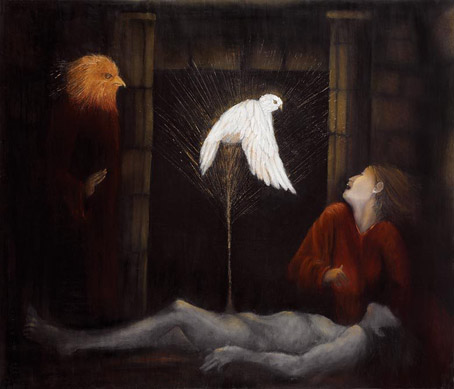
jansson.jpg

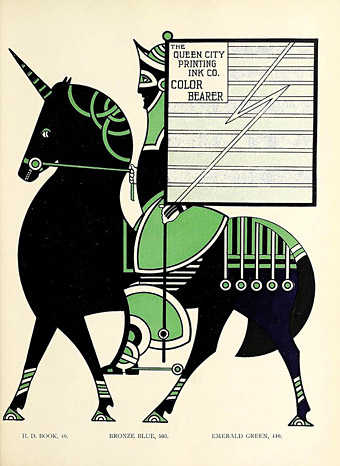
Art by Augustus Jansson for the Queen City Printing Ink Company (c.1906).

• Much of my music listening for the past couple of weeks has been the compositions and soundtracks of the late Jóhann Jóhannsson, so these links are pertinent: Jóhannsson and ensemble live at KEXP in 2010, and a memorial performance of Virdulegu Forsetar from last year.

• “[Her] approach to making electronic music was hard work, too, but it was less about controlling sounds and more about surrendering to them.” Geeta Dayal on Éliane Radigue whose Chry-Ptus has been reisssued by Important Records.

• Safe From Harm: Tim Murray on how Coil helped AIDS awareness on VHS. The video in question, The Gay Man’s Guide to Safer Sex, may be viewed at the Internet Archive.

• In the LRB podcast Ian Penman and Jennifer Hodgson discuss Penman’s new collection of essays, It Gets Me Home, This Curving Track.

• “A land of fog and emotional nightmares.” Oliver Wainwright on why Britain booted out the Bauhaus.

• Mapping Scotland’s Grim History of Witch-Hunting by Feargus O’Sullivan.

• Long-Haired Stars & the End of the World: John Boardley on comets.

My Will by Minimal Compact, a new version of an old song.

• La Danse Des Comètes (1970) by Nino Nardini | Kohoutek-Kometenmelodie 1 & 2 (1973) by Kraftwerk | Cometary Wailing (Valley Plateau) (1981) by Bernard Xolotl

Weekend links 483

doetecum.jpg

Fantastic Sea Carriage (1556) by Johannes van Doetecum the Elder.

• I’ve grown increasingly tired of Kubrick-related micro-fetishism (despite contributing to it myself with previous posts) but this piece at Film and Furniture about the history of David Hicks’ Hexagon carpet design is a good one.

• “In hindsight, we can see how rarely one technology supersedes another…” Leah Price on the oft-predicted, never arriving death of the book.

• From Rome To Weston-Super-Mare: Eden Tizard on Coil’s Musick To Play In The Dark.

“It is,” the editor of the London Sunday Express had written nine years earlier, sounding like HP Lovecraft describing Necronomicon:

the most infamously obscene book in ancient or modern literature….All the secret sewers of vice are canalized in its flood of unimaginable thoughts, images and pornographic words. And its unclean lunacies are larded with appalling and revolting blasphemies directed against the Christian religion and against the name of Christ—blasphemies hitherto associated with the most degraded orgies of Satanism and the Black Mass.

Regarded as a masterpiece by contemporary writers such as TS Eliot and Ernest Hemingway, celebrated for being as difficult to read as to obtain, Ulysses had been shocking the sensibilities of critics, censors, and readers from the moment it began to see print between 1918 and 1920, when four chapters were abortively serialized in the pages of a New York quarterly called The Little Review. Even sophisticated readers often found themselves recoiling in Lovecraftian dread from contact with its pages. “I can’t get over the feeling,” wrote Katherine Mansfield, “of wet linoleum and unemptied pails and far worse horrors in the house of [Joyce’s] mind.” Encyclopedic in its use of detail and allusion, orchestral in its multiplicity of voices and rhetorical strategies, virtuosic in its technique, Ulysses was a thoroughly modernist production, exhibiting—sometimes within a single chapter or a single paragraph—the vandalistic glee of Futurism, the decentered subjectivity of Cubism, the absurdist blasphemies and pranks of Dadaism, and Surrealism’s penchant for finding the mythic in the ordinary and the primitive in the low dives and nighttowns of the City.

Michael Chabon on the US trial of James Joyce’s Ulysses

• Mix of the week: Through A Landscape Of Mirrors Vol. III—France II by David Colohan.

• Another Not The Best Ambient And Space Music Of The Year Post by Dave Maier.

Sarah Angliss and friends perform Air Loom at Supernormal, 2019.

• Out next month: The World Is A Bell by The Leaf Library.

Amy Simmons on where to start with Pier Paolo Pasolini.

• At Dennis Cooper’s: Candy Clark Day.

• Uccellacci E Uccellini (1966) by Ennio Morricone | Liriïk Necronomicus Kahnt (1978) by Magma | Ostia (The Death Of Pasolini) (1986) by Coil

Weekend links 482

pacheco.jpg

Hades II (2004) by Ana Maria Pacheco.

• I’ve been reading a lot of Angela Carter over the past few weeks so the news of her house in Clapham being awarded a blue plaque was coincidental but also timely. Related: Angela Carter Online, and The Holy Family Album (1991), “a sacrilegious take on the history of Christian painting and iconography” written and narrated by Carter. Also, we’re still some distance from Halloween but take this as a precursor: Vampirella (1976), Angela Carter’s first radio play for the BBC, starring Anna Massey as a vampire countess.

• In May this year the Dark Entries record label announced the discovery of more tapes from Patrick Cowley’s pre-disco years in the 1970s. A selection from the archive, Mechanical Fantasy Box, will be released next month, together with a book of the same name reprinting Cowley’s homoerotic journal from the period.

• More Magma (there’s always more Magma): Warren Hatter on 7 essential albums from their sprawling discography. Related: Magma on film in 1972, appearing in Moi y’en a vouloir des sous, a short but typically intense performance.

• Out in November: Paul Wegener’s adaptation of Gustav Meyrink, Der Golem, wie er in die Welt kam (1920), receives a substantial blu-ray release from Eureka.

• Joe Banks’ forthcoming space-rock exegesis, Hawkwind: Days of the Underground, now has its own website.

• Mix of the week: The Stations Of Summer by Cafe Kaput.

Photos of London’s abandoned Underground stations.

• At Dennis Cooper’s: Alan Boyce grows invisible.

Gudrun Gut‘s favourite albums.

Tanz Der Vampire (1969) by The Vampires Of Dartmoore | Ketch Vampire (1976) by Devon Irons | Vampires (1999) by Pet Shop Boys