Tom’s World

tom01.jpg

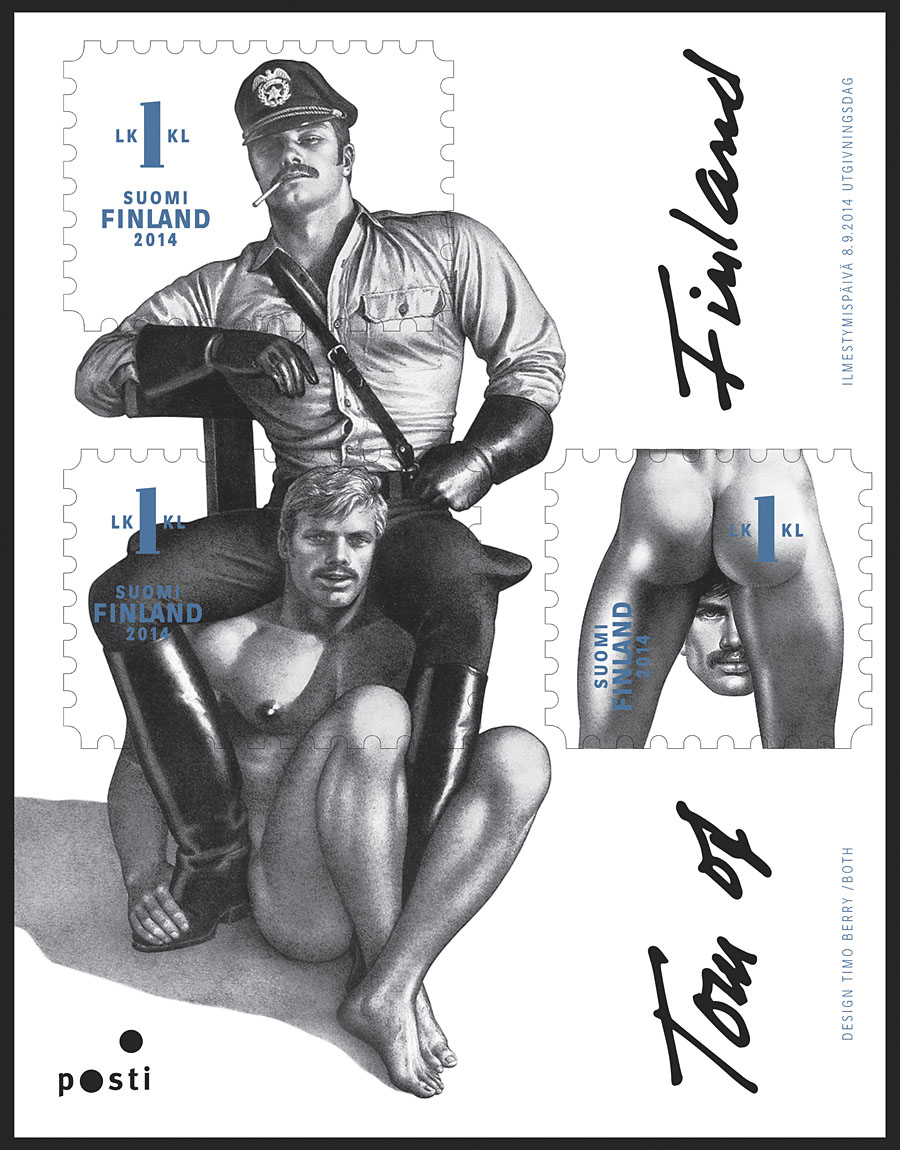
The celebratory stamps produced by the Finnish postal service in 2014.

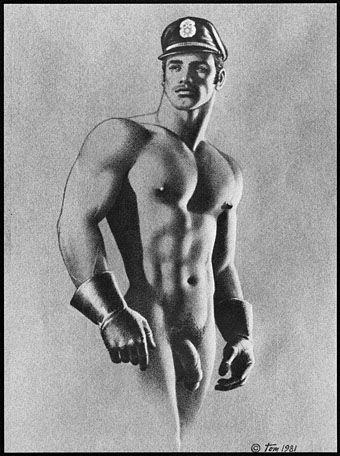
A post for Touko Valio Laaksonen, the man known to the world as Tom of Finland, born 100 years ago today. Back in March I finally acquired Tom of Finland XXL, a gorgeous, heavyweight Taschen volume edited by Dian Hanson, as a result of which Tom and his leather-clad muscle-men have been in my thoughts even without his anniversary. The thick-necked hunks that populate Tom’s drawings have never been my ideal of masculine beauty but I admire his dedication to erotic obsession as well as his draughtsmanship, the latter even more so after seeing the high-quality reproductions in Hanson’s collection. The drawings from the 1970s and 80s are especially impressive, when success had given the artist more time to spend perfecting his figures and capturing all the ways that leather apparel folds itself and reflects the light. His beautiful pencil renderings of jackets, trousers and boots treat their subjects to the careful scrutiny that Dutch still-life painters used to devote to pheasants and apples; this is a fetishist’s infatuation raised to the status of art.
tom07.jpg

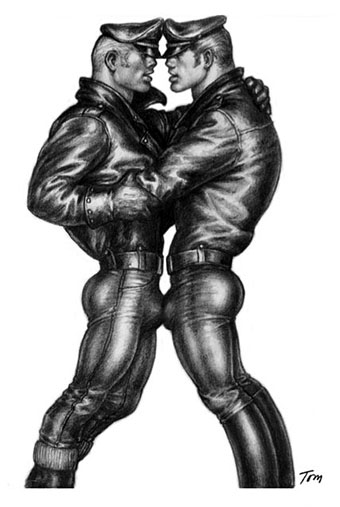
Leather duo (1963).

Tom of Finland’s progress from amateur pornographer to gallery artist and national institution is a very unlikely career path, especially when he wasn’t dependent on the support of the art market. Tom’s earliest drawings and comic strips were relatively simple things but still explicit enough for the Finnish authorities in the 1940s to find them obscene. Many erotic artists have been subject to similar opprobrium but none of them have achieved posthumous fame as the most internationally visible male artist from the nation that once proscribed their work, and all this without toning down that work in any way. Tom shares his celebrity with Moomin creator Tove Jansson, which means that Finland is now the only nation in the world whose art is represented internationally by a gay man and a lesbian. Their work, needless to say, could hardly be more different, despite both artists being adept at black-and-white illustration and the creation of sequential narratives. Jansson’s Moomins have been universally popular for many years but Tom of Finland’s art, which has never been anything other than gay pornography, is inevitably limited in its appeal. The lavish depictions of cock-sucking and anal sex are so profuse and unrelenting that whatever is shown of his drawings in the general media is always carefully selective, shunning the enormous penises in favour of a moustached face or a pair of embracing clones.
tom04.jpg

I’m amused by this and also reassured that there are still a few aspects of human life that are too anarchic for exploitation by mass media. The global domination of American culture and American technology has rendered everything grist to its all-devouring mill, everything, that is, except for explicit sex. Pornography is also a part of the US cultural behemoth but it’s like the bastard child that everybody pretends doesn’t exist and wishes would go away. America’s gay publications gave Tom of Finland his nom de plume and made him famous, but porn, for a variety of reasons, resists universal acceptance and approval. Tom’s art is so single-minded in its representation of gay men gleefully fucking each other that there’s little about it that can be exploited by cultural products intended to appeal to the widest audience, or sold to nations with repressive attitudes to gay sex and sexuality. Tom’s libidinous leather-clad hero, Kake, ejaculates his way through multiple penetrations and gang bangs the likes of which you’ll never see in a big-budget franchise, no matter how much Hollywood teases audiences with more polite same-sex scenarios. How many erections are a paying audience prepared to swallow?
Continue reading “Tom’s World”

Weekend links 514

kircher.jpg

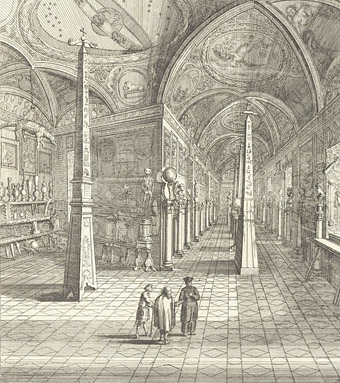
Athanasius Kircher welcoming two guests to the Collegio Romano, a detail from the frontispiece to his Romani Collegii Societatis Jesu Musaeum celeberrimum (1678).

Opium (1919) by Robert Reinert: “A Chinese opium dealer takes revenge on Westerners who have corrupted his wife.” With Werner Krauss and Conrad Veidt a year before their pairing in The Cabinet of Doctor Caligari.

Aubrey Beardsley at Tate Britain: in which the gallery thinks that 7 minutes is enough to give us a taste of a major exhibition that we can’t otherwise see.

Joe Pulver (RIP): His Highness in Yellow. A memorial piece that includes artist Michael Hutter talking about his paintings of Carcosa.

Court Mann on the strange history of Robert Smithson’s Spiral Jetty, 50 years old this month.

• “Invisible Little Worms”: Athanasius Kircher’s Study of the Plague by John Glassie.

Sophie Monks Kaufman on why literary lesbians are having a moment on screen.

• Photographer Ryan McGinley: “I was taught to believe in Satan. It scared me.”

• At Dennis Cooper’s: Ellen Burstyn Day, and the ghostly novels of WG Sebald.

Dorian Lynskey on where to start with Nina Simone’s back catalogue.

• Wie funktioniert ein Synthesizer? (1972). Bruno Spoerri explains.

• Banham avec Ballard: On style and violence by Mark Dorrian.

John Boardley on the most dangerous book in the world.

Improvisation for Sonic Cure by Ryuichi Sakamoto.

• The Strange World of…JG Thirlwell.

Diet Of Worms (1979) by This Heat | Stomach Worm (1992) by Stereolab | Heartworms (1998) by Coil

Oscar (1985)

oscar1.jpg

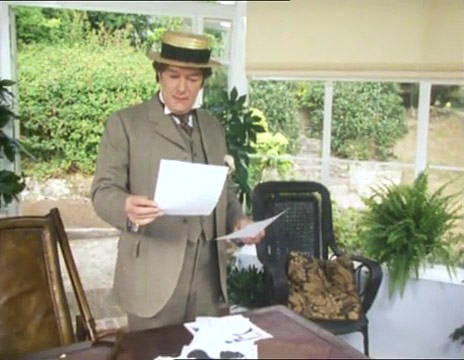
I’ve mentioned John Hawkesworth’s three-hour television biography of Oscar Wilde in previous Wilde-related posts, but was never able to point to a viewable copy until now. Oscar was broadcast by the BBC in three parts in 1985, and if it was ever shown again I don’t recall it; I certainly missed capturing it on tape. This was frustrating because I always remembered Michael Gambon’s portrayal of Wilde as being the best I’d seen, but the only reissues for home viewing were long-deleted tapes and discs produced for other countries. Having watched the drama again I’m pleased to find it as good as I remembered, possibly more so since I’ve read a several Wilde biographies in the interim so I’m better able to judge its accuracy.

oscar2.jpg

Oscar examining Aubrey Beardsley’s Salomé illustrations.

As a writer and TV producer John Hawkesworth specialised in period drama, creating and writing episodes for The Duchess of Duke Street, Danger UXB (about wartime bomb disposal), and the celebrated Granada TV Sherlock Holmes series featuring Jeremy Brett’s definitive portrayal of the detective. Oscar was based on biographical books by H. Montgomery Hyde, an MP who lost his seat for his campaigns in the late 1950s and 1960s against the British laws forbidding homosexual acts. Knowing this it’s significant that Hawkesworth’s opening scene in the first episode is a brief parliamentary discussion about the notorious Labouchere Amendment of 1885 (“The Blackmailer’s Charter”) which the narrator informs us would send Oscar Wilde to prison ten years later. Hawkesworth divides his drama into three distinct phases: Gilded Youth (concerning Wilde’s relationship with Alfred Douglas, his artistic success and the ire of the Marquess of Queensberry); Trials (the personal as well as legal variety); and De Profundis (imprisonment and its aftermath).

oscar3.jpg

In the dock at the Old Bailey.

The arc of tragedy is a familiar one, of course, but other dramatisations are seldom as well-balanced as here. Feature films about Oscar Wilde generally have shorter running times so devote their larger budgets to a recreation of the glamorous fin-de-siècle rise and the terrible downfall. Oscar is a typical BBC production of the period, mostly recorded on video in studio sets with occasional film work for exteriors. What we see of Victorian London appears sparse compared to the Sherlock Holmes episodes which were being filmed at this time. Hawkesworth may have been restricted by budget but three hours allows him to pay greater attention to the later episodes, especially the courtroom scenes. Oscar was the first screen biography to include the discussion of sexual details during the trial, as well as to show Wilde alone with a naked boy. This was a considerable advance at a time when gay sex of any kind was a rare sight on British television, and when even the straight variety could cause problems, as it did for Gambon and co. a year later when Dennis Potter’s The Singing Detective inspired the contemptible Mary Whitehouse to complain to the BBC. Hawkesworth also runs through the later years to the very end, a period of decline usually avoided or, as in Brian Gilbert’s Wilde (1997), disingenuously truncated so as to provide a “happy” resolution. Given this, I would have preferred some of the earlier scenes to be longer and to offer a sense of Wilde’s status as a serious thinker about art and aesthetics. Wilde’s flamboyant persona made him famous but he was influential not for his dandyish manner but for his ideas and their articulation in essays, lectures and the plays; his aesthetic theories were the foundation of all his writing. The most famous line from his final poem is a statement of philosophic principle: “Yet each man kills the thing he loves”.

oscar4.jpg

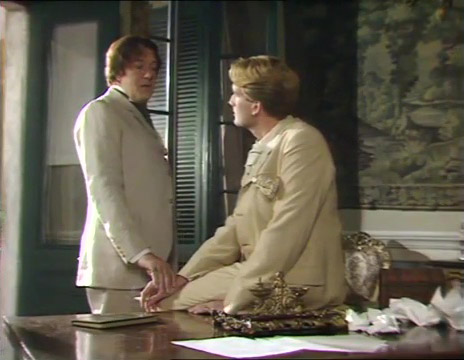
Oscar and Bosie.

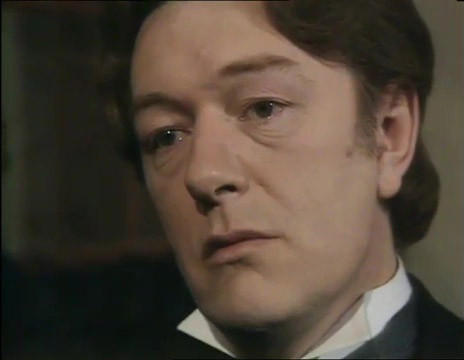
Aesthetics aside, the public perception of Oscar Wilde presents a hurdle for dramatisations which risk resurrecting the caricatures that flourished while Wilde was alive. Michael Gambon’s performance shows Wilde as a human being, not merely a charming dispenser of witty aphorisms. This has always seemed to me crucial for any actor; it’s not enough to merely look like Wilde—as Robert Morley and Stephen Fry did—but you have to be able to convey the horrors, the indignity (and, with regard to his wife, the culpability) of his later years. Stephen Fry is a good comic actor but he never could have played the Singing Detective. Gambon’s seductively purring voice is another plus, and he even allows a hint Irish brogue to slip through now and then. Of the other actors, Robin Lermitte looks more like Alfred Douglas than does Jude Law in Brian Gilbert’s film, but Law is better at conveying Bosie’s mercurial and tempestuous character; likewise Tom Wilkinson made the Marquess of Queensbury seem a little more human in Gilbert’s version, at least in the beginning, whereas Norman Rodway presents the man from the outset as a perpetually furious goblin. Missing from Hawkesworth’s drama are Wilde’s good friend Ada Leverson, and his mother, Speranza, whose urging him to stand tall and remain in England when the police were coming for him was one of the factors that sealed his fate.

Oscar may be seen here: Part One | Part Two | Part Three

For now, and possibly the foreseeable future, this is the only way to see this drama so I’d suggest downloading it if you can. It’s a rare work that could easily vanish once again.

Elsewhere on { feuilleton }
The Oscar Wilde archive

Previously on { feuilleton }
The Importance of Being Oscar

Weekend links 512

white

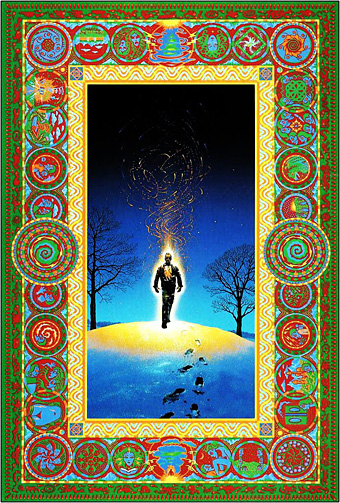
Cover art by Tim White for Weaveworld (1987) by Clive Barker.

• Another week leading with obituaries but that’s where we are just now. Among others, we had film maker Bruce Baillie, cartoonist Mort Drucker, lesbian/gay rights activist Phyllis Lyon, film director Nobuhiko Obayashi, artist Tim White, and music producer Hal Willner. Related to the last: Hal Willner’s Vanishing, Weird New York.

Open Door is a new recording by Roly Porter from his forthcoming album, Kistvaen. I designed the CD and vinyl packaging for this one.

• From 1995: Peter Wollen on dandyism, decadence and death in Donald Cammell & Nicolas Roeg’s Performance.

• “Fear, bigotry and misinformation—this reminds me of the 1980s AIDS pandemic,” says Edmund White.

David Lynch wants you to meditate, maybe make a lamp during self-isolation.

• “Weird tale” by Secret Garden author Frances Hodgson Burnett discovered.

• Behind the iron curtain, the final frontier: Soviet space art in pictures.

• Mix of the week: Secret Thirteen Mix 301 by Asher Levitas.

• At Dennis Cooper’s: Raymond Queneau, Party Animal.

Oren Ambarchi Archive at Bandcamp.

Japan’s Tourism Poster Awards.

• Hal Willner produces: Juliet Of The Spirits (1981) by Bill Frisell | Apocalypse (1990) by William S. Burroughs | The Masque Of The Red Death (1997) by Gabriel Byrne

BUTT covered

butt00.jpg

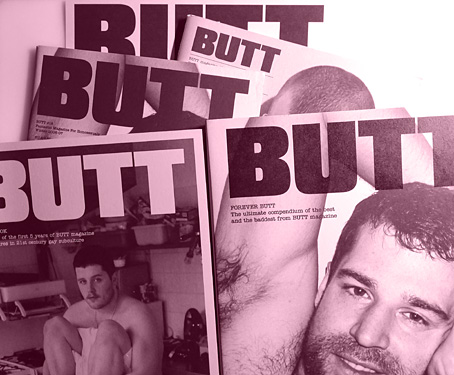
What I discovered is that BUTT actually matters, and I’ll tell you why. BUTT fills a hole, as tautologous as that may sound. I’m tempted to say that BUTT fills the vacuum left by the sad and lamented loss of such historically important magazines as the original Andy Warhol’s Interview, After Dark and the first five years of index (under the editorship of Bob Nickas), but since none of those magazines were explicitly and overtly, capital G gay, I guess it’s more accurate to say that BUTT has single-handedly pioneered the notion of a smart, literate and fashionable, conversational gay magazine that isn’t interested in propping up some ideologically proper or even terribly consistent image of what it means to be a homosexual, and that also manages to be dirty. —Bruce LaBruce

BUTT magazine—variously subtitled “Amazing (or Fantastic, or Hysterical) Magazine for Homosexuals”, “The Homosexualist Quarterly”, “International Fagazine”, etc, etc—ceased publication in 2012, but the best of its run is preserved in two book collections from Taschen: BUTT Book (2006), a paperback which seems now to be out of print, and Forever BUTT (2014), a hardback contained within leatherette boards. I was re-reading some of the interviews in the books recently, and feeling the loss of a gay magazine that was easily the best of its kind in the 2000s, a welcome alternative to contemporaries that were little more than glossy aspiration fodder, filled with fashion shoots and anodyne celebrity interviews.

butt01.jpg

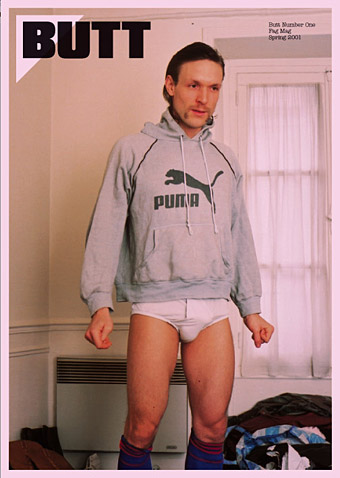
Issue 1: Bernhard Willhelm by Wolfgang Tillmans.

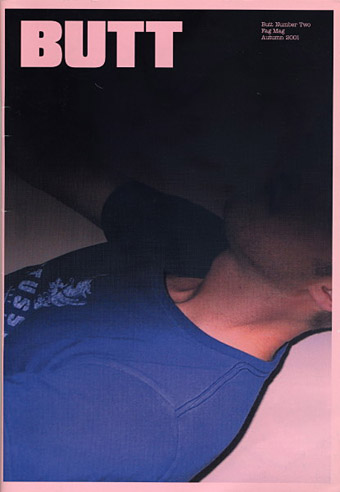
BUTT wasn’t as thoroughly sex-obsessed as Boyd McDonald’s Straight to Hell but publishers/editors Gert Jonkers and Jop van Bennekom shared McDonald’s determination to reflect the lives of gay men as they were lived, with an equivalence given to complete unknowns (often the magazine’s own readers) as well as to successful writers, musicians and film directors. Interviews with the latter predominately concerned the subjects’ sex lives and interests, they were never promo pieces for current work. BUTT was the only magazine in the world where you might find interviewees such as Gore Vidal and Edmund White rubbing shoulders with a man like Dirty Danny (“the filthiest homosexual on earth”) or a gay refuse collector. I also loved the design which from the first issue used pink paper stock and only two typefaces for the entire run: Compacta for headlines, and different weights of American Typewriter for everything else. The minimal look established a distinct identity that inspired imitation among later titles such as Kaiserin (“A magazine for boys with problems”).

butt02.jpg

Issue 2: Lernert in Stüssy by Jop van Bennekom.

BUTT ran for 29 issues in all, stopping short of the 30-issue barrier which smaller magazines often struggle to pass. I’m always torn in cases like this, wishing there might have been more while also being aware that magazines can outlive their initial promise if they run for too long. BUTT certainly maintained its integrity, and we have the books, of course, which is more than many other titles manage. Back issues may be found for sale online but they’re increasingly expensive, a disappointment for would-be collectors but also a sign of the magazine’s cult value. I just wish I’d bought more of them as they appeared.

butt03.jpg

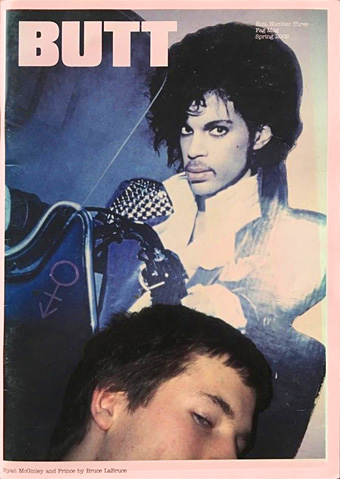
Issue 3: Ryan McGinley and Prince by Bruce LaBruce.

butt04.jpg

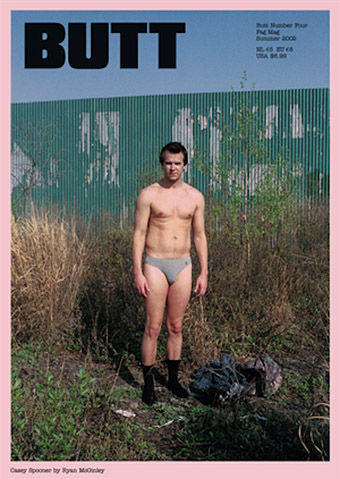
Issue 4: Casey Spooner by Ryan McGinley.

butt05.jpg

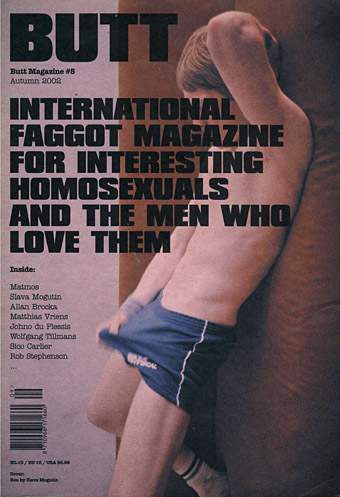
Issue 5: Ben by Slava Mogutin.

Continue reading “BUTT covered”