Weekend links 550

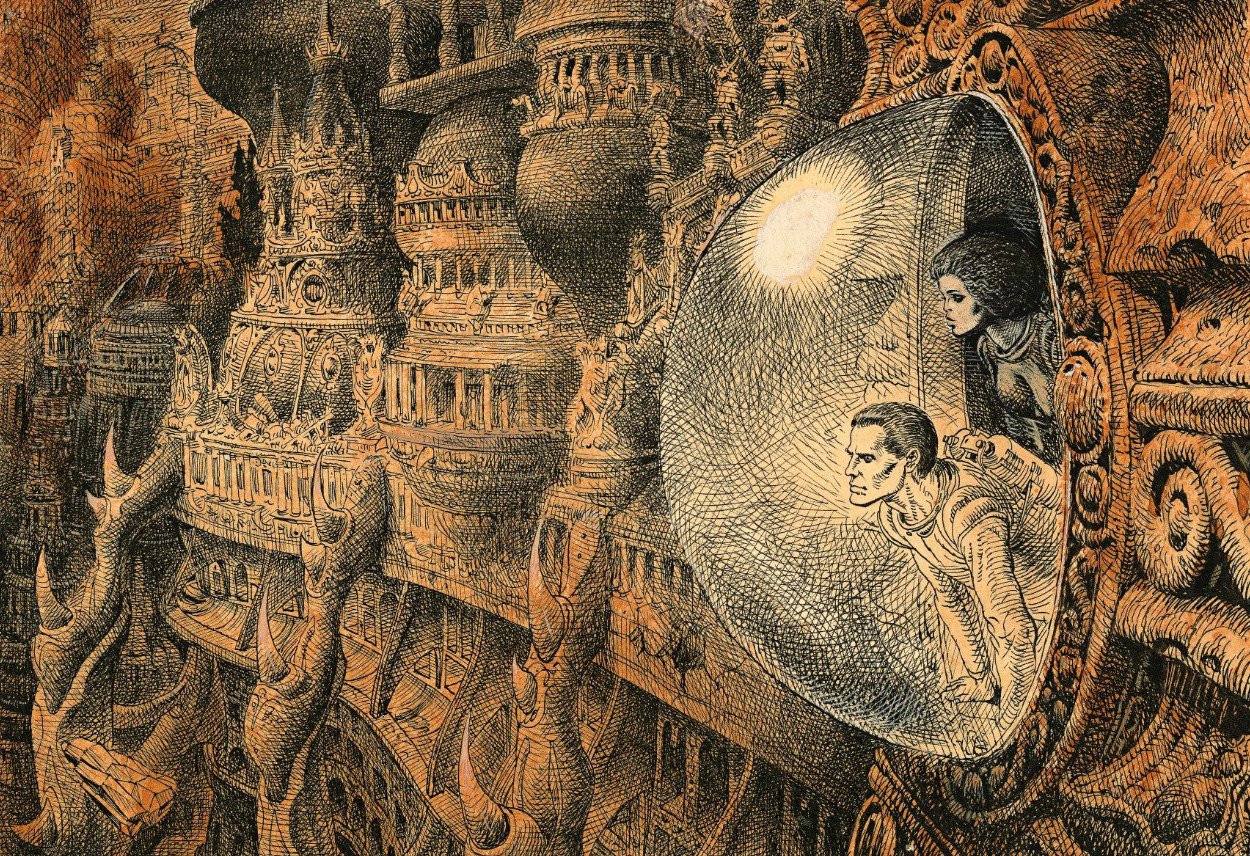
moebius

Illustration by Moebius for Les Robinsons du Cosmos (1970) by Francis Carsac.

Notre Dame des Fleurs is a collection of art based on or inspired by the Jean Genet novel. The book, which includes some new work of mine, will be published in February. Editor Jan van Rijn has a trailer for it here. It’s limited to 150 copies so anyone interested is advised to pre-order.

• Books that made me: William Gibson‘s influential reading. Good to see him mention Suttree by Cormac McCarthy, an outstanding novel that might be better known if it wasn’t for the gravitational pull of McCarthy’s other works.

• Zagava have announced a paperback reprint of The Art of Ilna Ewers-Wunderwald, a collection of neglected Art Nouveau drawings and designs compiled by Sven Brömsel.

• At Dennis Cooper’s: Black_Acrylic presents…He Stood In The Bath And He Stamped On The Floor: A Joe Meek Day.

• More yearly roundups: Our Haunted Year 2020 by Swan River Press, and The Year That Never Was by blissblog.

• New music: Spaceman Mystery Of The Terror Triangle by The Night Monitor.

Ralph Steadman’s guided tour through six decades of irrepressible art.

• At Greydogtales: Valentine Dyall: Mystery and Mesmerism.

• At Wormwoodiana: The Esoteric in Britain, 1921.

• At Strange Flowers: Marie Menken’s Lights.

I Want To See The Bright Lights Tonight (1974) by Richard and Linda Thompson | Neon Lights (1978) by Kraftwerk | Lights (1980) by Metabolist
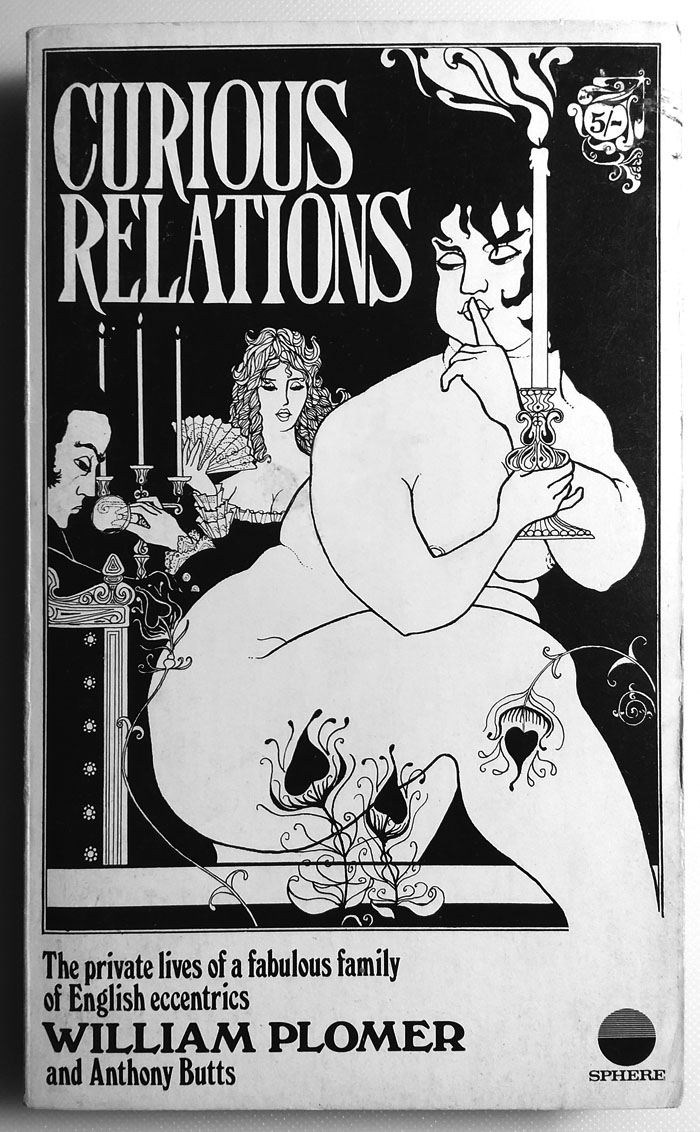
Curious Relations

curious.jpg

“It is the function of creative people to perceive relations between thoughts, or things, or forms of expressions that seem utterly different, and to be able to Connect the seemingly Unconnected.” — William Plomer

Regular readers will know that I relish an art mystery, and also enjoy finding pastiches of Aubrey Beardsley’s endlessly influential drawings. The cover of this book by William Plomer and Anthony Butts, a gift from the generous Mr TjZ, manages to combine both fixations in one. Curious Relations was first published in 1947 with the authors concealed behind the pseudonym “William D’Arfey”. The Sphere edition dates from 1968, a year when Beardsley mania was still prevalent in Britain following the landmark retrospective of the artist’s works at the V&A in 1966. The mystery on this occasion is the identity of the cover artist who isn’t credited, although the solution (for once) hasn’t been particularly elusive. After looking through the Sphere covers at ISFDB I guessed that Bill Botten might be responsible since publishers have a tendency to redeploy artists and designers, and Botten’s covers for science fiction novels displayed a bold graphic style. The guess proved correct, thanks to Mr Botten having a website that details his long career as designer, illustrator and art director for Sphere, Jonathan Cape and others. Some of his other covers have a Beardsley-like quality although there don’t seem to be any more direct pastiches.

bataille.jpg

Bill Botten cover for My Mother (1972) by Georges Bataille.

As for Curious Relations, this is Plomer and Butts’ account of the upstairs and downstairs world of the d’Arfeys and the Mountfaucons, two invented branches of the Edwardian aristocracy based on Butts’ own family, a confection that looks bizarre and absurd enough for me to enjoy. Where the English upper classes are concerned I prefer to see them skewered by the acid wit of Saki; I only want to hear about Downton Abbey if it’s invaded by Sredni Vashtar and his ravening polecat horde. Biographical notes describe Plomer as homosexual so that’s another plus if this is reflected in the book. The double entendre of the title suggests as much. We’ll see.

Elsewhere on { feuilleton }
The Aubrey Beardsley archive

Weekend links 547

baade.jpg

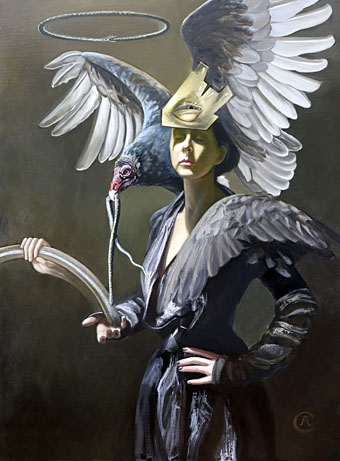
Anti-Vanitas (2018) by Carrie Ann Baade.

• RIP Richard Corben, an artist whose work I wasn’t always keen on but whose enthusiasm for pulp weirdness and cosmic horror was matched by a pulp vitality of his own. Corben’s Den was the first story in the first issue of Heavy Metal, a strip in which Den’s ever-present penis provided some rare equality of nudity in American comics. Corben was also a lifelong Lovecraftian; his 1972 adaptation of The Rats in the Walls is one of the earliest Lovecraft-derived comic strips.

• “Wit was the great man’s defence. Once, crossing Leicester Square with a friend, he looked up and saw a cinema marquee advertising a new film: Michael Redgrave and Dirk Bogarde in The Sea Shall Not Have Them. Coward turned to his friend and said: ‘I don’t see why not. Everyone else has.'” Philip Hoare on Noël Coward’s private lives: the photographs that could have landed him in jail.

• The end of the year brings the lists: Strange Flowers’ Secret Satan, 2020 is a guide to a surfeit of delectable volumes, while at 3 Quarks Daily Dave Maier selects his favourite ambient music of the year.

It’s not an easy life, but for Layne it is better than the alternative. “There is a generation of writers who think that it is a perfectly acceptable thing to accumulate a couple of hundred thousand dollars in student loan debt and go write “takes”—contrary opinion on things like ‘Why Dogs Are Actually The Worst Pet.’” None of it is new, he says, “it’s what people were doing when Rome burned.” But it has left us worse off, he says.

“I feel like we are post-language now,” he says. “Things are more symbolic. The relationship between words and facts and objectivity and their impact seems to have separated to the point where most of the writing that I see, especially on something like Twitter, is by people baffled that people don’t get what they are trying to say. It’s depressing.”

Dominic Rushe on how Ken Layne created an alternative to clickbait in the desert

• “Underworlds, otherworlds, so many passageways on this earth to elsewheres, especially during these weeks of the year.” Nina MacLaughlin on The Shadows below the Shadows.

Dennis Cooper‘s favourite fiction, poetry, non-fiction, film, art, and internet of 2020. Thanks again for the link here!

• The week in strange worlds: The Strange World of Colossive Press, and The Strange World of Robbie Basho.

• The Images Wish To Speak: An interview with artist Carrie Ann Baade.

Jackson Arn on why so many filmmakers have paid homage to Pieter Bruegel.

Physicists nail down the “Magic Number” that shapes the Universe.

Dreams, Built By Hand

Shadow (1990) by Nusrat Fateh Ali Khan | Shadows (1994) by Pram | Shadow Of A Twisted Hand Across My House (2001) by I.E.M.

Weekend links 545

harris.jpg

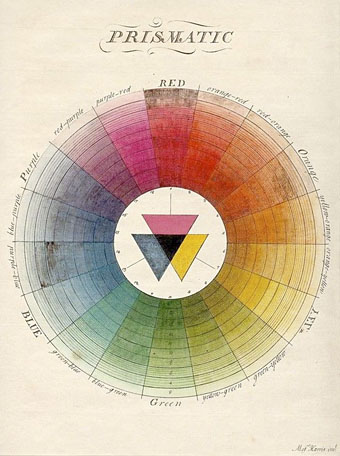
Colour wheel from The Natural System of Colours (1766) by Moses Harris.

• The Vatican’s favourite homosexual, Michelangelo di Lodovico Buonarroti Simoni, receives the ludicrously expensive art-book treatment in a huge $22,000 study of the Sistine Chapel frescos. Thanks, but I’ll stick with Taschen’s XXL Tom of Finland collection which cost considerably less and contains larger penises. Related: How Taschen became the world’s most famous erotic publishers.

• “In a metaphorical sense, a book cover is also a frame around the text and a bridge between text and world.” Peter Mendelsund and David J. Alworth on what a book cover can do.

The Night Porter: Nazi porn or daring arthouse eroticism? Ryan Gilbey talks to director Liliana Cavani about a film that’s still more read about (and condemned) than seen.

What is important about reading [Walter] Benjamin’s texts written under the influence of drugs is how you can then read back into all his work much of this same “drug” mind-set; in his university student days, wrangling with Kant’s philosophy at great length, he famously stated, according to Scholem, that “a philosophy that does not include the possibility of soothsaying from coffee grounds and cannot explicate it cannot be a true philosophy.” That was in 1913, and Scholem adds that such an approach must be “recognized as possible from the connection of things.” Scholem recalled seeing on Benjamin’s desk a few years later a copy of Baudelaire’s Les paradis artificiels, and that long before Benjamin took any drugs, he spoke of “the expansion of human experience in hallucinations,” by no means to be confused with “illusions.” Kant, Benjamin said, “motivated an inferior experience.”

Michael Taussig on getting high with Benjamin and Burroughs

• “Utah monolith: Internet sleuths got there, but its origins are still a mystery.” The solution to the mystery—if there is one—will be inferior to the mystery itself.

After Beardsley (1981), a short animated film about Aubrey Beardsley by Chris James, is now available on YouTube in its complete form.

• Mix of the week: The Ivy-Strangled Path Vol. XXIII – An Ivy-Strangled Midwinter by David Colohan.

Charlie Huenemann on the Monas Hieroglyphica, Feynman diagrams, and the Voynich Manuscript.

Katy Kelleher on verdigris: the colour of oxidation, statues, and impermanence.

• A trailer for Athanor: The Alchemical Furnace, a documentary about Jan Švankmajer.

All doom and boom: what’s the heaviest music ever made?

• At Strange Flowers: Ludwig the Second first and last.

• At Dennis Cooper’s: Krzysztof Kieślowski Day.

Ralph Steadman’s cultural highlights.

• RIP Daria Nicolodi.

Michael Angelo (1967) by The 23rd Turnoff | Nightporter (1980) by Japan | Verdigris (2020) by Roger Eno and Brian Eno

The art of Shinji Horimura

horimura1.jpg

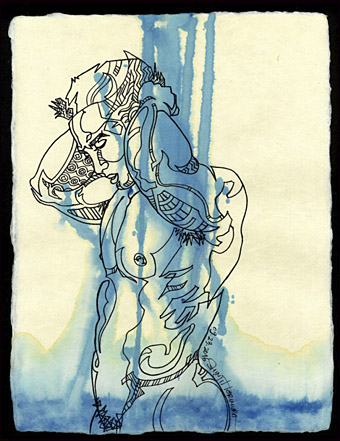
Lagrimas del Mar (2016).

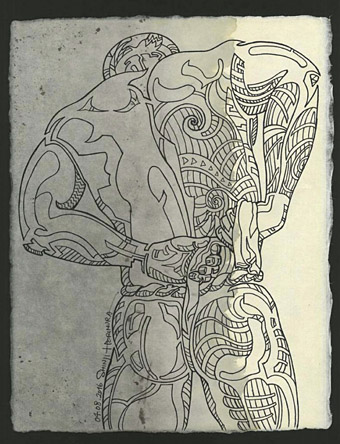
The gay artists archive continues to be the most popular destination on these pages which makes me feel I ought to add to it more often than I do. Not all of Shinji Horimura’s art is homoerotic but these drawings from his WAH series certainly are. In these and other works Horimura renders the male body with broken outlines that fragment into abstract patterns. In the black-and-white drawings these might be read as tattoos but in his colour art they suggest the hallucinatory revelations of Alex Grey’s paintings. There’s more to see on the artist’s Coroflot pages.

horimura2.jpg

Loosen (2016).

Continue reading “The art of Shinji Horimura”