Weekend links: Apocalypse not now

apocalypse.jpg

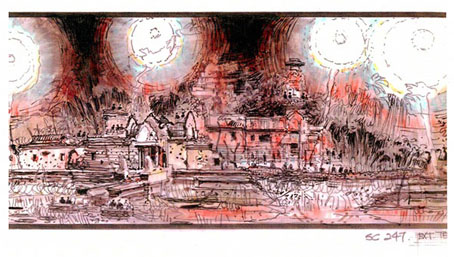
The Kurtz compound prior to destruction. An Apocalypse Now storyboard, one of a number which will be included among the extras on the Blu-Ray release of Francis Coppola’s film when it appears in the UK next month. The film is given a new cinema release on May 27th.

Radio broadcaster Harold Camping, a man denounced by fellow Christians as a false prophet, achieved one thing at least this week by making himself and his followers a global laughing-stock after the Rapture failed to materialise. I would have put money on him blaming those terrible gays somewhere along the way, such complaints being so common among a certain brand of American fundamentalist that you could write their sermons for them. Sure enough, here’s the old fool blathering about “lespianism” and describing the beautiful city of San Francisco as a cesspool. Shall we chalk this up as another victory for the gays, Harold? Related: No dogs go to heaven.

The internet has always been a home for ridicule but occasions like this bring out the wags in droves. The Oatmeal showed us how God is managing the Rapture using a Windows Install Wizard, and also pointed to a selection of sarcastic tweets. Meanwhile, this page has a comprehensive catalogue of previous apocalypse dates; the biggy is next year, of course.

Burroughs himself was no stranger to prosecution. In 1962 he was indicted on grounds of obscenity. Naked Lunch was not available in the US until 1962 and in the UK until 1964. The writer Norman Mailer and the poet Allen Ginsberg had to defend the book in court before the ruling could be reversed. In Turkey, it is now our turn to stand up for the novel.

Turkish writer Elif Shafak criticising the paternalism of the Turkish state in trying to protect its people from troubling novels. Related: William Burroughs publisher faces obscenity charges in Turkey.

An A–Z of the Fantastic City by Hal Duncan. “This guidebook leads readers and explorers through twenty-six cities of yore (Yore, while included, is one of the shorter entries).” Illustrated by Eric Schaller.

• The creepiest Alice in Wonderland of all, Jan Švankmajer’s semi-animated Alice (1988), receives a very welcome re-issue on DVD this month. With Brothers Quay extras and other good things.

smith.jpg

Robert E Howard’s sinister magus from the Conan stories, Thoth-Amon, as depicted by Barry Windsor-Smith. From a portfolio of five Robert E Howard characters, 1975.

What is computer music (or does it matter)? Related: A History of Electronic/Electroacoustic Music (1937–2001), 511 (!) downloadable pieces.

Unearthly Powers: Surrealism and SF: Rick Poynor explores the Tanguy-like strangeness of Richard Powers.

Magic Trip: Ken Kesey’s search for a kool place.

The Library of Congress National Jukebox.

Vladimir Nabokov’s butterflies.

Amy Ross’s Wunderkammer.

Rapture (1981) by Blondie | Apocalypse (1990) by William Burroughs | Rapture (2000) by Antony and the Johnsons.
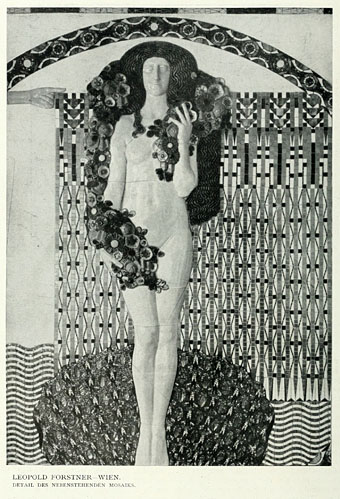
Deutsche Kunst und Dekoration #24

dkd24-01.jpg

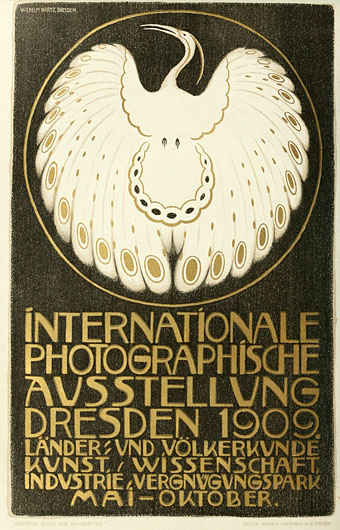
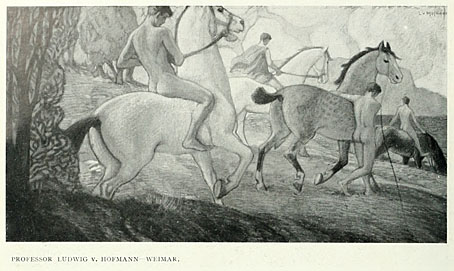
Continuing the delve into back numbers of Deutsche Kunst und Dekoration, the German periodical of art and decoration. Volume 24 covers the period from April 1909 to September 1909, and this is the penultimate edition that I’ll be posting samples from. The checkerboard designs of the Wiener Werkstätte are still being featured in this number but the focus here is on pictorial works rather than interior design. As before, anyone wishing to see these samples in greater detail is advised to download the entire number at the Internet Archive. There’ll be a final volume of DK&D next week.

dkd24-02.jpg

dkd24-03.jpg

Continue reading “Deutsche Kunst und Dekoration #24”

Weekend links 59

duetemmo.jpg

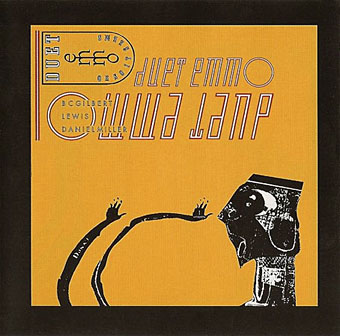
Or So It Seems (1983) by Duet Emmo. Design by The Brothers Quay.

• “Make things, no rules, but be quick.” Bruce Gilbert, musician in (among others) Wire, Dome and Duet Emmo is interviewed. Related: Daniel Miller, Mute label boss and another member of Duet Emmo is interviewed (and provides a mix) at The Quietus. For more electronica with nothing at all to do with Duet Emmo there’s this Matmos interview.

donovan.jpg

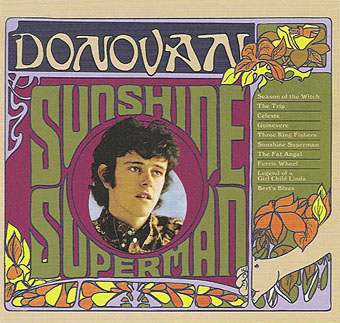
Design by Dick Smith.

“It’s psychedelic not because we were stoned before we wrote the songs, or stoned during composing them, but the experiences of searching for the transcendental world though altered states of consciousness were in the songs,” he says, which sounds suspiciously like another way of saying he was stoned before he wrote them, but perhaps it’s best not to quibble with the description of the method in the face of such impressive results…

Donovan revisits one of his finest works, Sunshine Superman.

• Yet more Guardian features: A Clockwork Orange: The droog rides again | Ira Cohen: psychedelic photography master | A life in writing: China Miéville | The stars of modern SF pick the best science fiction.

• There are many stars of the gaseous variety in Nick Risinger’s 5000-megapixel photograph of the Milky Way.

“It is quite true I have worshipped you with far more romance of feeling than a man should ever give to a friend. Somehow I have never loved a woman…. From the moment I met you, your personality had the most extraordinary influence over me…. I adored you madly, extravagantly, absurdly. I was jealous of everyone to whom you spoke. I wanted to have you all to myself. I was only happy when I was with you.”

Salon reviews the new unexpurgated edition of The Picture of Dorian Gray.

• Paul Gorman discovered the gay art origins of the notorious Cowboys T-shirt.

The full complement of Saul Bass’s designs for Vertigo‘s print advertising.

Photos of the recent Dodgem Logic event by Rosie Reed Gold.

Peter Ashworth is still taking great photos.

Jodorowsky’s Dune Finally Revealed?

Sunshine Superman (1966) by Donovan | Or So It Seems (1983) by Duet Emmo.

The Divine Eros Defeats the Earthly Eros

baglione1.jpg

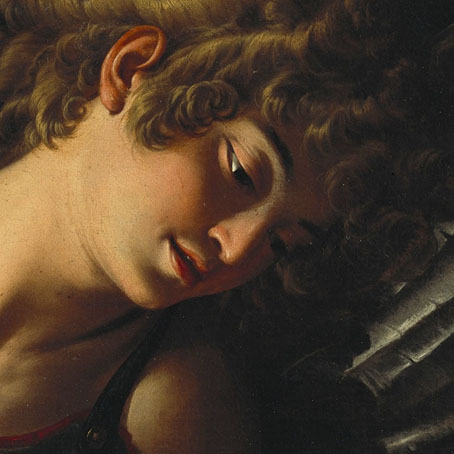
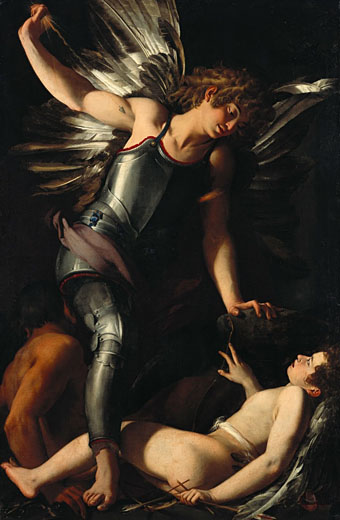
Another favourite painting receiving the Google Art Project high-res treatment. Giovanni Baglione’s picture (also known as Sacred Love versus Profane Love) was painted circa 1602 as a riposte to Caravaggio’s provocative Amor Vincit Omnia. Where Caravaggio showed Eros triumphing over worldly concerns Baglione gives us an image of religious propaganda which displeased the older artist. Salt was rubbed in the wounds when Baglione produced a second (and lesser) version which puts Caravaggio’s features on the figure of the Devil. There’s an irony in this spat in the way that Baglione’s noble aspiration is subverted by erotic tension, the victorious angel shown happily astride a vulnerable and capitulating youth. If someone had pointed this out to Caravaggio he might not have felt so aggrieved.

Both Amor Vincit Omnia and The Divine Eros Defeats the Earthly Eros are part of the Old Master collection at the Gemäldegalerie, Berlin, where they can be viewed side by side.

baglione2.jpg

Previously on { feuilleton }
Chiaroscuro
Angels 1: The Angel of History and sensual metaphysics

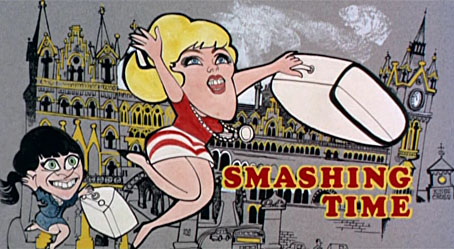
Smashing Time

st1.jpg

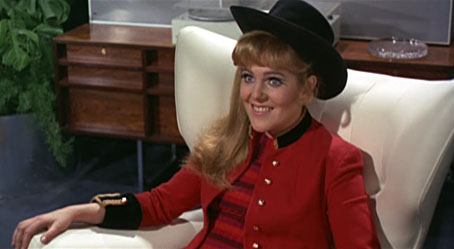
Writing about the late Lynn Redgrave last year I picked out this film as a career highlight despite not having seen it for a very long time. Watching it again recently was an interesting experience, not least for the way it connects to more recent points of obsession, none of them evident the first time round.

st2.jpg

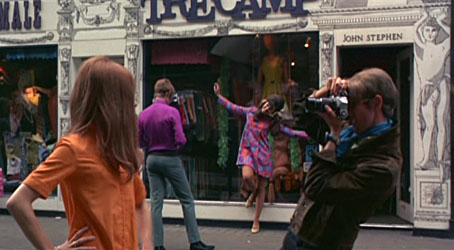
Carnaby Street antics.

Smashing Time was directed by Desmond Davies in 1967, and the direction is as perfunctory as you’d expect from someone whose career before and after was mostly for television. Of more interest is the script by George Melly, a bisexual jazz singer, writer, and lifelong evangelist for Surrealist art. This was Melly’s first job as a screenwriter and he seems an odd choice. He was 41 at the time, and his portrayal of Swinging London and its denizens is often typical of the acerbic older generation’s view of the younger groovers. It’s never as cynical as the Private Eye crowd but without Melly’s humour the tone might seem patronising. That said, it was the satire magazine that originated the names of the two lead characters, Brenda (Rita Tushingham) and Yvonne (Lynn Redgrave) being Private Eye‘s names for Queen Elizabeth and Princess Margaret respectively. The story is a simple one of the pair coming to London from the north of England in search of “a smashing time”, and, in Yvonne’s case, an attempt to make it big somehow. Misadventures ensue.

st3.jpg

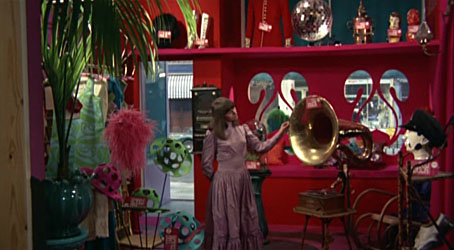
Brenda in the Too Much boutique.

Along the way there are digs at avant-garde artists, lecherous men, greedy pop promoters and wealthy boutique owners. Melly leavens his barbs with yet another example of the Lewis Carroll influence on late-60s culture. One of the scenes takes place in the Jabberwock Gallery, while Jabberwocky-derived character names appear throughout: Tom Wabe (Michael York), Charlotte Brillig, Mrs Gimble (the always wonderful Irene Handl), Bobby Mome-Rath (Ian Carmichael), Jeremy Tove. There’s also an Alice Boojum, and a band named The Snarks (real-life psych band Tomorrow) who don’t get to play, unfortunately. Tomorrow, who appear in the final party scene, are the sole connection with the genuinely hip London of 1967. Everything else we see is the Sunday supplement view of the city with Carnaby Street, shots of Chelsea and a dishevelled Camden. The raucous finale is staged at the top of that bright new landmark of 1960s London, the Post Office Tower.

st4.jpg

Yvonne begins her pop career.

My childhood enthusiasm was obviously taken with the film’s superficial qualities—there are so many songs it’s almost a musical—whereas now I’m impatient with the laboured slapstick but enjoy all the peripheral stuff. Many of the documentary shots of streets away from the centre are a reminder of how shabby and grimy the capital really was at that time, as was the rest of Britain when there was still a century of industrial soot on the walls. I also realise I’d missed the double-meaning of the title: “smashing time” isn’t only a modish phrase for an enjoyable experience but a nod to the way Brenda and Yvonne cause havoc wherever they go. The jabs from an older musician at brainless pop culture would have annoyed some but Yvonne’s hit song, I’m So Young (which is actually very good), has lyrics which resonate today:

I can’t sing but I’m young
I can’t do a thing but I’m young
I’m a fool
But I’m cool
Don’t put me down

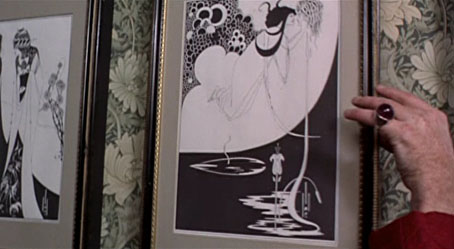
Lynne Redgrave is fantastic as Yvonne, completely convincing in a part that requires her to be loud, selfish and petulant without ever being too obnoxious. She also wears a different wig in nearly every scene. Among other moments of note there’s some fleeting gay humour with a pair of waiters camping it up in the Sweeney Todd pie shop (as does Murray Melvin in another scene). And there’s also an incident which, being an Aubrey Beardsley obsessive, I have to draw attention to:

st5.jpg

Was this the first appearance of Beardsley’s work in cinema? The V&A exhibition which began the Beardsley revival had taken place only a year before, and I can’t think of any examples earlier than this. The William Morris wallpaper is a fitting touch as well.

Reservations aside, this is a film I could watch more often than “properly” psychedelic fare like Wonderwall. For a snapshot of the period, it’s still a smash, baby.

Previously on { feuilleton }
Lynn Redgrave, 1943–2010
Through the Wonderwall