Weekend links 78

carr.jpg

Struggle (2009) by Lindsey Carr.

• “Twilight Science is an imprint for sound, music and DVD editions initiated by artist Paul Schütze. We will progressively publish all back catalogue, new projects and collaborations. These will include works by Phantom City, NAPE, Schütze-Hopkins and others.” Related (because Paul Schütze remixed Main): Main Feed The Collapse, Neil Kulkarni talks to Robert Hampson.

• “You can’t really narrate or display this situation, you can only, endlessly, contemplate it. When the writer or director gets tired of the iterations, he tells us who the mole is.” Michael Wood on the novel, (superb) television series and recent film of Tinker, Tailor, Soldier, Spy.

• “Havin’ a dick is pretty fuckin’ awesome” says Horst, a new gay magazine limited to 1000 copies. Related (well, there’s a guy in and out of his underwear): Naked Lunch, a fashion shoot very tenuously based on David Cronenberg’s film.

“At first, I tried fighting bullies one-on-one, but they don’t fight fair; they fight two and three on one,” Bennett said. So the youths got together and “started carrying mace, knives, brass knuckles and stun guns, and if somebody messed with one of us then all of us would gang up on them.”

 “Gay black youths go from attacked to attackers” says the headline. A group of genuine Wild Boys; William Burroughs would have approved.

• Tor.com reminded me of Sally Cruikshank‘s amazing animated film Face Like a Frog (1987) which features a score and Cab Calloway-style song by Danny Elfman.

• It’s 1969, OK? Pádraig Ó Méalóid talks with Kevin O’Neill about the Swinging League of Extraordinary Gentlemen.

• In the Tumblr labyrinth this week: Fuck Yeah St Sebastian and Gender is Irrelevant.

• For when you need some motherfucking placeholder text: Samuel L Ipsum.

• “Study finds ‘magic mushrooms’ may improve personality long-term.”

Solar Megalomania: paintings by Leonora Carrington.

• It’s all fun and games until Charles Manson turns up.

Firmament II (1993) by Main | Firmament IV (1993) by Main | Reformation (1994) by Main.
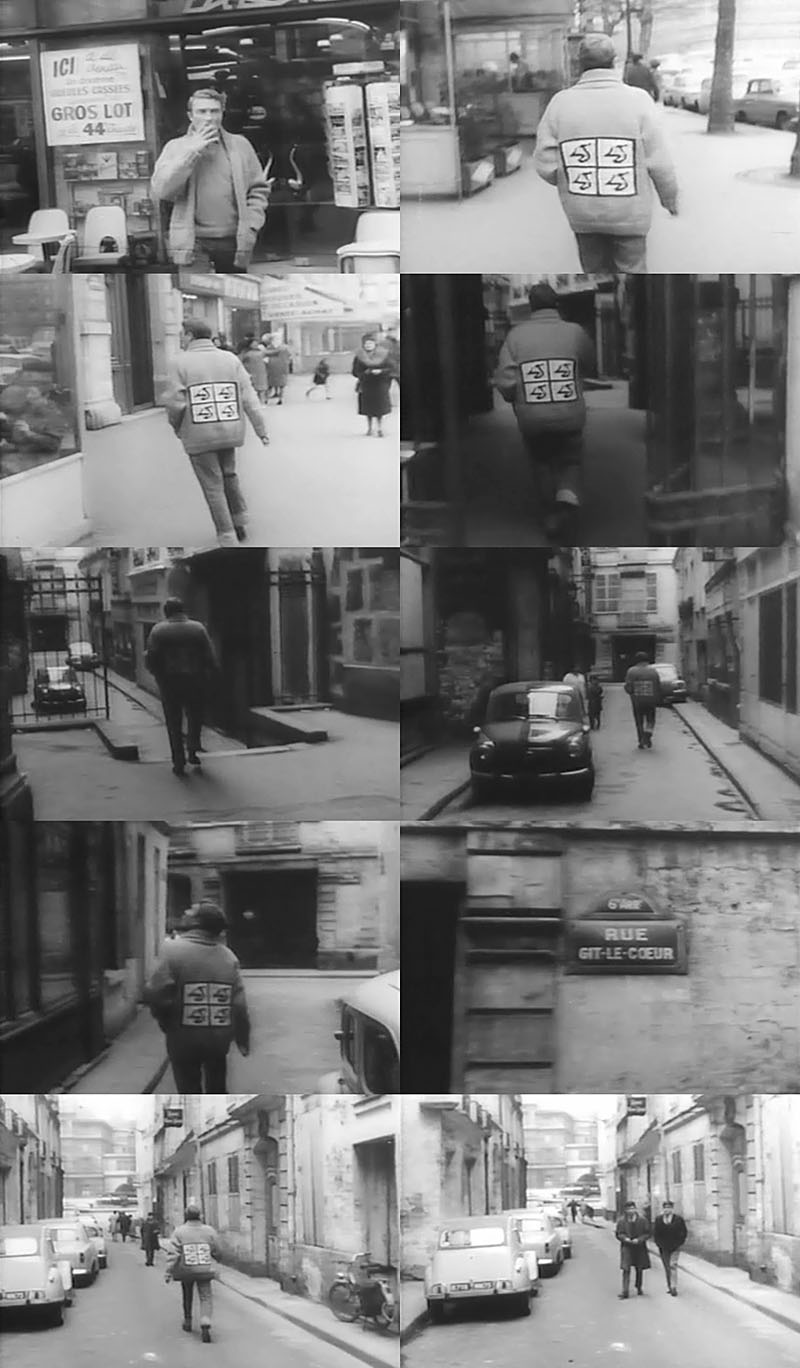
Brion Gysin’s walk, 1966

gysin.jpg

The Cut-Ups (1966).

More of the present preoccupation. Choosing Brion Gysin as a subject seems like a detour but the shots above are from Antony Balch’s 1966 film The Cut-Ups which also features William Burroughs, Ian Sommerville and someone-or-other’s cute boyfriend of the time who’s only ever credited as “Baby Zen”, a person about whom I know nothing at all.

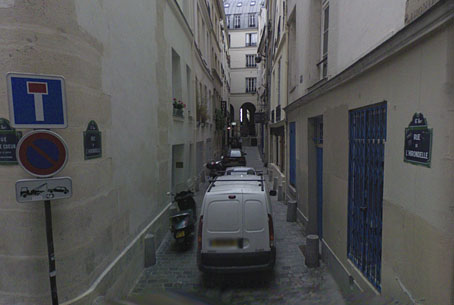
I first saw The Cut-Ups in video form projected on the screens of the Haçienda nightclub in Manchester during their Final Academy evening in 1982, an event at which Burroughs and John Giorno both gave readings. The film on that occasion was mixed with some of the other Antony Balch shorts including Towers Open Fire, and together they made a strong (and bewildering) impression. The Cut-Ups, as noted a few days ago, may have inspired some of the flash edits in Performance, although Nicolas Roeg had been cinematographer on Petulia for Richard Lester the year before, a film which uses similar Resnais-like flashbacks and flash-forwards. In Balch’s film several sequences each a foot in length are cut together at random, a process which was a lot more radical in 1966 than it looks today. The opening sequence shows Brion Gysin walking out of a shop, along a street, down an alley and into the Rue Git le Coeur where the Beat Hotel was located at no. 9, and into whose door he disappears. I visited the street the last time I was in Paris, and took a few snaps whilst there, but it wasn’t until I rewatched The Cut-Ups a couple of years later that I realised I’d made the same walk as Gysin, having inadvertently discovered the narrow passage (the Rue de L’Hirondelle) which connects Git le Coeur with the Boulevard Saint-Michel.

saintmichel1.jpg

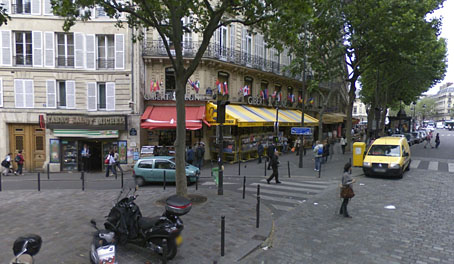
The corner of the Boulevard Saint-Michel where Gysin’s walk begins.

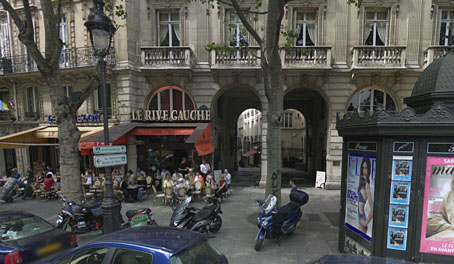
The route can be traced (after a fashion) using Google’s Street View where the photos have the usual drawbacks of being positioned high in the air and with a field-of-view which makes narrow spaces look a lot more cramped than they seem when you’re there. For those who can’t visit Paris, however, you at least get a sense of the Latin Quarter, even though the area is a lot more gentrified today than it was in 1966. The Beat Hotel, as I’ve noted before, is now the expensive Hotel du Vieux Paris whose website makes no mention of their establishment having once been cheap lodgings for depraved writers, artists and junkies. As for the Gysin film, I still wonder where he began his walk: was it at the Tabac Saint-Michel or elsewhere? You can judge for yourself at Ubuweb which has a copy of The Cut-Ups in its Burroughs film collection.

saintmichel2.jpg

Rue de L’Hirondelle from the Boulevard Saint-Michel.

saintmichel3.jpg

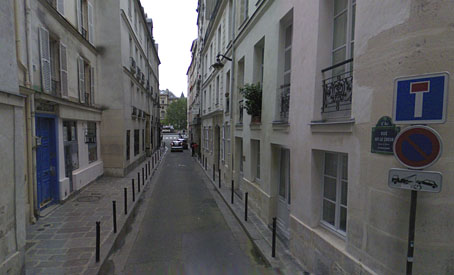
Rue de L’Hirondelle from Rue Git le Coeur.

saintmichel4.jpg

Rue Git le Coeur looking towards the Seine. The former Beat Hotel is down the street on the right.

Elsewhere on { feuilleton }
The William Burroughs archive

William Burroughs interviews

bunker.jpg

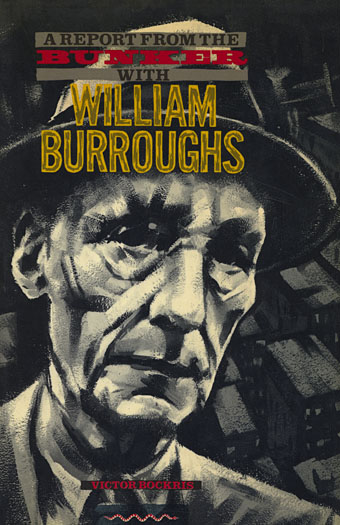
With William Burroughs: A Report from the Bunker (1982) by Victor Bockris. Design by Neville Brody.

If it’s interviews you want, some of the most entertaining are in Victor Bockris’s collection of conversations between El Hombre Invisible and the various New York notables ferried round to sit at Burroughs’ table in his Bowery Bunker. The British edition published by Vermilion was always preferrable for its Neville Brody cover design beside which the US original looks very dull indeed. The encyclopedic Burroughs site Reality Studio has copious lists of earlier Burroughs interviews. They also note the occasions when he put on his journalist hat and went out to interview someone equally famous, usually at the behest of a music magazine. A couple of those pieces are online thanks to the diligence of various fans.

diamond_dogs.jpg

Diamond Dogs (1974), a blend of Lou Reed, George Orwell and William Burroughs.

One such is the 1974 interview with David Bowie for Rolling Stone in which Bowie discusses Burroughs as an influence while Burroughs informs the singer that the heroes of his latest novel, The Wild Boys, favour the Bowie knife as a weapon:

Bowie: Nova Express really reminded me of Ziggy Stardust, which I am going to be putting into a theatrical performance. Forty scenes are in it and it would be nice if the characters and actors learned the scenes and we all shuffled them around in a hat the afternoon of the performance and just performed it as the scenes come out. I got this all from you Bill… so it would change every night.

burroughspage.jpg

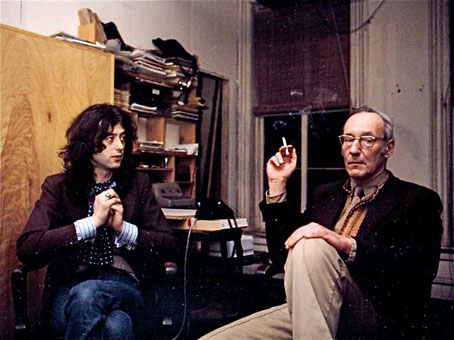
A year later Burroughs got together with Jimmy Page for Crawdaddy magazine where the discussion circles around some of the same subjects, notably the writer’s obsession with sound as a weapon. There’s also this comment from Burroughs which is the kind of thing that always gets my neurons firing:

Antony Balch and I collaborated on a film called Cut-Ups, in which the film was cut into segments and rearranged at random. Nicolas Roeg and Donald Cammell saw a screening of the film not long before they made Performance.

Roeg later directed Bowie, of course, and is one of the dinner guests in With William Burroughs, while Jimmy Page and Donald Cammell both appear in Kenneth Anger’s Lucifer Rising. The connections go round and round… Read the whole piece in a post I made a few years ago at the late, lamented Arthur magazine site.

Elsewhere on { feuilleton }
The William Burroughs archive

Science Friction by Stan VanDerBeek

vanderbeek.jpg

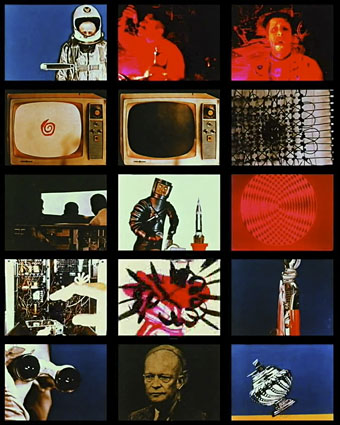
Ubuweb seems to have the best collection of films by experimental filmmaker Stan VanDerBeek (1927–1984) but not the one I was looking for, unfortunately, an abstract thing entitled Moirage. Searching around turned up Science Friction (1959), one of a number of collage animations VanDerBeek made in the 1950s. The juxtapositions of collage have always been good for comedy, and here they’re put to satirical effect in a comment on the Space Race and the tensions of the Cold War. When viewed today it’s impossible to ignore the resemblance to the later collage animation of Terry Gilliam. VanDerBeek wasn’t the only person doing this at the time—Walerian Borowczyk and Harry Smith also made collage films—but VanDerBeek’s sense of humour seems close enough to Gilliam’s to have given him ideas.

For more about the director there’s also Project Stan VanDerBeek.

Previously on { feuilleton }
Heaven and Earth Magic by Harry Smith
Gilliam’s shaver and Bovril by electrocution
Short films by Walerian Borowczyk

Weekend links 76

aftertime.jpg

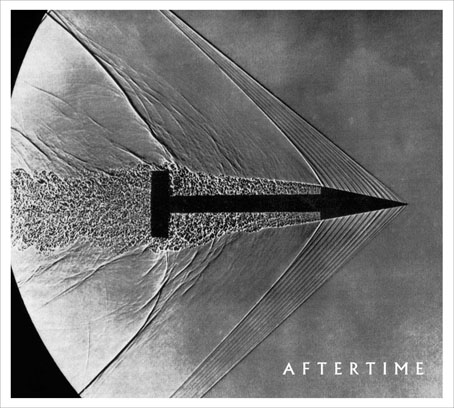
Despite appearances I’m still doing bits of design and layout work for various musicians. In the past week I’ve been trying to reorganise this sprawling website a little so it’s easier to add new work quickly and easily. One recent job was more layout than design, a CD and vinyl package for a Roly Porter collection of instrumentals entitled Aftertime. Each track on the album is named after a different planet from Frank Herbert’s Dune books although the music isn’t as illustrative as that implies. Porter’s use of an Ondes Martenot and various acoustic instruments which he subjects to degrees of distortion is just the kind of thing I like hearing. One track can be heard at FACT where Porter is interviewed about his work. Aftertime is released this month on the Subtext label.

It is a rollicking saga that involves all sorts of things not normally associated with think tanks – chickens, pirate radio, retired colonels, Jean-Paul Sartre, Screaming Lord Sutch, and at its heart is a dramatic and brutal killing committed by one of the very men who helped bring about the resurgence of the free market in Britain.

Adam Curtis on the strange history of Britain’s think tanks and their hidden agendas.

• Other assorted music business: Getting down to the Cabinessence: “This is the first of what may become an intermittent series of observations about Smile, and how Brian Wilson tried to put his dream on this planet.” | After The Flood: Talk Talk’s Laughing Stock 20-Years On: a lengthy and detailed Quietus piece on one of the best albums of the 1990s. | Jonathan Barnbrook uses an old analogue video synth to create a visual accompaniment for Interplay by John Foxx & The Maths. The HD version is an eye-searing delight.

Meredith Yayanos favours the sister instrument of the Ondes Martenot, the theremin, which she uses to provide a spooky score for a new film, Empty Rooms. There’s more spectral ambience at her SoundCloud page.

giovani.jpg

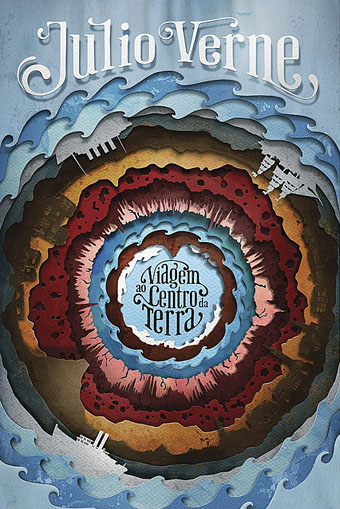
A Jules Verne cover by Carlo Giovani for Editora Ática.

• Sculptor and writer Josiah McElheny transforms the Whitechapel Gallery into a hall of mirrors.

Jacob’s Lament, an animated collaboration between illustrator Ian Miller and Stijn Windig.

Pornographic Poem (1967) by John Giorno.

Oscar Wilde grandson scorns “new” play.

• Manhattan in marble by Yutaka Sone.

Paul Atreides pt. 1 (1978) by Richard Pinhas | Harkonnen (1979) by Zed (Bernard Szajner) | Prophecy Theme (1984) by Brian Eno.