The Vengeance of Nitocris

weirdtales.jpg

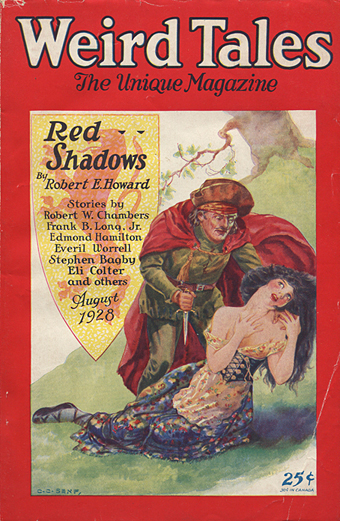
Cover illustration by CC Senf.

In her mind the queen Nitocris was seeing a ghastly picture. It was the picture of a room of orgy and feasting suddenly converted into a room of terror and horror, human beings one moment drunken and lustful, the next screaming in the seizure of sudden and awful death. If any of those present had been empowered to see also that picture of dire horror, they would have clambered wildly to make their escape. But none was so empowered.

Everyone today will be marking the Tennessee Williams centenary by noting his theatre work, of course, or his subversive celebration of outsiders and, yes, the gays. I’ll confine myself to reminding people that Williams’ first published work was a short story entitled The Vengeance of Nitocris in Weird Tales for August 1928, written when he was only 17. The story reads like the work of a teenager but editor Farnsworth Wright evidently enjoyed an atmosphere of lurid Egyptian melodrama which you can appraise for yourself here. Also in this issue was the debut appearance of Robert E Howard’s Solomon Kane, and The Demoiselle d’Ys by Robert Chambers. Seeing the name Nitocris I have to wonder whether Williams chose it after reading HP Lovecraft who used the name twice in earlier stories published in the same magazine, Imprisoned With the Pharaohs (1924) and The Outsider (1926). That last piece was one of Lovecraft’s most popular tales, and it’s easy to imagine its grotesque parable of alienation making an impression on a would-be writer who, as a gay youth, would have looked upon himself as another kind of outsider.

Previously on { feuilleton }
The King in Yellow

Thomas Mackenzie’s Aladdin

aladdin1.jpg

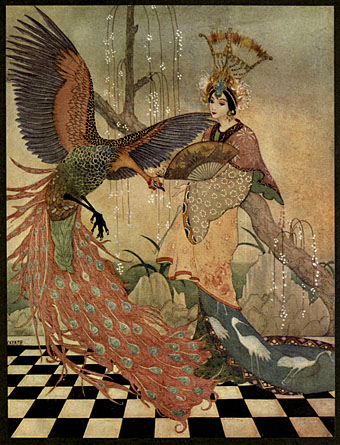
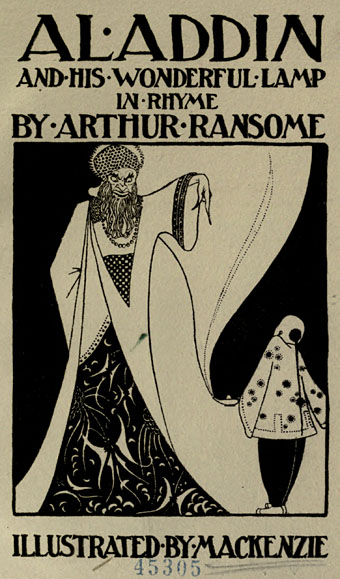
The tip for this one came via Beautiful Century. Thomas Mackenzie (1887–1944) was a minor British illustrator whose work I hadn’t seen before, and if I’d seen the picture above uncredited I might have taken it for something by Kay Nielsen or Edmund Dulac. Mackenzie’s colour plates for the 1919 edition of Aladdin and His Wonderful Lamp in Rhyme by Arthur Ransome are very similar to his more famous contemporaries, while the black-and-white pieces owe a considerable debt to Aubrey Beardsley, especially the title page below. Not all the drawing is as assured as one might hope but the book as a whole is still worth a look.

aladdin2.jpg

Continue reading “Thomas Mackenzie’s Aladdin”

Weekend links 50

selski1.jpg

Invisible Light by Margo Selski.

The Glass Garage Fine Art Gallery has an online collection of paintings by Margo Selski, many of which feature her cross-dressing son, Theo. Coilhouse profiled artist and model earlier in the week. Some of these paintings mix oil with beeswax which is something I’ve not come across before.

• The Periwinkle Journal‘s first issue will be available online, free, from March 22nd until mid-June, featuring work by filmmaker and artist Hans Scheirl (Dandy Dust), artwork and collages by Genesis Breyer P-Orridge, a 7-page colour comic by Mavado Charon, artwork by Timothy Cummings, artwork and installations by Cody Chritcheloe/SSION, photos by Megan Mantia, Science-Heroes by Peter Max Lawrence, an illustration portfolio by Diego Gómez, selections from the queer photography pool on Flickr, reviews and other stuff. More later.

• The Quietus wanted to remind us that this year is the 25th anniversary of the NME‘s C86 compilation tape, a collection that sought to capture a moment of ferment but which inadvertently inspired too much dreary sub-Velvet Underground pop. I’d rather celebrate the 30th anniversary of the NME‘s C81 compilation, a far more diverse collection and musically superior. If you want to judge for yourself, both tapes can be downloaded here.

selski2.jpg

Machine in the Garden — Our Island Shall Know Abundance Without End by Margo Selski.

• Rick Poynor continues his exploration of Ballardian graphics with a piece about the paintings of Peter Klasen. Related: Where Will It End? JG Ballard interviewed by V. Vale & introduced by Michael Moorcock (Arthur No. 15/March 2005).

In his autobiography, Miracles of Life, JG Ballard suggested that illustrated versions of The Arabian Nights helped prepare him for surrealism.

Robert Irwin, author of The Arabian Nightmare, on the illustrators of The Arabian Nights.

• Another Coulthart cult movie surfaces, Jerzy Skolimowski’s Deep End (1970), out of circulation for many years but newly restored by the BFI. A re-release is scheduled for May so I’m hoping now that a DVD release will follow soon after.

Thom Ayres’ photostream at Flickr, and more long-exposure photos.

Fuck You, A Magazine of the Arts, number 5, volume 8.

Nicolas Roeg: “I don’t want to be ahead of my time.”

• MetaFilter looks at the films of René Laloux.

• The Eerie covers of Frank Frazetta.

Indie Squid Kid.

Requiem (for String Orchestra) by Toru Takemitsu.

Die Andere Seite by Alfred Kubin

kubin1.jpg

Re-reading Alfred Kubin’s strange fantasy novel Die Andere Seite (The Other Side) this week, I found myself suffering the same frustration as when I bought the book, namely that the illustrations in the Dedalus edition are very poor reproductions. When this new translation appeared in 2000 there wasn’t any convenient way to see better copies of Kubin’s drawings unless you had the earlier (and for me, elusive) Penguin edition. Thanks to Flickr we can now see reproductions from the first printing of 1909 in this set of photos. Not all the drawings are featured but the ones present are better than those in my volume. The illustrations are often rather perfunctory, and they lack the finesse and erotic weirdness of Kubin’s better known works, but a couple are as macabre as one would expect. And I love the cover design.

kubin2.jpg

As to the story, it concerns an unnamed narrator who receives a request from an old school friend, Claus Patera, to leave Munich and go with his wife to live in the city of Pearl, a newly-built metropolis in a nation known as “The Dream Realm” which Patera has founded in the Far East. Having travelled there the couple find themselves in a city filled with other displaced Europeans which is at first eccentric then increasingly nightmarish. It’s the kind of book you might expect an artist like Kubin to have written, in other words, and since the narrator is a thinly-veiled counterpart of the author we can occasionally glimpse the man behind the works. Anyone interested in Kubin the artist is advised to seek it out.

Alfred Kubin at Weimar

Elsewhere on { feuilleton }
The illustrators archive

Previously on { feuilleton }
The Hourglass Sanatorium by Wojciech Has
Kafka’s porn unveiled
Hugo Steiner-Prag’s Golem

The art of Mario Laboccetta

laboccetta01.jpg

Tales of Hoffmann (1932).

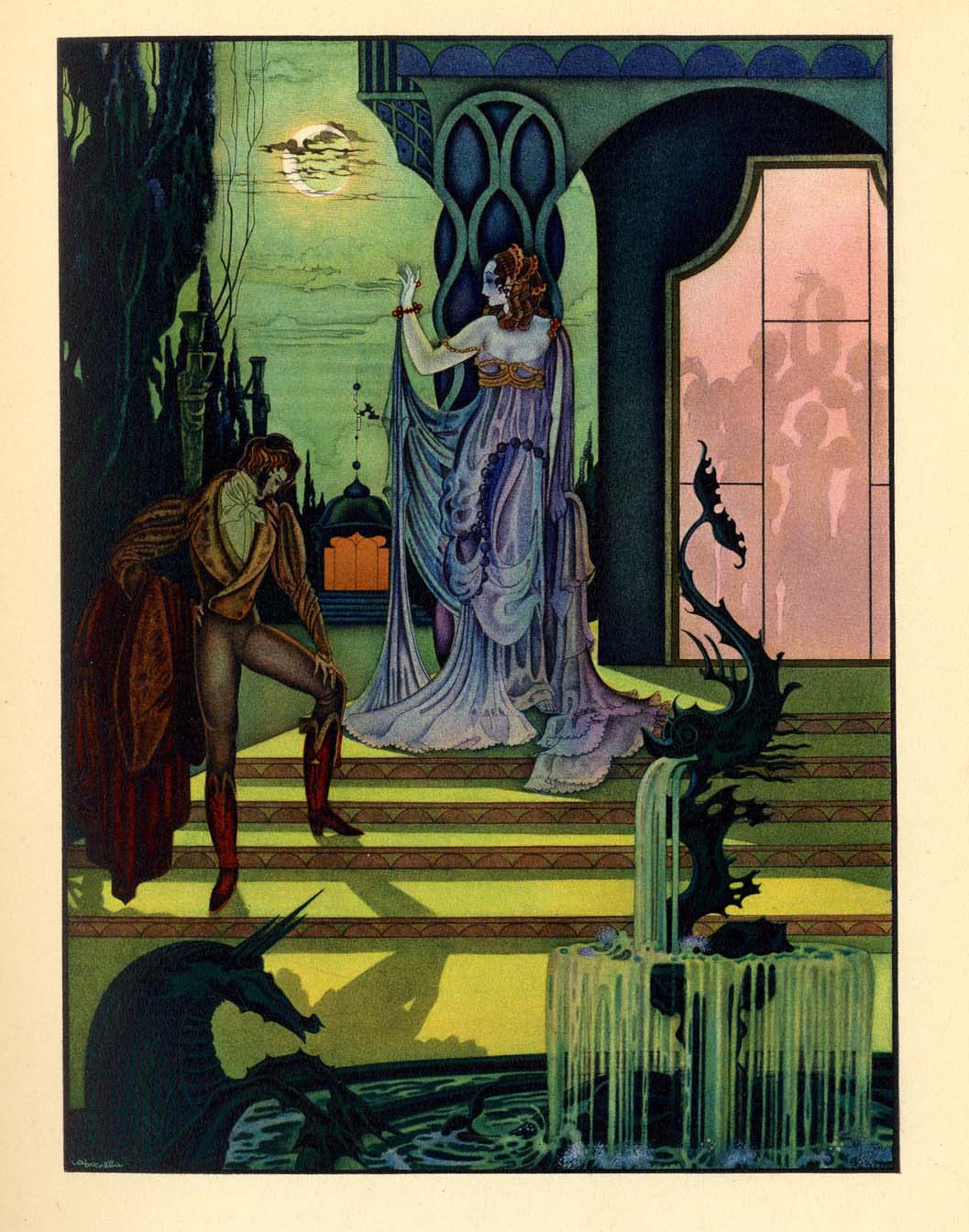
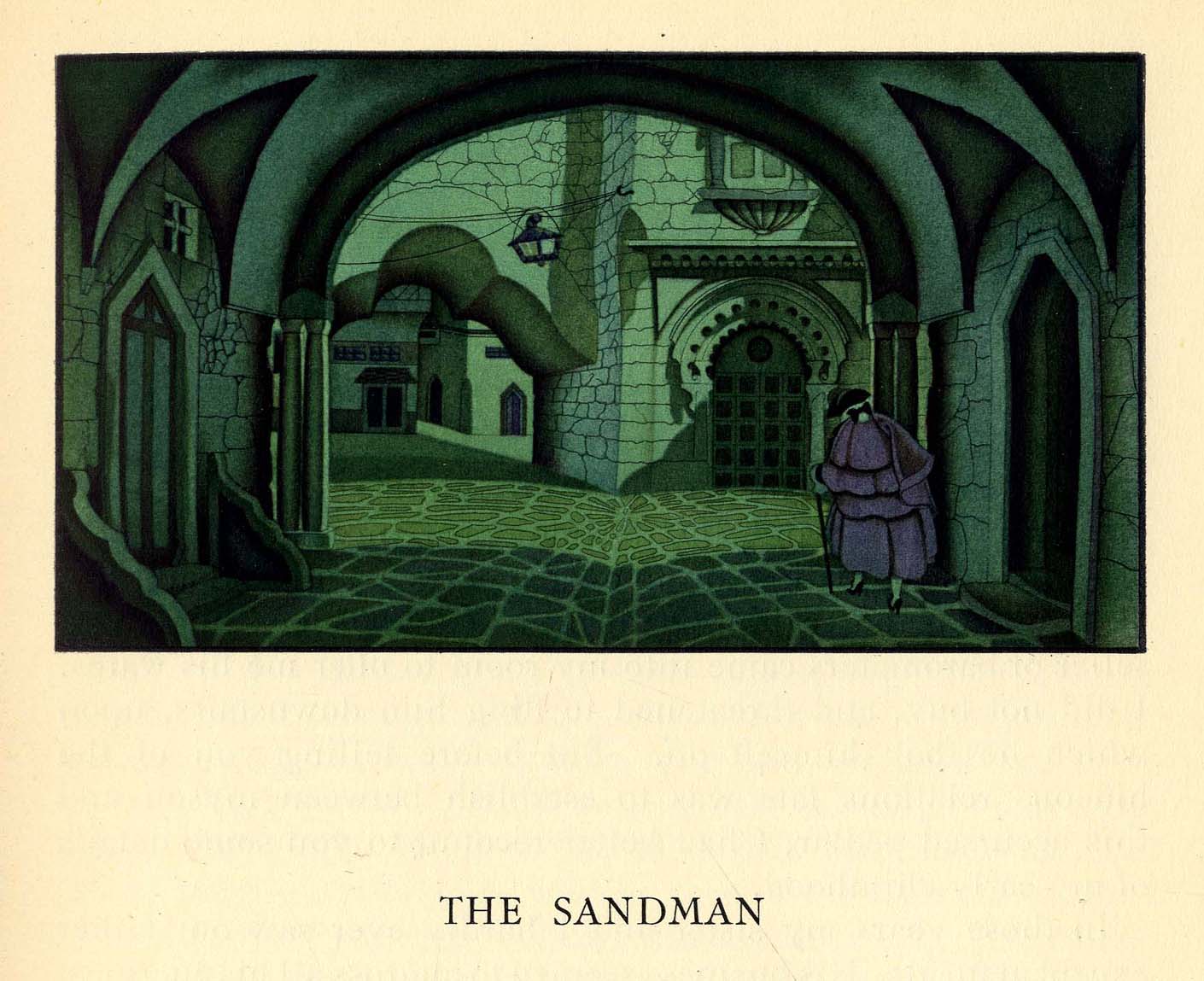
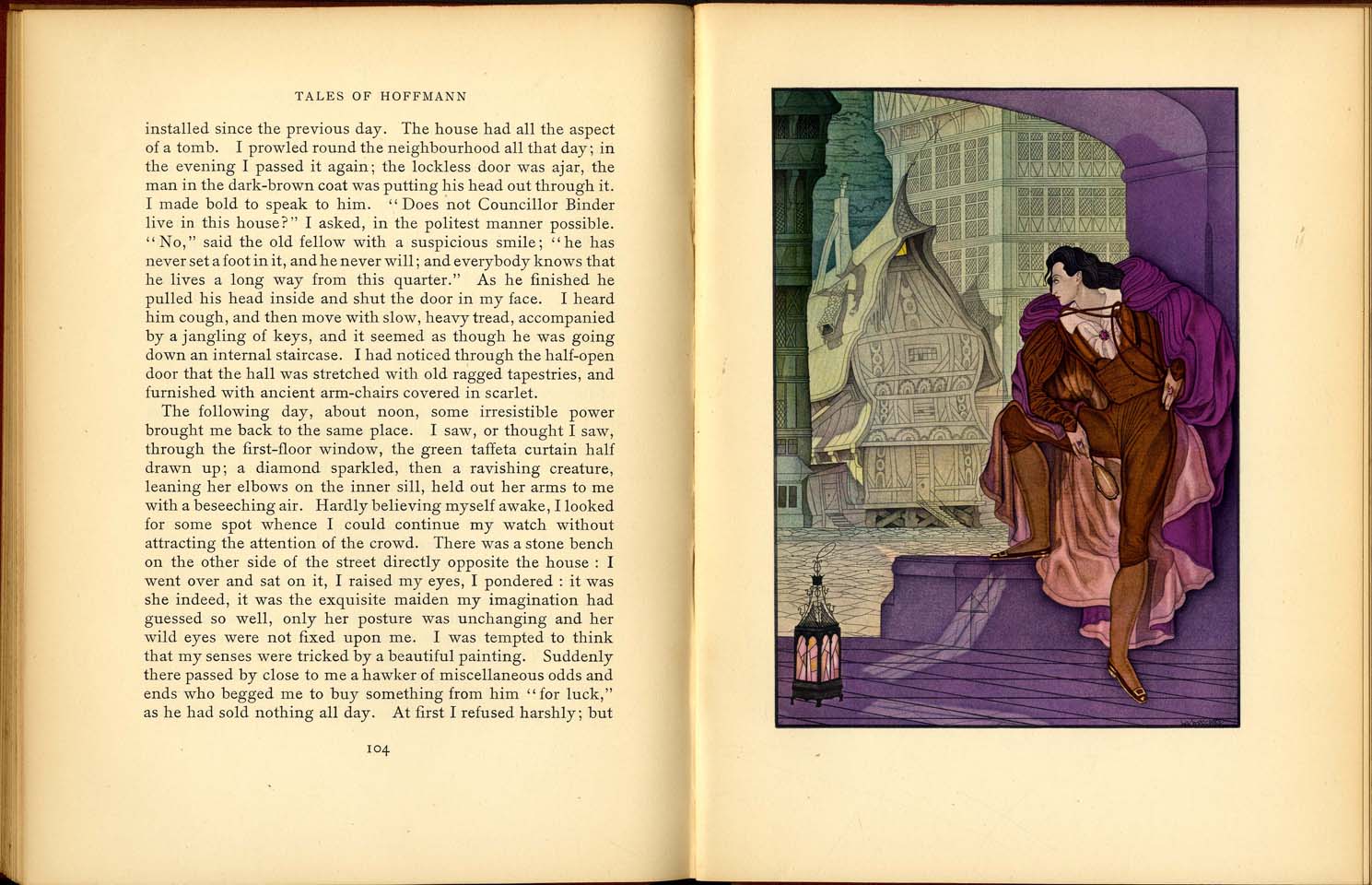
Another great illustrator about whom information is scant; I need better reference books, the web is often no use at all. Monsieur Thombeau posted the cover to Laboccetta’s edition of Les Fleurs du Mal (below) which had me looking around for other work by the artist. VTS has pages from a 1932 edition of Tales of Hoffmann while more of the Baudelaire pictures can be found on various bookdealers’ sites. As to the artist, we’re told he was an Italian living in Paris, and this French site has a small list of his illustrated editions. It’s frustrating to see that Les Paradis Artificiels is among these; what did he make of Baudelaire’s opium visions?

laboccetta02.jpg

Tales of Hoffmann (1932).

laboccetta03.jpg

Tales of Hoffmann (1932).

Continue reading “The art of Mario Laboccetta”