James Cawthorn: The Man and His Art

cawthorn-cover.jpg

The past year would have been busier than usual with the amount of illustration work I had to deal with, but it was made even busier with my having to design this book at the same time. James Cawthorn: The Man and His Art was originally intended to be a modest memorial by Maureen Cawthorn Bell for her artist brother following his death in 2008, but the book grew into a heavyweight volume of 448 pages containing over 800 individual pieces of art: book covers, illustrations for magazines and fanzines, private pieces for friends and relatives, and many sketches or preliminary works, most of which have never seen print before.

cawthorn-coverspread.jpg

Given Jim Cawthorn’s long association with Michael Moorcock, as both friend and collaborator, the task of collating the artwork and editing the book went to Moorcock bibliographer John Davey, who also serves as the book’s publisher. John spent three years locating over 3000 pieces of artwork, large and small. Some of these pieces are now lodged with the Moorcock archives in the Bodleian Library, Oxford, while others may only be found in the pages of the many science fiction and fantasy fanzines that Jim illustrated, copies of which are stored at the British Library. From this body of material Maureen and John selected a core of representative work from Jim’s private as well as public life, although no-one at the outset of the project was expecting the final picture tally to be so high.

cawthorn-spread-01.jpg

My task as the book’s designer involved making the text presentable (easy) and corralling the artwork (not so easy, and I also had to either clean or colour-adjust every single piece). Maureen had divided the book into several sections, beginning with a lengthy biographical reminiscence. Following this was “Jim by Jim”, a selection of interviews, magazine pieces, some fiction, essays and book reviews. There was also a lengthy extract from Fantasy: 100 Best Novels (1988), a book credited to Jim and Michael Moorcock but, by Moorcock’s admission, mostly Jim’s work. Jim Cawthorn was very well-read, especially in the genres—he was old enough and interested enough to have read The Lord of the Rings when it was first published—and could also present his erudition engagingly for a reader, so the text section of Maureen’s book is far from indulgent.

cawthorn-spread-02.jpg

The book design isn’t as elaborate as some I’ve worked on but it didn’t need to be when the pictorial material is rich with what Moorcock calls “wizardry and wild romance”. Maureen wanted a particular picture of Moorcock’s Elric character on the cover so I took details and motifs from some of Jim’s many Elric illustrations to give the book a thematic thread and internal consistency. Cawthorn was present at the creation of Elric in the early 1960s; he not only provided Moorcock’s characters with their first illustrations but even helped plot one of the earliest stories, Kings in Darkness.

cawthorn-number.jpg

Page numbers are framed by the swords from the Elric stories.

Using motifs such as the sword silhouette and Elric head is something I frequently do with book designs but for this book I also went to the trouble of creating a one-off font for the drop capitals based on Jim’s hand-drawn lettering. Jim drew titles and other lettering throughout his career, so again this was a decision warranted by the book’s contents. The few times we met I never asked him about this but I’ve always thought his lettering designs were derived from the stylised titles that J. Allen St. John created for many of the early Edgar Rice Burroughs books. Jim spent most of his life drawing Burroughs’ characters, and was very familiar with the work of Burroughs’ original illustrators. I was hoping to find a title design of Jim’s that I could rework for the book’s title but none of the examples worked as well as I hoped. For this reason the title lettering is based on different styles from the John Carter novels that were Jim’s favourites among Burroughs’ works.

cawthorn-spread-03.jpg

Other features include a foreword by Alan Moore, an afterword by Michael Moorcock, a gallery of Jim’s Lord of the Rings drawings and character sketches from the early 1960s (which predate all others bar those by Tolkien himself), artwork for Hawkwind (including Dave Brock’s “Meliadus” T-shirt), and even a handful of photos from the set of The Land that Time Forgot (1975), the ER Burroughs-derived feature film scripted by Jim with Michael Moorcock. The page samples here are necessarily few given the size of the book.

cawthorn-spread-04.jpg

For the moment James Cawthorn: The Man and His Art is available exclusively from publishers Jayde Design at a special pre-publication price of £20. After publication on 6th August the price will rise to £35. Further page samples follow.

Continue reading “James Cawthorn: The Man and His Art”

The Mercenaries of the Stolen Moon

mercenaries.jpg

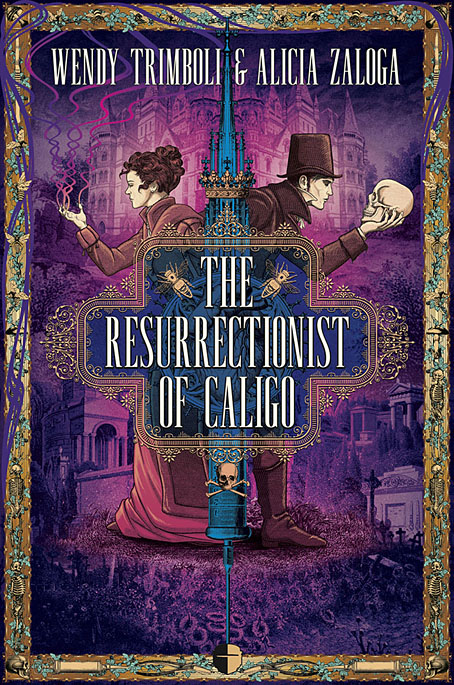
As promised last week, here’s my latest cover for Megan Derr’s gay fantasy series, Tales of the High Court. The first book wasn’t intended to have this many sequels so my initial cover design also wasn’t planned as something that might be a template for later volumes. The previous books (below) borrowed bits and pieces from a set of early Viollet-le-Duc illustrations, a decision that posed problems as the series evolved when I began to run out of usable material. The new book required a different setting so I was able to dispense with the medieval architecture in favour of a hybrid of Indian and Cambodian stonework. I’ve always enjoyed the ruined-jungle-temple aesthetic so this was fun to work on, and made a break from all the black-and-white illustration I’ve been producing for the past year or so. The Mercenaries of the Stolen Moon will be published by Less Than Three Press later this year.

loststar.jpg

derr2.jpg

derr1.jpg

Previously on { feuilleton }
The Heart of the Lost Star
Tales of the High Court

The artists of Future Life

future.jpg

My earlier post about Future Life magazine mentioned the regular Portfolio series which featured interviews with illustrators and space artists, the latter group being the people who providing conceptual paintings for astronomy books and government entities such as NASA. Since the magazine files at the Internet Archive aren’t searchable I thought it worth making note of the interviews here, for my own benefit as much as anything else. (This blog has often served as a useful notebook.)

fl01-bonestell.jpg

Issue 1: Chesley Bonestell.

Many of the artists featured in Future Life were receiving their first (in some cases, only) high-profile feature at a time when little attention was given to the producers of this kind of work even in popular science-fiction magazines. The story magazines have always run interviews with writers but prior to Future Life, Science Fiction Monthly was the only magazine that I’d seen with a regular illustration feature, and that title didn’t last very long. Future Life covered some of the same people, Chris Foss, for example, while seeking out the prominent figures of the US illustration world. Not all the art is to my taste at all but the interviews are of interest even if you don’t like the pictures. One surprise was finding an interview in one of the issues that I’d missed with Ludek Pesek, a Czech artist whose views of the Solar System and depictions of the evolution of life on Earth I knew from the Puffin books he worked on with Peter Ryan. Those books were aimed at a young readership and were great favourites of mine before I’d seen anything by Foss and co. Another of the space artists interviewed is David Hardy, a British contemporary of Pesek’s whose view of an alien planet will be familiar to Hawkwind enthusiasts on the back cover of Hall Of The Mountain Grill. Another notable feature of the series is the lack of women artists, although this isn’t so surprising given that women creating pictures of space hardware are few even today. All the same, they might have featured Rowena Morrill, a popular cover artist for SF and fantasy novels at the time, and someone whose work I prefer to many of the people they did profile.

fl03-boris.jpg

Issue 3: Boris Vallejo.

fl04-mccall.jpg

Issue 4: Robert McCall.

fl05-nagaoka.jpg

Issue 5: Shusei Nagaoka.

A Japanese artist best known in the West for his album-cover art for ELO, Earth, Wind and Fire, and many others.

fl06-miller.jpg

Issue 6: Ron Miller.

fl07-hildebrandt.jpg

Issue 7: The Brothers Hildebrandt.

fl08-hardy.jpg

Issue 8: David Hardy.

Continue reading “The artists of Future Life”

Weekend links 403

pennington.jpg

Cover art by Bruce Pennington, 1974. Via Clark Ashton Smith vs Bruce Pennington.

Garçons de Joie. Prostitution masculine à Paris 1860-1960 is an exhibition running at Galerie Au Bonheur du Jour, Paris, until May. The catalogue is expensive (and seems to be in French throughout) but features a substantial amount of rare homoerotic art.

• In the latest Expanding Mind podcast Erik Davis talks to Burt Shonberg biographer Spencer Kansa about LA bohemia, psychedelic art, Marjorie Cameron, gumshoe biography, and his new book Out There: The Transcendent Life and Art of Burt Schonberg.

Gregg Anderson on 20 years of Southern Lord’s dark and heavy art. Related: Earth’s Dylan Carlson announced a new solo album, Conquistador, and single, Scorpions In Their Mouths.

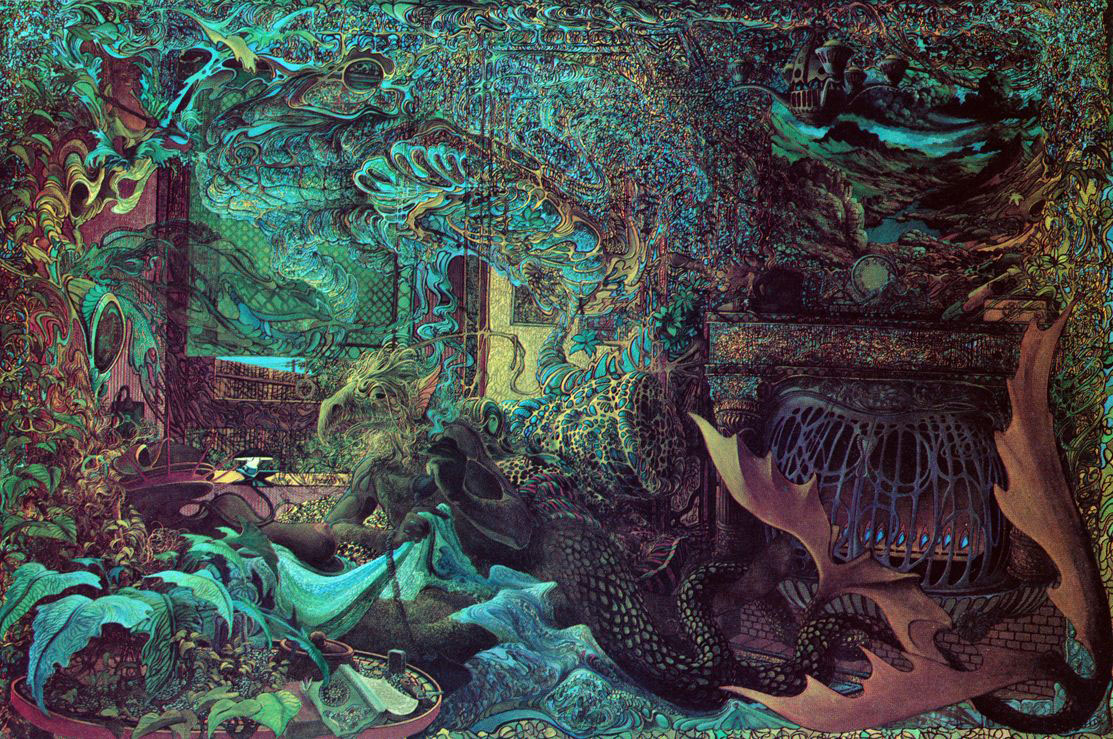
Without any formal training, Smith began to paint and draw his strange visions of sentient plants, grotesque creatures from other dimensions, and throbbing alien landscapes. Eventually commissioned to provide illustrations for Weird Tales, he became one of Lovecraft’s most voluminous correspondents (though never as voluminous as Lovecraft himself). Over the next 10 years, they filled one another’s mailboxes with effusive admiration for each other’s stories and poems. With Lovecraft’s adulatory wind at his back, Smith never strayed far from the Long Valley, and sat home to produce more than a hundred bizarre, linguistically challenging, often unforgettable stories and novelettes for the pulp magazines between 1925 and 1936. Unsurprisingly, Smith’s spurt of fictional creativity didn’t survive the death of Lovecraft in 1937, and while that rich burst of stories may not have earned Smith much money or fame, it caused an almost episteme-shifting earthquake in the brains of the young, aspiring writers lucky enough to read him.

Scott Bradfield on Clark Ashton Smith

Psychomagic, An Art That Heals will be Alejandro Jodorowsky’s next feature film if the crowdfunding is successful. Many rewards are available, large and small.

• At The Quietus this week: Val Wilmer on Sun Ra, and The Strange World of…Cocteau Twins.

• Spectacular images from Chicago’s turn-of-the-century design bible (The Inland Printer).

The shop that buys your dead uncle’s porn collection.

• Mix of the week: FACT mix 642 by Mokira.

Cafe Bohemian (1959) by The Enchanters | Genius Of Love (1981) by Tom Tom Club | A Scandal In Bohemia (1986) by United States Of Existence

Weekend links 398

deon.jpg

Untitled art by Felix D’Eon. Via Dangerous Minds.

• “The music inside lived up to the cover’s challenge: a collage of pop-culture nostalgia, hard-rock guitar, piano-driven melodies, stylised high vocals, strange musical structures and experimental sound pictures. Roxy Music’s eponymous album sounded like nothing else in 1971 and 1972—and like nothing else the group would ever attempt again.” Jon Savage on the creation of Roxy Music’s debut album.

• Behind the scenes of the BFI’s forthcoming Derek Jarman box-sets. Jarman appears in a rare acting role (not one of his strengths) in Dead Cat (1989) a short film by David Lewis which is only now being released on DVD.

• Rob Young’s long-awaited book about Cologne’s finest, Can, has finally been given a publication date. All Gates Open: The Story of Can will be published by Faber in May.

• At the Lever Gallery, London: UNCOVERED: Illustrating the Sixties and Seventies. Wallpaper magazine has a related feature about the exhibition.

Trim Tabroid [sic]: Yui Takada’s Instagram showing Japanese tabloid pages reduced to abstraction by careful pruning.

• On Fairy Tales: Carol Mavor and Marina Warner in discussion for the London Review Bookshop podcast.

• Mixes of the week: XLR8R podcast 527 by Peter Van Hoesen, and Secret Thirteen Mix 245 by Chikiss.

• Dubbing is a Must: Oli Warwick on the modern sound of leftfield dub.

This Book Is Bound in Lab-Grown Jellyfish Leather.

Cornelius’s Favourite Albums

Dubism (1976) by The Upsetters | Dub Fi Gwan (1979) by King Tubby | Dub Yalil (1995) by Natacha Atlas