Weekend links 546

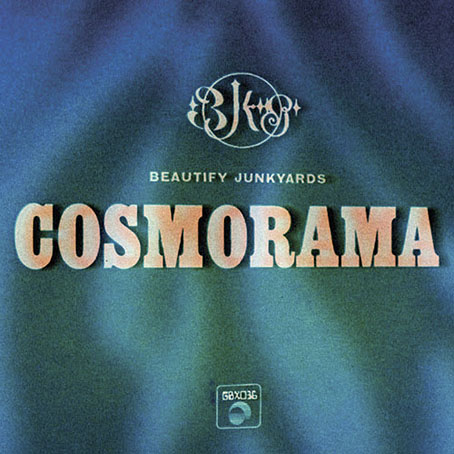
cosmorama.jpg

The next release on the Ghost Box label, Cosmorama is “tropicalia tinged psychedelic dream pop” by Beautify Junkyards. The album will be available in January. Design, as always, is by Julian House.

• Reading a review of John Gray’s Straw Dogs several years ago I remember thinking facetiously that Gray should write a follow-up about cats. (Straw Dogs isn’t a book about dogs.) The joke is on me with the publication of Gray’s latest, Feline Philosophy: Cats and the Meaning of Life. I should set up as a literary agent.

• All you need is doom: Plague Notes, Unnamed, Unknown, A Finger Dragged Through Dust, the debut album from My Heart, an Inverted Flame, is released on the 11th of this month. “Absolutely NO guitars were used in the casting of these drone metal voidscapes.” Excellent work.

• What a difference a week makes: “A Utah monolith enchanted millions and then it was gone, leaving mysteries behind.”

• En Pleine Mer: The underwater landscapes of Eugen von Ransonnet-Villez, 1867.

• Imaginative drawings of travel during a pandemic lockdown by Oscar Oiwa.

• The beauty of starling murmurations as photographed by Søren Solkær.

• Cosmic Dancer: Alice Finney on the strange world of Michael Clark.

• Mix of the week: Invaders by The Ephemeral Man.

Cosmos (1972) by Bruno Menny | Gliding Thru The Cosmophonic Dome (1981) by Bernard Xolotl | Radio Cosmos (1981) by Ippu-Do

Harry Clarke record covers

clarke01.jpg

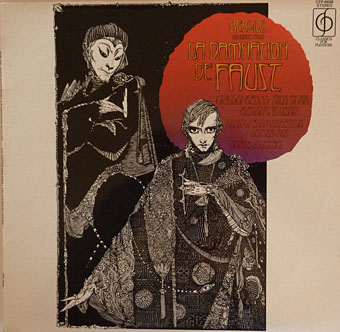
Hector Berlioz: Highlights From La Damnation De Faust (1960); Paris Opera Orchestra And Chorus, André Cluytens.  Artwork: “I wish you had something else to do than torment me when I’m quiet” from Faust (1925).

Continuing an occasional series about artists or designers whose work has appeared on record sleeves. Harry Clarke would have been added to this list some time ago but it’s taken a while for Discogs to fill in the gaps ignored by its dominant core of techno-techno-techno obsessives. Clarke’s work is also much more visible today, as a result of which many of the releases here are very recent. The viral nature of internet popularity is a great thing for artists whose work can be shared and appreciated instantly. The drawback is demonstrated by the following albums, many of which recycle the same few drawings from Clarke’s Poe and Faust volumes. I’m sure the musicians who relish Clarke’s work for its grotesque or decadent qualities would find something equally appealing in his Swinburne illustrations if they sought them out. As before, this is probably an incomplete list so if anyone knows of other suitable candidates then please leave a comment.

clarke02.jpg

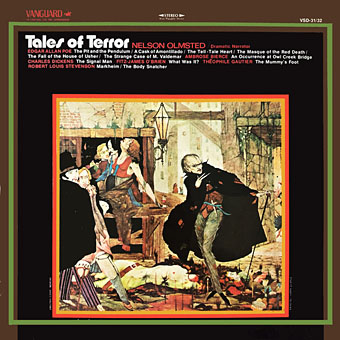
Tales of Terror (1971) read by Nelson Olmsted. Artwork: The Man of the Crowd from Tales of Mystery and Imagination (second edition, 1923).

A double album of readings from horror stories. I used to own this one, mainly for the cover since I don’t recall playing it very much. The gatefold interior features Clarke’s painting for The Fall of the House of Usher together with a note from beyond the grave by HP Lovecraft.

clarke03.jpg

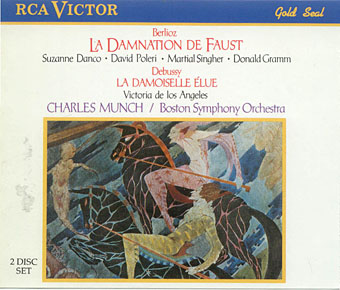
Hector Berlioz / Claude Debussy: La Damnation De Faust / La Damoiselle Elue (1988); Suzanne Danco, David Poleri, Martial Singher, Donald Gramm, Victoria De Los Angeles, Charles Munch, Boston Symphony Orchestra. Artwork: “Forward! Forward!—Faster! Faster!” from Faust (1925).

The classical labels are at least justified in their use of the Faust illustrations. This cropped painting is one of two pieces depicting Faust and Mephistopheles on horseback that suggest Clarke’s parallel career as a stained-glass artist.

clarke04.jpg

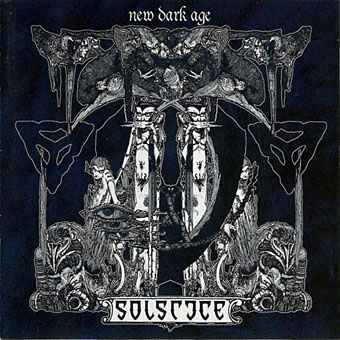
New Dark Age (1998) by Solstice. Artwork: collage of drawings from Faust (1925).

clarke05.jpg

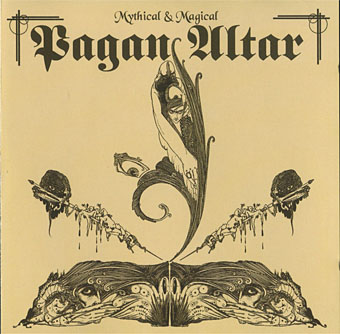
Mythical & Magical (2008) by Pagan Altar. Artwork: collage of drawings from Faust (1925).

Continue reading “Harry Clarke record covers”

Weekend links 545

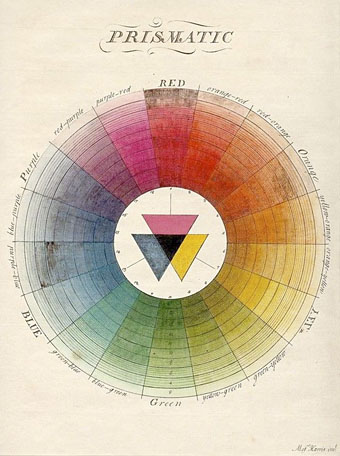
harris.jpg

Colour wheel from The Natural System of Colours (1766) by Moses Harris.

• The Vatican’s favourite homosexual, Michelangelo di Lodovico Buonarroti Simoni, receives the ludicrously expensive art-book treatment in a huge $22,000 study of the Sistine Chapel frescos. Thanks, but I’ll stick with Taschen’s XXL Tom of Finland collection which cost considerably less and contains larger penises. Related: How Taschen became the world’s most famous erotic publishers.

• “In a metaphorical sense, a book cover is also a frame around the text and a bridge between text and world.” Peter Mendelsund and David J. Alworth on what a book cover can do.

The Night Porter: Nazi porn or daring arthouse eroticism? Ryan Gilbey talks to director Liliana Cavani about a film that’s still more read about (and condemned) than seen.

What is important about reading [Walter] Benjamin’s texts written under the influence of drugs is how you can then read back into all his work much of this same “drug” mind-set; in his university student days, wrangling with Kant’s philosophy at great length, he famously stated, according to Scholem, that “a philosophy that does not include the possibility of soothsaying from coffee grounds and cannot explicate it cannot be a true philosophy.” That was in 1913, and Scholem adds that such an approach must be “recognized as possible from the connection of things.” Scholem recalled seeing on Benjamin’s desk a few years later a copy of Baudelaire’s Les paradis artificiels, and that long before Benjamin took any drugs, he spoke of “the expansion of human experience in hallucinations,” by no means to be confused with “illusions.” Kant, Benjamin said, “motivated an inferior experience.”

Michael Taussig on getting high with Benjamin and Burroughs

• “Utah monolith: Internet sleuths got there, but its origins are still a mystery.” The solution to the mystery—if there is one—will be inferior to the mystery itself.

After Beardsley (1981), a short animated film about Aubrey Beardsley by Chris James, is now available on YouTube in its complete form.

• Mix of the week: The Ivy-Strangled Path Vol. XXIII – An Ivy-Strangled Midwinter by David Colohan.

Charlie Huenemann on the Monas Hieroglyphica, Feynman diagrams, and the Voynich Manuscript.

Katy Kelleher on verdigris: the colour of oxidation, statues, and impermanence.

• A trailer for Athanor: The Alchemical Furnace, a documentary about Jan Švankmajer.

All doom and boom: what’s the heaviest music ever made?

• At Strange Flowers: Ludwig the Second first and last.

• At Dennis Cooper’s: Krzysztof Kieślowski Day.

Ralph Steadman’s cultural highlights.

• RIP Daria Nicolodi.

Michael Angelo (1967) by The 23rd Turnoff | Nightporter (1980) by Japan | Verdigris (2020) by Roger Eno and Brian Eno
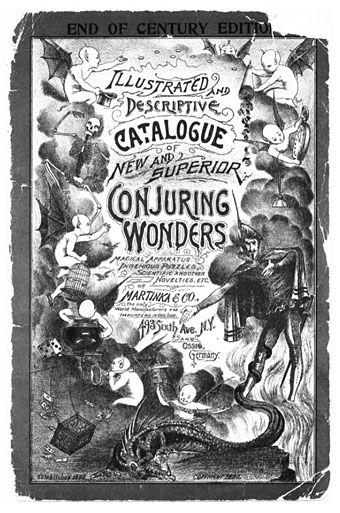
Martinka & Co. catalogue, 1899

martinka01.jpg

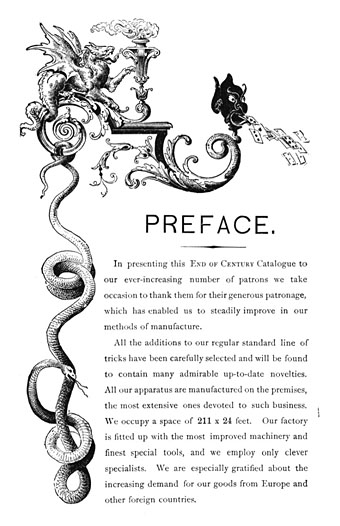
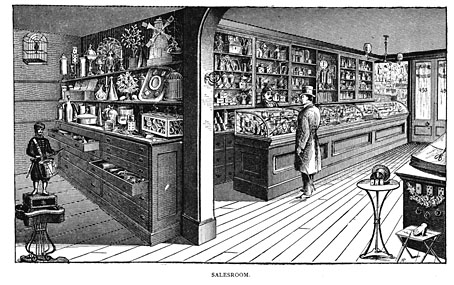
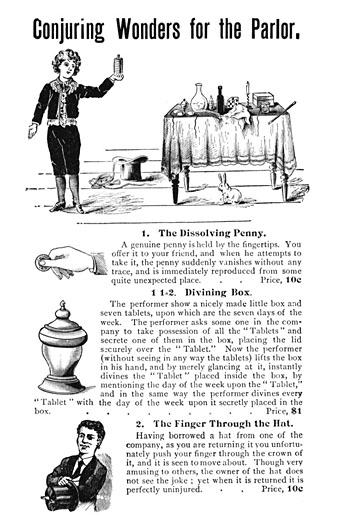
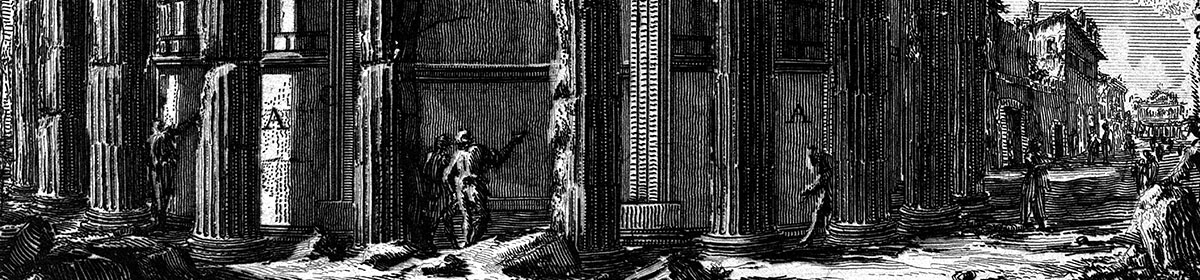
More conjuring. The Internet Archive has a number of catalogues published by suppliers to stage magicians but I’ve yet to see one as large or as heavily illustrated as this. Martinka and Co. was a magic supplier whose premises in New York distributed tricks and illusions manufactured in Germany. To judge by the size of their catalogue they must have been one of the largest (maybe the largest) distributors of conjuring props in the entire USA. If you’re interested in stage magic then reading these pages is like being shown the menu of a feast you never got to attend. I’d love to see some of their hand-made items, which range from pocket-size tricks to a life-size chess-playing automaton. The catalogue runs to over 200 pages, and is illustrated on almost every page with vignettes of just the type that Ricky Jay liked to use in his books. According to the uploader, the scans were originally intended for a crowd-funded reprint but the present owners of the Martinka name objected. Browse a world of magic here.

martinka02.jpg

martinka13.jpg

martinka14.jpg

martinka15.jpg

martinka03.jpg

Continue reading “Martinka & Co. catalogue, 1899”

That old black magic: A Dark Song

adarksong1.jpg

Catherine Walker.

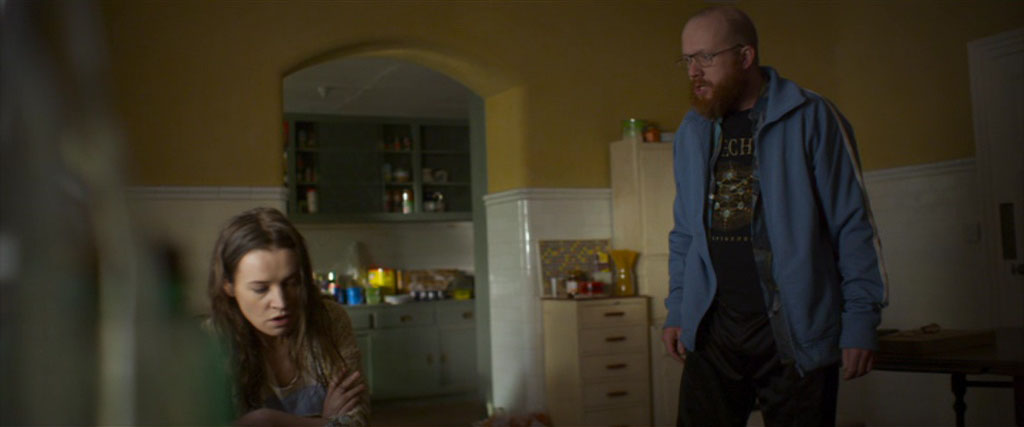
Among the Halloween viewing this year was A Dark Song (2016), a debut feature written and directed by Liam Gavin. I’d known about this one for some time thanks to recommendations from friends but for various reasons hadn’t seen it until now. Part of the interest was nakedly egotistical: one of the lead characters wears a T-shirt bearing a design based on the Epigenesis album cover that I created for Melechesh in 2010. The cover art—a variation on the Kabbalistic Tree of Life—suits the occult theme of the film, while Steve Oram’s character is also the kind of person who might be a metal-head.

adarksong2.jpg

Steve Oram in that shirt.

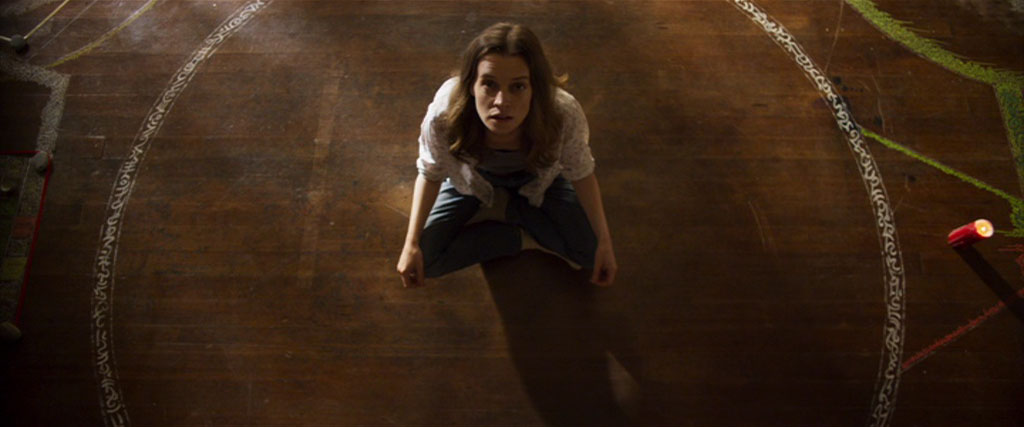
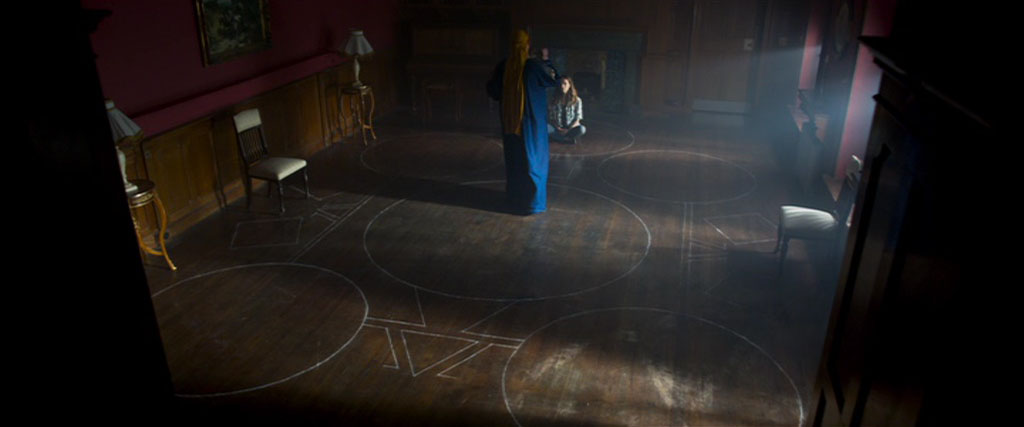
Ego matters aside, it’s the occult business that really sets this film apart. Had I known earlier that the story concerns an enactment of the famously arduous Abra-Melin ritual I’d have sought it out much sooner. Catherine Walker plays Sophia, a woman looking for supernatural vengeance following the murder of her young son. Her ritual guide, Oram’s Joseph Solomon, is evidently her last resort after attempts to hire other occultists have failed. Her determination forces her to engage the man despite his obvious unsuitability as a mentor for the Abra-Melin’s psychic assault course. Solomon is a surly recovering alcoholic; once the ritual begins he turns into a belligerent bully. With the pair locked into a remote house that neither of them can leave for fear of the occult consequences, the ensuing battle of wills makes an already hazardous ritual all the more dangerous.

adarksong3.jpg

Continue reading “That old black magic: A Dark Song”