Weekend links 370

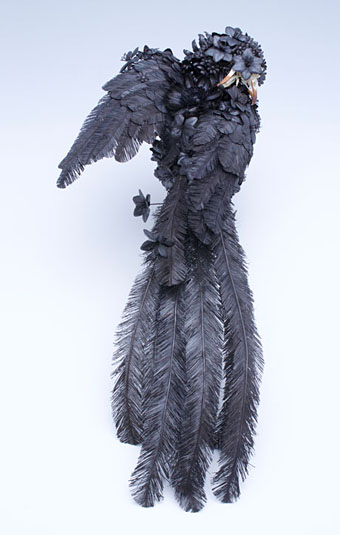
lai.jpg

The Conjure (2016) by Jolene Lai. Via Dangerous Minds.

• RIP George Romero, a proudly independent filmmaker who succeeded on his own terms. Kim Newman remembers the man who remade horror cinema. Romero always referred to Powell & Pressburger’s Tales of Hoffmann (1951) as a key cinematic influence, something he discussed with Marc Lee in 2005.

Man Alive (BBC TV, 1967): Consenting Adults: 1. The Men | Consenting Adults: 2. The Women. Two documentaries about the British homosexual experience screened shortly before the House of Commons vote that decriminalised sex between men in England and Wales.

Dolente…Dolore: The Inferno of Malcolm Lowry is the latest musical release from Larkfall: “a trembling, drunken dream with flashes of heaven and hell…”

Tom Harper on The Klenke Atlas (1660), one of the largest atlases in the world which is now available for viewing at the British Library.

Martin Jenkins of Pye Corner Audio, The House In The Woods et al talks to Bandcamp about his own brand of sinister electronica.

• RIP Peter Principle, a musician whose up-front bass playing was always a key feature of the Tuxedomoon sound.

• And RIP actor John Heard talking to Will Harris in 2015 about some of his many roles in film and TV.

• 355 free copies of Galaxy Magazine at the Internet Archive.

• Google Maps goes inside the International Space Station.

• Good with a knife: The papercut art of Ivonne Carley.

• Mix of the week: FACT Mix 610 by Karen Gwyer.

• At Dennis Cooper’s: Yasujiro Ozu Day.

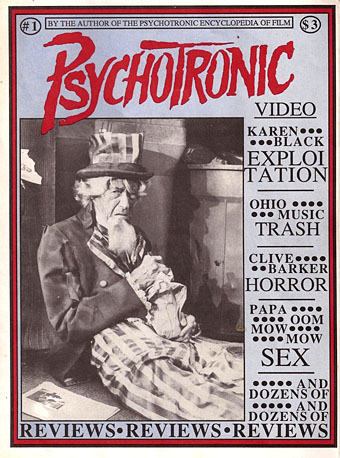
• L’alba Dei Morti Viventi (1978) by Goblin | East/Jinx/•••/Music #1 (1981) by Tuxedomoon | Martin (1983) by Soft Cell

Weekend links 369

popovic.jpg

Untitled painting by Serbian Surrealist Ljuba Popovic (1934–2016). I missed the announcement of Popovic’s death last year.

Bryan Washington on the radical grace of Gengoroh Tagame: My Brother’s Husband and the tradition of gay manga. Where bara artists are concerned, I favour the work of Mentaiko Itto. Bruno Gmünder recently published a collection in English.

• At madrotter-treasure-hunt: Post punk from old tapes; “Some live recordings from concerts in Holland from Charles Hayward and from This Heat, Metabolist, Pere Ubu, Holger Hiller…”

Dennis Cooper‘s favourite fiction, poetry, non-fiction, film, music, art & internet of 2017 so far. (Thanks again for the nod to this blog!)

The Weird and the Eerie is an evocative and carefully-written short study in cultural aesthetics. Far from the familiar line-up of vampires, zombies, and demons, Fisher’s eclectic examples speak directly to one of the central themes of the horror genre: the limits of human knowledge, the metamorphic shapes of fear, and the blurriness of boundaries of all types. His simple conceptual distinction quickly gives way to reversals, permutations, and complications, ultimately refusing any notion of a monstrous or alien unhumanness “out there”; with Fisher, the unhuman is more likely to reside within the human itself (or as Lovecraft might write it, “the unhuman is discovered to reside within the human itself”).

Many books on the horror genre are concerned with providing answers, using varieties of taxonomy and psychology to provide a therapeutic application to “our” lives, helping us to cathartically purge collective anxieties and fears. For Fisher, the emphasis is more on questions, questions that target the vanity and presumptuousness of human culture, questions regarding human consciousness elevating itself above all else, questions concerning the presumed sovereignty of the species at whatever cost – perhaps questions it’s better not to pose, at the risk of undermining the entire endeavour to begin with.

Eugene Thacker reviewing The Weird and the Eerie by Mark Fisher. I’ve not read Fisher’s book yet (I’m intending to) but I was pleased to see one of my illustrations of R’lyeh accompanying the piece.

• At Dirge Magazine: Gwendolyn Nix on Twisted Labyrinths, Dark Mazes, and Ancient Methods of Reflection.

• Mixes of the week: XLR8R podcast 498 by Nicola Kazimir, and Secret Thirteen Mix 227 by Sculpture.

AO Scott reviews Endless Poetry, Alejandro Jodorowsky’s surreal self-portrait.

Maze Of Love (1968) by The Dave Clark Five | Audiomaze (2000) by Tabla Beat Science | Into The Maze (2012) by Pye Corner Audio

Weekend links 368

nerly.jpg

Piazzetta San Marco by Moonlight (no date) by Friedrich Paul Nerly.

• RIP Heathcote Williams (Guardian obit, NYT obit): poet, playwright, actor, artist, anarchist, stage magician, and no doubt many other things besides. Being a product of the counter-culture, and one of Britain’s foremost anti-establishment writers (his polemics against the Royal Family were unceasing), Williams was a regular in the early publications produced by my colleagues at Savoy Books; in fact there’s a piece by him in The Savoy Book itself. Consequently, Williams always felt like a distant relative even though we never met. Of his many film appearances, which ranged from low-budget independent productions to Hollywood junk, he was ideally cast as Prospero in Derek Jarman’s film of The Tempest, and he audaciously steals a scene from Tilda Swinton in Sally Potter’s wonderful Orlando. Elsewhere: Jeremy Harding on Williams’ run-ins with the gatekeepers, and Why D’Ya Do It?, a song by Marianne Faithfull with lyrics by Williams.

• Mixes of the week: Secret Thirteen Mix 226 by Chihei Hatakeyama, and SydArthur Festival 2: Summer of Love Edition by Head Heritage.

Geeta Dayal on composer and musique concrète pioneer Pierre Henry whose death was also announced this week.

Jonathan Meades reviews Vinyl.Album.Cover.Art: The Complete Hipgnosis Catalogue by Aubrey Powell.

• “Brutal! Vulgar! Dirty!” Polly Stenham on Mae West and the gay comedy that shocked 1920s America.

Hannah Devlin on religious leaders getting high on psilocybin for science.

• At Dennis Cooper’s: Spotlight on…In Transit (1969) by Brigid Brophy.

• At Bibliothèque Gay: Matelots (1935) by Gregorio Prieto.

SD Sykes on reconsidering Venice, crumbling city.

Letters and Liquor

This Ain’t The Summer Of Love (1976) by Blue Öyster Cult | Orlando (1996) by Trans Am | Transit (2004) by Fennesz

Hector Guimard’s Castel Béranger

guimard01.jpg

Art Nouveau is never far from these pages or from my own work, as has been the case this week when work-related research turned up this recent addition to the scanned books at the Internet Archive. Hector Guimard is best known today for his entrances to the Paris Metro not all of which survived the ravages of the 20th century. His designs for the Castel Béranger, an apartment block in Paris, slightly precede the Metro commission, and were intended by Guimard as a showcase for his own development of the Art Nouveau style.

guimard02.jpg

Like Frank Lloyd Wright, Guimard attended to every detail of the building’s construction and interior design, furniture included, and that’s what you have here, a book length guide to the building inside and out. The asymmetrical wrought-iron gate is a familiar sight from studies of Art Nouveau but other views of the building are less common. Compared to Alphonse Mucha’s control and Victor Horta’s sinuous curves, Guimard’s decoration can appear undisciplined but the wildness also makes it seem in advance of its time. Some of the wallpaper patterns for the Castel Béranger contain shapes that wouldn’t be seen again in a design context until the psychedelic posters of the 1960s. Guimard believed he was designing for the future but didn’t live to see the world that could make use of such stylistic delirium.

guimard03.jpg

Continue reading “Hector Guimard’s Castel Béranger”

Weekend links 366

kashiki.jpg

Dandelion (2009) by Tomoko Kashiki.

• “Standard Ebooks takes ebooks from sources like Project Gutenberg, formats and typesets them using a carefully designed and professional-grade style guide, lightly modernizes them, fully proofreads and corrects them, and then builds them to take advantage of state-of-the-art ereader and browser technology.”

Obscenity and the Arts, a previously unpublished essay by Anthony Burgess, will appear in book form later this year via Pariah Press.

• Mixes of the week: VF Mix 97: Talk Talk by The Last Dinosaur, and Secret Thirteen Mix 225 by Janek Schaefer.

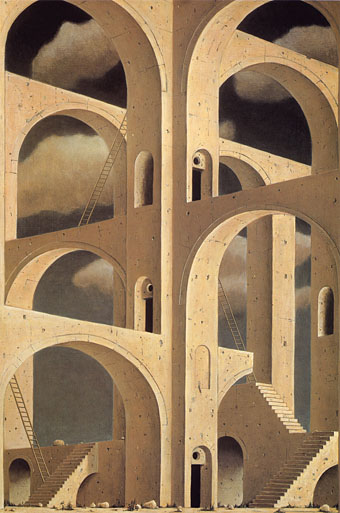
Rub any two writers together and similarities will show. No two writers, however different, are completely different. Here’s a crucial instance: Lovecraft and Ballard both put architecture at the heart of their fiction, even though neither had the slightest formal training in the subject. And it is via this interest that the two intersect in an unexpected way. They are connected, through time and space, by that most humble of architectural events: the corner, the junction between two walls. What Lovecraft and Ballard did was to make the corner into a place of nightmares — and in doing so, they reveal its secret history.

Will Wiles in a long and rewarding essay, The Corner of Lovecraft and Ballard

• Dungeons Deep, Forests Dark – A beginner’s guide to Dungeon Synth by Daniel Pietersen.

Alex Ross on Joséphin Péladan, the Symbolists and the occult roots of Modernism.

• Cooling the Tube: engineering heat out of the [London] Underground by IanVisits.

Caroline on the mysteries of Pye Corner: Flames, poltergeists and bodysnatchers.

• The Saint of Sin City – Tony Kail Visits Las Vegas’ Santuario de la Santa Muerte.

• Photographs of Art Nouveau architecture by Keiichi Tahara.

• A stream of the new Porter Ricks album, Anguilla Electrica.

Jasper Sharp on 100 years of Japanese animation.

• At Dennis Cooper’s: 197 clocks.

On The Corner [Take 4] (1972) by Miles Davis | Corner Crew Dub (1976) by Augustus Pablo | Empty Avenues And Dark Corners (Pye Corner Audio Mix) (2013) by John Foxx and the Belbury Circle