Harry Smith revisited

harry_smith1.jpg

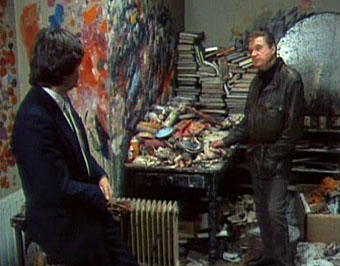
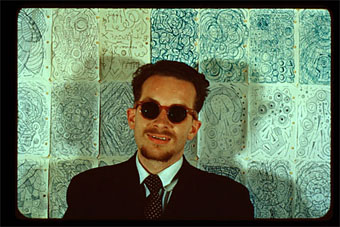
Harry Smith in the middle of the Twentieth Century with some of his drawings.

The first European exhibition of work by artist, writer, filmmaker, collector, Kabbalist, ethnographer…okay, polymath Harry Smith, opens today at the Reg Vardy Gallery, Sunderland. The exhibition runs from 2nd May–8th June 2007. In addition, there’s a companion exhibition, Harry Smith Anthology Remixed, at alt.gallery from 8th May–30th June. Among his many accomplishments, Smith compiled the landmark Anthology of American Folk Music and the latter showing features 84 musical and non-musical artists responding to each of the 84 songs which comprise that collection.
harry_smith2.jpg

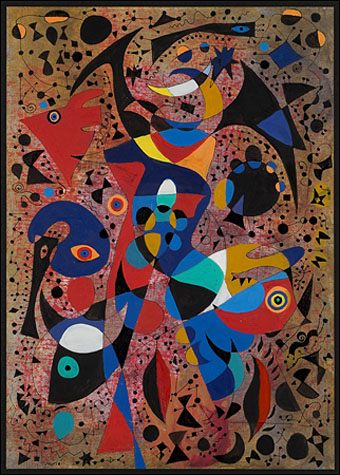
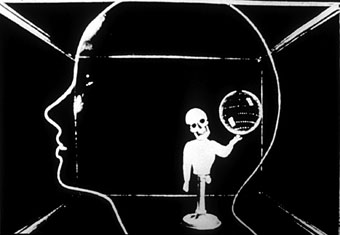
Heaven and Earth Magic (1962).

Harry Smith: Hobbies and films

2nd May–8th June 2007

Reg Vardy Gallery
School of Arts, Design, Media & Culture
University of Sunderland
Ashburne House
Ryhope Road
Sunderland
SR2 7EF

Reg Vardy Gallery is proud to host the first European exhibition devoted to Harry Smith’s films and hobbies.

Smith, who died in 1991, was a polymath of the highest order. With his coke bottle glasses, slight hunchback and long, bony tobacco-stained fingers, Smith dedicated himself to a life of seemingly infinite interests. He collected Seminole patchworks and painted Ukranian Easter eggs. He was a leading authority on string figures (such as the ‘cat’s cradle’) and made a study of the underlying principles of Highland tartans. He recorded the peyote songs of the Kiowa Indians and in a project entitled “Materials for the Study of Religion and Culture in the Lower East Side”, made vast live recordings of traffic noises, children’s jump-rope rhymes and city birdsong, as well as the drug talk of junkies and the death-rattles and prayers of hobos in Bowery flophouses (where he himself lived in poverty for some time).

He was one of the most influential figures in avant-garde film, developing new and ingenious methods of animation, and he collected thousands of folk records which later formed the basis for the work he is best remembered for—the Anthology of American Folk Music—the seminal collection of early music recordings that was in a large part responsible for triggering the folk music revival of the 1950s and 60s.
George Pendle

This exhibition includes a variety of Smith?s eccentric ethnographic collections, or what he called “Encyclopaedias of Design” such as string figures, Pysanky (Ukrainian Easter eggs), early sound recordings, and a range of his hand-painted, stop-motion and collaged animations such as Early Abstractions, and Late Superimpositions. The exhibition will also include documentation of Smith?s paper airplane collection. This unusual and rare collection is comprised of hundreds of paper airplanes found by Smith on the streets of New York City from the late 1960s to the early 1980s. This exhibition of the hobbies and artistry of Harry Smith has been organised in collaboration with the Harry Smith Archives and Anthology Film Archives, New York. George Pendle writes for Frieze, Cabinet, and the Financial Times . His most recent book Strange Angel (Weidenfeld & Nicolson, 2005) traces the life of the eccentric rocket scientist John Whiteside Parsons. Both Parsons and Harry Smith were heavily involved with the occult fraternity—the Ordo Templi Orientis.

Harry Smith Anthology Remixed

8th May–30th June

alt.gallery
61/62 Thornton Street
Newcastle Upon Tyne
NE1 4AW
anthology.jpgThe exhibition brings together the work of 84 leading artists and musicians, who have been invited to make a visual artwork in response to 1 track each from the groundbreaking music release the Anthology of American Folk Music. The Anthology was edited by seminal New York artist, musicologist and experimental filmmaker Harry Smith, and first published by Folkways in 1952.

The Anthology is comprised entirely of recordings issued between 1927 (the year electronic recording made accurate reproduction possible) and 1932 when the Depression stifled folk music sales. Harry Smith used the new LP technology to create an unbroken sequence of songs, divided into three colour coded sets, which represented three elements: air, fire and water. The Anthology is considered to be one of the most important collections of information in modern society, creating a folk canon and contributing to numerous folk revival movements.

This exhibition aims to create a new visual collection of the Anthology, to continue the collective history and revival of the work, as seen through the eyes of contemporary visual artists and musicians. The exhibition includes artists from the Europe, Japan and the US reflecting a diverse and exciting range of practice including: visual art, outsider art, comic book, design, craft and illustration.

Exhibition curated by Rebecca Shatwell. A specially commissioned essay by David Keenan accompanies the exhibition and can be downloaded here.

Harry Smith Anthology Remixed includes work by: Dave Allen, Jonathan Allen, Diane Barcelowsky, Marcia Bassett, Eric Beltz, Hisham Bharoocha, Jesse Bransford, Vashti Bunyan, Jelle Crama, Jaron Childs, Rob Churm, Marcus Coates, Karen Constance, Christian Cummings & Jed Lackritz, Dearraindrop, Arrington di Dionyso, Graham Dolphin, Bill Drummond, Jorn Ebner, Espers, Peter J Evans, Yamataka Eye, Jad Fair, Feathers Family, Kyle Field, Alec Finlay, Devin Flynn, Iain Forsyth and Jane Pollard, Luke Fowler, Chris Graham, Susie Green, Doug Harvey, A Hawk And A Hacksaw, Rama Hoffpauir, Dan Howard-Birt, Zoe Irvine, Rich Jacobs, Juneau Projects, Seth Kelly, Jeffrey Lewis, Linder, Derek Lodge, Lone Twin, Robert AA Lowe, Ant Macari, The Matinee Orchestra, Maya Miller, Gean Moreno, Heather Leigh Murray, Michael Nyman, Dylan Nyoukis, John Olson, John Orth, Paper Rad, Mike Paré, Plastic Crimewave, Dave Portner, Devin Powers, Adam Putnam, The Rebel, Ginnie Reed, Clare E Rojas, Chris Rollen, Arik Roper, Giles Round, Royal Art Lodge, Mathew Sawyer, David Sherry, Ross Sinclair, DJ Spooky, Andre Stitt, Philip Taaffe, Vernon & Burns, Daryl Waller, Flora Whiteley, Michael Wilson, Simon Woolham, Andrew Jeffrey Wright, C. Spencer Yeh, Yokoland, zoviet*france

The Harry Smith Archives
American Magus: Harry Smith—A Modern Alchemist

Previously on { feuilleton }
Meshes of the Afternoon by Maya Deren
Jodorowsky on DVD
Jordan Belson on DVD
The art of Arik Roper
Wallace Burman and Semina
The art of Cameron, 1922–1995
Kenneth Anger on DVD…finally
Ten films by Oskar Fischinger
Lapis by James Whitney
The art of Harry Smith, 1923–1991
La Villa Santo Sospir by Jean Cocteau
Expanded Cinema by Gene Youngblood
The Invasion of Thunderbolt Pagoda
Fantastic art from Pan Books

larkin_fantastic.jpg

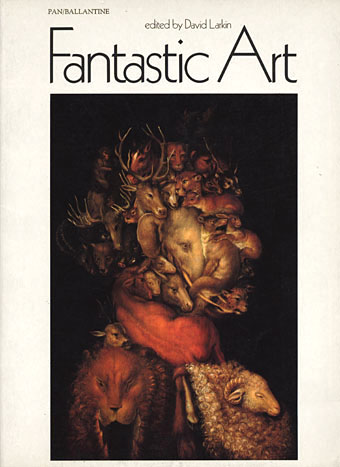
Fantastic Art (1973).
Cover: Earth by Arcimboldo.

I’d thought of writing something about this book series even before I started this blog since there’s very little information to be found about it online. I can’t compete with the serious Penguin-heads, and I’m not much of a dedicated book collector anyway, but I do have a decent collection of the art books that Pan/Ballantine published in the UK throughout the 1970s. The books were published simultaneously by Ballantine/Peacock Press in the US, and nearly all were edited by David Larkin, with Betty Ballantine overseeing the American editions. Two of the series, the Dalí and Magritte, were among the first art books I owned. Over the years I’ve gradually accumulated most of the set, and I always look for their distinctive white spines in secondhand shops.

The Pan books were a uniform size, approximately A4 (297 x 210 mm), with a single picture on each recto page surrounded by generous margins. The reproductions were excellent, printed on quality paper, and all featured specially-commissioned introductions (JG Ballard for the Dalí book) with those pages printed on textured sheets. Each book was beautifully designed, the opening pages and introductions often featuring black-and-white vignettes if the artists in question produced line drawings. David Larkin’s focus was on art that tended to the fantastic, visionary or imaginative, something that was in vogue throughout the Seventies after psychedelic art had ransacked the Victorian and Edwardian eras for inspiration a few years earlier. Aubrey Beardsley had been rediscovered in the mid-Sixties (turning up on the cover of Sgt. Pepper) and underground magazines such as Oz and IT helped create a renewed interest in art that would look good when you were stoned or tripping. The Pan books weren’t “head books” as such but its probably fair to say that the series was supported and made possible by the prevailing attitudes of the time.

larkin_magritte.jpg

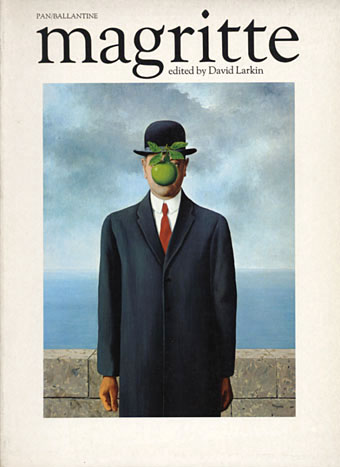
Magritte (1972).
Cover: The Son of Man.

As the series developed the format evolved away from fine art towards contemporary fantasy art, and as a result became less interesting for me, although the success of the Frank Frazetta books undoubtedly meant that this was the way the sales were going. The demand for the Ernst and Rousseau titles can be gauged by the remainder cut-outs on their covers. The final volumes (which I’ve never bought) featured artists such as Brian Froud (The Dark Crystal), Alan Lee (The Lord of the Rings) and others, with their Faeries, Giants, Castles and Gnomes books. I’m still missing a couple of the earlier numbers which I could now order online but that would spoil the game of letting chance deliver the goods, wouldn’t it?

Fantastic Art is easily my favourite, a great collection of visionary work through the ages beginning with Bosch and proceeding through Goya, John Martin, Richard Dadd, the Symbolists and the Surrealists to what was then contemporary work by artists such as Hundertwasser. This was one of the first of the series and seems to be the key volume in the way it provides an overview of the art that would follow.

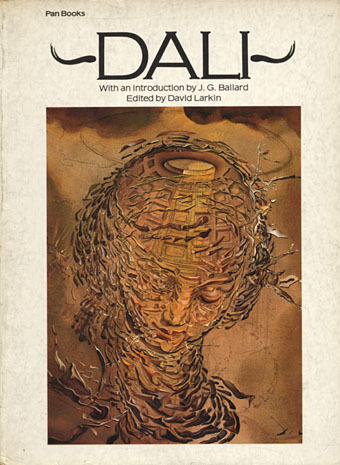
larkin_dali.jpg

Dali (1974).
Cover: Raphaelesque Head Exploding.

A great introduction by JG Ballard in this one, replete with the usual phrases about “the dark causeways of our spinal columns”.

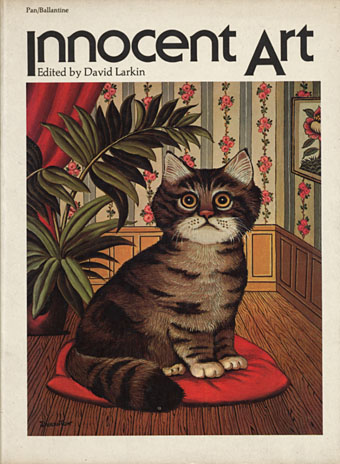
larkin_innocent.jpg

Innocent Art (1974).
Cover: Cat by André Duranton.

A collection of what used to be called naive painting, ie: work by unschooled “Sunday painters” such as Rousseau. Outsider art is the preferred term these days even though the work itself hasn’t always changed.

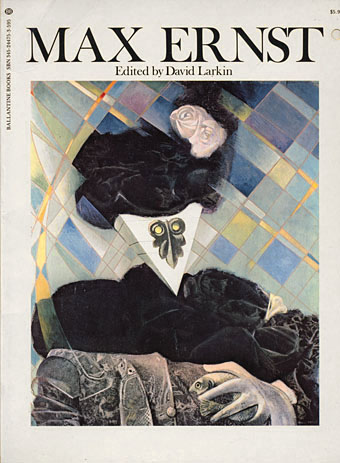
larkin_ernst.jpg

Max Ernst (1975).
Cover: Euclid.

Ernst’s later work in this book was the most abstract and experimental of the series. Europe After the Rain was printed across a fold-out sheet so that its full width could be displayed.

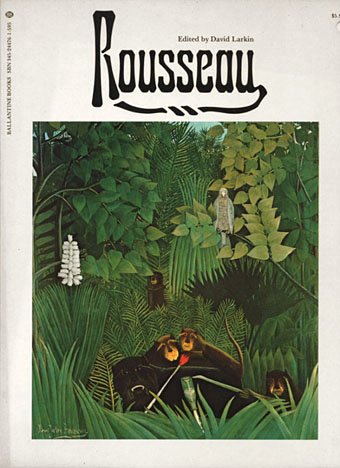
larkin_rousseau.jpg

Rousseau (1975).
Cover: The Merry Jesters.

larkin_dreamers.jpg

The English Dreamers (1975).
Cover: The Bridesmaid by John Everett Millais.

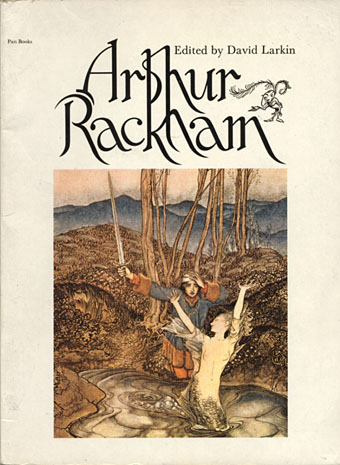
larkin_rackham.jpg

Arthur Rackham (1975).
Cover: Clerk Colville (from Some British Ballads).

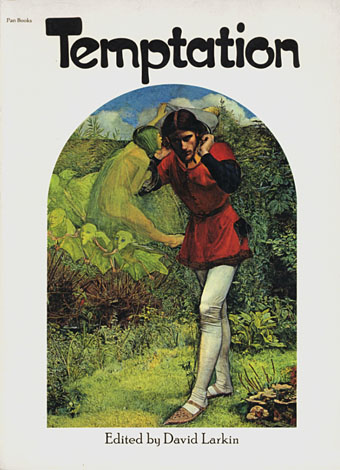
larkin_temptation.jpg

Temptation (1975).
Cover: Ferdinand Lured by Ariel by John Everett Millais.

An unusual collection with a wide range of pictures (Bosch, Alma-Tadema, Balthus). Mainly concerns sexual temptation for female bodies but also includes Biblical and other temptations.

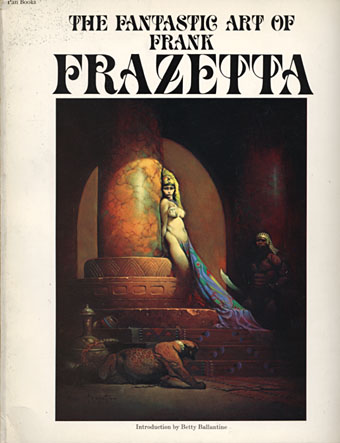
larkin_frazetta1.jpg

The Fantastic Art of Frank Frazetta (1975).
Cover: Egyptian Queen.

The book that launched a thousand metal albums. Volume One here was the first attempt to collect Frazetta’s work and was easily the most popular title of the series, going through many reprintings and prompting three follow-up volumes. Many of the reproductions are superior to their equivalents in Taschen’s later Icon collection. This was the first one I bought after the Surrealist books and, while I’ve never been a muscle obsessive, I couldn’t help but notice all the male flesh on display.

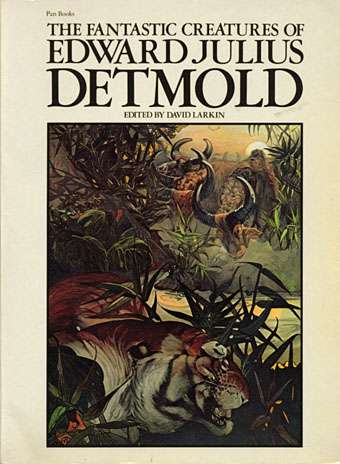
larkin_detmold.jpg

The Fantastic Creatures of Edward Julius Detmold (1976).
Cover: Shere Khan in the jungle (from The Jungle Book).

larkin_robinson.jpg

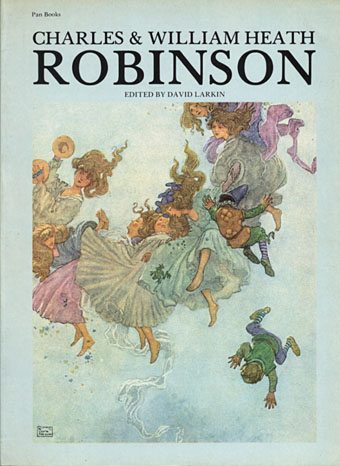
Charles and William Heath Robinson (1976).
Cover: Elfin Mount (from Hans Andersen’s Fairy Tales).

A collection of the Robinsons’ fairy tale paintings. A break from the format with a blue cover.

larkin_larsson.jpg

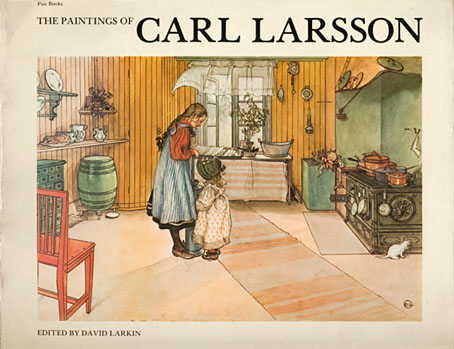
The Paintings of Carl Larsson (1976).
Cover: The Kitchen.

Another break with the format, the book being printed landscape to suit Larsson’s drawings and paintings. As with the Ernst book, a fold-out page was a special feature.

larkin_nielsen.jpg

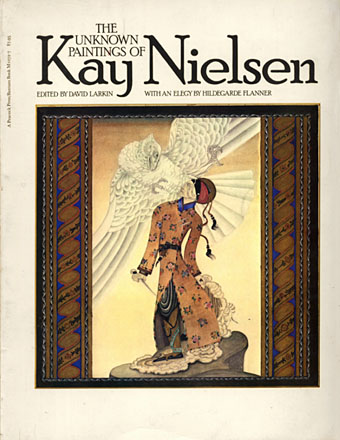
The Unknown Paintings of Kay Nielsen (1977).
Cover: The Tale of the Third Dervish.

A collection of Nielsen’s work derived from Turkish and Persian miniatures.

larkin_frazetta2.jpg

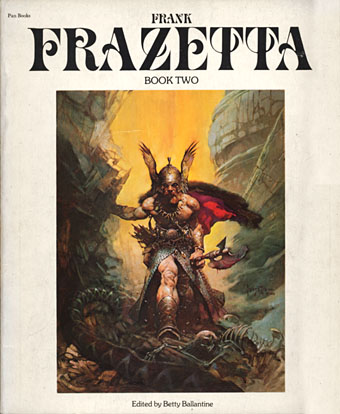
Frank Frazetta, Book Two (1977).
Cover: Dark Kingdom.

larkin_frazetta3.jpg

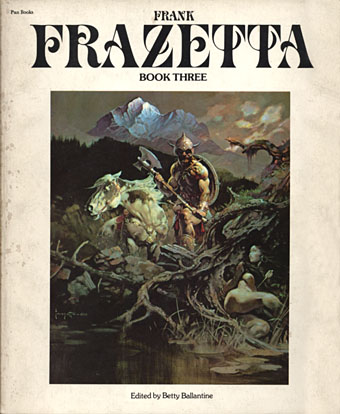
Frank Frazetta, Book Three (1978).
Cover painting: Nightwinds.

larkin_wulfing.jpg

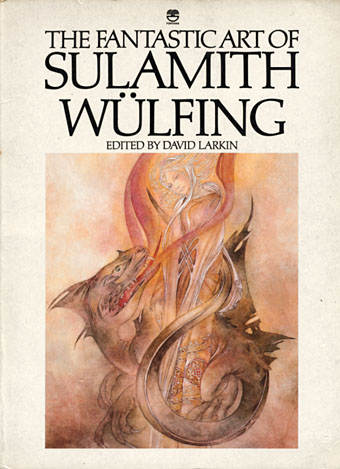
The Fantastic Art of Sulamith Wülfing (1978).
Cover: The Big Dragon.

Part of the series but published by Fontana/Collins, not Pan.

Elsewhere on { feuilleton }
The fantastic art archive
The book covers archive
The illustrators archive

The art of ejaculation

kwok1.jpg

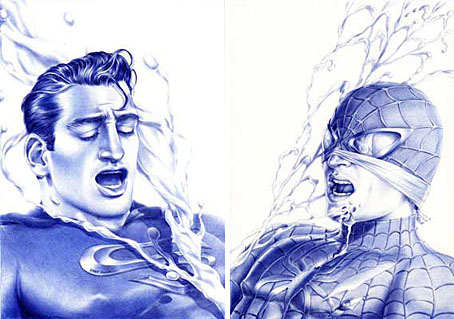
left: Sperman (2007) by Cary Kwok; right: Here Cums the Spider (2007) by Cary Kwok.

NSFW, as if you need to be told. It’s almost a commonplace of contemporary art that there are so many artists around today, producing such a volume of work, that any newcomer (as it were) has to find a niche and stay there if they want their efforts to stand out from the crowd. Cary Kwok’s niche seems to be the seminal emission which he depicts in a variety of ways, including showing various well-known comic-book characters shooting their respective loads. Kwok’s work has been shown recently at the Herald Street gallery, London, and Hard Hat, Geneva.

I like Kwok’s drawings, they’re carefully-done and funny, and serve to remind one that the cum shot is under-represented in art. Despite various Biblical prohibitions, women have been subject to no end of sexual display throughout art history, from copulations with gods in the form of animals to Danaë’s impregnation by Zeus as a literal golden shower. But male sexuality, especially at its most essential moment, has rarely been depicted outside the pages of pornography. The irony of this, as with arguments against erections in art, is that if it wasn’t for ejaculations we wouldn’t be here to discuss their pros and cons. Gay artists have been in the vanguard of addressing the sperm-drought, possibly because they have more than a passing interest in these matters; Michael Petry’s work earlier this year took a lateral view. There’s another sample (as it were) of Cary Kwok’s work below the fold plus some other seminal (as it were) artworks through the ages.

Update: Jack-Off Sculpture Sells For $15 Million.

Continue reading “The art of ejaculation”

Penguin Surrealism

genet.jpg

Design by Germano Facetti with a detail from Europe after the Rain by Max Ernst.

Is this the start of a new meme? Ace Jet 170 features a number of posts about the history of Penguin and Pelican book cover design. (I won’t link to any specific page as the site is full of other good stuff which you really ought to go and look at.) Now Dan Hill at City of Sound has followed suit, inspiring me to dig out a few choice volumes connected by theme, in this case the use of Surrealist paintings for cover art.

See also:
The Penguin Collectors’ Society
The Penguin Paperback Spotters’ Guild (Flickr pool)

Continue reading “Penguin Surrealism”