La Vie Électrique by Albert Robida

robidavie01.jpg

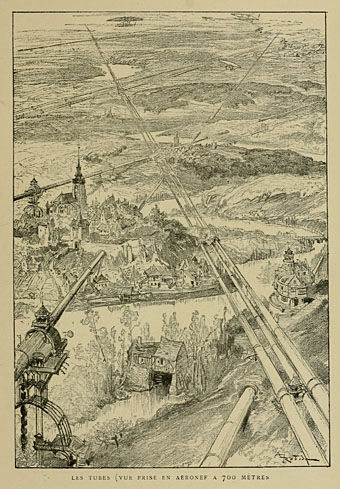
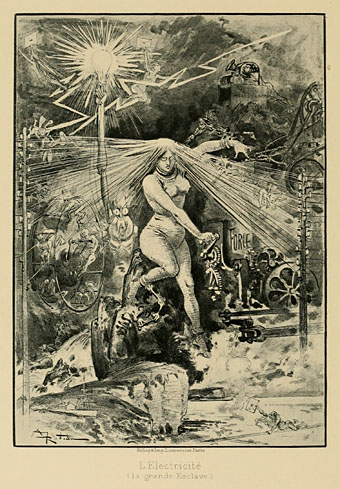
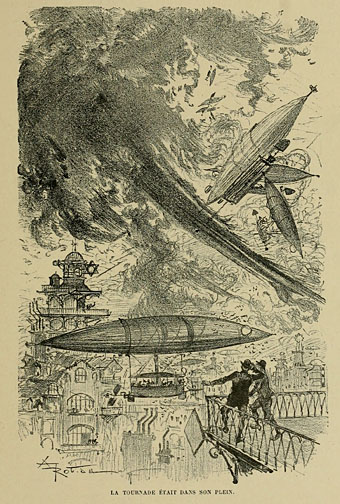
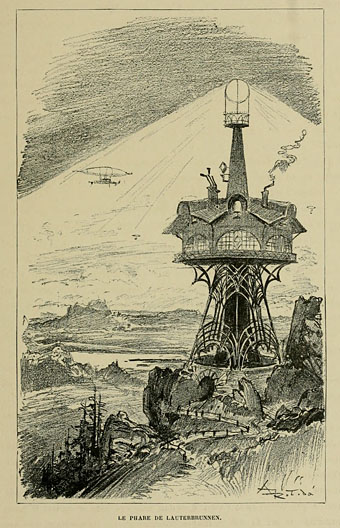
Albert Robida (1848–1926), a French illustrator and writer, might be less well-known today had he not authored several books which attempt to predict what life might be like in the 20th century. He was sufficiently well-regarded in his lifetime to be given the task of imagining “Old Paris” for one of the attractions at that cult event of mine, the Exposition Universelle of 1900. These days his work mostly appears in histories of science fiction as a result of books such as Le Vingtième Siècle: La Vie Électrique, a comic novel published in 1890 that looks at French life in the distant year of 1955. The attitude may be humorous, with a drawing style that resembles the contraptions of William Heath Robinson rendered by Gustave Doré, but some of Robida’s predictions are as prescient as those of HG Wells. The inhabitants of France in the 1950s may still dress like those in the 1890s but they communicate via “Téléphonoscope” while the military wage biological and chemical warfare. The usual fleets of fanciful airships fill the skies; the idea that everyone in the future would be the owner of a flying-machine goes back a long way. Robida also shows submarines, transit tubes connecting cities, and pollution caused by the new technologies.

La Vie Électrique is copiously illustrated so the selection here is a necessarily small sample. Anyone wishing to see the whole book can browse it or download it at the Internet Archive.
robidavie02.jpg

robidavie03.jpg

robidavie04.jpg

Continue reading “La Vie Électrique by Albert Robida”

L’art dans la décoration extérieure des livres

livres1.jpg

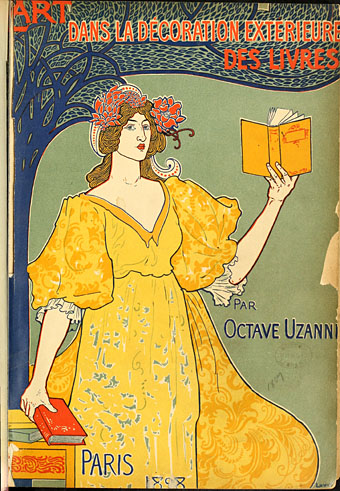
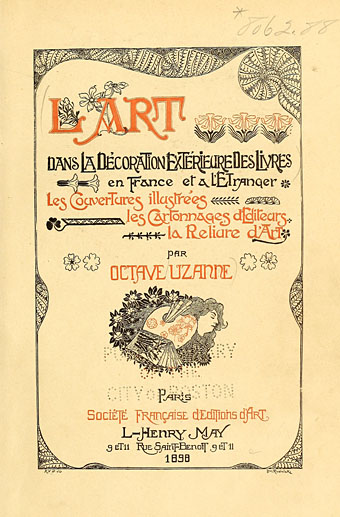
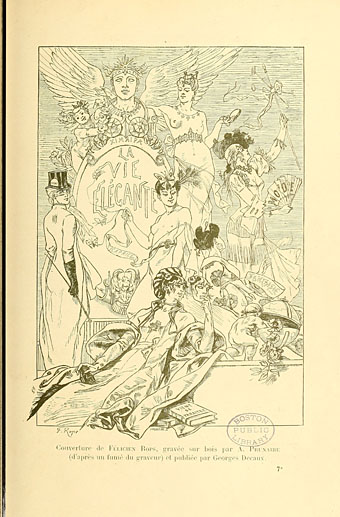
Back at the fin de siècle with this study by Octave Uzanne of book cover design in the 1890s. L’art dans la décoration extérieure des livres is over four hundred pages of very varied designs, from covers for popular novels to the state of the art by usual suspects Aubrey Beardsley, Charles Ricketts et al. Léon Rudnicki provides the cover and some interior illustrations. The examples below include pieces by Symbolist artists Félicien Rops and Franz Stuck, as well as one of Alphonse Mucha’s designs for Judith Gautier’s Mémoires d’un Éléphant blanc. The complete book may be browsed here or downloaded here.

livres2.jpg

livres3.jpg

Continue reading “L’art dans la décoration extérieure des livres”

The Occult Explosion

occult01.jpg

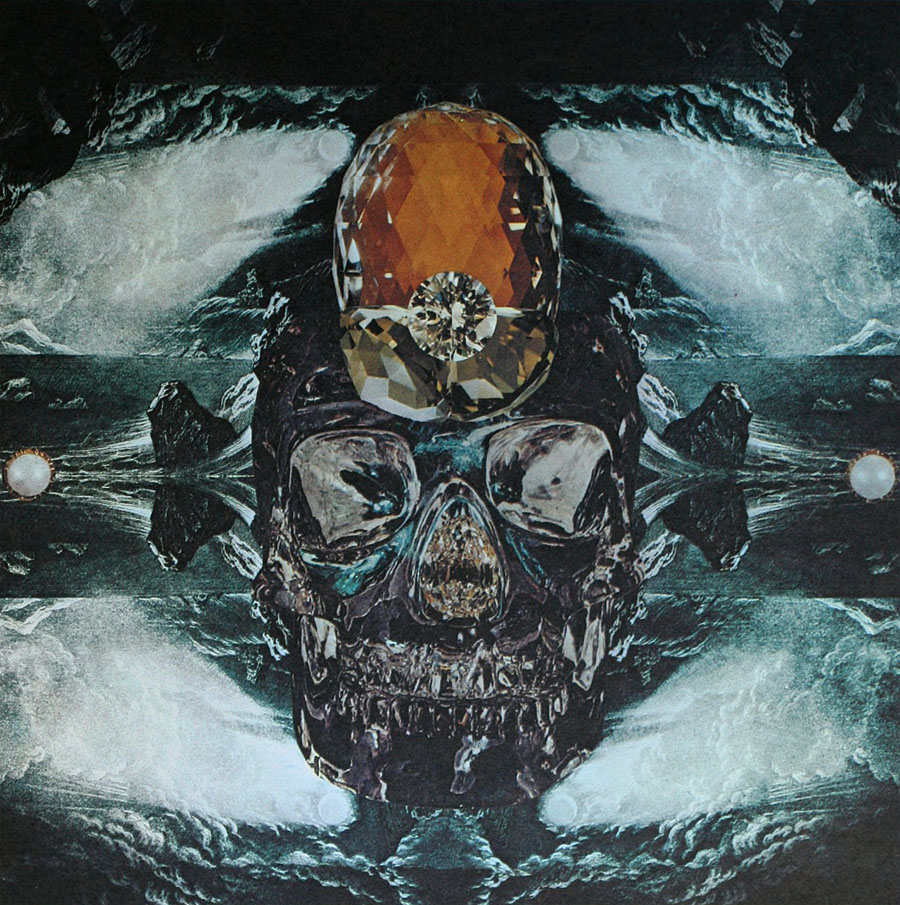
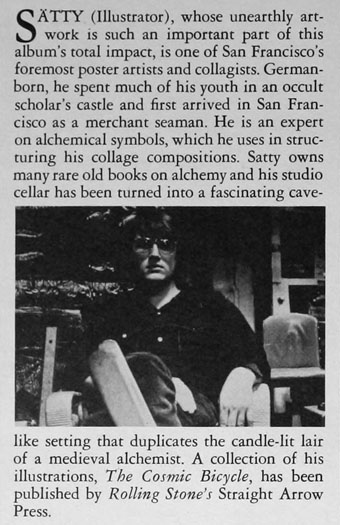
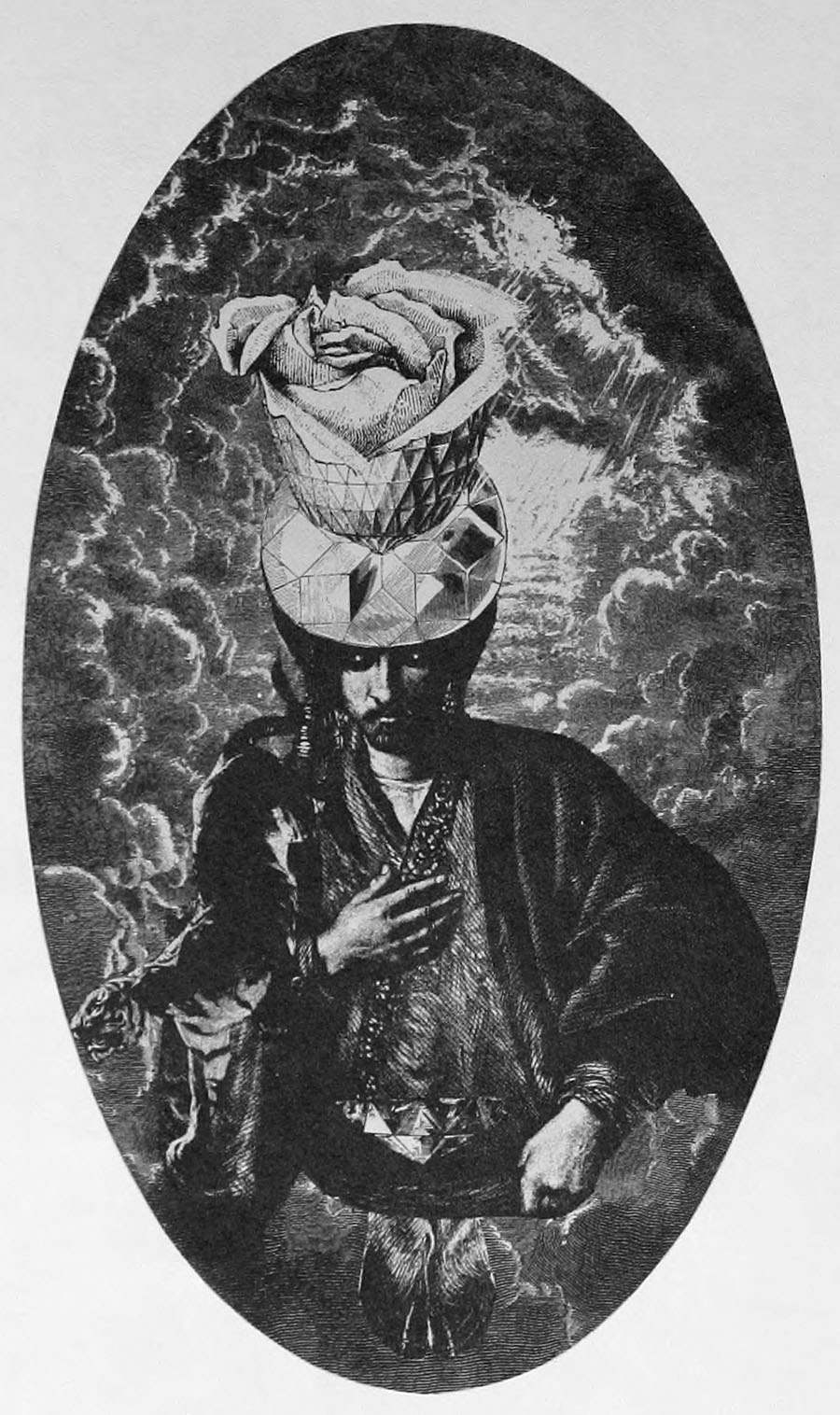
So here’s a strange thing: having spent another working week sifting through scanned books at the Internet Archive what do I find but scans of album booklet art by Wilfried Sätty only a couple of days after writing about his album covers. The album in question may be familiar to some readers but it was a new one to me. The Occult Explosion (1973) was a collection of recorded interviews with people such as Alan Watts and Anton LaVey discussing subjects pertinent to the title, although the general tone is more in the direction of catch-all mysticism than occultism as such. Anton LaVey is there to pronounce about Satanism, of course, and the album also features two songs by British rock band Black Widow, one of which, Come To The Sabbat, has since achieved a kind of novelty notoriety. (There’s a nice video-feedback recording of them playing the song live on Beat Club in 1970.)

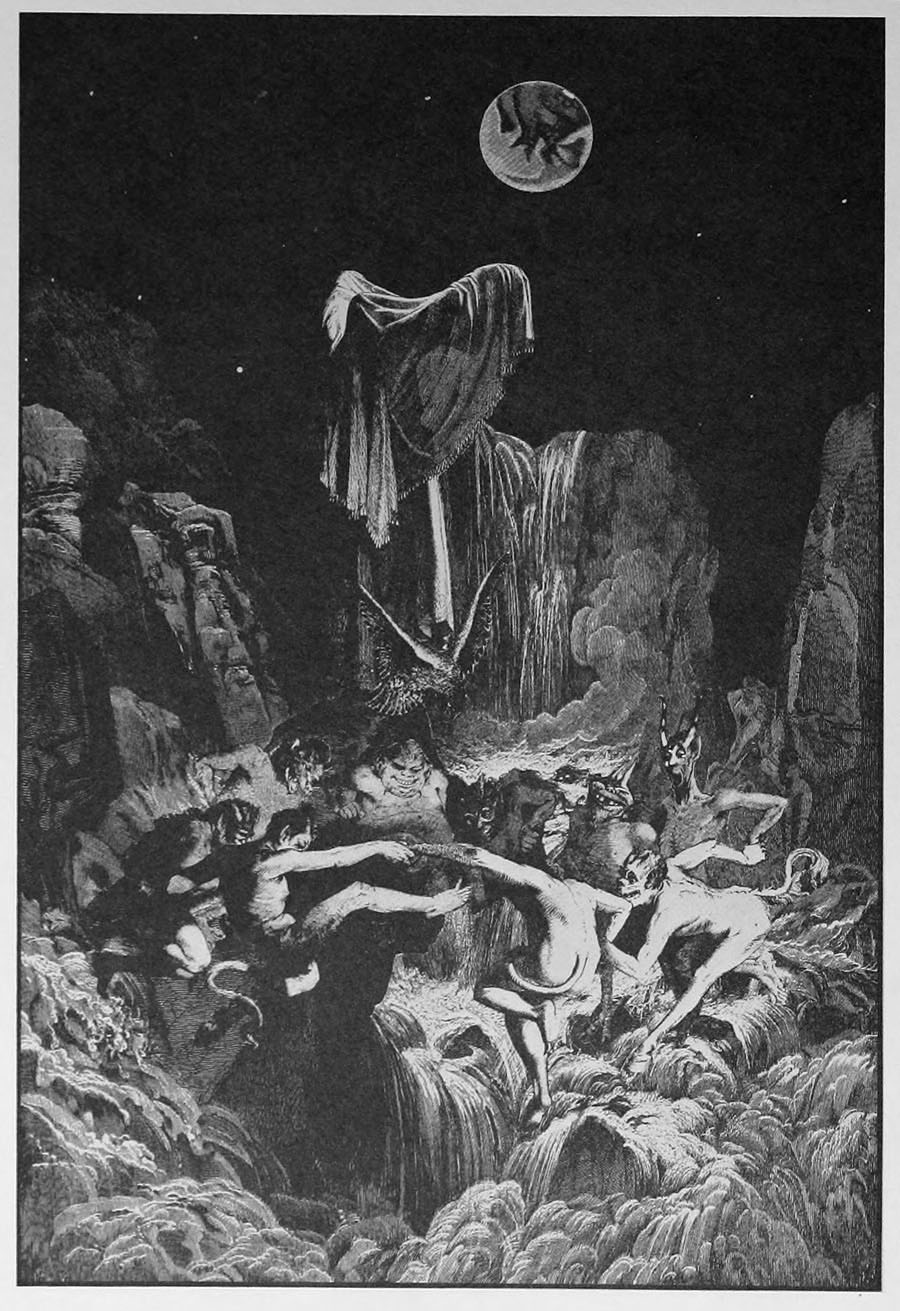
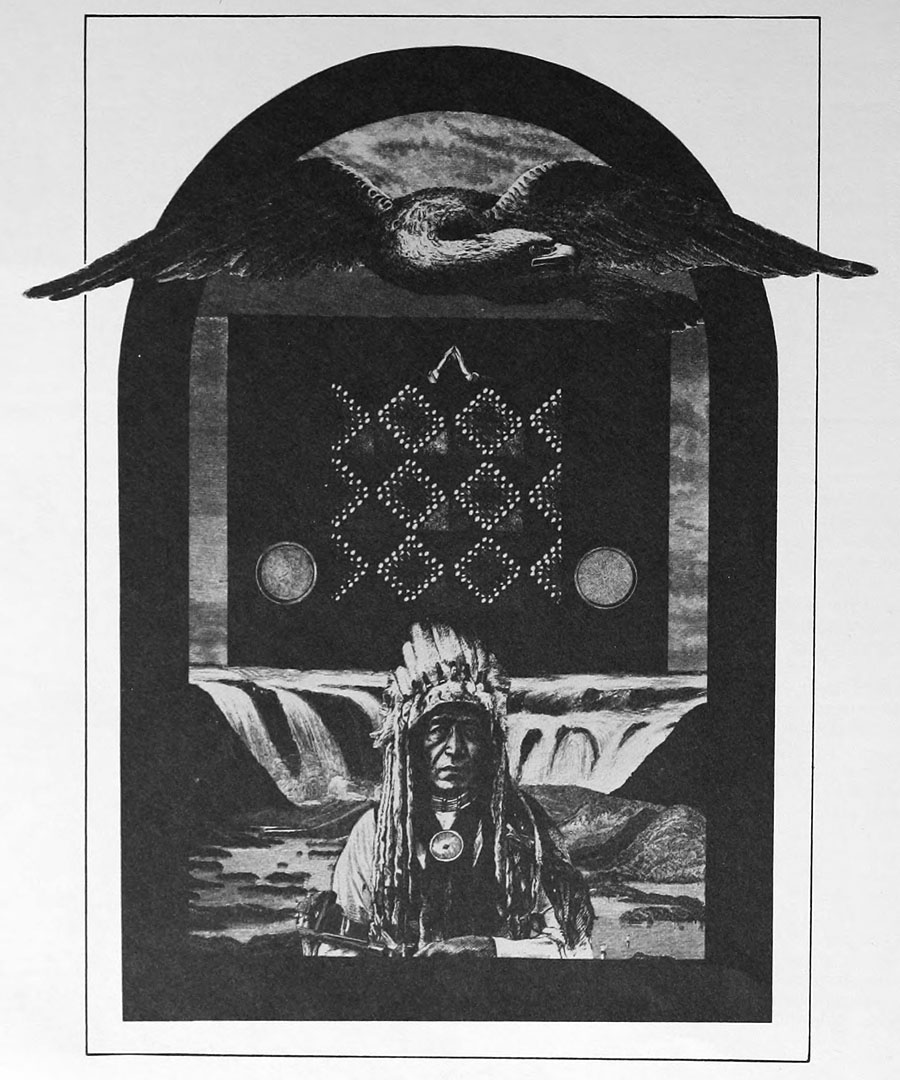
Nat Freedland was the author of a book entitled The Occult Explosion for which the album acts as an audio appendix. This is all so typically 1970s: witchcraft, Satanism, rock music, yoga, Alan Watts, UFOs, ESP, and the whole thing packaged in Sätty’s post-psychedelia collages. The entire album is available at the Internet Archive: the recordings are here while the badly-scanned insert pages are here. (There’s a better view of the cover art at Flickr.) Some of the more impressive pieces of Sätty’s art follow, work which has been buried for almost forty years. Just to add to the net of coincidences this week, the last of the pictures below borrows a demon from Gustave Doré’s Divine Comedy, the same source as yesterday’s Rick Griffin poster.

occult08.jpg

occult02.jpg

occult03.jpg

occult04.jpg

Continue reading “The Occult Explosion”

Lucifer Rising posters

lucifer1.jpg

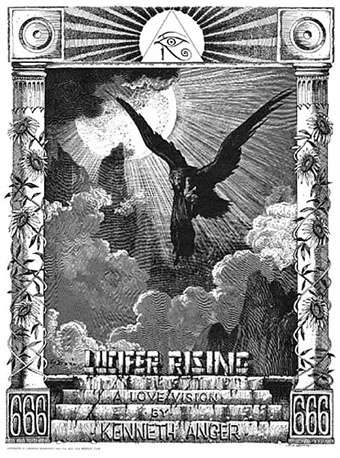
Lucifer Rising: A Love Vision by Kenneth Anger (1967) by Rick Griffin.

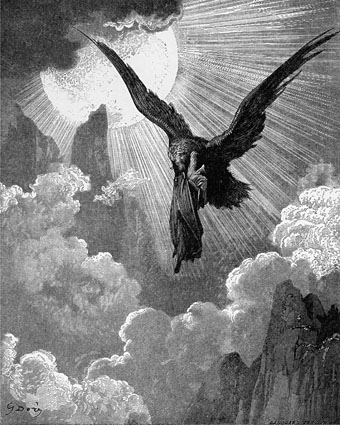
The status of Kenneth Anger’s Lucifer Rising as a kind of poly-cultural crossroads even extends to its poster art. The original poster by Rick Griffin dates back to the earliest drafts of the film, and with its swipe from Gustave Doré makes me think it’s the kind of thing Wilfried Sätty might have produced for Anger had he been asked. (They were both living in San Francisco at this time.)

dore.jpg

The San Francisco poster artists happily plundered the past for unusual images; Doré was a popular choice since his images are frequently striking and copies of the books (or reprints) would have been easy to find. This is one of the illustrations from the Purgatorio section of his illustrated Divine Comedy (1867) showing Dante being ferried up Mount Purgatory (“like Ganymede”) by a giant eagle.

lucifer2.jpg

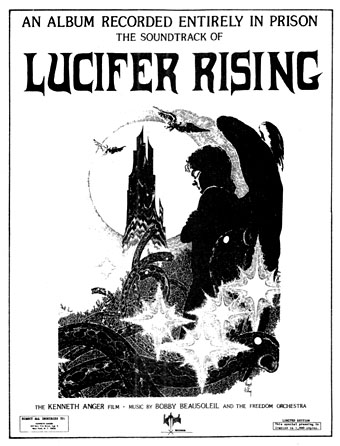
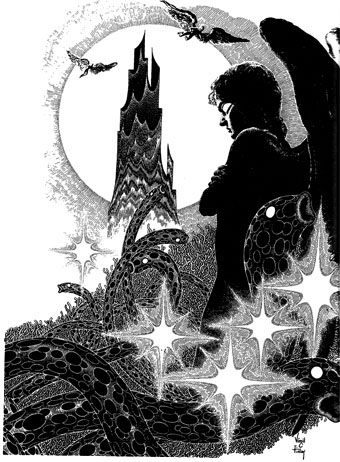
From Dante and Virgil to Virgil Finlay, one of whose illustrations was used on this promo sheet advertising a limited run of Bobby Beausoleil’s soundtrack for the film.

finlay.jpg

Earth’s Last Citadel (1950) by Virgil Finlay.

The illustration this time is for a reprint of Earth’s Last Citadel by CL Moore and Henry Kuttner in Fantastic Novels Magazine for July 1950. I’ve never seen any mention of William Burroughs meeting Kenneth Anger which is a shame since they had acquaintances in common and Burroughs occasionally showed an interest in some of Aleister Crowley’s ideas. The Henry Kuttner connection in this case would provide a link to some of the borrowings Burroughs himself made from Kuttner’s writing. But no, it’s too much of a reach.

lucifer3.jpg

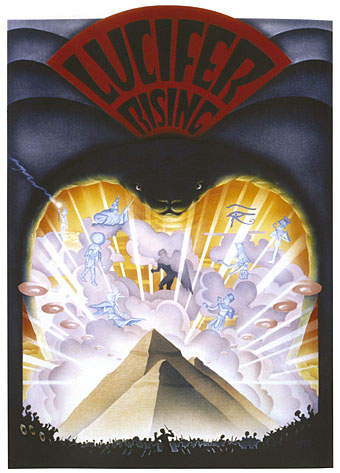
Lucifer Rising (1980) by Page Wood.

After all that the final poster is an original piece of work by Page Wood for a premier screening at the Whitney Museum, New York in 1980. The art avoids the overt occultism in favour of making a resolutely low-budget piece seem like a Hollywood epic. Given Anger’s lifelong obsession with Hollywood’s myths and tragedies I think he would have appreciated that.

Previously on { feuilleton }
• Externsteine panoramas
• San Francisco by Anthony Stern
• The art of Alia Penner
• Missoni by Kenneth Anger
• Anger in London
• Arabesque for Kenneth Anger by Marie Menken
• Edmund Teske
• Kenneth Anger on DVD again
• Mouse Heaven by Kenneth Anger
• The Man We Want to Hang by Kenneth Anger
• Relighting the Magick Lantern
• Kenneth Anger on DVD…finally

Green Pipes: Poems and Pictures

jpf01.jpg

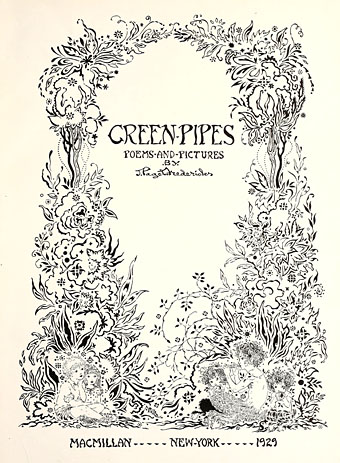
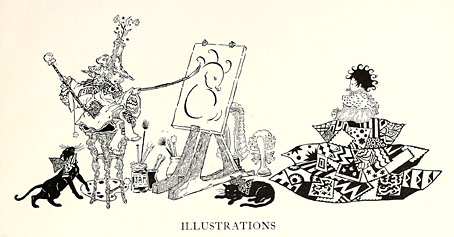
This is a strange book. Green Pipes: Poems and Pictures (1929) was written and illustrated by Joseph Rous Paget-Fredericks (1903–1963), a man better known these days for a substantial collection of memorabilia and archive material related to 20th-century dance. Paget-Fredericks studied with Léon Bakst then went on to create his own costume designs as well as producing some books for children of which this is an example. In style the poems aim at AA Milne’s When We Were Very Young but succumb to tweeness with a superfluity of fairies and pixies. At first glance the illustrations seem just as twee until you notice remarkable details such as costumes and foliage created from a wealth of disconnected lines and squiggles. The drawing of a Smoke Sprite is closer to something by Alastair than EH Shepard, while the Snow Fairy is the vaguest outline in a dress composed of circles, lines and dots. The Green Pipes of the title are the pipes of Pan, and so we get a late eruption of that peculiar flourishing of Pan Mania that extends from the 1890s to the 1930s. A book of children’s poetry isn’t the place you’d expect to encounter flower children kneeling before a piping faun but after the openly Pantheist chapter of The Wind in the Willows anything is possible. Far more out of place among all the fairies is a painting of a pirate brandishing a bloody cutlass. And what are we to make of the lines at the end of Elfin Children?

Then from the windowed heights we stream
By silent starlit mire…

The Starlit Mire (1911) was a book of epigrams by James Bertram & F. Russell illustrated by Austin Osman Spare (with a head of Pan blocked onto the cover). It’s not at all a book for children so the occurrence of that phrase in Paget-Fredericks’ poem is very surprising. Is “starlit mire” a quote that precedes the Bertram & Russell book? Please leave a comment if you know.

Read Green Pipes online here or download it here.

jpf02.jpg

jpf03.jpg

Continue reading “Green Pipes: Poems and Pictures”