Weekend links 165

smart.jpg

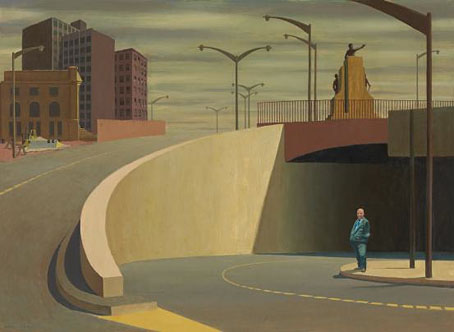
Cahill Expressway (1962) by Jeffrey Smart whose death was announced this week.

• “Russell Beale is awed by the beauty of the Roman silver Warren Cup showing men and youths making love, so startlingly erotic that the first time the British Museum was offered it in the 1950s, it turned it down flat. In 1999, when it came on the market again, the museum had to raise £1.8m to acquire it. ‘It’s just heaven, isn’t it?’ Russell Beale sighs.” Maev Kennedy on Same-Sex Desire and Gender Identity, a new exhibition at the British Museum.

• “The route to Tyburn Tree snaked through Holborn and St Giles, then went along Tyburn Road, today’s Oxford Street. It was dense with spectators.” Matthew Beaumont on the tiny memorial (Google view) for the estimated 50,000 people executed in the centre of London.

• Mixes of the Week: Bottoms Up by Staffan Lindberg for BUTT Magazine, and Electronic Ladyland, a collection of women with synths (and other instruments) from Bitch Media.

But the very thing that is valuable about diversity – the cultural and ideological clashes that it brings about – is precisely what many people fear. And that fear takes two forms. On the one hand you have the little Englander sentiment: immigration is undermining the national fabric, eroding our sense of British or Englishness, turning our cities into little Lahores or mini-Kingstons. And on the other you have the multicultural argument: that diversity is good, but it has to be policed to minimise the clashes and conflicts and frictions that diversity brings in its wake. And so we have to restrain speech, and police the giving of offence.

Kenan Malik on The Pleasures of Pluralism, The Pain of Offence.

L’Empire des Lumières is a great title for Anne Billson’s blog about Belgium. Tram-wire covered streets are one of my favourite things.

The Outer Church, 28 musical artists with an uncanny temperament collected by Joseph Stannard for Front & Follow.

His Heavy Heart, a film by Alan Moore & Mitch Jenkins, is looking for Kickstarter funding.

• In 1997 Quentin Crisp wrote about “Ten Wonderful Gangster Movies” for Neon magazine.

Raymond Chandler’s The Big Sleep redesigned for the Penguin Design Award, 2013.

• Out on DVD/Blu-Ray this month: The Curtis Harrington Short Film Collection.

A billion-pixel panoramic view of the planet Mars from the Curiosity Rover.

• In the TLS: Robert Craft on Stravinsky and The Rite of Spring.

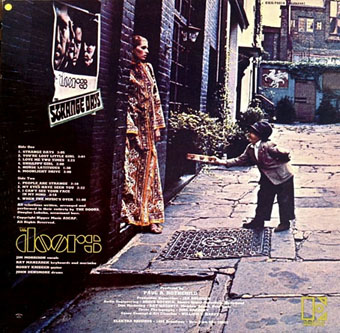
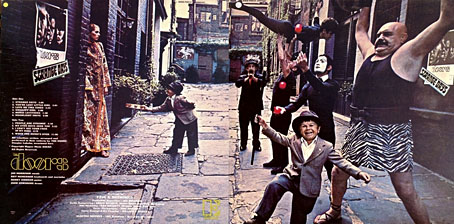
Typophonic: Album cover typography.

The Owl Theremin is a thing.

LSD ABC

Spring Rounds From The Rite Of Spring (1975) by Alice Coltrane | Revenge Of The Black Regent (1999) by Add N To (X) | Sore Ga Afrirampo (2010) by Afrirampo

The Modern Antiquarian

modern1.jpg

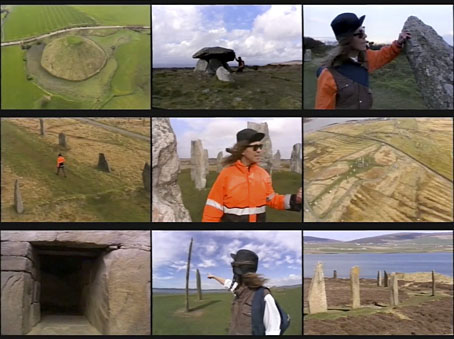
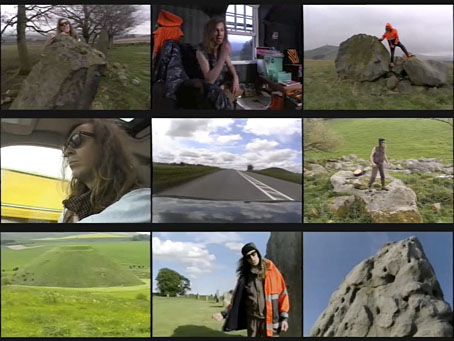
The stones of Callanish are explored again, this time by an energetic and erudite Julian Cope. The Modern Antiquarian was a 55-minute TV documentary produced by the BBC in 2000 as a spin-off from Cope’s book-length study of the ancient past of the British Isles, The Modern Antiquarian: A Pre-Millennial Odyssey Through Megalithic Britain (1998). Cope has always been a great enthusiast, blessed with a talent for communicating that enthusiasm in his own inimitable manner. Needless to say this film, which follows him while he visits some of his favourite neolithic sites, is nothing like the standard television approach to archaeology. Cope isn’t an academic (thank Odin) yet his book is 448-pages of deep investigation which involved visiting every one of the sites he was writing about; he’s also not that other television standby, the shallow audience proxy, he’s too well-informed for that. It would have been good if this one-off film had developed into a series but for its original screening it was shunted into a late-night slot where few people would have seen it. Cope then, as now, is probably too intense for a general audience.

The Modern Antiquarian: part 1 | part 2 | part 3 | part 4 | part 5 | part 6

modern2.jpg

Previously on { feuilleton }
Callanish panoramas
Japrocksampler

Callanish panoramas

callanish1.jpg

Photo by Serge (SEB) Bogdanov.

A post for the Summer Solstice. I’ve linked to panoramas of the Callanish standing stones before but these are more recent photos at 360Cities where the full-screen views are more immersive, especially if you have a large monitor. The stones are situated on the Isle of Lewis in north-west Scotland, and still tend to be overshadowed by the reputation of their more visible relations in the south of England. Stonehenge and Avebury may be more famous but they’re ruined cathedrals next to the Callanish stones which have survived four thousand years of harsh Atlantic weather very much intact by virtue of being so remote. In that respect they retain some of their original aura: anyone planning a visit has to really want to see these things, you can’t simply drive past them on the way to somewhere else.

callanish2.jpg

Photo by Alan McLean.

callanish3.jpg

Photo by Alan McLean.

Elsewhere on { feuilleton }
The panoramas archive

Atget’s corners

seine1.jpg

Un coin, rue de Seine (1924).

Photographer Eugène Atget had a thing for the architectural promontory, as do I for that matter, and this photo of a street corner in the rue de Seine, Paris, has always been a favourite. Atget liked the location enough to photograph it at least twice from different angles. The long exposures bleach the sky and turn passing figures into ghostly blurs.

seine2.jpg

Coin rue de Seine (1924).

seine3.jpg

Opening up Google Maps to see how the street looks today left me astonished when I realised I’d walked past this very corner without realising it was the location of Atget’s photos. The rue de Seine is one of two streets giving access to the rue des Beaux-Arts, the location of L’Hôtel where Oscar Wilde died. Matters weren’t helped by my walking in the opposite direction to this view so I didn’t notice the narrow corner. In any case the street looks very different today from Atget’s gloomy intersection.

clery1.jpg

Maison d’Andre Chenier en 1793–97, rue de Cléry (1907).

Equally as clean and unremarkable is another narrow building in the rue de Cléry which in 1907 was sporting some kind of wooden structure on its upper floor. Google’s cameras tend to diminish whatever space they photograph but the streets seem smaller today when cluttered with bollards, cars, bikes and the ubiquitous green bins of Paris.

clery2.jpg

Previously on { feuilleton }
Rue St. Augustin, then and now
Brion Gysin’s walk, 1966
L’Hôtel, Paris

Weekend links 163

michishita.jpg

Le Cadavre Exquis by Yukio Michishita. As featured in The Purple Book: Sensuality & Symbolism in Contemporary Art & Illustration by Angus Hyland & Angharad Lewis.

• ” Like Polo’s magic cities, which in the end all turn out to be Venice, fantasy finally refers us back to reality and the challenge of everyday social engagement.” Jonathan Galassi on The Dreams of Italo Calvino. In the same edition of the NYRB, Anna Somers Cocks on The Coming Death of Venice?

• Mix of the week: Solid Steel Radio Show 7/6/2013 Part 3 + 4: Peter “Look Around You” Serafinowicz compiles 70 minutes of Boards of Canada-inflected ambience.

• “Magic and art tend to share a lot of the same language. They both talk about evocation, invocation, and conjuring.” Alan Moore talks to Peter Bebergal.

The gay rights movement around the world has promoted a basic idea: we want to show society that we are human beings like everyone else. The problem is that the train driver at the Kashirskaya train station doesn’t necessarily think that those few dozen passengers in whose face he closes the doors are a priori inferior and deserve such treatment. He feels that he becomes superior to them by means of using his power over them. This sense of superiority can be trumped only by some higher superiority.

On the Moscow Metro and Being Gay by Dmitry Kuzmin.

• “I went from being a very promising young writer to being completely ignored in two novels.” Madeleine Monson-Rosen on Angela Carter.

Sequence6, another excellent sampler from Future Sequence: 40 new pieces of music as a free download.

timlin.jpg

The Arrival on Mars, an illustration from The Ship That Sailed to Mars (1923) by William Timlin.

• At PingMag: An Icon for Everyone: Shoryu Hatoba, Japanese Crest Artist.

• More Japanese weirdness at Sardines Bizarres.

• Larry Nolen on Bruno Schulz.

Magic Ritual (1976) by Black Renaissance | Magic Fly (1977) by Space | Magic Vox (1981) by Ippu-Do