Astronomiae Instauratae Mechanica

tycho01.jpg

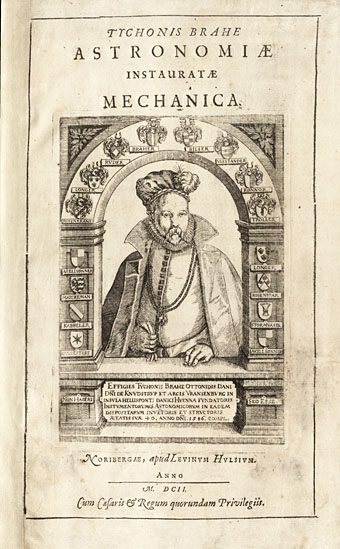
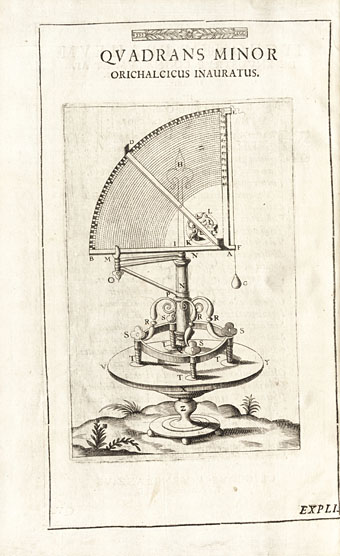
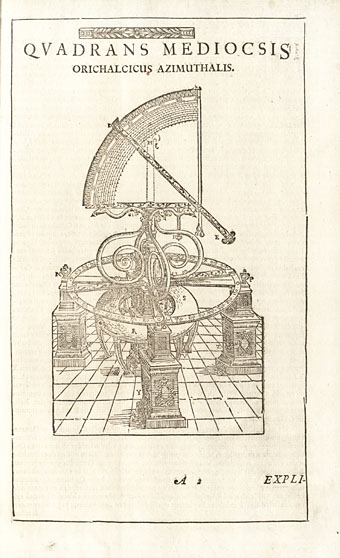
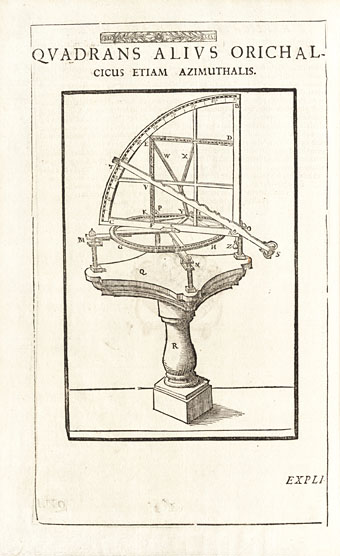
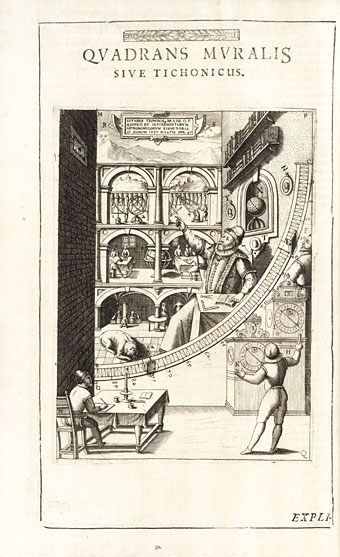
Let there be no complaints about lack of variety: fetish photography one day, 17th-century astronomical instruments the next. Tycho Brahe’s Astronomiae Instauratae Mechanica (1602) is a description of the astronomical devices used at Brahe’s Stjerneborg (Star Castle) on the island of Ven in Oresund, Denmark. One of the plates below shows the layout of the Star Castle while the others detail various sextants, armillary spheres and the like. A number of these are familiar from their more recent use as book illustrations so it’s good to once again find the source volume.

The concept of an observatory garden is very reminiscent of the Peking Observatory, and the much more impressive structures at Jaipur. Brahe wrote: “My purpose was partly to have placed some of the most important instruments securely and firmly in order that they should not be exposed to the disturbing influence of the wind, and should be easier to use, partly to separate my collaborators when there were several with me at the same time, and have some of them make observations in the castle itself, others in these cellars, in order that they should not get in the way of each other or compare their observations before I wanted this.”

Browse the rest of the book here or download it here. Tip via this tweet which linked to coloured copies of the plates.

tycho02.jpg

tycho03.jpg

tycho04.jpg

tycho06.jpg

Continue reading “Astronomiae Instauratae Mechanica”

Weekend links 167

field.jpg

Poster by Luke Insect & Kenn Goodall.

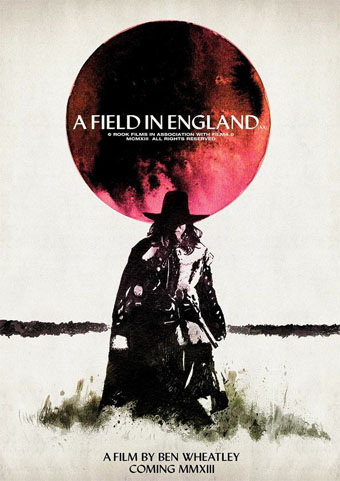
In recent years I’ve had little patience for British cinema: too much dour “realism” with little of Alan Clarke’s vitality, too many comedies that aren’t funny, too many Hollywood calling cards, too much Colin Firth… So it’s been a pleasure to see Peter Strickland’s Berberian Sound Studio followed this month by Ben Wheatley’s A Field In England, a pair of films that stand out by daring to be different in a medium which seems to grow more creatively conservative with each passing year. A Field In England adds to the micro-genre of weird British films set around the time of the English Civil War. In place of witchfinders and devil worshippers we have magic, murder, madness, and a field of hallucinogenic mushrooms. Wheatley, like Strickland, takes risks that wouldn’t be allowed with a bigger budget which makes me excited to see what they’ll be doing next. A Field In England is already out on DVD & Blu-ray. The trailer is here. The director talked to Mat Colegate about the genesis of the film (spoiler alert). There’s more big hats and cloaks in this list of ten 17th century films.

• “I like to look at men…the way they look at women,” photographer Ingrid Berthon-Moine says about her pictures of sculpted testicles.

Roger Dean has finally sued James Cameron over the designs for Avatar. Will be interesting to see how this one turns out.

• Google has taken its Street View cameras to Battleship Island, “the most desolate city on earth“.

• The strange fantasy novels of Edward Whittemore are available again in digital editions.

Julia Holter talks about her forthcoming Gigi-inspired album Loud City Song.

• At Pinterest: Maneki-neko, the beckoning cat of good fortune.

Beautiful Books: Decorative Publishers’ Cloth Bindings.

• The abstract paintings of Hilma af Klint (1862–1944).

Lee Brown Coye illustrates August Derleth in 1945.

Bill Laswell’s discography intimidates the collector.

• Mix of the week: Kit Mix #23 by Joseph Burnett.

• The Soundcarriers: Last Broadcast (2010) | Signals (2010) | This Is Normal (2012)

Strange Days

doors1.jpg

Strange Days was the second album by The Doors, released in October 1967. It’s the album that veers the closest to what people think of today as a psychedelic sound—which puts it in my favour—and is also unique in the group’s catalogue for minimising their presence on the gatefold sleeve, something Jim Morrison was always eager to do even as the record company were trying to turn him into a pop star.

doors2.jpg

The cover photo by Joel Brodsky of street performers was intended to be reminiscent of a scene from Fellini. For years I was under the impression that this street was European, it certainly doesn’t look typically American, so it was a surprise to read earlier today that the location is Sniffen Court, a small mews in the heart of New York City. New York or not, I’ve always wanted to live in a place like this. You can keep your gardens and empty lawns, I’d be quite happy to see those wonderfully eroded flagstones every day. Contemporary views of Sniffen Court show that much of its atmosphere on the cover derives solely from Joel Brodsky’s skill at capturing the light as it reflects from the paving stones. The place today looks neater, cleaner and a lot less attractive, but that’s not too surprising for a historic area in one of the most expensive cities on earth.

doors3.jpg

sniffen.jpg

Sniffen Court, NYC, in 2012. The plaques at the rear were sculpted by Malvina Hoffman.

Elsewhere on { feuilleton }
The album covers archive

Top of the world

burj1.jpg

How quickly things change. When I began this blog in February, 2006 the Burj Khalifa in Dubai had been under construction for two years but wouldn’t be finished for another three; Google’s Maps was an ongoing thing but the company had yet to introduce their Street View. Now you can use the one to visit the other via the latest Street View tour which takes you up that monument to hubris at the heart of Dubai. One new feature is the addition of a scale showing the available floors: you can start at the ground floor then jump upwards having viewed a succession of expensively bland (and increasingly cramped) rooms and corridors. Google’s cameras always make places appear smaller than they are, but the effect when caught in a tiny space at the top of a very tall building gives the impression of being in a computer game where there isn’t much room to manoeuvre. Did you know there’s a Nando’s in the Burj Khalifa? I didn’t. If you’re wealthy enough you can eat multi-national cuisine while watching the dust storms blow in from the desert. They should have buried JG Ballard there. Welcome to the future.

burj2.jpg

The lifts on the ground floor.

burj3.jpg

The view from the 154th floor.

Weekend links 166

foxxbelbury.jpg

The Julian House cover art for the forthcoming collaboration between John Foxx and Belbury Poly (here renamed) has been revealed. Single no. 9 in the Ghost Box Listening Centre Study Series is now available.

• In addition to new Ghost Box records there’s more Hauntological (for want of a better term) cinema on the way this summer with the DVD/BR release of Ben Wheatley’s A Field in England. The potted description at Movie Mail is “a monochrome psychedelic trip into magic and madness set during the English Civil War”. Julian House has made a trailer. Meanwhile at Fangoria, there’s a PIF mixtape from The Advisory Circle. This accompanies an interview with John Krish, director of the most bizarre of the UK’s many strange and alarming public information films from the 1970s.

• More mixes: The hour-long OH/EX/OH show for The Geography Trip on Chorlton FM. “Expect slumber / tension / euphoria in almost equal measures.” It’s marvellous. At Self-Titled mag there’s DJ Food with O Is For Orange: Boards of Canada, Broadcast, The Books, etc.

Tangiers is a computer game based on the fiction of William Burroughs. Jim Rossignol talked to Alex Harvey about the development of the project.

walpurgisnacht.jpg

Walpurgisnacht (1917) by Amadeus. A drawing that could easily be from the late 1960s. If anyone knows the full name of the artist, please leave a comment. Via Beautiful Century.

Rebecca J. Rosen asks “What would the night sky look like if the other planets were as close as the moon?”

• The mystery of Charles Dellschau and the Sonora Aero Club.

The Surreal Cave Paintings Of Stockholm’s Metro Stations.

• At 50 Watts: More strange art from Marcus Behmer.

Ry Cooder in 1970. Directed by Van Dyke Parks!

The Post Office Tower: now you see it…

• At Little Augury: 99 Meninas.

Sartori In Tangier (1982) by King Crimson | City Of Mirage (2010) by John Foxx