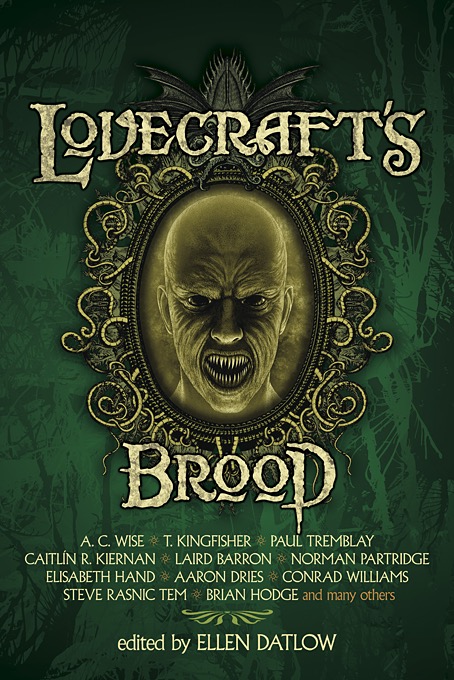
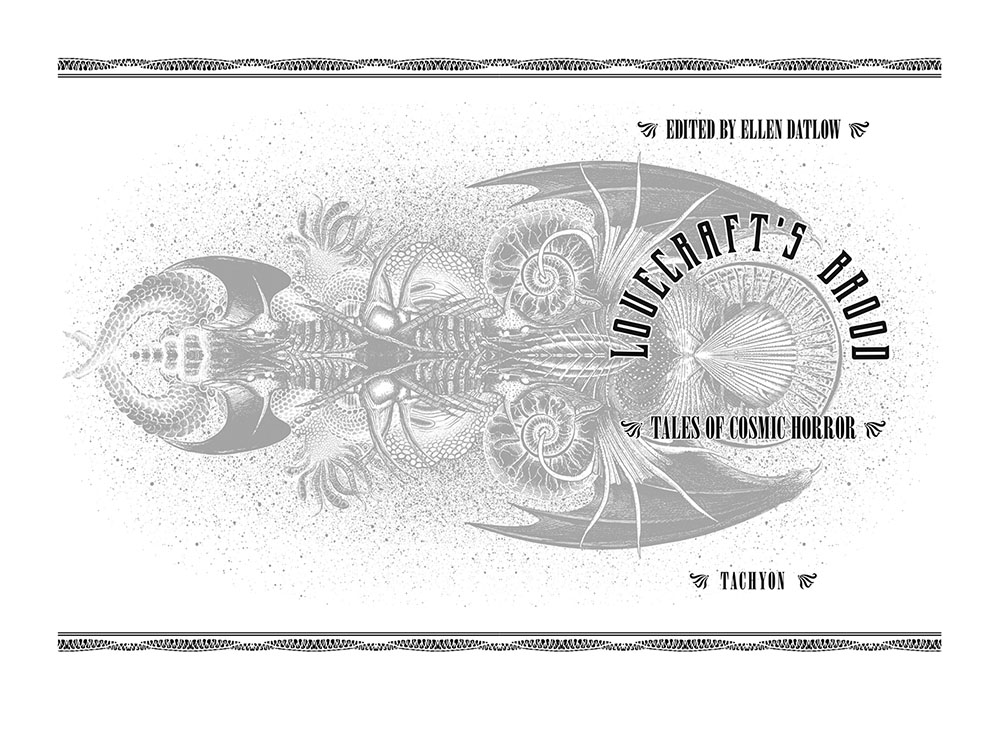
Lovecraft’s Brood

brood01.jpg

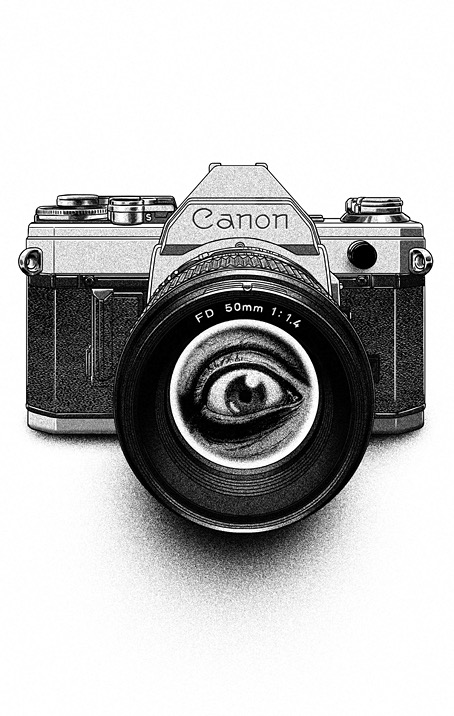
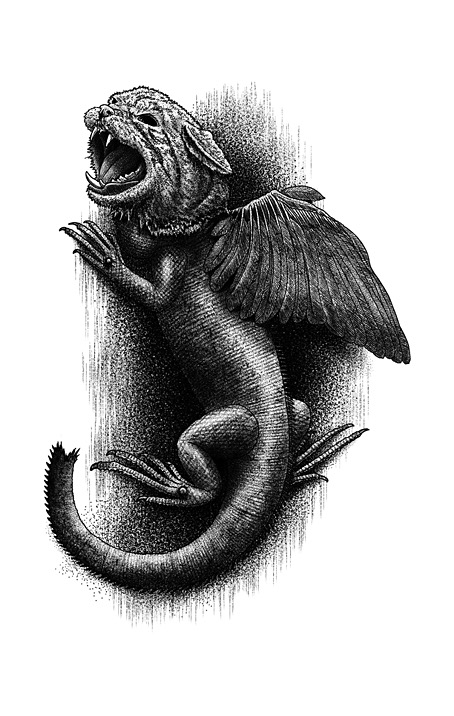
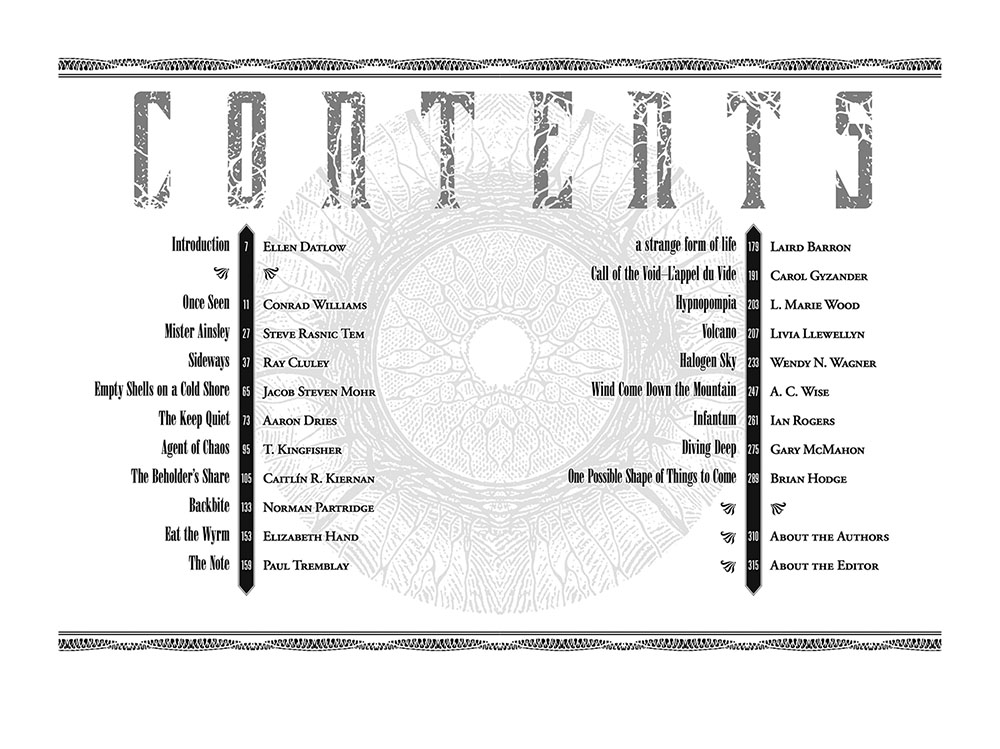
It’s that man again, or some of his progeny, infecting the world with their nightmares. Lovecraft’s Brood is a story collection edited by Ellen Datlow, a kind of follow-up to Lovecraft’s Monsters, although the new book is a more expansive take on the Lovecraftian weird tale. As with the earlier collection, I designed and illustrated this one throughout. The illustrations were more of a challenge this time since the stories weren’t always focused on explicitly physical threats; or if they were, the threats remained either unseen or inexplicable. That can be good sometimes—there’s a tendency in horror illustration to always go for monster portraits or spoilerish scenes from the end of the story—but it doesn’t make the artist’s task an easy one. For a few of the pictures I used a minor detail; in the case of Mister Ainsley, for example, there’s a mention of taxidermy experiments which is what I chose to focus on. What “Mister Ainsley” looks like (or actually is) is never described as such, the reader’s imagination is left to fill the gaps in the story.
brood21.jpg

Among the other pictures there’s my first ever drawing of the real church that gave Lovecraft his model for the home of The Starry Wisdom cult in The Haunter of the Dark. This church, or its fictional counterpart, has haunted my imagination for a long time, being the subject of my first Lovecraft illustration in 1979 and (of course) the subject of my first Lovecraft comic strip in 1986. In Lovecraft’s Brood the church appears in The Beholder’s Share, another fine riff on Lovecraft’s fiction by Caitlín R. Kiernan in which the Starry Wisdom cult actually existed, with the old Catholic church on Federal Hill being the centre of their operations. The real church was demolished in 1992 but the location is still easy to find since the grounds have been turned into a small recreational area which retains the walls that surrounded the building. When I was in Providence in 2015 I walked over to Federal Hill to see a concert performance in a converted cinema but I didn’t manage to visit the site of the church, something I now regret.
brood22.jpg

On the technical side, this set of illustrations is the first where I’ve used Glitch Lab in the creation of some of the artwork. Glitch Lab is one of several tablet-based image-processing apps made by Ilixa that function like Photoshop’s filters but with many more options. Photoshop hasn’t done much with its basic suite of filters since the 1990s, something that doesn’t bother me most of the time but every so often you find yourself wanting to imitate a technical effect that can’t easily be achieved without a lot of work. For two of these illustrations I wanted views seen through different kinds of monitors, the first a low-quality TV screen of a type you’d see in a supermarket, then a distorted image from a malfunctioning camera whose output is being viewed on a computer monitor. Glitch Lab specialises in this kind of technical distortion, and can imitate a wide range of visual glitches of a type generated by old TV sets. The Note is the story with the security camera for which I painted a relatively minimal greyscale scene. This wouldn’t have worked on its own but running it through the filters gave it the required appearance. Wind Come Down the Mountain is much more heavily processed, and could have been pushed a lot further but I’d already destroyed a lot of the detail I’d put into the picture.

Lovecraft’s Brood is out now in print and digital from Tachyon and all the usual outlets.
brood23.jpg

brood02.jpg

Once Seen by Conrad Williams.

brood03.jpg

Mister Ainsley by Steve Rasnic Tem.
Continue reading “Lovecraft’s Brood”

Weekend links 840

hugo.jpg

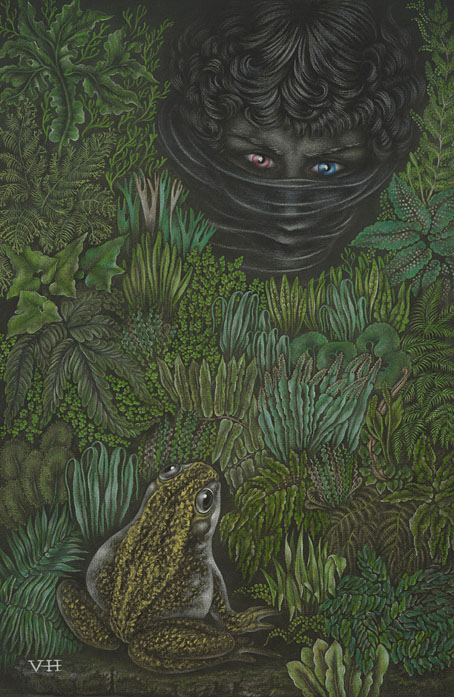
The Toad of Maldoror (1932) by Valentine Hugo.

• Old music: Thank You America (John Robie Dub Mix) by Cabaret Voltaire. Code, the group’s 1987 debut for the Parlophone label, receives an overdue reissue later this year with a substantial collection of remixes.

• At Lesser-Known Writers: Douglas A. Anderson examines the career of Hal Garrott, a writer whose novels for children feature fine illustrations by Dugald Stewart Walker and Mary-Ponton Gardner.

• The August catalogue of lots for the After Dark: Gay Art and Culture online auction. Homoerotic art, photos, historic porn, etc.

• Mixes of the week: The Invisible Collage Vol. 1, and Robert Aiki Aubrey Lowe’s Invisible Jukebox Mix at The Wire.

• New music: Modulisme Session 144. Lightning Field 01. Constraint by Philippe Petit, and Signal Loss by Paul Beaudoin.

• At Colossal: Los Angeles Public Library unveils the world’s largest pop-Up book.

• At the BFI: Craig Ian Mann selects 10 great East German films.

• At Dennis Cooper’s it’s Ed Emshwiller’s Day.

Signaux Codes Non Identifiés (1978) by Michel Magne | Code Rays (Codex Dub) (1995) by Main | Codes (Encryption And Decryption) (2025) by Andrew Heath

Cornell, 1965

cornell1.jpg

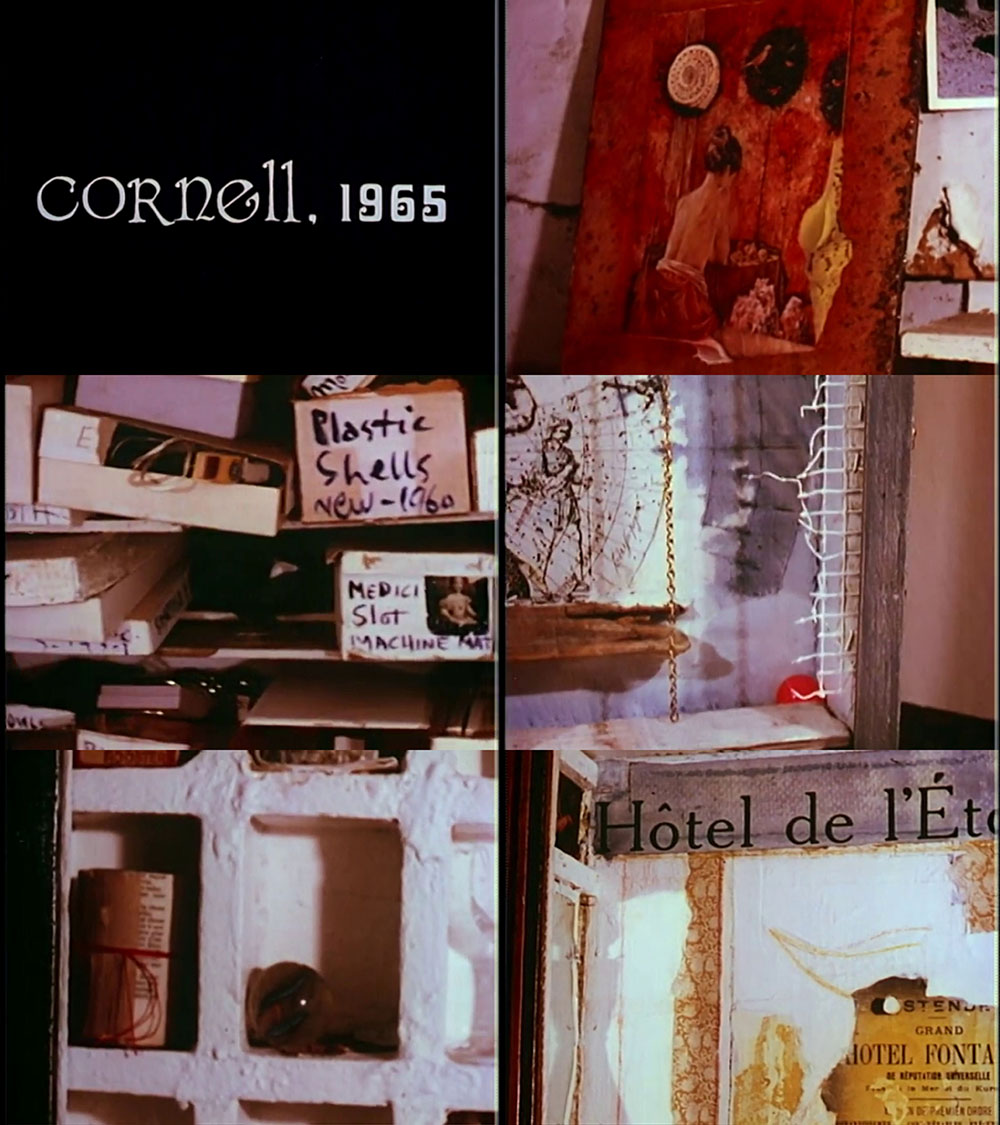
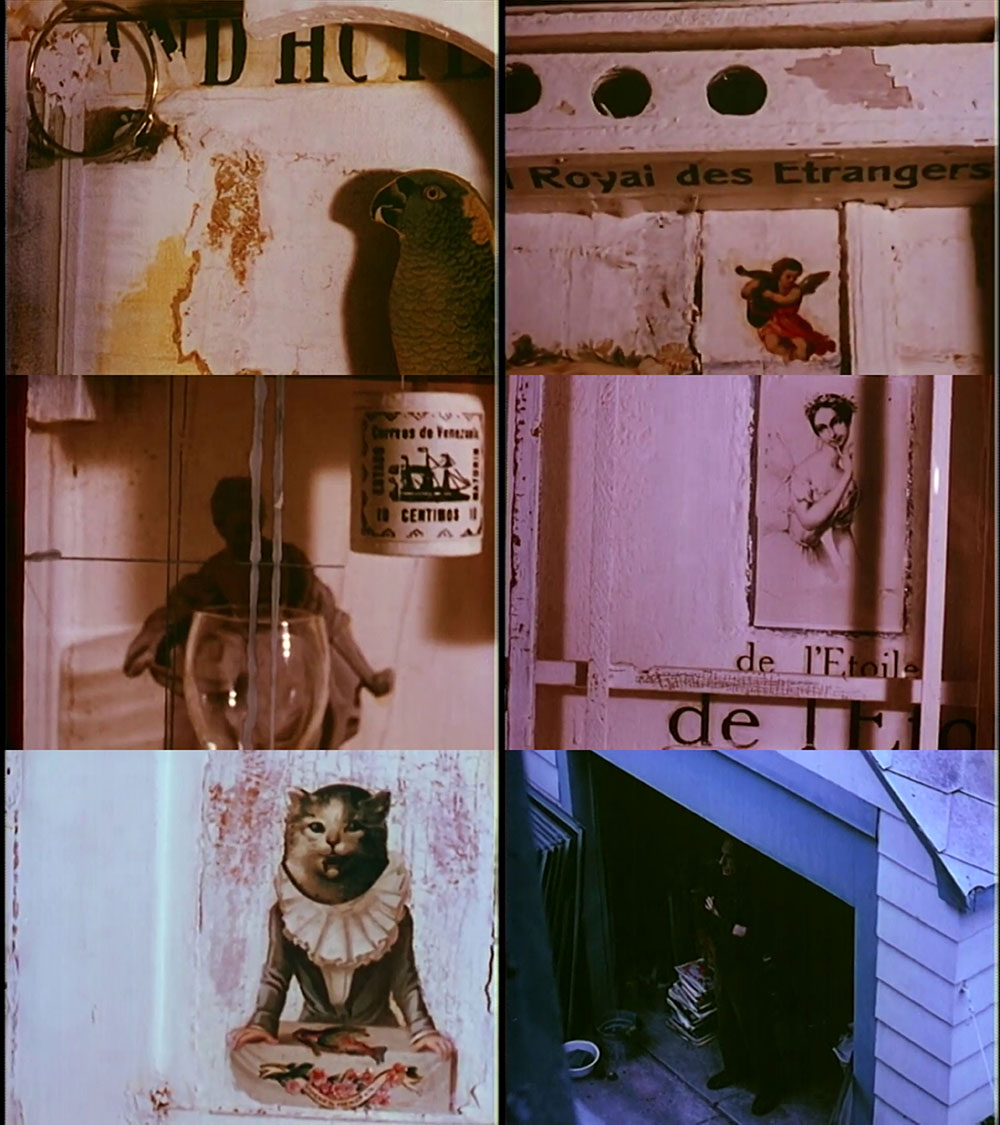
It’s the magus of Utopia Parkway again. As the title suggests, Cornell, 1965 was shot in the 1960s, although the footage wasn’t assembled as a film until 1978 when director Lawrence Jordan added his narration and a Debussy soundtrack. Jordan had been Joseph Cornell’s assistant in the 1960s, and his footage was meant to document details in the workroom where Cornell made so many of his boxes. The details are mostly of the boxes that didn’t get sent to the galleries, half-finished or damaged works which the camera explores in close-up. Jordan also managed to capture a few surreptitious shots of the camera-shy artist from an upstairs window. Cornell didn’t like to see himself on a screen but he loved the medium of cinema, using it to fuel his imagination—an early issue of View includes his star-struck paean to Hedy Lamarr—while also making short films of his own. Many of the latter, including the celebrated Rose Hobart, may be seen at Ubuweb.

cornell2.jpg

Elsewhere on { feuilleton }
The Surrealism archive

Previously on { feuilleton }
Cosmic Alchemy, a film by Lawrence Jordan
Hamfat Asar, a film by Lawrence Jordan
Cornell’s Constellations
Carabosse, a film by Lawrence Jordan
Joseph Cornell: Worlds in a Box
Joseph Cornell, 1967
Rose Hobart by Joseph Cornell

“Through the eyes of poets”: View magazine

viewcovers.jpg

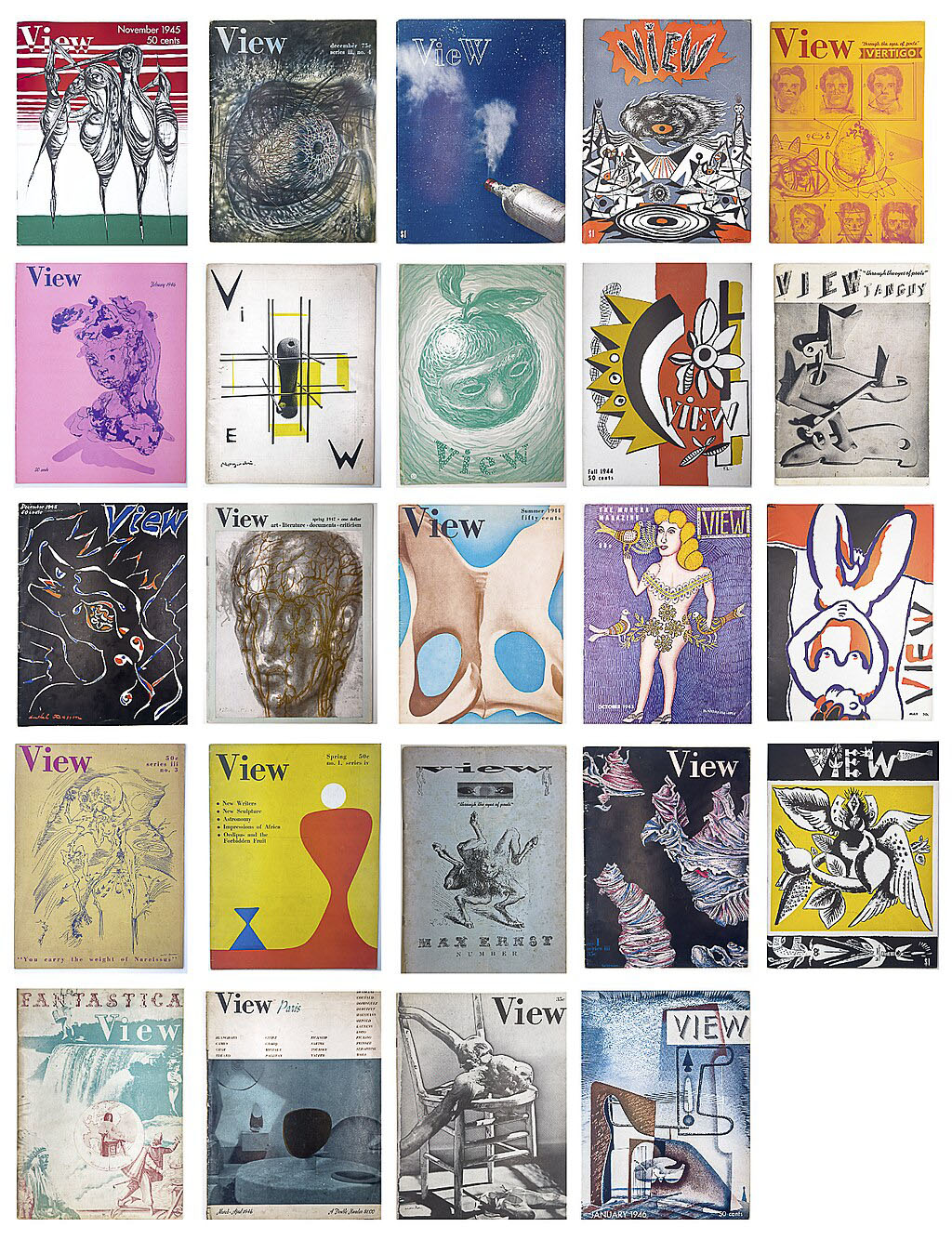
Charles Henri Ford’s avant-garde magazine has been a sporadic visitor to these pages over the past 20 years, the subject of occasional posts as well as my complaints about the difficulties of finding online sources for important magazines and journals. The difficulties are now over where View is concerned…or almost over because this cache is an incomplete run, with the last seven issues absent. That still gives us 30 complete issues to look through, however, so I’ll temper my complaints. The run is further compromised by being taken from a single-volume reprint which has reduced all the colour to black and white, but the covers at least are easy to find elsewhere. The first few issues of View were simple newsprint affairs, but the design soon became more ambitious and properly magazine-like, with coloured paper used for interior pages.

view-ernst.jpg

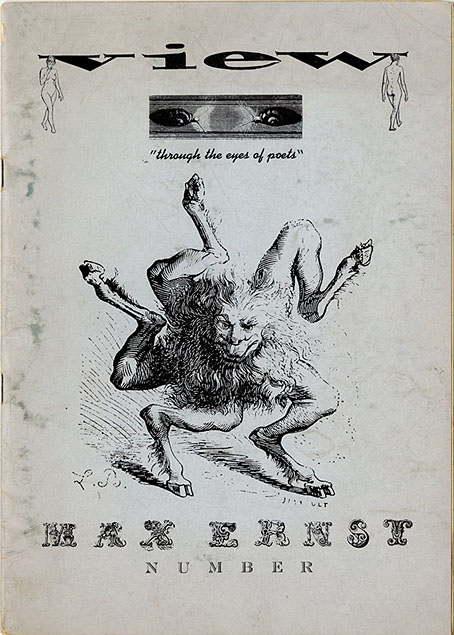
Vol 2, issue 1; April 1942.

View (1940–47) was an important arts magazine for a number of reasons, chief among them the title’s status as the leading American journal devoted to Surrealism. The Surrealist movement in Europe had been destroyed by the advent of war but Surrealism found itself revitalised in the United States when artists and writers fleeing the Nazis made their way to New York. In a very short space of time the movement went from being a European curiosity to a local novelty, with the same delayed impact that occurred when modern art was revealed to a bewildered American public by the Armory Show in 1913. View magazine took advantage of the wave of aesthetic immigration, positioning itself as a showcase and promoter of the new art of “the Marvellous”. The range of the magazine’s contributors is astonishing (per Wikipedia):

…writers like Wallace Stevens, an interview with whom was featured in the first number of View, William Carlos Williams, Joseph Cornell, Edouard Roditi, Henry Miller, Lawrence Durrell, Paul Bowles, Brion Gysin, Philip Lamantia, Paul Goodman, Marshall McLuhan, André Breton, Raymond Roussel, Albert Camus, Jean-Paul Sartre, Jean Genet or Jorge Luis Borges and artists like Pablo Picasso, Paul Klee, Fernand Léger, Georgia O’Keeffe, Man Ray, Joan Miró, Alexander Calder, Isamu Noguchi, Marc Chagall, René Magritte and Jean Dubuffet.

view-cornell.jpg

Volume 2, issue 4; January 1943. Cover collage by Joseph Cornell.

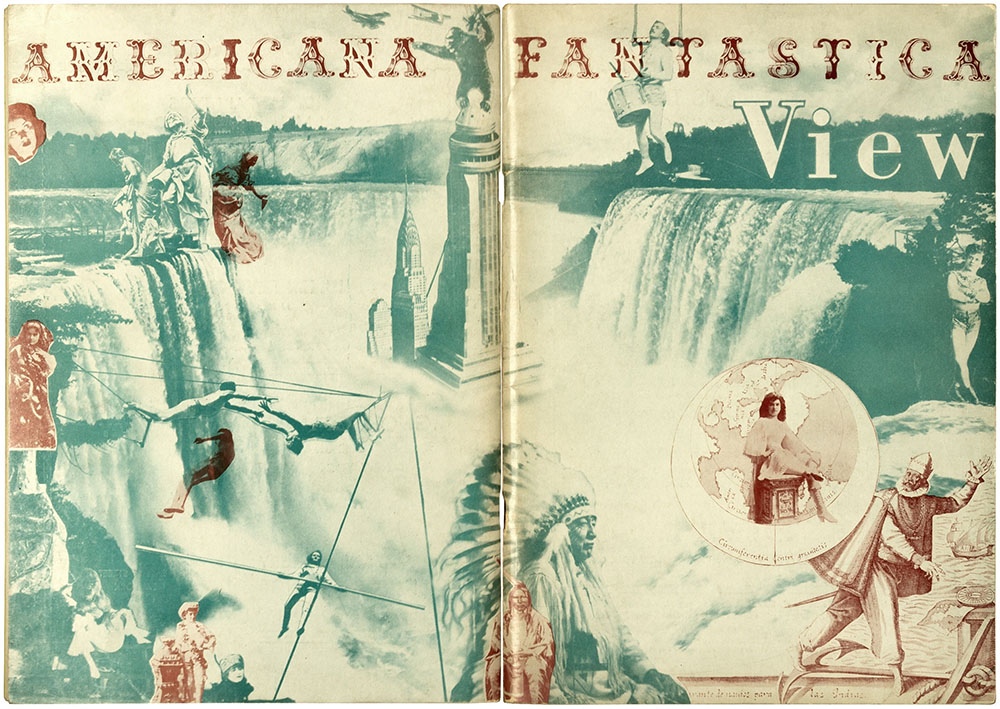
To the names above can be added Leonora Carrington and Leonor Fini. Several of the early issues were devoted to a single theme: Max Ernst was the subject of an entire issue, Yves Tanguy and Pavel Tchelitchew shared an issue, while other numbers explored specific subjects—“Vertigo”, “Americana Fantastica”, “Narcissus”, “Tropical Americana”, “America”, “Italy”, and “Surrealism in Belgium”. The magazine also helped promote Surrealism-adjacent Americans like Joseph Cornell and Morris Hirshfield. Cornell was a virtual unknown in the art world of the early 1940s; Charles Henri Ford helped him a great deal when he gave his collages and constructions an equal platform with the Europeans. “Americana Fantastica” is pretty much a Cornell issue, while elsewhere Cornell creates print works like the one-page “Story Without a Name” in the Max Ernst issue, a homage to Ernst using collaged engravings. Some of this material was reprinted in 1992 in Parade of the Avant-Garde, Ford’s book-length compilation of the magazine’s greatest hits, and a very commendable publication in itself. But magazines, especially ones as rich as this, have to be seen as entire issues, with all their minor pieces, decorative vignettes and advertising pages intact. What we have here is a compromised View but it’s still a sight worth seeing.

Elsewhere on { feuilleton }
The Surrealism archive

Previously on { feuilleton }
Minotaure, 1933–1939
The nightingale echo
Max Ernst’s favourites
Viewing View
Cornell’s Constellations
Joseph Cornell: Worlds in a Box
Joseph Cornell, 1967
Rose Hobart by Joseph Cornell
View: The Modern Magazine

Weekend links 839

tanyguy.jpg

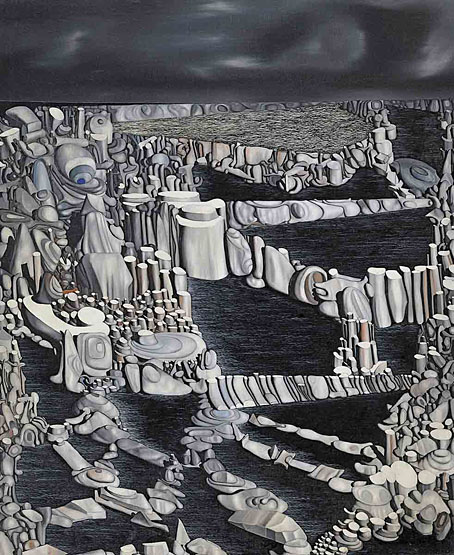
Imaginary Numbers (1954) by Yves Tanguy.

• “In all his writing, Ballard seems to embrace the opposed extremes of pulp genre conventions on the one hand and avant-garde experimentation on the other, while entirely rejecting the norms of conventional literary fiction that lie between these two extremes.” Steven Shaviro reviewing The Illuminated Man: Life, Death and the Worlds of JG Ballard by Christopher Priest and Nina Allan.

The Naturalist’s Library: A complete digital edition of William Jardine’s 40-volume series on natural history published 1833–1843.

• New music: Cooked by Oren Ambarchi; Where Light Pauses In The Silence Of The Sun by Abul Mogard / Rafael Anton Irisarri.

Richard Dadd: the painter whose fantastical vision was unconfined by his 43 years in an asylum.

• At Colossal: “Trompe-l’œil paintings by Jason Limon reveal a hidden skeletal world.”

• “Adam Rowe is writing a new book about science fiction art.”

• Mix of the week: DreamScenes – July 2026 at Ambientblog.

• RIP Sam Neill.

Curationist

The Skeleton And The Roundabout (1968) by The Idle Race | Skeletal Framework (1981) by Eyeless In Gaza | Skeletal Remains (2002) by Bohren & Der Club Of Gore