Weekend links 833

hyde.jpg

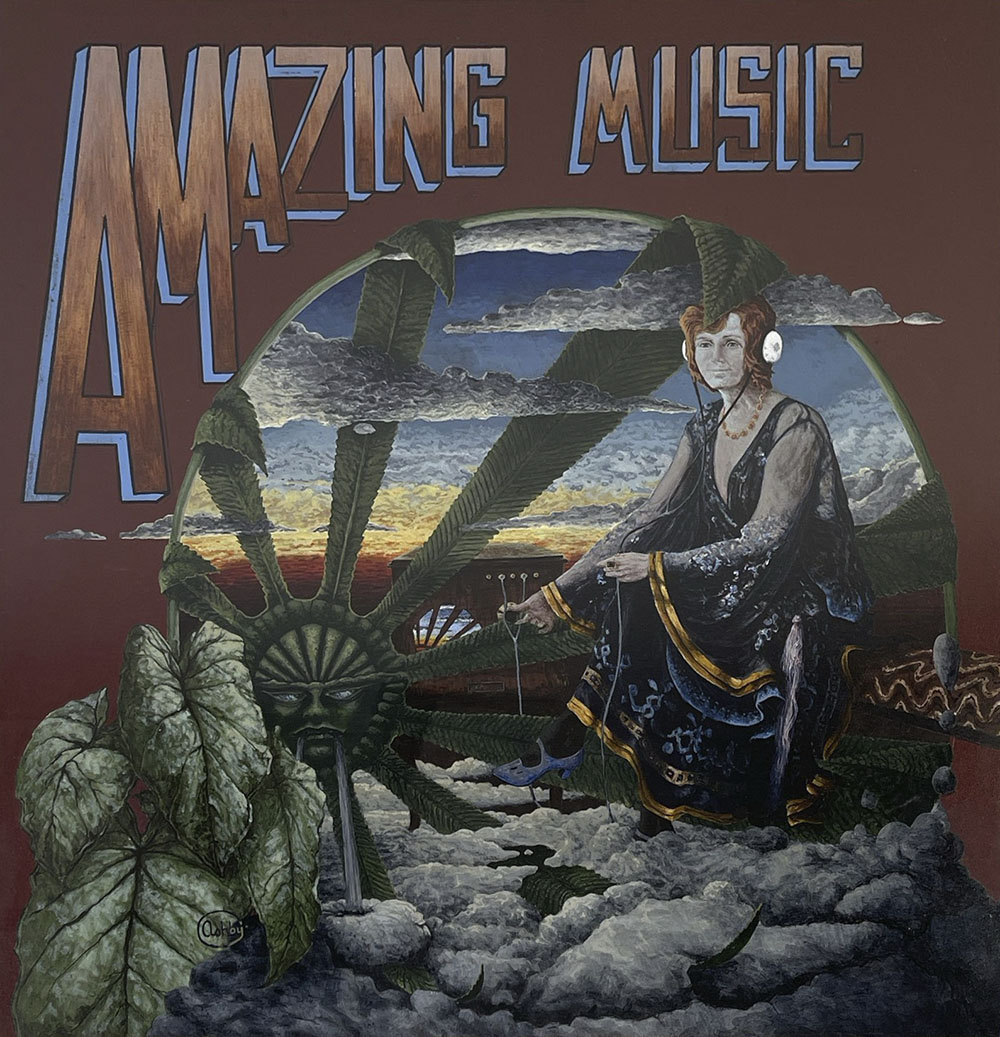
Tony Hyde’s original artwork for the front cover of Astounding Sounds, Amazing Music by Hawkwind. The painting is being auctioned later this month.

• At the Daily Heller: Steven Heller reprints his 2012 Atlantic review of The Graphic Canon, a three-volume collection of visual adaptations of works of literature. The collection was edited by the late Russ Kick, and includes my own condensation of The Picture of Dorian Gray.

• At Dennis Cooper’s: Bill Hsu presents…21st Century Nightmares: Dark Animations by Cristóbal León/Joaquín Cociña, Hugo Covarrubias, Christiane Cegavske, John Frame, Saori Shiroki, Joe Hsieh, Phil Tippett, Robert Morgan, Shengwei Zhou.

• At Colossal: In Los Angeles, 70 artists transform a vacant hospital into a sprawling art experience.

What we were doing was rooted in that specific moment, but looking back, it also seems to resonate strongly with the present—particularly in terms of how we understand media, perception, and reality itself. This is something I’ve been thinking about again recently, especially with the renewed activity around Cabaret Voltaire. It brings into focus the extent to which earlier work now reads almost as a form of prefiguration. At the time, though, much of it was intuitive. We didn’t necessarily have a fully formed theoretical framework for what we were doing—we were artists, and we were working instinctively. It’s really only in retrospect that some of those ideas begin to take on a clearer shape and meaning.

Stephen Mallinder talking to Nicolas Ballet about Cabaret Voltaire, the group’s history and working methods

• New music: The Endless Dance by Hannah Peel; Helt by Fjall; Air Signs by Anthéne.

Adam Rowe is writing a new book about science fiction art.

• Steven Heller’s font of the month is Brutal Types.

• Mix of the week: Isolatedmix 135 by Aspetuck.

Brute Reason (1983) by Bernard Szajner | Let’s Get Brutal (1986) by Nitro Deluxe | Brutal But Clean (1994) by Cabaret Voltaire
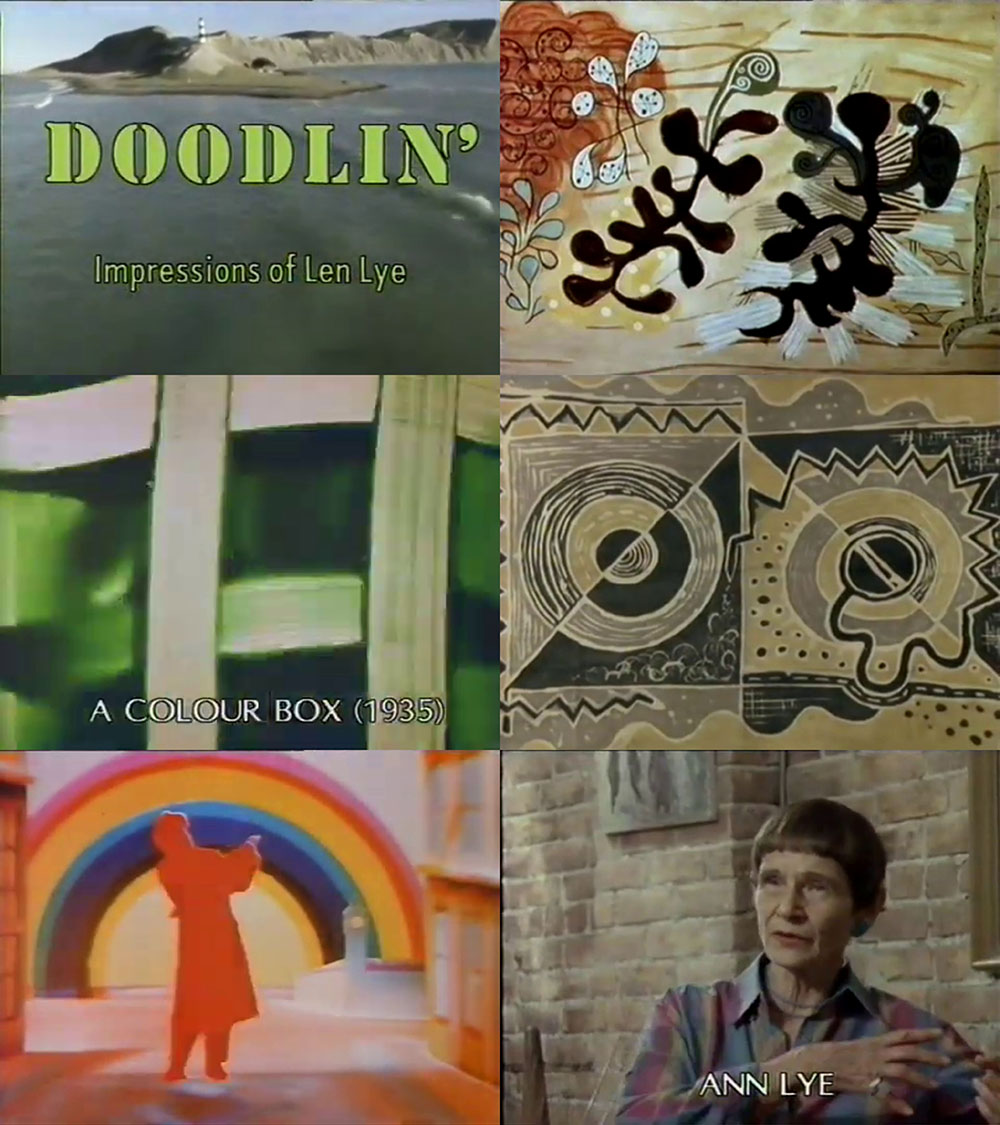
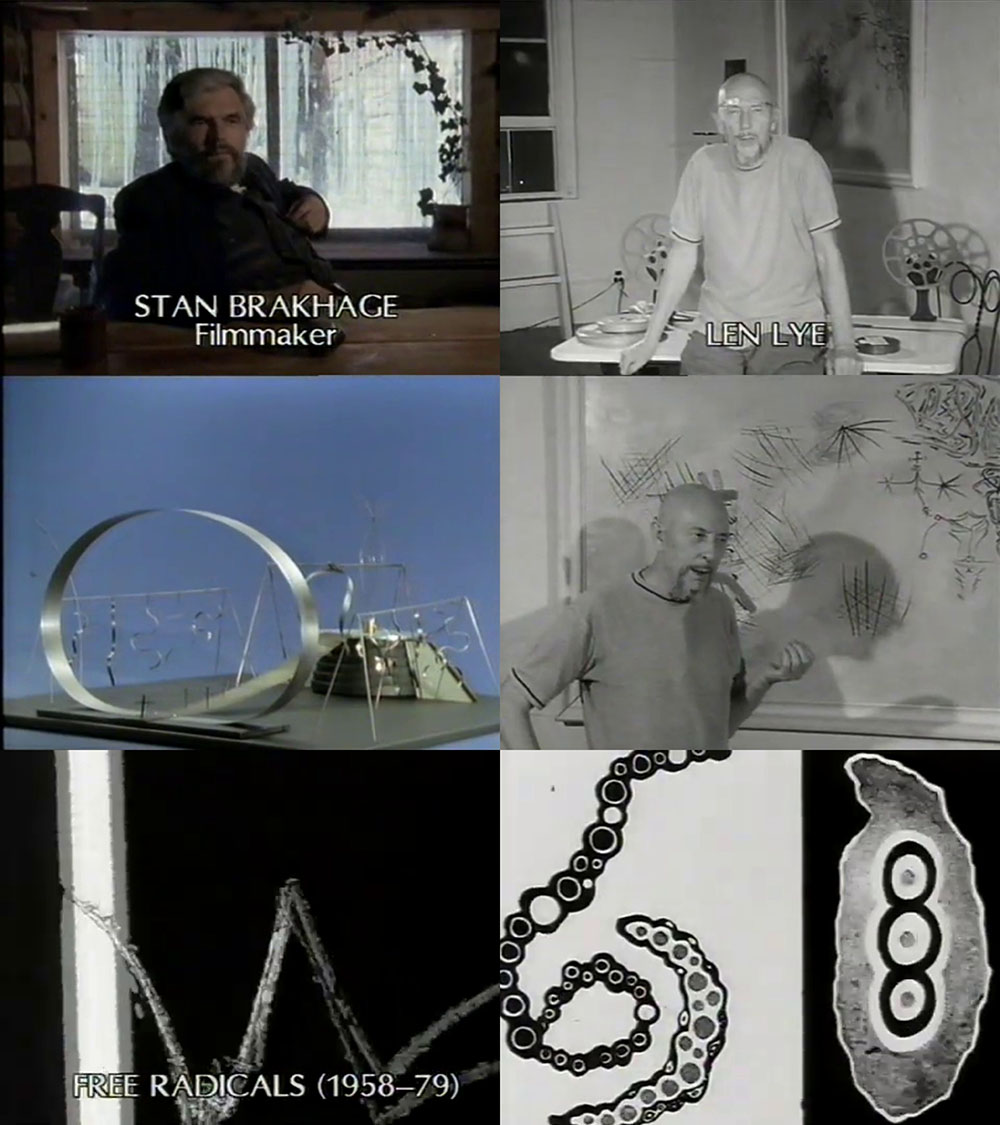
Doodlin’ – Impressions of Len Lye

doodlin1.jpg

Finally, finally, Keith Griffiths’ documentary about Len Lye (1901–1980) turns up on YouTube. Doodlin’ – Impressions of Len Lye was made in 1987, and is one of several films that Griffiths made about avant-garde film-makers. There’s some slight crossover with his later history of abstract cinema—Stan Brakhage turns up in both films—but Lye was always much more than a film-maker despite his pioneering work of the 1930s. Doodlin’ charts Lye’s progress from his youth in New Zealand, where his earliest artistic impulses were oriented towards painting, to his travels through Samoa and Australia, and from there to London where almost by accident he ended up making short, semi-abstract films for the General Post Office’s promotional division. The single constant in Lye’s life was a restless creativity, something he later brought to kinetic sculpture after he moved to America in the 1940s. Lye is justly celebrated for his short films: Free Radicals (1958/79) is an extraordinary piece of abstract cinema, white lines and marks scratched onto the emulsion of a strip of unprocessed film that jump and flash in time to a recording of African drums. Griffiths’ documentary is a reminder that Lye was also an artist who was never constrained by a single medium.

doodlin2.jpg

Elsewhere on { feuilleton }
The abstract cinema archive

Weekend links 821

tevis.jpg

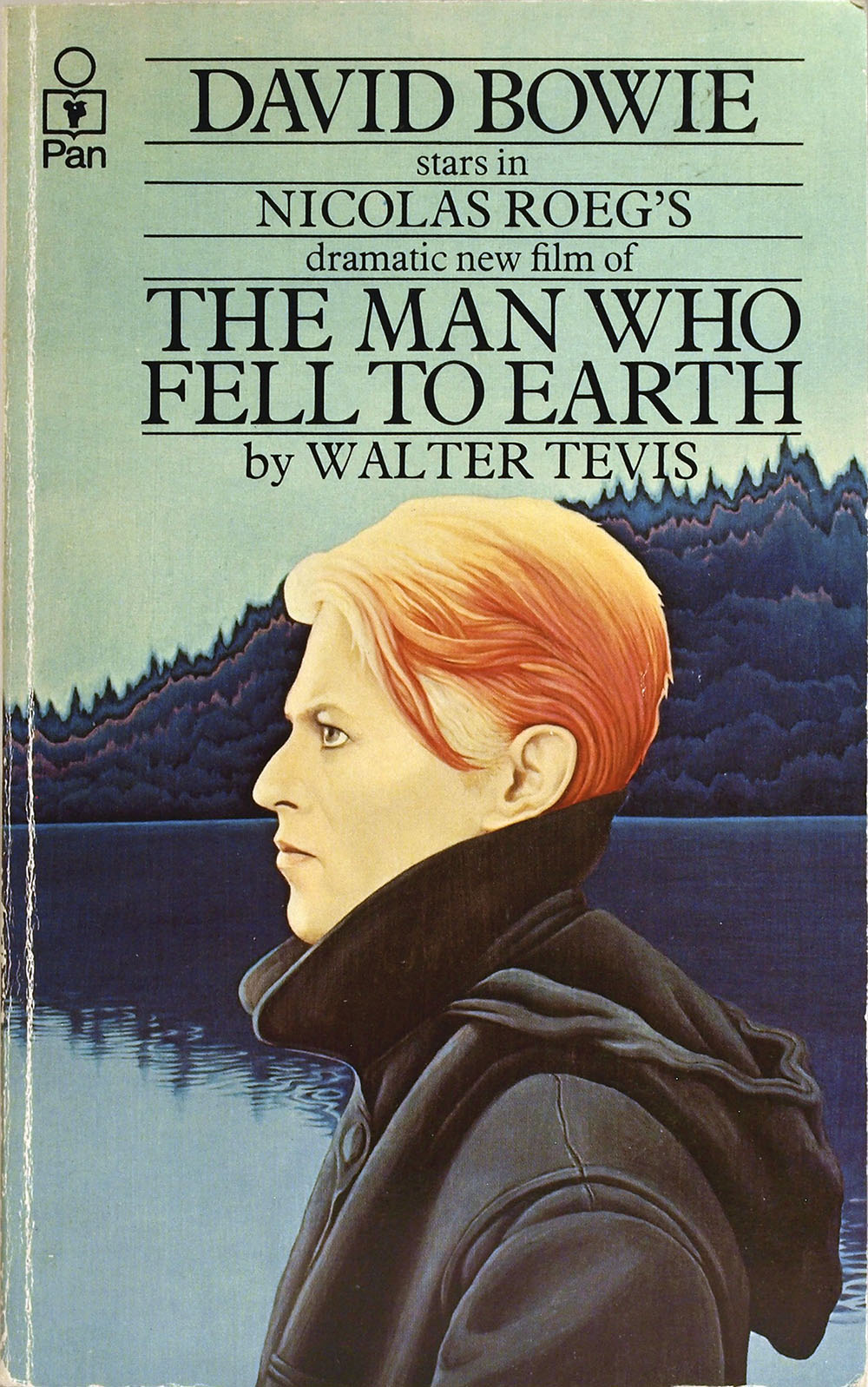
The first UK paperback edition, 1976. Cover art by David Bowie’s illustrator friend George Underwood.

• At the BFI: “Humanity, lost and found”. The original Sight and Sound review by Tom Milne of The Man Who Fell to Earth which was released 50 years ago this month. The film is another Nicolas Roeg project whose lofty reputation today has made everyone forget the bewildered or even hostile reaction it generated at the time, including from the US distributor, Paramount, who hated it. Milne, by contrast, had read the novel it was based on, and paid close attention to what the film’s writer, Paul Mayersberg, described as its “minefield of images”.

• Among the new titles at Standard Ebooks, the home of free, high-quality, public-domain texts: The Varieties of Religious Experience by William James.

• Issue 13 of Verbal magazine features an interview with Michael Moorcock, Iain Sinclair in the “Talking Books” section, and more.

• New music: 4 Hours (DVATION 2026 Version) by Clock DVA; -Music For Oriental Hotel Okinawa Resort & Spa- by Harikuyamaku.

• The Shaw Brothers Cinema YouTube channel has whole feature films from the studio’s huge archive free to view.

• At Colossal: “Historic architecture emerges from stone in Matthew Simmonds‘ ethereal sculptures”.

• “Music with Balls”: Terry Riley performing live with an arrangement of shiny silver spheres on KQED TV in 1969.

• Mixes of the week: DreamScenes – March 2026 at Ambientblog, and Motorik by Jon Savage.

• “What is electronic music?” Daphne Oram explains.

• RIP Country Joe MacDonald.

Stardust (1941) by Artie Shaw And His Orchestra | Stardust (1959) by Martin Denny | Stardust (1985) by Yasuaki Shimizu & Saxofonettes

Weekend links 813

bruenchenhein.jpg

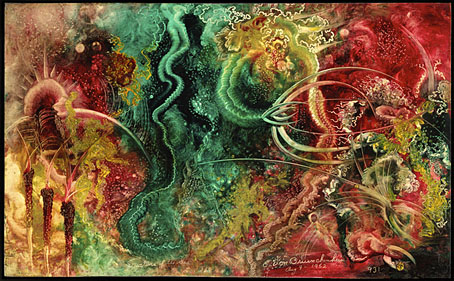
Dwellers of the Sea (1962) by Eugene Von Bruenchenhein.

• Among the new titles at Standard Ebooks, the home of free, high-quality, public-domain texts: Conan Stories by Robert E. Howard.

• At Colossal: “Uncanny personalities appear from nature in Malene Hartmann Rasmussen’s ceramics.”

• New music: Glory Black by Sunn O))); Through Lands Of Ghosts by Foster Neville; Sirenoscape by NIMF.

If we insist that art functions as a tool for promoting a limited set of political principles, what happens when an ideology that doesn’t share our values sweeps into power? Learning to engage with complexity is a necessary skill if we are ever to drag ourselves out of the puerile swamp of the culture wars. But if we continue to reduce art to moralistic soundbites, we will only succeed in stripping it of its capacity to transform us, which would be a huge loss. Art can help us to better understand ourselves, and the world we live in, by expressing those things that words cannot. It exposes us to a vast range of experiences, and asks us to sit with the fundamental ambivalences, moral complexities and conflicting emotions that are a part and parcel of being human.

Rosanna McLaughlin on attempts to make art of the past reflect the moral platitudes of the present

Strange Attractor is having a winter sale with 30% off all its available titles.

• At the BFI: Miriam Balanescu selects 10 great filmmaker biopics.

• Mix of the week: DreamScenes – January 2026 at Ambientblog.

• The Strange World of…Free Jazz & Improvised Music.

Free (1991) by Mazzy Star | The Free Design (1999) by Stereolab | Everything Is Free (2001) by Gillian Welch

Weekend links 803

USA-ad.jpg

Ad for The United States Of America from Helix magazine, 1968.

• American composer Joseph Byrd died this week but I’ve yet to see a proper obituary anywhere. He may not have been a popular artist but he was significant for the one-off album produced in 1968 by his short-lived psychedelic group, The United States Of America. Their self-titled album has been a favourite of mine since it was reissued in the 1980s, one of the few American albums of the period that tried to learn from, and even go beyond, the studio experimentation of Sgt Pepper. The United States Of America didn’t have the resources of the Beatles and Abbey Road but they did have Byrd’s arrangements, together with an energetic rhythm section, an electric violin, a ring modulator, some crude synthesizer components, the voice of Dorothy Moskowitz, and a collection of songs with lyrics that ranged from druggy poetry to barbed portrayals of the nation’s sexual neuroses. The album became an important one for British groups in the 1990s who were looking for inspiration in the wilder margins of psychedelia, especially Stereolab, Portishead (Half Day Closing is a deliberate pastiche), and Broadcast. Byrd did much more than this, of course, and his follow-up release, The American Metaphysical Circus by Joe Byrd And The Field Hippies, has its moments even though it doesn’t reach the heights of its predecessor. Byrd spoke about this period of his career with It’s Psychedelic Baby Magazine in 2013.

• At BBC Future: “The most desolate place in the world”: The sea of ice that inspired Frankenstein. Richard Fisher examines the history of the Mer de Glace in fact and fiction with a piece that includes one of my Frankenstein illustrations. The latter are still in print via the deluxe edition from Union Square.

• A Year In The Country looks at a rare book in which Alan Garner’s children describe the making of The Owl Service TV serial.

• The final installment of Smoky Man’s exploration of The Bumper Book of Magic has been posted (in Italian) at (quasi).

• At Public Domain Review: Perverse, Grotesque, Sensuous, Inimitable: A Selection of Works by Aubrey Beardsley.

• At Colossal: Ceramics mimic cardboard in Jacques Monneraud’s trompe-l’œil ode to Giorgio Morandi.

• At the Daily Heller: The “narrative abstraction” of Roy Kuhlman‘s cover designs for Grove Press.

• New music: Elemental Studies by Various Artists; and Gleann Ciùin by Claire M. Singer.

• Steven Heller’s font of the month is Archive Matrix.

Sensual Hallucinations (1970) by Les Baxter | The Garden Of Earthly Delights (United States Of America cover) (1982) by Snakefinger | Perversion (1992) by Stereolab