Wavelength

wavelength1.jpg

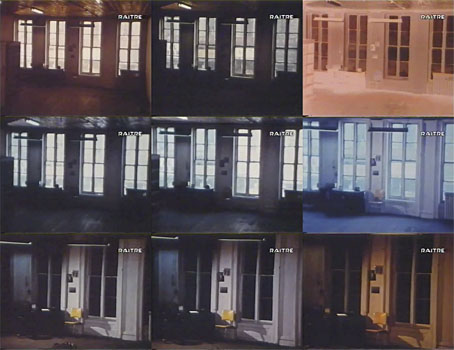
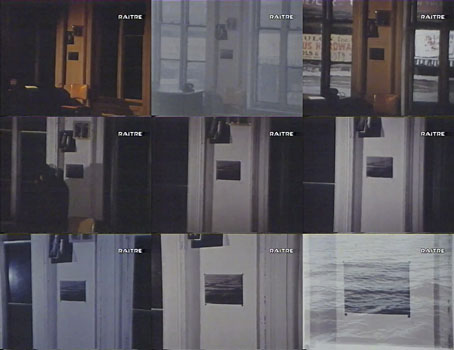
Thanks be to YouTube for once more resurrecting moments of underground cinema which would otherwise be very difficult to see. Wavelength (1967) is Michael Snow’s experimental masterwork, a 45-minute zoom across a New York loft that ends on a photograph of waves that fills the screen. This recipe for ennui is not without incident: we see a bookcase being installed, someone plays a Beatles record—Strawberry Fields Forever—a man breaks into the apartment and collapses. (He may be dead but we never find out.) Throughout this, the film is subject to flashes of colour filtering, moments of negative inversion and sudden flares of light. For at least half the running time the sound is replaced by a droning oscillator tone which rises inexorably the closer the camera brings us to its destination.

wavelength2.jpg

Between these events there’s plenty of time to meditate upon the meaning of the title: the various wavelengths of sound and light, the distance across the room to the view of the waves, the waves themselves. It’s a fascinating film which is linked for me (and may have influenced) two other takes on the long take: JG Ballard’s short story The 60 Minute Zoom (1976), in which a man monitors his wife’s infidelity from a hotel balcony, and the celebrated shot at the end of Antonioni’s The Passenger (1975) when Jack Nicholson’s character is assassinated off-screen in another hotel room while the camera floats miraculously through the iron bars of the window. You can see Wavelength in full here. I’d recommend watching it full-screen, it requires immersion.

Previously on { feuilleton }
() by Morgan Fisher
La Région Centrale
Downside Up

Nothing Is

sunra.jpg

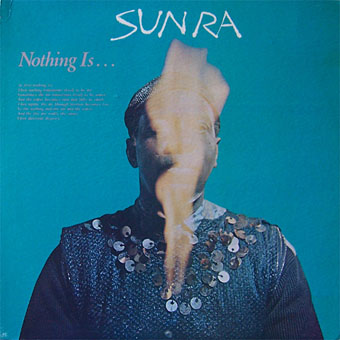
1: Nothing Is… (1966), an album of science fiction jazz by Sun Ra.

What does the empty space of that ellipsis imply?

beatles.jpg

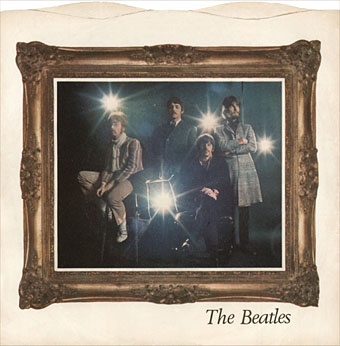
2: Strawberry Fields Forever (1967), a single by The Beatles.

“Strawberry Fields / Nothing is real”

harrison1.jpg

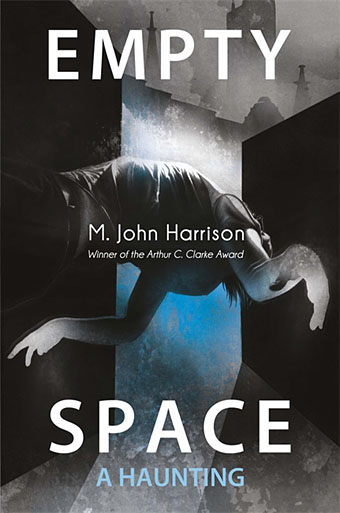
Cover art by Sam Green.

3: Empty Space (2012), a science fiction novel by M. John Harrison.

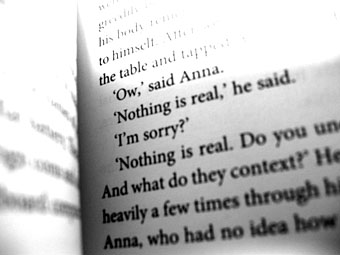
Chapter 1: “Nothing is real,” he said.

harrison2.jpg

mbv.jpg

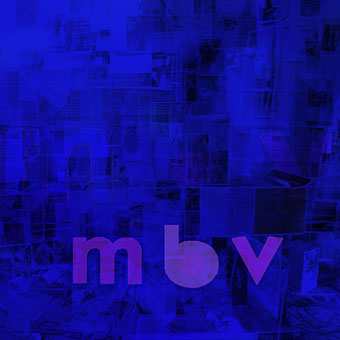
4: MBV (2013), an album by My Bloody Valentine which emerged from empty space at the weekend.

Track 8: Nothing Is.

Previously on { feuilleton }
Golden apples and silver apples

Weekend links 142

bowie.jpg

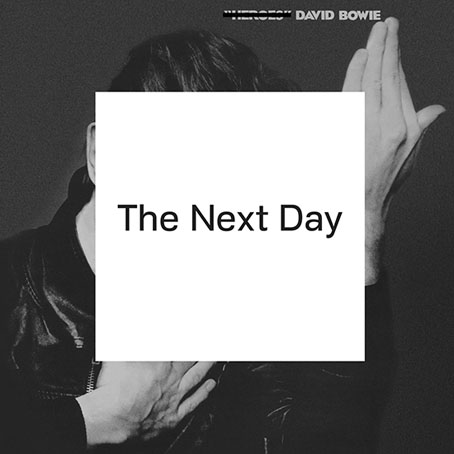
Gratifying this week to see album cover art under discussion even if the heat-to-light ratio was as unbalanced as it usually is when pop culture is the subject. Jonathan Barnbrook, who also designed the Heathen (2002) and Reality (2003) packaging for David Bowie, wrote about the thinking behind the new cover on his blog. (And for the time being let’s note that this is still only a cover design, we don’t know what else is on its way.)

For my part I’ll point out that the artist-as-cover-image is the great cliché of album design, and the bigger the name the more the rule applies; Neville Brody complains about this in the first book of his work, as does Storm Thorgerson in the Hipgnosis books. In Bowie’s case the rule has been applied almost universally since his debut album in 1967, the only variations being illustrational ones or slight dodges like having his feet appear on the front of Lodger and his back facing the viewer on Earthling. Consequently the new design is a radical gesture from an artist who could have got away with a photo of himself du jour. By way of contrast, consider that Rod Stewart is a year older than David Bowie and presented the world with this artefact in October 2012.

Related: Hard Format responds to the cover, Chris Roberts on “Picasso resurrected in a Rolf Harris era“, and Alexis Petridis on The inside story of how David Bowie made The Next Day.

The Quicksilver typeface, designed by Dean Morris when he was only 16, bought by Letraset and now an indelible feature of pop design from the 1970s. Morris describes his experience here (“they shunned rapidographs!”) and collects examples of the print history here.

When the days are short, we are closest to the medieval world. To the avoidance of mirrors where death improves our portraits every morning with a few more lines and shadows. What would once have been a sermon, a conjuring of hellfire, a phantom slide show, is now an entertainment. But before we can begin again, we have to kick free of the embrace of our inconvenient predecessors, that compost legion of the anonymous dead. They come uninvited, requiring us to sign up for what the late Derek Raymond called the general contract: a brief turn in the light, then extinction. Eternal darkness. How to live with such knowledge? William Burroughs admired the unswerving bleakness of Beckett’s gaze, the way he reduced compensatory illusions to zero. Nowhere left to crawl. And nothing to crawl on. Last breath is last breath. Stare into the abyss and the abyss will stare right back.

Iain Sinclair reviews The Undiscovered Country: Journeys Among the Dead by Carl Watkins

Broadcast’s James Cargill on Morricone, Minidiscs and Scoring Berberian Sound Studio. Related: Melmoth the Wanderer posts a new mix, The Curious Episode of the Wizard’s Skull, and more spooky sounds are on their way from The Haxan Cloak.

• A Firm Turn Toward the Objective: Joanne Meister on meeting the great Swiss designer Josef Müller-Brockmann.

duchess.jpg

Twitter user @thisnorthernboy reworked Paul Emsley’s portrait of Kate Middleton. @barnbrook approved.

• The Beatles of Comedy: David Free on the Monty Python team.

• The history of the London Underground poster.

Impossible Architecture by Filip Dujardin.

• At Pinterest: Art Dolls & Sculpture

• Grace Jones’ Nightclubbing album has been on repeat play this week: Warm Leatherette/Walking In The Rain | I’ve Seen That Face Before (Libertango) | Demolition Man

Weekend links 124

despont.jpg

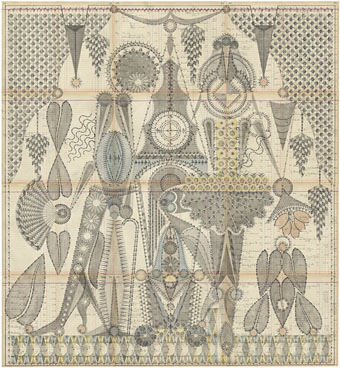
Couple with Clock Tower (2011) by Louise Despont.

Assuming such a thing doesn’t already exist, there’s a micro-thesis to be written about the associations between the musicians of Germany’s Krautrock/Kosmische music scene in the early 1970s and the directors of the New German Cinema. I’d not seen this clip before which shows the mighty Amon Düül II jamming briefly in Fassbinder’s The Niklashausen Journey, a bizarre agitprop TV movie made in 1970. More familiar is the low-budget short that Wim Wenders helped photograph a year earlier showing the Düül performing Phallus Dei. Wenders later commissioned Can to provide music for the final scene of Alice in the Cities. And this is before you get to Werner Herzog’s lengthy relationship with Popol Vuh which includes this memorable moment. Any others out there that I’ve missed?

Album sleeves in their original locations. And speaking of album sleeves, photo prints of some very famous cover designs by Storm Thorgerson will be on display at the Public Works Gallery, Chicago, throughout September and October.

Crazy for kittehs: the quest to find the purring heart of cat videos: Gideon Lewis-Kraus goes where few journalists dare to tread. Also at Wired, the same writer explores the Cat Cafés of Tokyo.

The City of Rotted Names, a “shamelessly Joycian cubist fantasy” by Hal Duncan, available to read in a variety of formats on a pay-as-thou-wilt basis until Monday only.

• Jailhouse rockers: How The Prisoner inspired artists from The Beatles to Richard Hawley.

How To Survive A Plague, a documentary about HIV/AIDS activism in the US.

• Deborah Harry: hippy girl in 1968, punk in 1976, and Giger-woman in 1981.

Alan Garner answers readers’ questions about his new novel, Boneland.

• For steampunk aficionados: ‘COG’nitive Dreams by Dana Mattocks.

• David Bowie, Iggy Pop, Madonna & Asparagus: Kraftwerk in 1976.

• New music videos: Goddess Eyes I by Julia Holter | Sulphurdew by Ufomammut | Warm Leatherette by Laibach.

Tomorrow Never Knows

beatles.jpg

Episode 38 of The Beatles (1967).

The Beatles’ Yellow Submarine was released on Blu-ray earlier this month. The quality is as good as you’d expect, it looks and sounds fantastic with the songs really benefitting from their remixes and high-definition audio. The film atoned for Al Brodax and George Dunning’s earlier role as producers of the lamentable The Beatles animated TV series which ran for 39 episodes from 1965 to 1967. The series as a whole may be cheap and nasty but the penultimate number is notable for being the only one featuring two of John Lennon’s songs inspired by his acid trips: Tomorrow Never Knows and She Said, She Said. These tiny eruptions of psychedelic culture into children’s film and television have always fascinated me, and this is one example I’d missed until now. No wonder it had to end, the Fab Four were getting far too weird. Okay kids, sing along now: “I know what it’s like to be dead…”

Previously on { feuilleton }
The Dukes declare it’s 25 O’Clock!
Yellow Submarine comic books
A splendid time is guaranteed for all
Heinz Edelmann
Please Mr. Postman
All you need is…