Weekend links 456

tanning.jpg

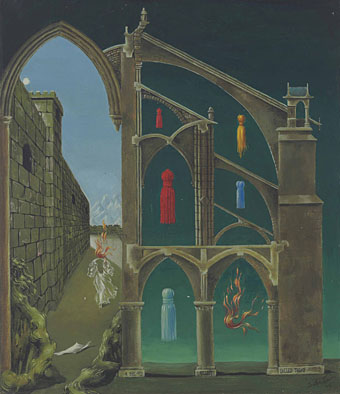
A Mrs Radcliffe Called Today (1944) by Dorothea Tanning.

Darran Anderson on how the Bauhaus kept things weird. “Many imitators of the famous art school’s output have missed the surreal, sensual, irrational, and instinctual spirit that drove its creativity.”

• Notes on the Fourth Dimension: Hyperspace, ghosts, and colourful cubes—Jon Crabb on the work of Charles Howard Hinton and the cultural history of higher dimensions.

• “[Edward] Gorey is slowly emerging as one of the more unclubbable American greats, like Lovecraft or Joseph Cornell,” says Phil Baker.

The label “homosexual writer” stuck for the rest of his career, with Purdy confined to what Gore Vidal called “the large cemetery of gay literature…where unalike writers are thrown together in a lot, well off the beaten track of family values”. In later years, Purdy moved further off the beaten track, as much by intention as circumstance. “I’m not a gay writer,” he would tell interviewers. “I’m a monster. Gay writers are too conservative.”

Speaking to Penthouse magazine in 1978, Purdy said being published was like “throwing a party for friends and all these coarse wicked people come instead, and break the furniture and vomit all over the house”. He added that, in order to protect oneself, “a writer needs to be completely unavailable”.

Andrew Male on writer James Purdy

• The Necessity of Being Judgmental: Roger Luckhurst on k-punk: The Collected and Unpublished Writings of Mark Fisher.

Faunus: The Decorative Imagination of Arthur Machen, edited by James Machin with an introduction by Stewart Lee.

• More James Purdy: “His poetry displays a softness that readers of his fiction might not expect,” says Daniel Green.

Drag Star! is a 150,000-word interactive novel/text adventure by Evan J. Peterson.

• At Dangerous Minds: Dave Ball discusses his years as the other half of Soft Cell.

Daisy Woodward on the story of radical female Surrealist Dorothea Tanning.

• Inside the bascule chamber: photos of Tower Bridge, inside and out.

Tim Smith-Laing on the meaning of Miró’s doodles.

• Galerie Dennis Cooper presents…Emma Kunz.

rarecinema: a shop at Redbubble.

Apollo Press Kits

The Fourth Dimension (1964) by The Ventures | Dimension Soleils (1983) by Gilles Tremblay | Into The Fourth Dimension (1991) by The Orb
Weekend links 433

ginzburg.jpg

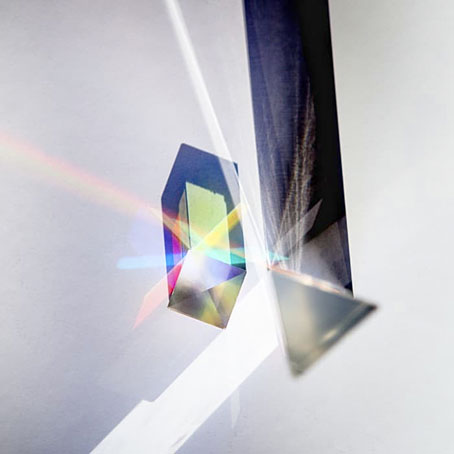
Cover art for Six Correlations, a solo album by Emptyset’s James Ginzburg which is released later this month. Photo by Clayton Welham.

• “Every single leather S&M club in London was raided by the police at least once, but they couldn’t get any convictions because juries wouldn’t convict us.” Ed Siddons on the death of London’s gay leather scene.

• I’ve been listening to a lot of Stereolab this week so this post from Dangerous Minds last year was useful: “The intriguing origins of ‘Cliff,’ the cartoon character that’s all over Stereolab’s early album art”.

• Available for pre-order: Performance – The Making of a Classic, a book by Jay Glennie celebrating the 50th anniversary of Donald Cammell & Nicolas Roeg’s cult feature film.

• Out later this month from Strange Attractor: The Haunted Writings of Lionel Johnson, the Decadent Era’s Dark Angel, edited by Nina Antonia.

• Mixes of the week: Rosemary Hill – an Autumn Autobiography by cafekaput, and Secret Thirteen Mix 267 by Drew McDowall.

The top 100 albums of The Quietus’ existence, as picked by tQ’s writers.

RC Harvey on the 50th anniversary of (American) underground comix.

• At Haute Macabre: An enigmatic baroness and her collection of skulls.

Miyu Kojima creates miniature replicas of lonely deaths.

Scratches in Kubrick’s 2001: A Space Odyssey.

Richard Thompson’s favourite albums.

Wrong Airport Ghost by Sam Slater.

Mark Valentine’s 3 Wyrd Things.

• 4/4 In Leather (1981) by Eurythmics | The Girl With The Patent Leather Face (1981) by Soft Cell | Leather Bound (1982) by Patrick Cowley

Weekend links 370

lai.jpg

The Conjure (2016) by Jolene Lai. Via Dangerous Minds.

• RIP George Romero, a proudly independent filmmaker who succeeded on his own terms. Kim Newman remembers the man who remade horror cinema. Romero always referred to Powell & Pressburger’s Tales of Hoffmann (1951) as a key cinematic influence, something he discussed with Marc Lee in 2005.

Man Alive (BBC TV, 1967): Consenting Adults: 1. The Men | Consenting Adults: 2. The Women. Two documentaries about the British homosexual experience screened shortly before the House of Commons vote that decriminalised sex between men in England and Wales.

Dolente…Dolore: The Inferno of Malcolm Lowry is the latest musical release from Larkfall: “a trembling, drunken dream with flashes of heaven and hell…”

Tom Harper on The Klenke Atlas (1660), one of the largest atlases in the world which is now available for viewing at the British Library.

Martin Jenkins of Pye Corner Audio, The House In The Woods et al talks to Bandcamp about his own brand of sinister electronica.

• RIP Peter Principle, a musician whose up-front bass playing was always a key feature of the Tuxedomoon sound.

• And RIP actor John Heard talking to Will Harris in 2015 about some of his many roles in film and TV.

• 355 free copies of Galaxy Magazine at the Internet Archive.

• Google Maps goes inside the International Space Station.

• Good with a knife: The papercut art of Ivonne Carley.

• Mix of the week: FACT Mix 610 by Karen Gwyer.

• At Dennis Cooper’s: Yasujiro Ozu Day.

• L’alba Dei Morti Viventi (1978) by Goblin | East/Jinx/•••/Music #1 (1981) by Tuxedomoon | Martin (1983) by Soft Cell

Weekend links 301

ruscha.jpg

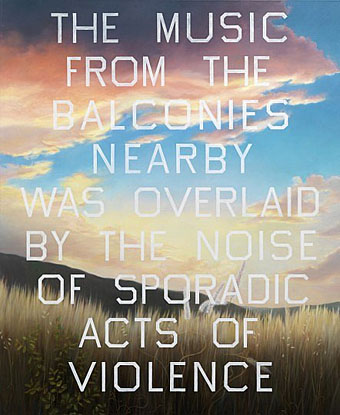
The Music from the Balconies (1984) by Edward Ruscha.

• At The Quietus: High-Rise director Ben Wheatley runs through his favourite films. Kudos for mentioning Elem Klimov’s Come and See (1985) among the more familiar fare, a nightmarish masterwork that everyone should watch at least once. On the same site, author Joe R. Lansdale also lists some favourite films while discussing the new TV series of his Hap and Leonard books.

Electric Hintermass (Sound Apart) by Hintermass, a track from The Apple Tree, their debut album on the Ghost Box label.

Michael Mann’s Heat: “A complex, stylistically supreme candidate for one of the most impressive films of the Nineties”.

• Despair Fatigue: David Graeber on how [political] hopelessness grew boring, and what happens next.

• Mix of the week: FACT Mix 541 by Tortoise, and Blowing Up The Workshop 56 by Eric Lanham.

• At Dennis Cooper’s: “Some books (1961–1975) that either faked ingesting LSD or did”.

• David Litvinoff again: “Was he only an opportunistic hustler?” asks David Collard.

John Carpenter’s The Thing rescored with one of the director’s Lost Themes.

Overlooked: a book by Marina Willer about the manhole covers of London.

• Pam Grossman (words) and Tin Can Forest (art) ask What is a Witch?

• A long way down: Oliver Wainwright on JG Ballard and High-Rise.

• A conversation with designer and typographer Erik Spiekermann.

• The BFI compiles a list of “The 30 Best LGBT Films of All Time“.

• Decoding the spiritual symbolism of artist Hilma af Klint.

Sabat Magazine

Heat (1983) by Soft Cell | The Heat (1985) by Peter Gabriel | Heat Miser (1994) by Massive Attack

Weekend links 247

buratti.jpg

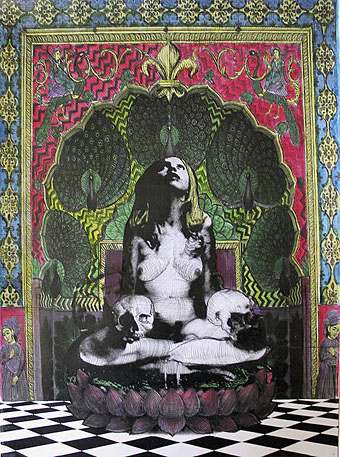
Encounter with the Priestess by Robert Buratti.

• “We were gothy, we loved the New York thing and people like Suicide, Dave loved Throbbing Gristle, we both loved the Sheffield bands…we loved the darkness to that kind of electro.” Marc Almond talking to Simon Price. Also at The Quietus, Cat’s Eyes choose their favourite soundtracks.

• “When he reveals that all he wants is to deliver a breakfast sandwich, the enigma of his desire is not so much dispelled as redoubled—why on earth would anyone want to do that?” Adam Kotsko on the unheimlich nature of old Burger King ads.

• “…commercial design is full of politics, to be a commercial designer is a political decision.” Jonathan Barnbrook talking to Katrina Schollenberger.

You need to know who Billy Wilder was. You need to know the names of people who are no longer alive. Because it’s very important—it’s what our history is made of. You need to see the movies the way they were—with the racism, the violence, and the censorship. All the things that let you see what the movie past had been so you understand where we are! But really nobody’s interested in that right now. Their interests are so bifurcated.

Joe Dante discussing film production past and present with Michael Sragow.

• From 1983: The Encyclopedia of Ecstasy, Vol. 1, a publication which creator Alistair Livingston describes as a “psychedelic goth punk fanzine”.

• Mixes of the week: No One’s There, a collection of post-punk electronica by Abigail Ward, and Secret Thirteen Mix 146 by Te/DIS.

• Frans Masereel’s My Book of Hours is “a crucial example of the power of stories without words,” says Stefany Anne Golberg.

Miles Davis and band in concert, 18th August, 1970. Pro-shot, 45 minutes.

• Lots of good reading and cultural connections at Celluloid Wicker Man.

A world map of micro-nations

Tokyo in dense fog

Tainted Love/Where Did Our Love Go? (1981) by Soft Cell | Tainted Love (1985) by Coil | Titan Arch (1991) by Coil with Marc Almond