Wildeana 14

bench.jpg

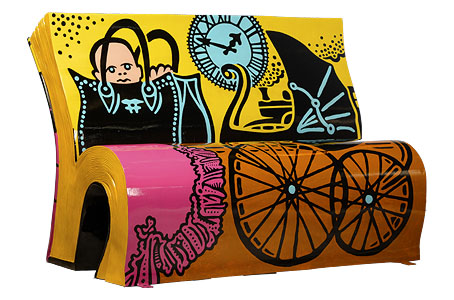
BookBench by Trevor Skempton.

Continuing an occasional series. Recent (and not-so-recent) Wildean links.

• The BookBench above is one of several pieces of street furniture placed around London last autumn all of which were based on literary works past and present. Trevor Skempton’s design for Oscar Wilde was based on The Importance of Being Earnest which wouldn’t have been my choice (Dorian Gray, please). See the rest of the designs here.

• “Rare Play About Oscar Wilde Will Return to NYC“: John Gay’s solo play Diversions & Delights will get its first professional New York staging since Vincent Price performed it on Broadway in 1978.

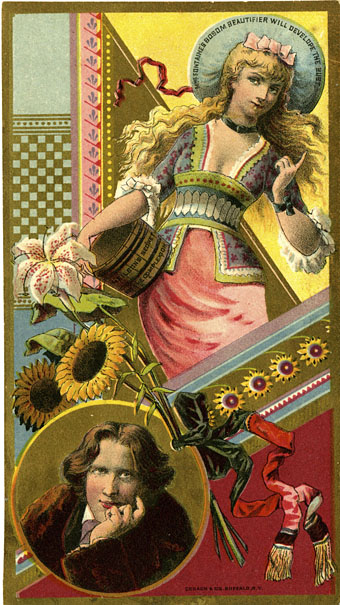
Chapter Three, “Strike a Pose,” concerns Wilde’s visit to the New York studio of the celebrated portrait photographer Napoleon Sarony, where he posed for twenty-seven portraits. The now-familiar images from this session would be used not only for publicity, but also on trade cards advertising “products ranging from cigars to kitchen stoves.” An image of Wilde even wound up promoting “Mme Marie Fontaine’s Bosom Beautifier for Beautifying & Enlarging The Bust.’”

Jennie Rathbun reviews Wilde in America: Oscar Wilde and the Invention of Modern Celebrity by David M. Friedman

• “Letters unravel mystery of the death of Oscar Wilde’s wife: Grandson of Irish dramatist has unearthed medical evidence in private family letters which points to likely cause of death”.

fontaine.jpg

Mme Marie Fontaine’s Bosom Beautifier for Beautifying & Enlarging The Bust. Trade card, 1882.

Books from Oscar Wilde’s library discovered in the National Library of the Netherlands.

Wilde-inspired: a list of recommended film viewing.

Elsewhere on { feuilleton }
The Oscar Wilde archive

Weekend links 243

burgoyne.jpg

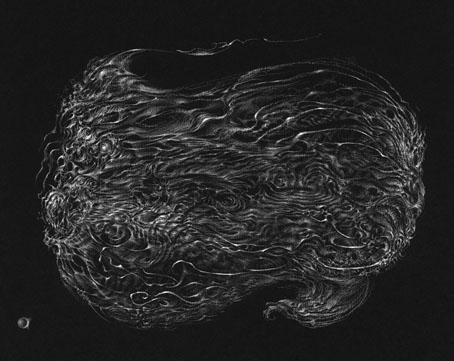
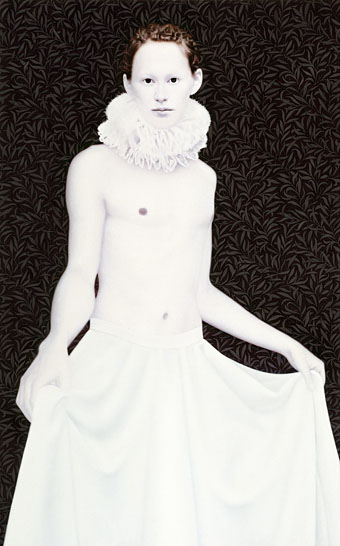
Genesia (2011) by Bette Burgoyne.

• “…so I started buying these old gay porn novels, just for the covers and kept on collecting them.” Maitland McDonagh on the underexamined world of gay pulp. McDonagh’s 120 Days Books is reprinting some of these scarce titles. More gay erotica: Plans are afoot to republish Des Grieux, the rare prequel to Teleny or The Reverse of the Medal (1893), a novel often attributed (without much evidence) to Oscar Wilde.

Merricat is the name under which the Turrell Brothers, John & Tom, produce their atmospheric “nacht music”. Albums with titles such as Oneiros, Widdershins and Zerkalo give an idea of the spheres of interest. They also make short films, clips from which may be seen here.

• “Fascists don’t like satire. They don’t like it at all. And they especially don’t enjoy visual satire. Because of its unique power to communicate.” Ralph Steadman talking to Robert Chalmers about recent events.

There is an unexamined commonplace now floating around the social media, which has it that satire derogates its proper function when it stops targeting the powerful, and targets the relatively powerless instead. Theodor Adorno has also been cited here and there with his remarks on satire in the Minima Moralia of 1951, but few have noticed that the account he offers there stands in direct contradiction to the current received wisdom. For Adorno, satire is in its essence wistful and traditionalist. It looks back to something that has been lost, and dismisses the straight-facedness of everyone who attempts, against all evidence, to maintain the illusion that there is anything respect-worthy about the present state of things. It targets not just elected officials, but the yokels who elected them; not just the honcho who runs the saloon, but the sucker who hands over his last possessions at the poker table. There is a need for this: the yokels and the suckers need it most of all. There is redemption in it, and I confess to harboring whatever amount of traditionalism it takes to appreciate this redemptive quality.

Paris, 2015: a lengthy meditation by Justin EH Smith on the responses of left and right to the Charlie Hebdo killings

• “When the surface of the world is so overloaded with competing narratives…there is an understandable impulse to go underground.” Iain Sinclair on the excavation of London.

• More German music: Sinai Desert (1981) and Kailash, Pilgerfahrt Zum Thron Der Götter (no date), two films with music by Popol Vuh.

Kim Fowley: Sins & Secrets of the Silver Sixties. UglyThings Magazine makes available its definitive Fowley interview from 2001.

• More electronica and mix of the week: the FACT guide to the Yellow Magic Orchestra and associates.

• Vegetable-snake Undersea Beings: Allen Ginsberg writes to the Paris Review about LSD in 1966.

• The Edge Question for 2015: What do you think about machines that think?

Life of Cats: Selections from the Hiraki Ukiyo-e Collection.

Lake Baikal frozen over

Serial Killer Barbie

NGC 891 (1974) by Edgar Froese | Overture (1974) by Tangerine Dream | PA 701 (1976) by Edgar Froese

The Importance of Being Oscar

macliammoir1.jpg

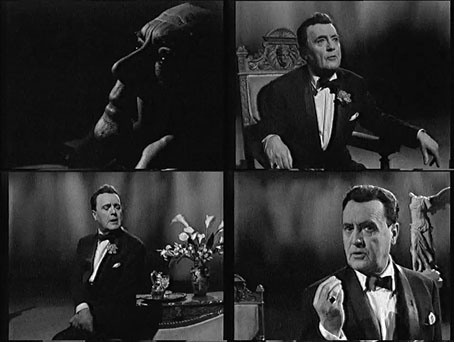
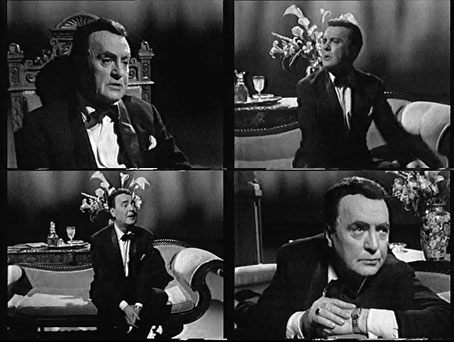
Picking up where we left off, I was thrilled to find that Micheál MacLiammóir’s one-man dramatised biography of Oscar Wilde had finally made it to YouTube. The Importance of Being Oscar was MacLiammóir’s 100-minute magnum opus, an acclaimed condensation of Wilde’s life and work first performed at the Gate Theatre, Dublin, in 1960. Hilton Edwards produced for partner MacLiammóir who subsequently took his show around the world, including performances on Broadway.

MacLiammóir’s monologue interleaves sketches of Wilde’s life with substantial extracts from the major works—An Ideal Husband, The Picture of Dorian Gray, The Importance of Being Earnest, De Profundis, and The Ballad of Reading Gaol—with the actor/writer often taking two roles in the same scene. The readings are deeply felt; this would have been a very personal project, not only for its subject being a fellow Irishman and playwright but also for MacLiammóir and Edwards’ status as gay men in Ireland at a time when they could never be open about their private lives. (Or openly secretive: Barbara Leaming’s biography of Orson Welles makes it clear that iniquitous laws did nothing to stifle the pair in their pursuit of other men.) Accounts of Wilde’s post-trial life are inevitably sombre but MacLiammóir notes that even prison couldn’t suppress Wilde’s sense of humour. A literary conversation with one of the warders is recounted, along with the famous barb thrown at Marie Corelli: “Now don’t think I’ve anything against her moral character, but from the way she writes she ought to be in here.” If MacLiammóir’s performance seems a little overwrought in the television studio it would have appeared less so on the stage.

macliammoir2.jpg

The BBC filmed The Importance of Being Oscar in the mid-60s, and I think that recording may be the one linked here, a version I recall being shown during an evening of Wilde-related TV in the late 1980s. Prior to this MacLiammóir had played Wilde himself for a televised dramatisation of the courtroom appearances broadcast by the BBC in 1960. This was a key year for reappraisals of Wilde’s reputation which also saw the cinema release of Oscar Wilde (with Robert Morley) and The Trials of Oscar Wilde (with Peter Finch). The latter is the superior film and performance even if Finch looks nothing like Wilde. Public attitudes were changing but all the films and TV plays at this time remained evasive about the precise nature of Wilde’s infractions. The Importance of Being Oscar follows this pattern with a fade to black after Wilde’s arrest; the second act opens with MacLiammóir as the judge passing sentence on Wilde and procurer Alfred Taylor. Circumspection doesn’t detract from the power of the monologue which has been revived in recent years, most notably by Simon Callow, another great Wilde enthusiast and also the biographer of MacLiammóir’s young protégé, Orson Welles.

Now that MacLiammóir’s monologue has resurfaced I’ll be hoping someone uploads John Hawkesworth’s Oscar (1985), a three-part television biography with Michael Gambon playing Wilde.

Elsewhere on { feuilleton }
The Oscar Wilde archive

Wildeana 13

wilde.jpg

Oscar Wilde, no. 26 (1882). One of a series of photo portraits taken by Napoleon Sarony when Wilde was in New York.

Every day is an anniversary for something. Among other things, October 16th 2014 is the 160th anniversary of the day that Oscar Wilde was brought to Earth in a spaceship—see Velvet Goldmine for details—so in honour of that moment here’s a few more Wildean links.

• One item of news I missed last month was Al Pacino’s announcement that he’ll be bringing his production of Wilde’s Salomé to the London stage in 2016. Good to hear that his enthusiasm was sparked by the excellent Steven Berkoff production, and this detail is especially noteworthy: “There will be make-up, sets, costumes… and decadence. It will be a whole different thing to what we did in America.”

• Turkish censors still have problems with Anglophone novels that publishers attempt to present in Turkish translations—the work of William Burroughs caused a fuss a couple of years ago—but last month an uncensored edition of The Picture of Dorian Gray was published there for the first time.

Oscar Wilde’s grandson Merlin Holland: “We’ve got as close as we can to hearing him speak” Holland has co-written The Trials of Oscar Wilde, a dramatisation of Wilde’s court appearances which opens at Trafalgar Studios, London, this week.

The extraordinary story of Oscar Wilde’s holiday in Worthing in 1894. James Connaughton interviews Antony Edmonds about his new book, Oscar Wilde’s Scandalous Summer: The 1894 Worthing Holiday and the Aftermath.

The beau of Reading jail: was prisoner 1122 Oscar Wilde’s lover? (The answer to any newspaper headline ending with a question mark is invariably “No”.)

Elsewhere on { feuilleton }
The Oscar Wilde archive

Weekend links 229

drongelen.jpg

Untitled (2007) by Remko van Drongelen.

• Another week, another Kickstarter project: Frank Woodward’s 2008 documentary, Lovecraft: Fear of the Unknown, was an excellent study of HP Lovecraft’s life and work featuring interviews with John Carpenter, Neil Gaiman, Caitlín R. Kiernan, Peter Straub, Guillermo Del Toro and leading Lovecraft scholar ST Joshi; the film also included a few examples of my Cthulhoid artwork. Disc copies of the film have been out-of-print for a while so Frank’s fund is hoping to raise money for a new Blu-ray edition featuring extended interviews and other extras.

• David Cronenberg’s debut novel, Consumed, “reads somewhat like a mashup of William Gibson, the king of near-future SF cool, and 1970s horror maestro James Herbert,” says Steven Poole. I’d have thought a more obvious analogy would be with JG Ballard; descriptions of Cronenberg’s narrative make it sound like Ballard’s concerns repurposed for our current era of electronically-mediated everything. Related: Crash by Sanyú, “adaptación de un fragmento de la novela de J. Ballard”.

• “To commune with the music of Cyclobe is to enter not just a strange world, but strange constellations – interdimensional, atemporal zones of carefully cultivated auras bordering wild, unstable forces.” Russell Cuzner talks to Ossian Brown and Stephen Thrower about Derek Jarman, hurdy-gurdies and the deceptive nature of time.

…there are no rules in fiction even if creative writing programs everywhere have tried to make people believe there are. When I read fiction that has passed through the filter of too many workshops, I often get the feeling that I’m reading the same novel over and over again: the same way of being humorous, the same way of being candid, the same way of creating empathy.

Valeria Luiselli talking to Jennifer Kabat about fiction, cities and maps.

• The rationale behind Silent Partners: Artist & Mannequin from Function to Fetish is “to explore the way that the artificial human figure has routinely provided artists with the most direct and reliable route to visual realism. And then to work out why that makes us so upset.” Kathryn Hughes on a new exhibition.

• “It immediately throws up some interesting thoughts: Bowie as the young dandy and the obvious comparisons with Oscar Wilde and The Picture Of Dorian Gray, with the portrait that ages.” Designer Jonathan Barnbrook on the cover photos for David Bowie’s forthcoming album Nothing Has Changed.

• October brings all the music mixes. This week there’s a choice of FACT mix 463 by Dntel, Autumn’s Whirr by Café Kaput (aka Jon Brooks), and Suspected Rural Telephone Box Poltergeist by The Geography Trip.

• “…when you first go into the room it’s like entering a furnace… a furnace of sound.” Scott Walker talks to John Doran about recording with Sunn O))). The new album, Soused, is out on 20th October.

We are the Martians: the Legacy of Nigel Kneale, a new collection of Kneale-related essays and appreciations, edited by Neil Snowdon.

• Kim Newman is one of the contributors to the Kneale collection. Here he is on the main types of ghost story, and how to recognize them.

Issue 7 of Glitterwolf magazine is out on the 15th, and it’s a Halloween special.

Etai Rahmil makes mask-pipes from glass for weed smokers.

Accidental Cool Art

Hurdy Gurdy Man (1968) by Donovan | Hurdy Gurdy Man (1970) by Eartha Kitt | Hurdy Gurdy Man (2009) by Patrick Cowley & Jorge Socarras