Demons by rail-light: Stefan Grabiński’s weird fiction

grabinski.jpg

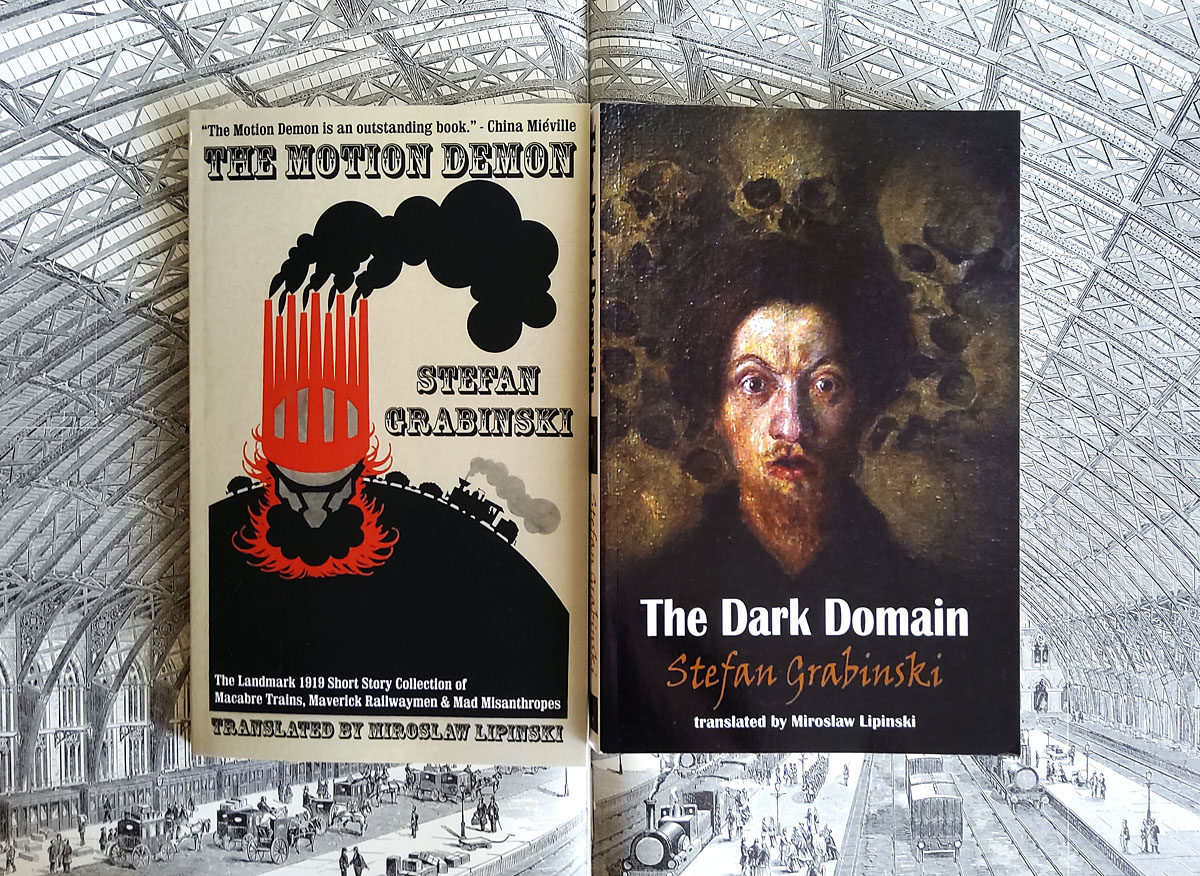
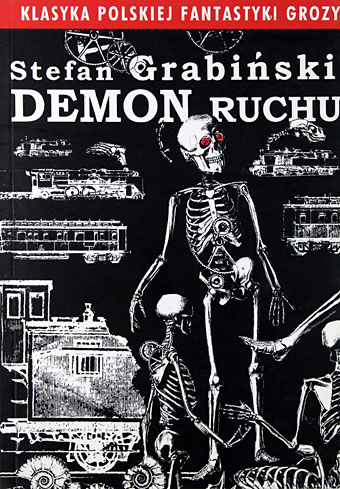
Thanks to the demons of distraction it’s taken me a long time to find my way to these books by Polish author Stefan Grabiński (1887–1936) but I’m very pleased to have done so at last. Grabiński was one of several writers first drawn to my attention by Franz Rottensteiner’s The Fantasy Book: The Ghostly, the Gothic, the Magical, the Unreal (1978), a lavishly illustrated popular study that charted the history of fantasy and horror fiction. The book is inevitably dominated by Anglophone authors but Rottensteiner was looking at the genres from a global perspective, to an extent that some of the writers in the sections devoted to Continental Europe were either difficult to find or, as with Grabiński, hadn’t yet been translated into English. Robert Hadji’s Grabiński entry in the Penguin Encyclopedia of Horror and the Supernatural (1986) further stoked my curiosity. Neither Rottensteiner nor Hadji mention how they came to read these obscure tales but I’d guess it was in the two collections published in Germany under the Bibliothek des Hauses Usher imprint, Das Abstellgleis (1971) and Dunst und andere unheimliche Geschichten (1974); several covers from the imprint appear in Rottensteiner’s book. Wherever it was that they read the stories, both writers praised Grabiński as an overlooked master of weird fiction. Rottensteiner notes that he was a contemporary of HP Lovecraft, and with a similar biography—briefly married and suffering artistic neglect during his lifetime—but neither Rottensteiner nor Hadji use the common shorthand descriptions of Grabiński as “the Polish Poe” or “the Polish Lovecraft”. These labels are intriguing but misapplied.
grabinski2.jpg

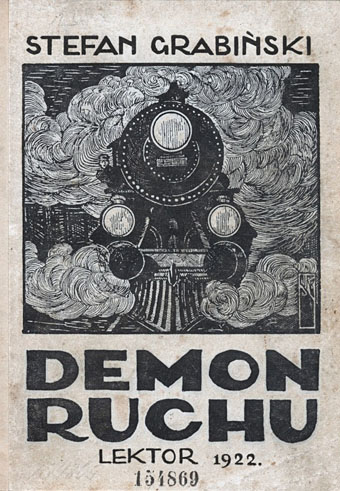
Bearing in mind that these stories are translated works, one of the surprises of finally reading them is how fresh they seem compared to so many British ghost stories from the same period. Grabiński was writing during the birth of Modernism but the stories of his Anglophone contemporaries can often read like the products of an earlier epoch. His economical prose lacks the ornamentation of Poe and Lovecraft, just as it lacks Poe’s morbid Romanticism and has nothing of Lovecraft’s cosmic scale. But there are recurrent themes, particularly that of possession, whether by the spirits of the dead, by inhuman elementals, or by idée fixe. The latter provides the subject of The Glance, a story that also demonstrates Grabiński’s knack of finding horror in the most mundane situations: a man whose wife died prematurely is troubled by the sight of an open door, the same door through which she walked out of his life, and subsequently, out of her own. The man’s obsession with the door grows into a fear of closed doors and the implicit tragedies they may conceal, an obsession that soon extends itself to anything that hides too much of the world: curtains, rugs, the sharp corners of city streets… Edgar Allan Poe was fond of cataloguing madness in this manner but Grabiński’s stories go beyond glib formulations of insanity. “Metaphysical” is a word often used in discussion of the Grabiński oeuvre; the fixations of his protagonists reveal truths about the world to which others are blind.
grabinski3.jpg

Continue reading “Demons by rail-light: Stefan Grabiński’s weird fiction”
Picturing On Land

allsaints.jpg

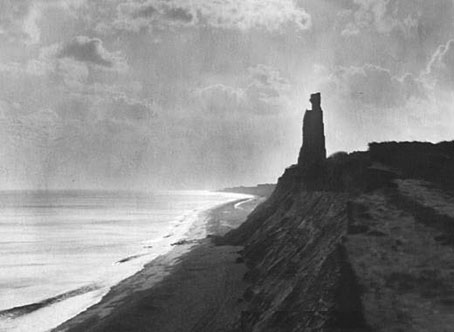
The ruined tower of All Saints Church, Dunwich, 1919.

I became interested in inventing places for sounds. I often listen to music and get a picture of a certain time of day, a certain type of light. I did that with On Land: for each piece I had an image of a time of day. On Land is specifically dedicated to the idea of creating places in music. — Brian Eno

My recent reading has included a couple of novels by the Strugatsky Brothers, and The Rings of Saturn (1995) by WG Sebald, a book I’d been intending to read for many years. The Sebald is a semi-fictionalised account of the author’s walking tour through Suffolk in the early 1990s, an account interleaved with extended detours into personal memory, history and literature, with the text being augmented by grainy and often indistinct pictures or photographs. The book has acquired something of a cult reputation in recent years, and its digressions touch on a couple of cult areas of my own, notably Jorge Luis Borges (via his story, Tlön, Uqbar, Orbis Tertius) and, less directly, the music group Coil, whose Batwings (A Limnal Hymn) is evoked via a description of Thomas Browne’s catalogue of imagined objects, the Musaeum Clausum. Coincidentally, Thomas Browne is mentioned in the Borges story although Sebald cleverly leaves this as something for the curious reader to discover.

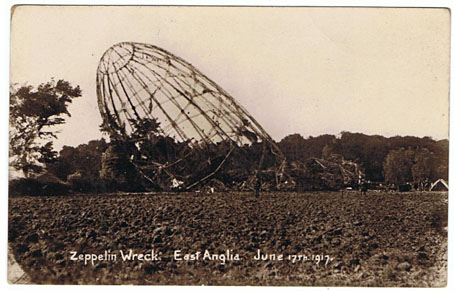
zeppelin.jpg

Suffolk is itself a curious county, in the sense of being strange, verging on the weird. The place is rich in British history—its situation on England’s eastern shore made it a site of various invasions—and weird enough to almost be considered Weird in the literary sense, even without fictional resonances from MR James (“Oh, Whistle, and I’ll Come to You, My Lad”, A Warning to the Curious), Robert Aickman (Ringing the Changes) and, tangentially, HP Lovecraft, who took the name of the sea-devoured town of Dunwich for one of his Massachusetts settings.

Sebald doesn’t mention weird fiction and he also doesn’t mention (and quite possibly never heard of) Brian Eno, but Eno’s fourth album in his Ambient series, On Land, was continually in my mind while reading, owing to the intersection of the places that Sebald visits with the titles of several of Eno’s pieces. The most obvious of these is the last track on the album, Dunwich Beach, Autumn, 1960, but equally Suffolkian are Lantern Marsh, and Unfamiliar Wind (Leeks Hills), the latter being a wood situated between Woodbridge and Melton, two of the places that Sebald passes through. Eno was born in Woodbridge, and On Land is as much concerned with unreliable (or semi-fictional) memories as The Rings of Saturn, something that Eno compares in his notes to Fellini’s semi-fictional film about his own childhood, Amarcord. Sebald’s descriptions sent me searching for pictures of Eno’s localities, especially the less familiar ones like Lantern Marsh and Leeks Hill. (Suffolk’s Dunwich is much more familiar to Britons owing to its long history of being eaten away by coastal erosion.) This in turn gave me the idea of trying to find a collection of suitably Sebaldian pictures for each track on the album, pictures that would be generally accurate but might equally be vague enough to suggest something more than the place or (in the case of painter Pierre Tal-Coat) the person in question.

Continue reading “Picturing On Land”

A Czech Machen

machen.jpg

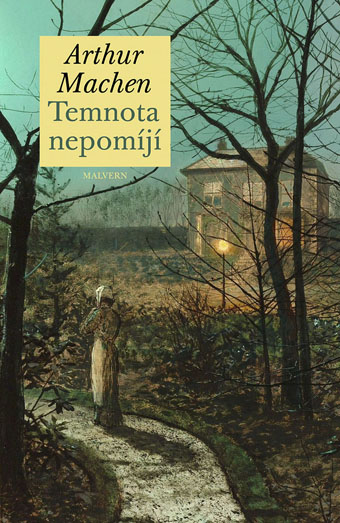
Cover art is a detail from A Woman on a Path by a Cottage (1882) by John Atkinson Grimshaw.

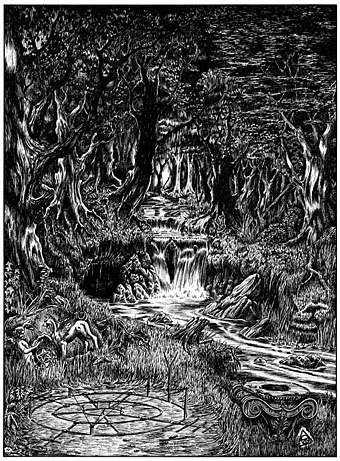
The fiction of Arthur Machen doesn’t inspire a great deal of illustration, probably because his best writing is more concerned with the description of particular places and the feelings those places evoke, rather than the depiction of illustratable scenes or events. I did make the attempt myself, however, when I started a series of illustrations in 1990 that were intended for a Savoy Books edition of The White People. This never materialised for a variety of reasons, and I never finished the series of drawings although the work did yield one picture (below), that I’ve always been pleased with.

whitepeople.jpg

Some of these drawings may now be seen in Temnota nepomíjí, an edition of Machen’s stories from Czech publisher, Malvern, almost all of which are appearing for the first time in translation. I’m told by the translator, Patrik Linhart, that the title in English would be “Darkness is undying”. As for the cover art, I approve the choice of John Atkinson Grimshaw, a painter whose sombre, autumnal views could cover an entire series of Machen books. His work is often seen today in connection with MR James but being a predominantly urban artist his work seems a better match for the Apostle of Wonder.

Previously on { feuilleton }
• Ibrahim Ineke’s The White People
• The White People
• The Bowmen by Arthur Machen
• Rex Ingram’s The Magician
• The Great God Pan

Weekend links 444

guillou.jpg

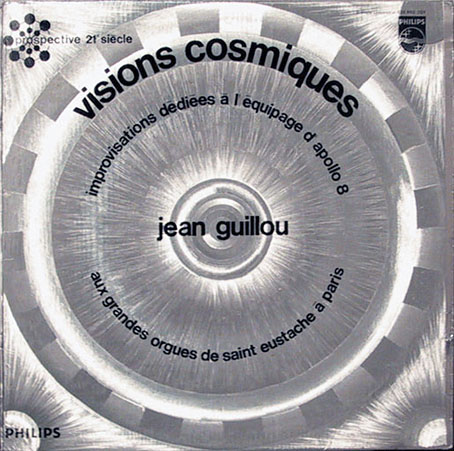
Visions Cosmiques—Improvisations Dédiées À L’équipage D’Apollo 8 (1969) by Jean Guillou. No designer credited.

• 50 years ago this weekend Apollo 8 was on its way to the Moon. Jean Guillou’s album of organ improvisations took the mission as its inspiration although his turbulent music seems more suited to the near-disaster of Apollo 13 than the weightless drift of space travel. The album has been out-of-print for decades but may be heard in full here and here. Related: the Discogs listing for the Philips’ Prospective 21e Siècle series of avant-garde music. Most of the other albums in this series remain unreissued, and are now very collectible, not least because of their metallic “Heliophore” sleeves.

• Christmas cheer be damned: the spook season extends from Halloween to the end of the year. At These Unquiet Things, Sarah Chavez offers a list of favourite seasonal vampires, witches and ghosts. For those who prefer something televisual that isn’t more MR James, The Lorelei (1990) is a feature-length supernatural drama written by Nick Dunning. And speaking of the unavoidable James, Sarah K Marr presents an annotated analysis of A Warning to the Curious embellished with her excellent photos of the area of the Norfolk coast where the story is set.

• At Bandcamp: Voltaic Liturgies: “A symbiosis of flesh, machinery and umbral cosmic mysticism” by Primitive Knot and The Wyrding Module; and In The Sunshine We Rode The Horses by Rowan : Morrison (Rowan Amber Mill with Angeline Morrison): “The album explores themes of our beautiful natural surroundings, and how the pursuit of profit guides us to learn ‘the cost of everything and the value of nothing’, paving the way for the scarring of the landscape with fracking, HS2, retail parks, and so on…”

• “Influential Manga Artist Gengoroh Tagame on Upending Traditional Japanese Culture”. Tagame is also a prolific gay porn illustrator, a part of his career the headline avoids although it is acknowledged in Anne Ishii’s interview.

• Mixes of the week: Dream Perception Mix by Moon Wiring Club, Strange Great Snow: A Conjuror’s Hexmas by Seraphic Manta, December’s Reverie by Cafekaput, and Secret Thirteen Mix 275 by CoH.

• On the Scary Thoughts podcast: Erik Davis on philosophical pessimism, cosmic horror, police procedurals, serial killers, gnostic notions, and Louisiana as featured in the first season of True Detective.

• Manuscripts, letters and other documents by HP Lovecraft are now digitised and available for browsing at Brown University Library.

• William Hope Hodgson—The Essex-born Master of Horror: a biographical essay by Peter Berresford Ellis.

• The best ambient releases of 2018 according to FACT.

• At Dennis Cooper’s: Donald Sutherland Day.

• Sandspiel

• Rocket USA (1977) by Suicide | Ticket To The Moon (1981) by Electric Light Orchestra | From Ape to Apollo (1994) Thomas Fehlmann

Weekend links 432

urbanowicz.jpg

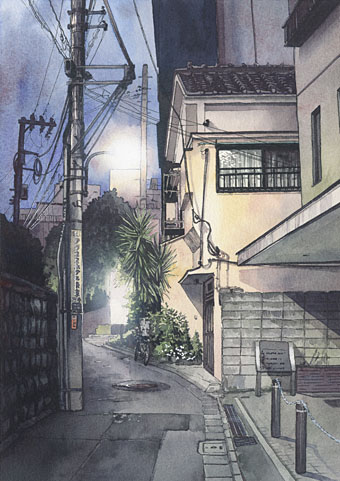
Tokyo at night, one of a series of watercolours depicting the back streets of the city by Mateusz Urbanowicz.

• “The experience of reading the book is something like watching Dr. Strangelove on one screen, Apocalypse Now on a second screen, and having both feeds interrupted by explicit gay erotica.” Bad Books For Bad People examines William Burroughs’ celebrated YA novel, The Wild Boys. The subject is a perennial one here, explored at length in this post.

• Lindsay Anderson’s The White Bus (1967), a surreal precursor to If…. and O Lucky Man!, will receive the high-quality BFI reissue treatment as part of the Woodfall Films portmanteau feature, Red, White and Zero.

• The Radiophonic Workshop have composed the score for Possum, a horror film by Matthew Holness. The main title theme is here. The film is released later next month.

Might I have written a sober affair, had I not been under the influence? Perhaps not—I have never needed tramadol to be attended by angels, or to feel demons pricking my feet. But I think of Vincent van Gogh, who looked at the world through the yellowish haze conveyed by digitalis, and grew enraptured by sunflowers and straw chairs, and I think of a glass prism through which a beam of white light passes and is split into a rainbow. What had been a single lucid idea had passed through the drugs I took and been dispersed into a spectrum of colours I had only half foreseen.

Sarah Perry on trying to write while besieged by bodily pain and prescription drugs

• Jacques Tourneur’s masterful MR James adaptation, Night of the Demon (1957), is released on region-free Blu-ray next month by Powerhouse Films.

• Mixes of the week: FACT mix 673 is The Bug presents PRESSURE, and XLR8R Podcast 561 by Zendid.

• The Space Shifters exhibition at the Hayward Gallery, London, messes with Adrian Searle‘s mind.

• Gregory Wells on queers, faeries and revolutionaries in the psychedelic movement.

• Wide Boys (1977) by Ultravox! | On Demon Wings (2000) by Bohren & Der Club Of Gore | Spoonful (2013) by Robert Plant and the Sensational Space Shifters