Weekend links 589

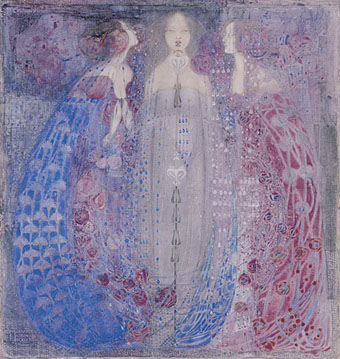
mackintosh.jpg

The Three Perfumes (1912) by Margaret Macdonald Mackintosh.

• “…we have empowered this monopoly to strike fear into the hearts of authors. And that may be unprecedented in history. Through our own complicity as consumers, their market share only grows.” Dave Eggers talking to Rachel Krantz about the dominance of Amazon, and his new novel, The Every.

• “People will readily flock to yoga and Pilates classes, but how many show up for soundscape therapy or take a sound-walk?” Bernie Krause on the healing powers of quietude, the Ba’Aka tribe, and Japanese forest bathing.

• “Difficulty is my drug of choice, I guess.” Dennis Cooper (again) talking to Troy James Weaver about his new novel, I Wished.

• At Wormwoodiana: Mark Valentine reviews Shadows of London by Jonathan Wood.

• Robert Fripp’s drive to 1981: Joe Banks on Discipline and the return of King Crimson.

• End times and rapture: Ken Hollings remembers Richard H. Kirk.

• Daniel Spicer on The Strange (Parallel) World of Miles Davis.

• Mix of the week: XLR8R Podcast 715 by Uffe.

• Steven Heller’s font of the month is Oposta.

Perfumed Metal (1981) by Chrome | Ode To Perfume (1982) by Holger Czukay | Perfume (2006) by Sparks
Eiko Ishioka album covers

ei01.jpg

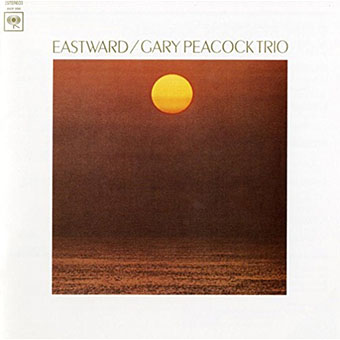
Eastward (1970) by Gary Peacock Trio. Photography by Hiroshi Asada, Tadayuki Naitoh.

Continuing an occasional series about artists or designers whose work has appeared on record sleeves. Also another jazz-related post which includes Herbie Hancock via the V.S.O.P. album.

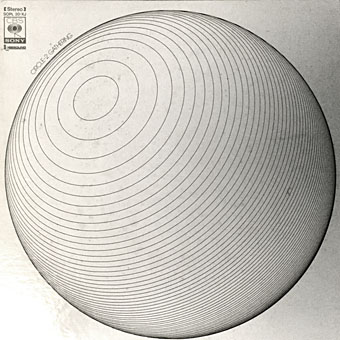
Eiko Ishioka is best known outside Japan for the costume designs she created for feature films, especially those in Francis Coppola’s Dracula, but she also had a parallel career as a graphic designer and art director, working with photographers and other designers on a large number of album covers. The examples here are a partial selection, many of which were created for East Wind, a label established by Nippon Phonogram to promote Japanese artists overseas.

ei02.jpg

Circle 2: Gathering (1971) by Circle. Design by Eiko Ishioka, Seiya Sawayama, Yoshio Nakanishi.

ei03.jpg

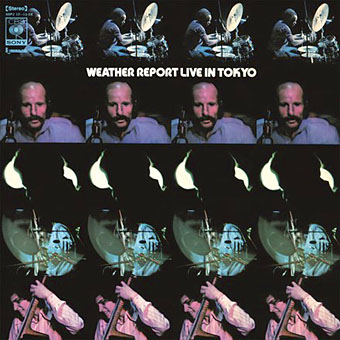
Weather Report Live In Tokyo (1972) by Weather Report. Design by Eiko Ishioka, Yoshio Nakanishi.

ei04.jpg

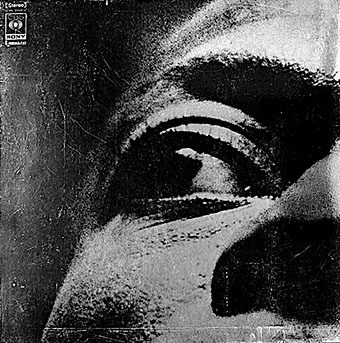
Miles Davis Story Vol. 2 (1972) by Miles Davis. Design by Eiko Ishioka, Yoshio Nakanishi. Photography by Columbia Records Photo Studio, Tadayuki Naitoh.

Black ink on silver foil, something that always looks impressive but doesn’t wear very well. This cover may have led to Ishioka’s work on Tutu (see below).

ei05.jpg

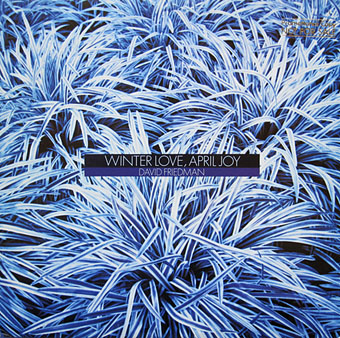
Winter Love, April Joy (1975) by David Friedman. Design by Eiko Ishioka, Motoko Naruse.

Continue reading “Eiko Ishioka album covers”

Weekend links 554

yokoo.jpg

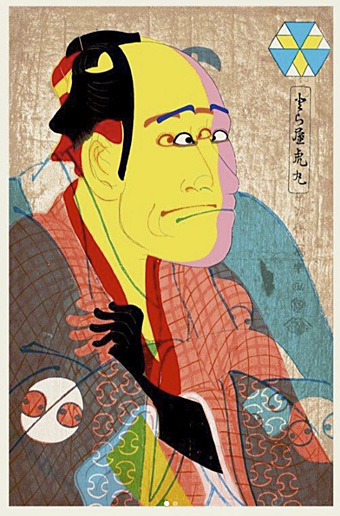
Tadanori Yokoo Emphasizes Deliberate Misalignment in Contemporary Woodblock Series.

• Another week, another Paris Review essay on Leonora Carrington. This time it’s Olga Tokarczuk exploring eccentricity as feminism. At the same publication there’s more eccentricity in Lucy Scholes‘ feature about the neglected novels of Irene Handl, a woman best known for the characters she played in many British films and TV dramas. I’ve long been curious about Handl’s writing career so this was good to see.

• “The denial of our participation in the world, [Fisher] implies—the disavowal of our desire for iPhones even as we diligently think anti-capitalist thoughts—is incapacitating. It leads to a regressive utopianism that cannot envision going through capitalism, but only retreating or escaping from it, into a primitive past or fictional future.” Lola Seaton on the ghosts of Mark Fisher.

• More ghosts: Paranormal is the latest collection of spooky, atmospheric electronica from Grey Frequency, “an audio document exploring extraordinary phenomena which have challenged orthodox science, but which have also grown and evolved as part of contemporary culture and a wider folkloric landscape.”

• “Items billed as THE BEST EVER can stop us cold, and even cause us to take them for granted, never reassessing them, as we instead gesture, often without thought, to where they sit in the corner, under a halo and backdrop of blue ribbons.” Colin Fleming on Miles Davis and Kind Of Blue.

• “Diaboliques and Psycho both achieve something very rare: a perfect plot twist but an unspoilable movie,” says Milan Terlunen.

• Richard Kirk returns once more as “Cabaret Voltaire” with a new recording, Billion Dollar.

• Even more Leonora Carrington: some of the cards from her Tarot deck.

DJ Food on Zodiac Posters by Simboli Design, 1969.

Kodak Ghosts (1970) by Michael Chapman | Plight (The Spiralling Of Winter Ghosts) (1988) by David Sylvian & Holger Czukay | The Ghosts Of Animals (1995) by Paul Schütze

Weekend links 533

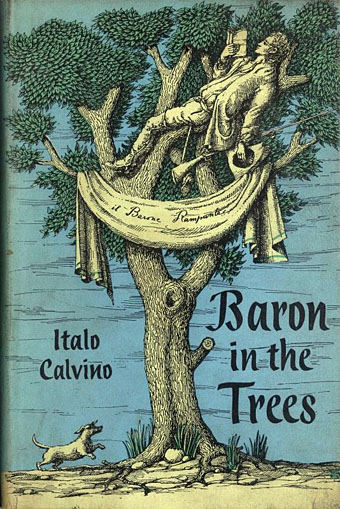
calvino.jpg

Cover art by Domenico Gnoli, 1959.

• After decades of ignoring the output of Tangerine Dream it feels strange to be interested in the group once again; musicians you’re compelled to dismiss seldom manage to recapture your attention later on. Stranger still when the group itself is now completely detached from its origins following the death of founder Edgar Froese in 2015. But it was Froese’s departure, and with it the disappearance of many years of poor aesthetic choices, that helped renew my interest. At FACT the group take up the against-the-clock challenge in which musicians are given 10 minutes to create a new piece of music.

• “We were both working at Sounds at the time and we thought that instead of listening to these terrible ’80s records like Haircut 100 we’d go off and look for Montague Summers books, so off we went!” Savage Pencil (Edwin Pouncey) on his enthusiasm for Summers, Austin Spare and Louis Wain.

• At the Paris Review: Valerie Stivers bakes pies for Italo Calvino. I’d like to see someone create a series of dishes based on every location from Invisible Cities. Elsewhere there’s William N. Copley on Joseph Cornell: “No art historian ever prophesied the coming of the box.”

• On the experimental realism of an eccentric Russian Anglophile: “For Sigizmund Krzhizhanovsky, strangeness was a matter of perspective,” says Caryl Emerson.

Nova Reperta: John Boardley on a series of 16th-century prints showing new inventions.

• RIP David Graeber. From 2014: “What’s the point if we can’t have fun?

• “Damn your blood”: John Spurr on swearing in early modern English.

• At Wormwoodiana: Mark Valentine maps the esoteric in Britain, 1920.

• At Dennis Cooper’s: Seijun Suzuki Day.

Big Fun/Holly-wuud (Take 3) (1972) by Miles Davis | Funtime (1977) by Iggy Pop | Funny Time Of Year (2002) by Beth Gibbons and Rustin Man

Miles and Miles

discs.jpg

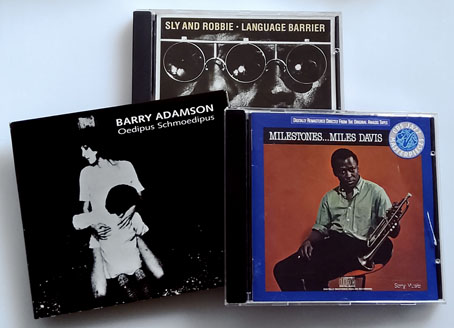
I listen to music all the time when I’m working but it’s not always a good idea to give new music an airing when you’re also concentrating on new work. What often happens on these occasions is that the album will fail to make an impression and end up being laid aside in favour of more familiar sounds, which is what happened to the copy of Milestones (1958) by Miles Davis that I bought last year in a charity shop. Listening to it again this week provoked a “Wow!” response as well as making me realise that I’d heard the tune of the fourth track, Miles, somewhere before. Miles, or Milestones as it’s confusingly also known, is covered by Barry Adamson on his 1996 album, Oedipus Schmoedipus, a simpler version but still jazzier than everything else on the album. I’d always suspected that Adamson was referring to Miles Davis with the title but since I’d never looked at the writing credits until this week I didn’t make the connection. Davis had a habit of naming new pieces of music after people he knew—John McLaughlin, Billy Preston, Mtume, producer Teo Macero, etc—so Miles (as opposed to Milestones) can be taken as an early example of the habit even though it refers to him and also doubles as a reference to measurement rather than a person.

The same title, but not the same piece of music, appears on a 1985 album by Sly & Robbie, Language Barrier, the track in this case being a renamed reworking of Black Satin from Miles Davis’s On The Corner album. Language Barrier in turn was produced by Bill Laswell who later remixed the original Black Satin for his excellent compilation/reconstruction of Davis’s electric period, Panthalassa, and who may have suggested that Sly & Robbie record their own version of the Davis piece. Whatever its origin, Miles (Black Satin) is credited to “B. Laswell, M. Davis, R. Shakespeare & S. Dunbar” which brings us back to Barry Adamson whose Miles has a similar credit at Discogs (but not on my CD…) although Laswell is now (bizarrely) “William Laswell”. I still don’t know what connection Laswell or Sly & Robbie have with Adamson’s track, unless it’s a Discogs error or contains a sample I’ve missed, but the ghost of M. Davis might at least be satisfied that he was influencing popular music after so many years on the outside looking in. Always miles ahead. And that’s the title of another Davis album I’ve yet to acquire…