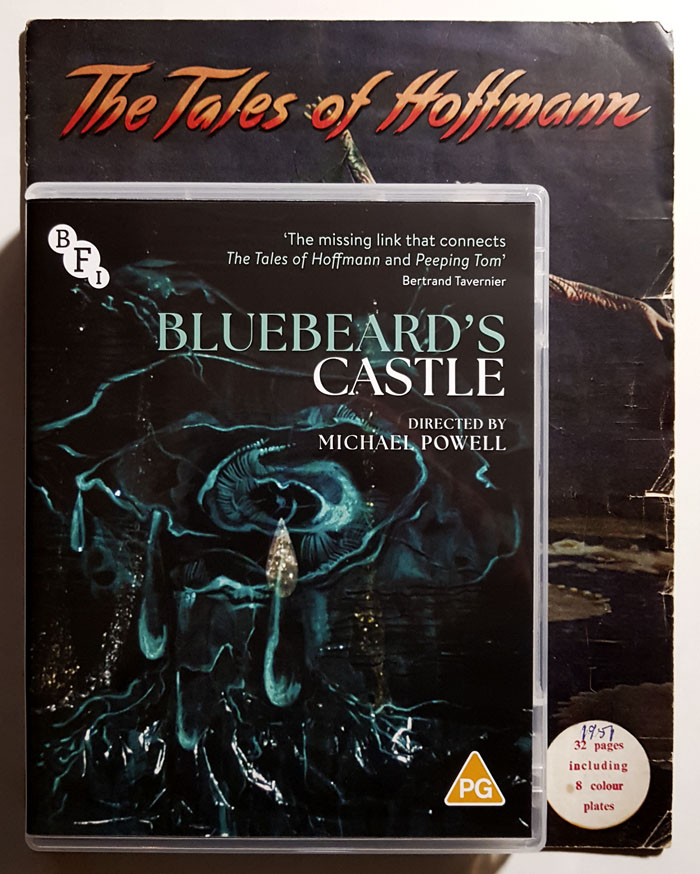
Powell’s Bluebeard on blu-ray

bluebeard1.jpg

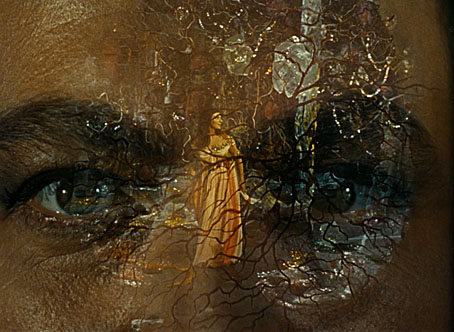
My film viewing at the weekend included a return visit to Michael Powell and Emeric Pressburger’s opéra fantastique, The Tales of Hoffmann, followed by the new blu-ray restoration of Powell’s Bluebeard’s Castle. This is the third time I’ve written about Powell’s film of the Bartók opera, the first occasion being a “When will I get to see this?” post, the second a review of a VHS copy which had turned up on YouTube. The new release, which is the film’s debut appearance on disc, is a restoration by the BFI under the supervision of Thelma Schoonmaker and Martin Scorsese.
bluebeard2.jpg

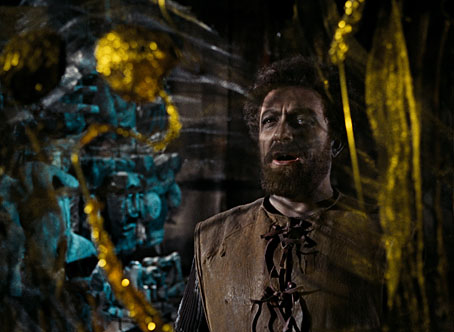
Norman Foster (Bluebeard).

Powell directed the hour-long dramatisation for the German TV channel Süddeutscher Rundfunk in 1963, at a time when his career was in the doldrums following the critical outrage provoked by the release of Peeping Tom. The production was a smaller one than he was used to but it was still shot on 35mm which has now been polished to a breathtaking degree, revealing rich shadows, deep colours and a profusion of glittering detail. (See this clip.) The audio track remains monophonic but the sound is a great improvement on the VHS version. Seeing the latter was gratifying after so long a wait but was also an underwhelming experience. The restoration proves once again how unfair it is to judge filmmakers from a low-grade copy of their work that’s been thrown onto the internet.
bluebeard3.jpg

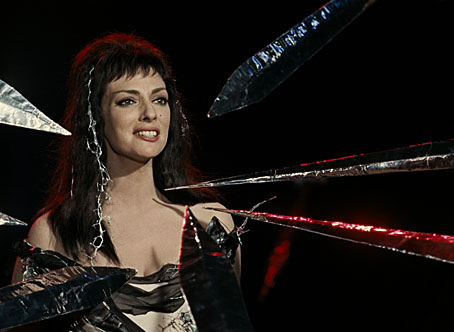
Ana Raquel Satre (Judith).

Bluebeard’s Castle (or Herzog Blaubarts Burg, to use the film’s German title) wasn’t a project that Powell inaugurated. Hein Heckroth, the production designer on many of Powell and Pressburger’s colour features, had been working for German TV since the late 1950s, and suggested to singer/producer Norman Foster that Powell might be interested in directing the film. The presence of Heckroth’s weirdly Expressionist designs give Bluebeard’s Castle a continuity with the extended ballet sequence in The Red Shoes and the “Giulietta” episode of The Tales of Hoffmann; all three stories share a dream-like atmosphere whose grading to nightmare is enhanced by Heckroth’s decors. I’ve often wondered whether the strangeness of some of Heckroth’s set designs, whose aesthetics extend to Dalínean Surrealism, were a factor in the frequent grumblings of distaste expressed by British critics for Powell and Pressburger’s films even before Powell made Peeping Tom. The first film that Powell worked on was The Magician in 1926, Rex Ingram’s adaptation of the Somerset Maugham novel, and a film which is at its best in its moments of visual excess. Powell’s films are valued today for their own visual excess but this quality hasn’t always been encouraged in British cinema, as Ken Russell later discovered. Favourable critics like Ian Christie often point to this as part of the “European” sensibility of Powell and Pressburger’s oeuvre, something which is present even when the subject matter is very English. Pressburger was a Hungarian emigré, while Powell met Ingram when he was living in the south of France; the production designers on all the major P&P films, Alfred Junge and Hein Heckroth, were both German, and the films themselves, especially The Red Shoes and The Tales of Hoffmann, feature a host of different nationalities. Watching Bluebeard’s Castle again I was reminded of Italian horror cinema, especially the films of Mario Bava. When you combine the artificiality of Heckroth’s sets with the Gothic story of a woman imperilled by a powerful aristocrat, plus the resemblance of Ana Raquel Satre to Barbara Steele, the whole thing assumes a very Bavaesque flavour.
bluebeard4.jpg

On a musical level I much prefer Bartók to Offenbach, (although Offenbach’s famous Barcarolle is always worth hearing) so I’m pleased that this minor work has been treated to the same restorative care as The Tales of Hoffmann. The 1988 version of Bartók’s opera directed for the BBC by the late Leslie Megahey remains my favourite filmed Bluebeard even though it lacks Powell’s flamboyance; Megahey’s film has more gravitas, and the direction, performances and musical recording are better. But seeing Powell’s film again revealed nuances I’d missed before, like the sustained shot near the end when Judith seals her fate by asking for the key to the forbidden room. It also makes a change hearing the whole thing sung in German, a language I can understand in parts. Bluebeard’s Castle is a further example of Powell’s idea of a “composed film”, a work that would combine all the dramatic arts. (Or almost all—this one lacks dance.) As I said ten years ago, it may be minor compared to the films that he made with Emeric Pressburger but it offers a more satisfying coda to his career than his final features.

Previously on { feuilleton }
Bluebeard’s Castle, 1981
Powell’s Bluebeard revisited
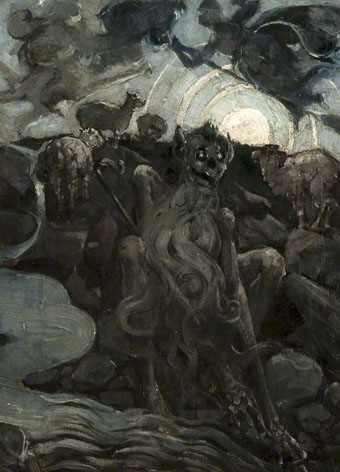
Joseph Southall’s Bluebeard
Leslie Megahey’s Bluebeard
Powell’s Bluebeard
The Tale of Giulietta

Weekend links 700

demorgan.jpg

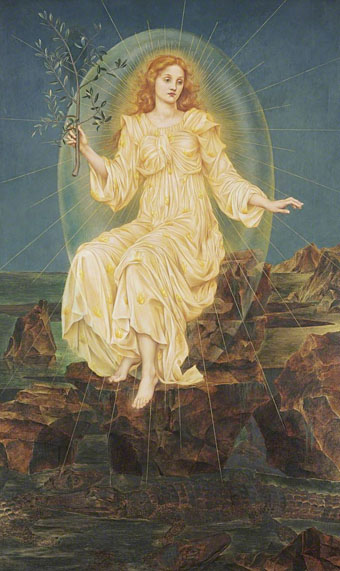
Lux in Tenebris (1895) by Evelyn De Morgan.

• “NASA celebrates the worm logo designer, Richard Danne“. Until I read this story (and this one) I wasn’t aware that the NASA logos were known as The Meatball and The Worm.

The Red Shoes: behind the scenes of the classic Powell and Pressburger film – in pictures. Related: Kings of the movies: Martin Scorsese on Powell & Pressburger.

• The 700th weekend post happens to arrive on Alan Moore’s 70th birthday. Many happy returns to the Northampton Magus.

Fundamentally, we face a choice. Either:

• it’s a coincidence that, of all the possible values that the finely tuned constants of physics may have had, they just happen to have the right values for life;

or:

• the constants have those values because they are right for life.

The former option is wildly improbable; on a conservative estimate, the odds of getting finely tuned constants by chance is less than 1 in 10-136. The latter option amounts to a belief that something at the fundamental level of reality is directed towards the emergence of life. I call this kind of fundamental goal-directedness ‘cosmic purpose’.

As a society, we’re somewhat in denial about fine-tuning, because it doesn’t fit with the picture of science we’ve got used to. It’s a bit like in the 16th century when we started getting evidence that our Earth wasn’t in the centre of the universe, and people struggled to accept it because it didn’t fit with the picture of the universe they’d got used to. Nowadays, we scoff at our ancestors’ inability to follow the evidence where it leads. But every generation absorbs a worldview it can’t see beyond. I believe we’re in a similar situation now with respect to the mounting evidence for cosmic purpose. We’re ignoring what is lying in plain view because it doesn’t fit with the version of reality we’ve got used to. Future generations will mock us for our intransigence.

Philip Goff, professor in philosophy at Durham University, making an argument for cosmic purpose

• At Spoon & Tamago: Exploring Japanese Hell through art from the 12th to 19th century.

• New music: Turning The Prism by Ben Frost, and Sanctuary Of Desire by Steve Roach.

• Mix of the week is DreamScenes – November 2023 at Ambientblog.

• DJ Food looks at Tomi Ungerer’s Electric Circus posters.

• At Dennis Cooper’s: Alain Resnais Day.

Strange Flowers visits the Villa Stuck.

Diet Of Worms (1979) by This Heat | Opera Of Worms (1981) by Van Kaye & Ignit| Wormhole (2002) by Cliff Martinez

Weekend links 696

hornel.jpg

The Brownie of Blednoch (1889) by Edward Atkinson Hornel.

• “None of the theatrics of most films are available in Bresson, because in some ways Bresson’s characters, along with Dreyer’s and Cassavetes’s are the most inscrutable in motion pictures—maybe since their creators are the best believers in suggestion.” Greg Gerke explores the later films of Robert Bresson.

Iizuna Fair is a short animated film by Sumito Sakakibara that will be viewable at Vimeo for the next few months.

• Occult scholar Mitch Horowitz returns to the Aquarium Drunkard podcast for a wide-ranging discussion.

Marty [Scorsese] went to the Edinburgh Film Festival in 1974 to collect an award for Alice Doesn’t Live Here Anymore. They asked him who he wanted to present it to him, and he said Michael Powell. They had no idea who he was. No one did, but I found an American doing publicity for Kubrick’s 2001 who knew where he was. He introduced Michael to Marty at a lunch where Marty bombarded Michael with questions about how he did this and how he did that. Michael writes in his autobiography that the blood started to run in his veins again, it had been so long that he and Emeric had been living in oblivion.

Marty brought Michael to America, where we had already started working on Raging Bull. Marty had been educating me about Powell and Pressburger’s films, sending me home with VHSs. I had fallen in love with them, and then he said that Michael Powell was coming for dinner one night and asked if I would like to meet him. That’s how we met and eventually became involved, all thanks to Marty.

Thelma Schoonmaker remembering her husband, Michael Powell, and discussing the ongoing restoration of his films. Good to hear that plans are afoot to resurrect Gone to Earth

Whole Earth Index is a near-complete archive of the Whole Earth Catalog and its related publications.

• At the Daily Heller: David Byrd, the East Coast’s psychedelic poster man.

• See the winners of the Nikon 2023 Photomicrography Competition.

• New music: Golden Feelings by Better Weather.

Mikrostruktury (1963) by Wlodzimierz Kotonski | La Chasse Aux Microbes (1977) by Michael Bundt | Microscopic (1995) by Gas

Into the Midnight Underground

midnight01.jpg

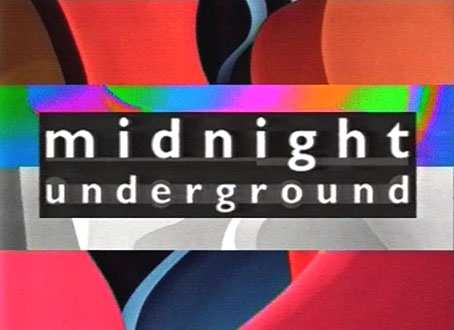
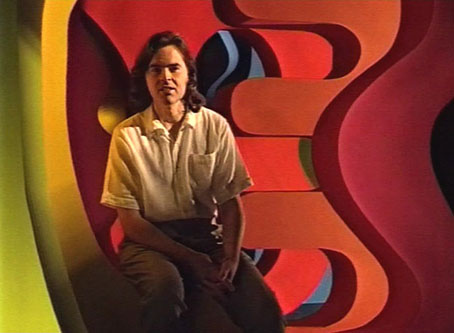
Browsing Vimeo recently I found a film by Anna Thew, Cling Film, which I remembered seeing years ago on Midnight Underground, a TV series devoted to avant-garde cinema. The series was broadcast by Channel 4 (UK) for eight weeks in 1993, with each episode being screened shortly after midnight. The presenter was the always reliable Benjamin Woolley, sitting before a backdrop resembling one of Verner Panton’s psychedelic environments from where he introduced the cinematic offerings, an eclectic blend of avant-garde and experimental films, unusual dramas plus a couple of animations. Episodes ran for around an hour, with each installment following a different theme. The films were a mix of the old and the new: “classics” (for want of a better term) of underground cinema set alongside more recent works. This was very much a television equivalent of the screenings of avant-garde cinema which Film and Video Umbrella had been touring around Britain’s arthouses since the mid-1980s; one of the founders of FVU, Michael O’Pray, is thanked in the series credits. Midnight Underground was so tailored to my interests at the time it was easy to feel like this was being screened for my benefit alone. I taped everything as it was broadcast but I never got round to digitising all the episodes, so that many of the films shown there, Cling Film included, I haven’t seen for a long time.

midnight02.jpg

Benjamin Woolley.

The discovery of Anna Thew’s film set me wondering whether it would be possible to replicate the contents of Midnight Underground via links to various video sites. Since this post exists, the answer is obviously yes, or almost… Of the 44 films shown in the series only 3 are currently unavailable, with one more being limited to an extract and another as pay-to-view. This was a much better result than I expected, especially for works with such a limited appeal. The majority of the films shown in the series were being screened on British TV for the first time, also the last time for most of them. In 1993 Channel 4 was still maintaining its original brief, offering a genuine alternative to the programming on the other three terrestrial channels. As I’ve often complained here, this didn’t last; the underground remained underground. Woolley’s series was a brief taste of a televisual world where the concept of diversity could apply to form and content as well as identity. It’s a world the corporate channels will never show you, one you have to find for yourself.

* * *

1: Strange Spirits
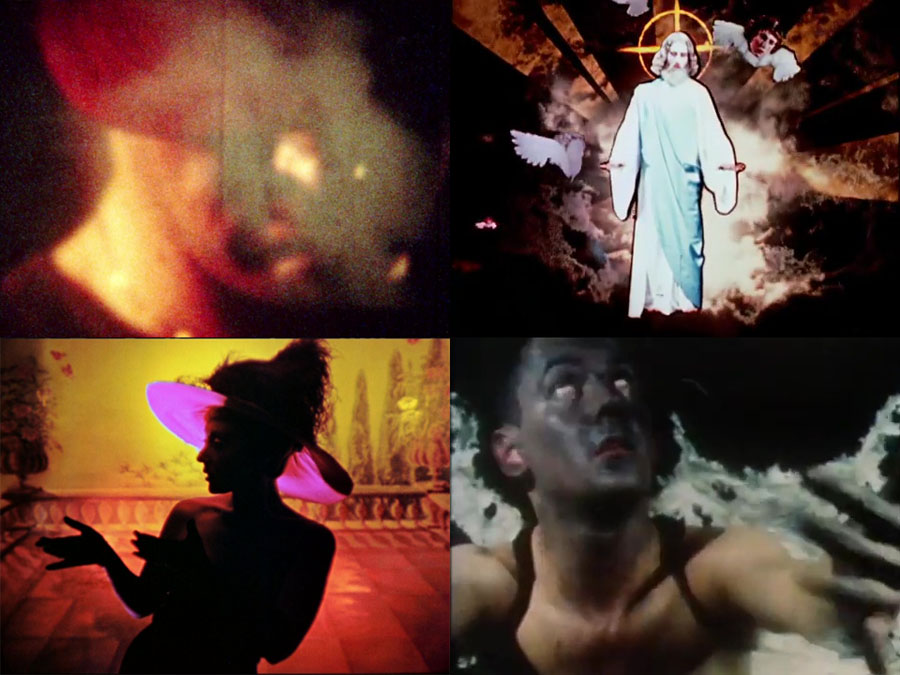
The opening episode shows why I felt they were broadcasting this for me alone. Derek Jarman’s grainy film of a Throbbing Gristle performance is probably the first (and only?) time the group appeared on British TV. This was the first surprise. The second one was Kenneth Anger’s film being shown with its Janácek score. I’d seen this at an FVU screening a couple of years before with its ELO soundtrack, the so-called “Eldorado Edition”, which Anger later discarded. As for Daina Krumins’ weird and creepy religiose short, I expected this one to be unavailable but the director now has several of her films on YouTube. Don’t miss her even-weirder animated slime moulds, Babobilicons. The angel in Maggie Jailler’s film is artist (and Jarman/TG associate) Cerith Wyn Evans.

midnight03.jpg

TG: Psychic Rally in Heaven (Derek Jarman, 1981)
The Divine Miracle (Daina Krumins, 1973)
Inauguration of the Pleasure Dome (Kenneth Anger, 1954)
L’ange frénétique (Maggie Jailler, 1985)


2: Music for the Eye and Ear
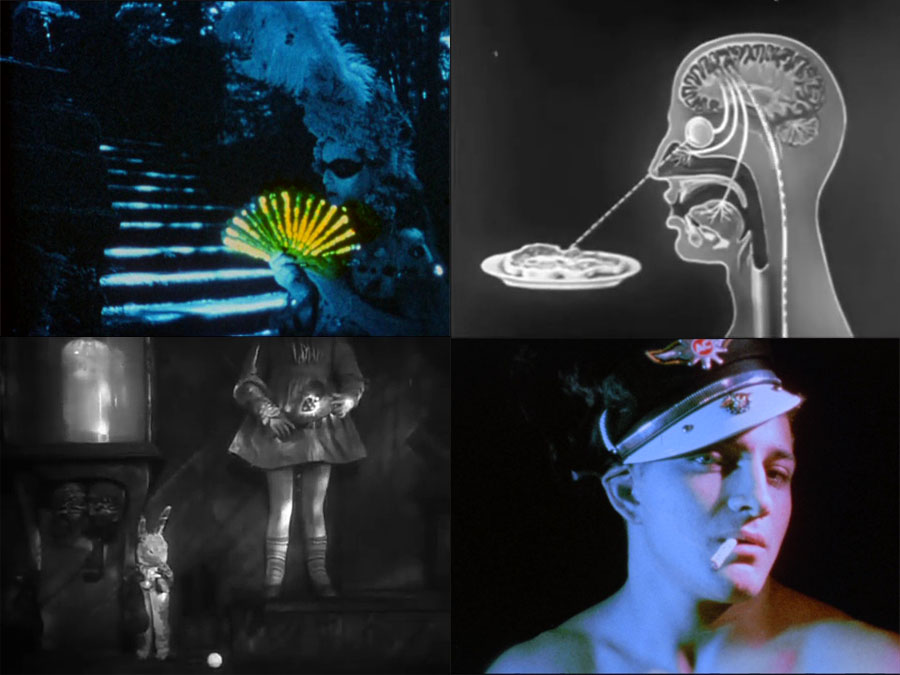
Bruce Conner’s films are continually elusive on the internet, especially those made to accompany music by Devo and Eno & Byrne. The version of Mongoloid linked here differs slightly from the original but it’s essentially the same film. Versailles II is taped from the Midnight Underground broadcast, and includes Benjamin Woolley’s introduction.

midnight04.jpg

Eaux d’artifice (Kenneth Anger, 1953)
Mongoloid (Bruce Conner, 1978)
Versailles II (Chris Garratt, 1976)
Stille Nacht II: Are We Still Married? (Quay Brothers, 1992)
All My Life (Bruce Baillie, 1966)
Scorpio Rising (Kenneth Anger, 1964)


3: New Sexualities
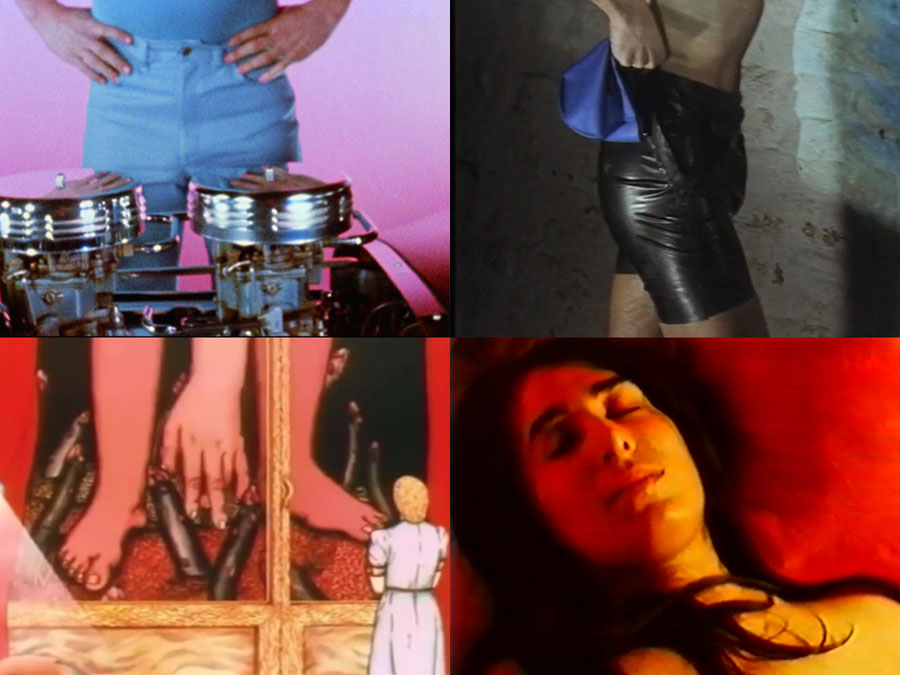
Stephen Dwoskin’s film is the one that shows a close-up of a woman’s face during the act of masturbation. This is paralleled later in the series by Antony Balch’s masturbatory self-portrait in Towers Open Fire. Cling Film is all about safe sex, and was broadcast in a slightly amended form to avoid being too explicit. The version on Vimeo is uncensored.

midnight05.jpg

Kiss (Chris Newby, 1992) (no video)
Kustom Kar Kommandos (Kenneth Anger, 1965)
Cling Film (Anna Thew, 1993)
Stain (Simon Pummell, 1992)
Asparagus (Suzan Pitt, 1979)
6/64: Mama und Papa (Materialaktion Otto Mühl) (Kurt Kren, 1964)
Moment (Stephen Dwoskin, 1969)


4: London Suite
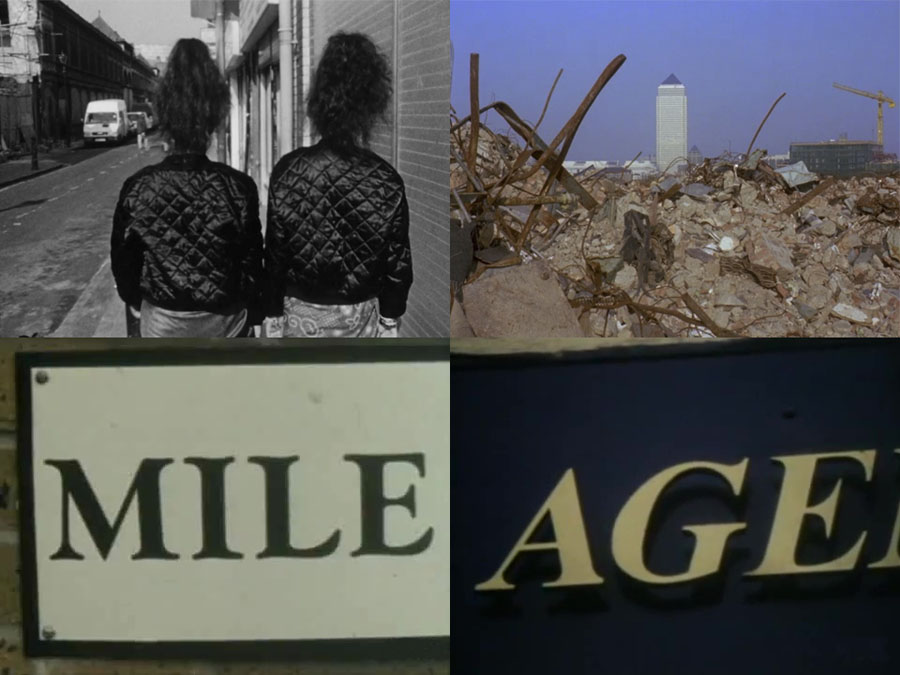
Sundial and Mile End Purgatorio have both appeared here before as a result of my seeing them on Midnight Underground.

midnight06.jpg

Latifah and Himli’s Nomadic Uncle (Alnoor Dewshi, 1992)
Sundial (William Raban, 1993)
The London Story (Sally Potter, 1987) (pay-to-view)
Mile End Purgatorio (Guy Sherwin, 1991)
London Suite (Vivienne Dick, 1989) (no video)


Continue reading “Into the Midnight Underground”

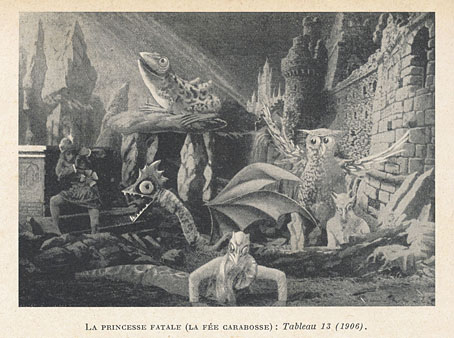
Georges Méliès, Mage

melies01.jpg

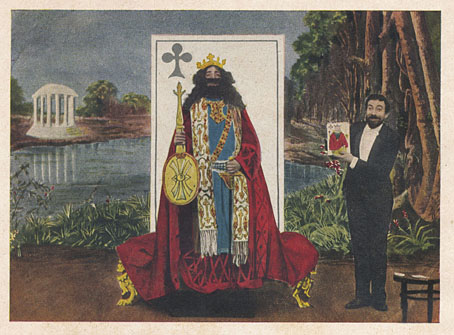
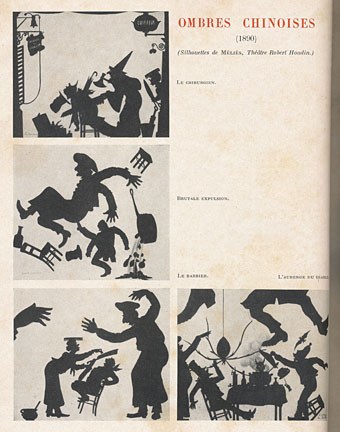
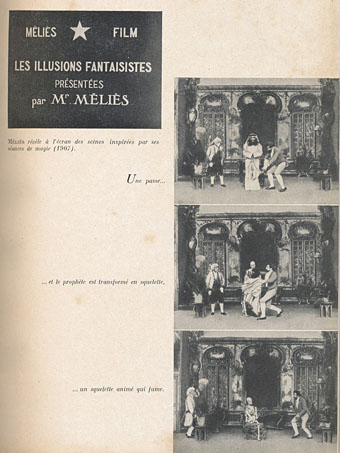
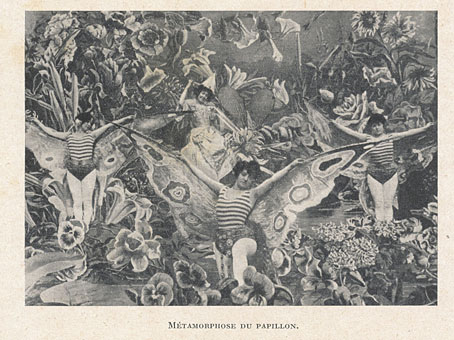
Georges Méliès: magician. Yes, indeed. I was watching Martin Scorsese’s Hugo again recently, a film I found more enjoyable the second time around mostly for the Méliès side of the story. The flashback to the Star Films studio offers in miniature a history that this book delivers in detail. Georges Méliès, Mage (1945) by Maurice Bessy and Joseph-Marie Lo Duca is a copiously illustrated guide to Méliès’ entire career, beginning with his early years as a conjuror and a creator of the kinds of theatrical fantasies that formed the basis for his first films. The text is in French throughout but there’s a wealth of pictorial material, with many production sketches and drawings that show how some of his more complex effects were achieved.

melies02.jpg

One of the things I’ve always found attractive about Méliès’ films is the way they resemble 19th-century illustrations brought to life. The same can be said about some of the later Hollywood productions, especially the Douglas Fairbanks Thief of Bagdad, but they lack the overt theatricality of Méliès. For a taste of those hand-tinted marvels, go here.

melies03.jpg

melies04.jpg

melies05.jpg

Continue reading “Georges Méliès, Mage”