Reversible men and Lipský’s Happy End

overloaded.jpg

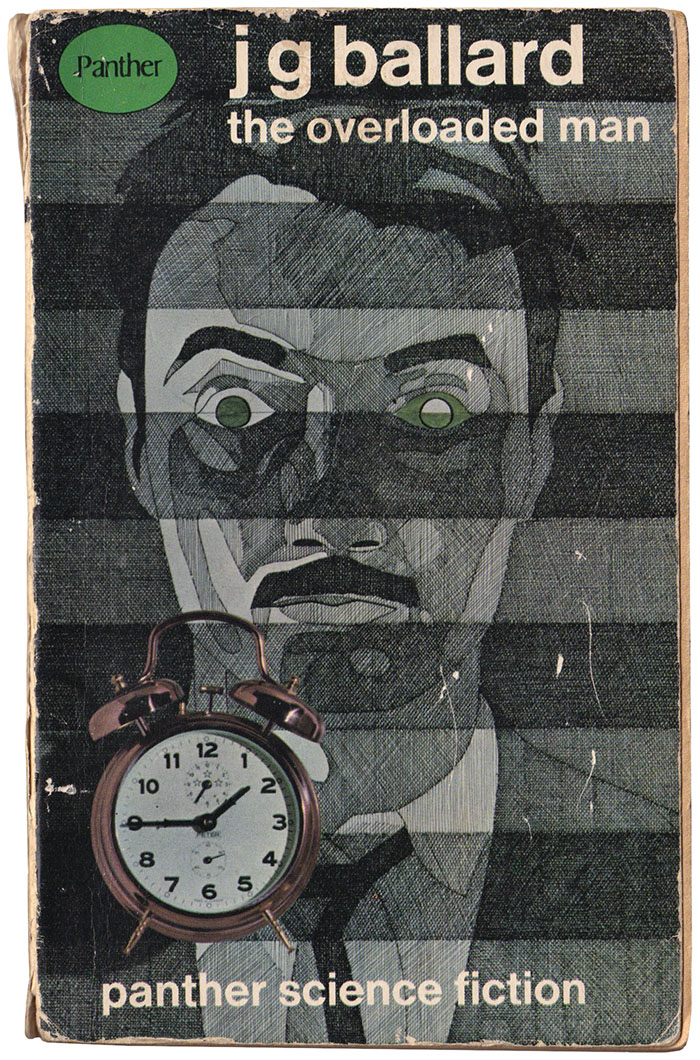
A paperback ravaged by the passage of time. Art by Ray Ginghofer.

Time of Passage, a piece of short fiction by JG Ballard, received its first publication in Science Fantasy magazine in February, 1964. The piece was subsequently collected in two paperbacks, The Impossible Man and Other Stories (Berkley Medallion, 1966), and The Overloaded Man (Panther, 1967). Time of Passage is more of a biographical sketch than a story, describing in reverse the life of a stockbroker, James Falkman, a man “born” in 1963 by being dug out of a grave while surrounded by tearful relatives. Ballard goes on to describe the major events of Falkman’s life, from retirement to career to marriage, charting the man’s gradual descent into youth and eventual infant helplessness. The story ends with Falkman bheing taken to a hospital in 1900 for a final encounter with his mother, his “death” in Ballard’s words.
venus.jpg

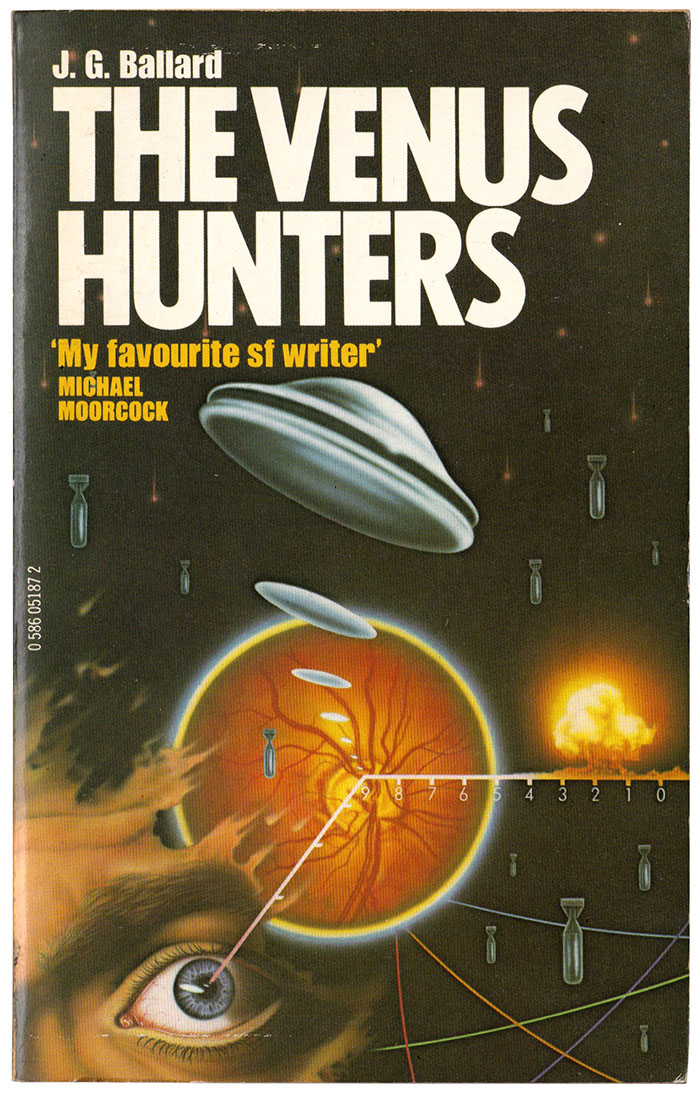
A revised reprint of The Overloaded Man, 1980. The artwork by Peter Gudynas may be the only Ballard cover to feature flying saucers.

There may be earlier literary examples of the life described in reverse but Ballard’s is the earliest one I know of. I’m thinking here of explicit reversals of human circumstance, as opposed to the more common reverse chronology whereby an otherwise forward-flowing story is chopped into episodes which are then presented in a reversed order. Philip K. Dick’s Counter-Clock World (1967) is a novel-length extrapolation of Ballard’s concept, set in a future where time has started to run backwards, and the dead are being born again in cemeteries. The 1960s saw a peculiar spate of fiction along these lines; to paraphrase Charles Fort, it must have been time-reversal time. In an earlier Ballard story, Mr. F is Mr. F, the titular character finds himself aging in reverse while time continues to run forward for his wife and the world outside their home; in An Age (1967) by Brian Aldiss scientific experiments reveal that time is actually moving in reverse despite our perceptions to the contrary.
reversible.jpg

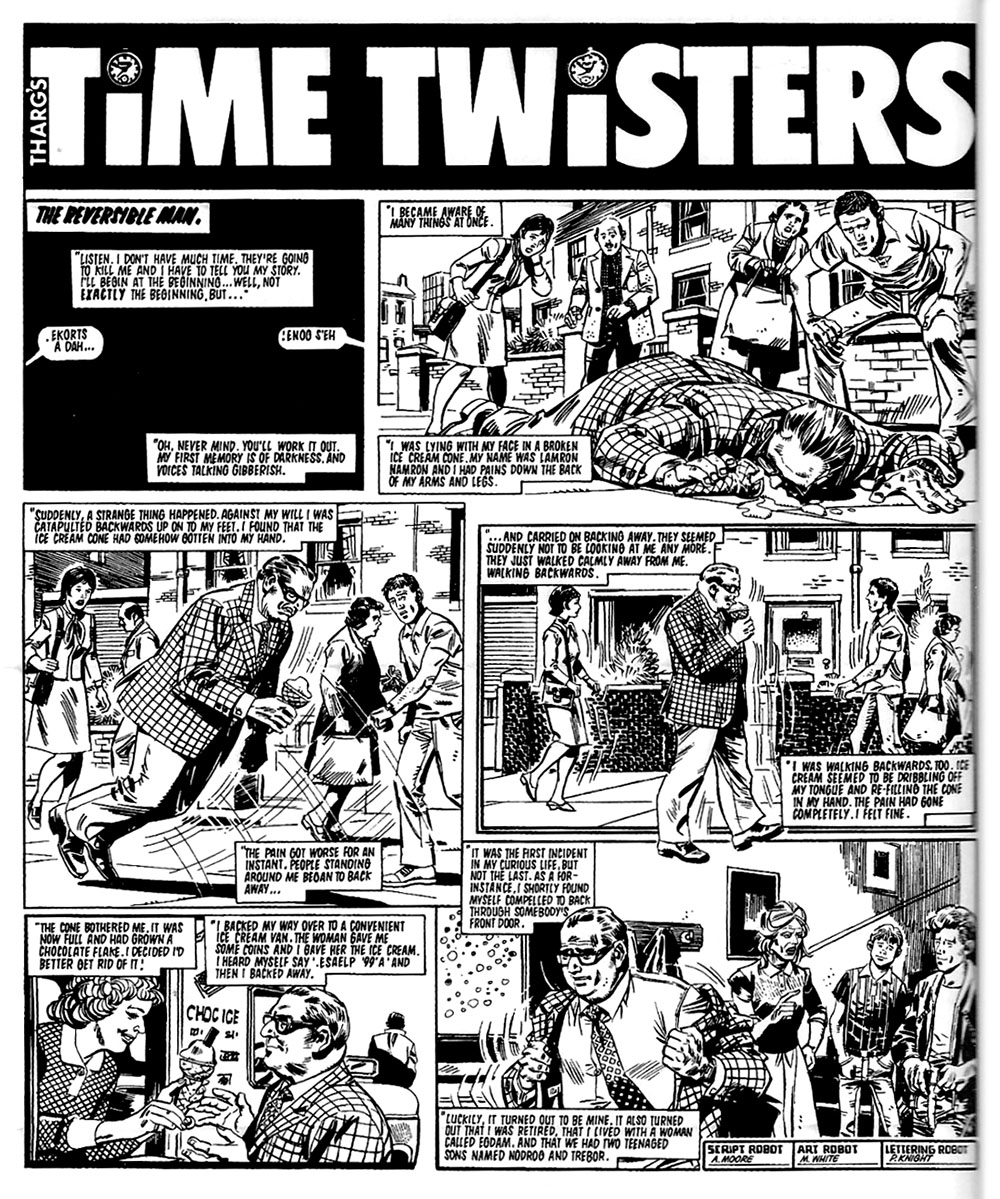
Art by Mike White.

Alan Moore would no doubt have been familiar with one or more of these stories when he wrote The Reversible Man for 2000 AD in 1983, a four-page strip which shows the life of an ordinary man from death to birth. Moore freshens the concept a little by the use of first-person narration. The most well-known treatment of the idea is Time’s Arrow by Martin Amis, a novel whose structure was taken by some reviewers as wholly original even though Amis said he was inspired by a passage in Kurt Vonnegut’s Slaughterhouse-Five. I’ve always felt Amis was being evasive on this point; he was very familiar with Ballard’s fiction, he interviewed Ballard and reviewed his novels on several occasions. Anyone with this much interest in Ballard’s work would have read Time of Passage in one of its many reprintings.
happy-end.jpg

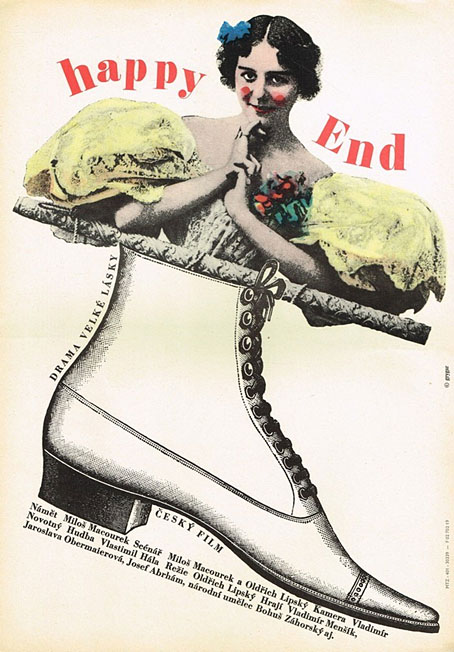
Design by Milan Grygar.

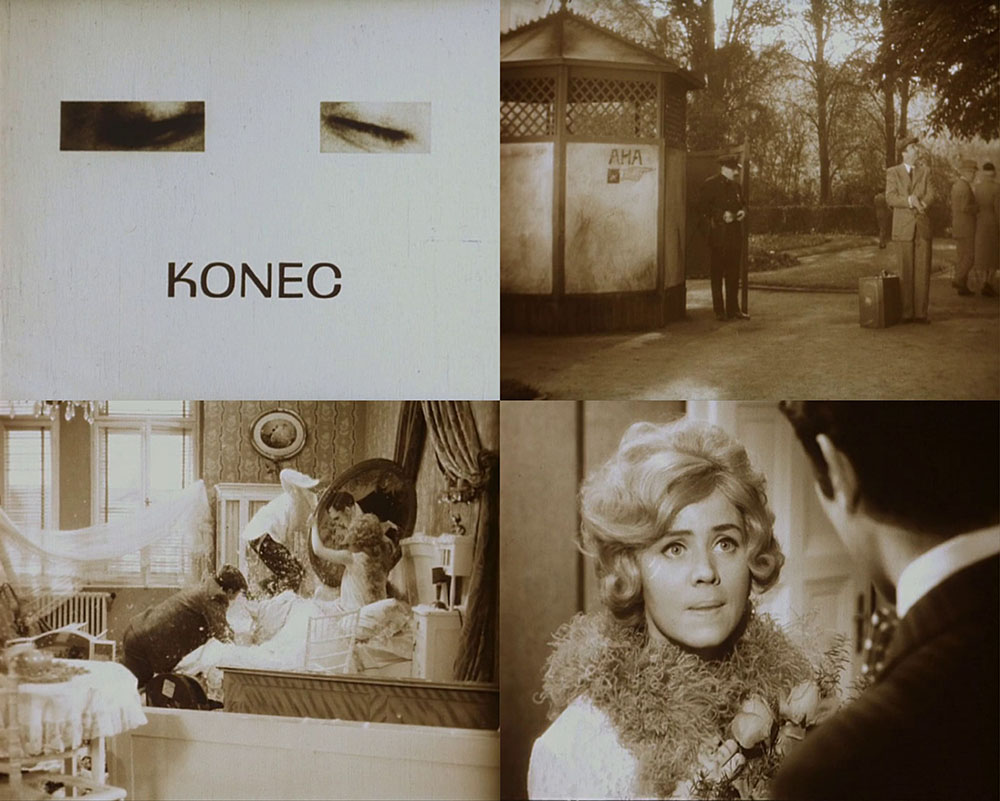
When it comes to authorial influence it seems unlikely that Czech film-maker Oldřich Lipský could have been influenced by Ballard or Dick’s time-reversals, which makes the appearance of Happy End in 1967 all the more remarkable. Lipský’s feature film, which I watched last week, is essentially Ballard’s death-to-life narrative played for its comic potential, with the film itself running in reverse for much of the time. Happy End opens with a title card in Czech—”Konec” (“The End”)—before presenting the “birth” of its protagonist by means of a guillotine. The decapitated head of Bedřich Frydrych (Vladimír Menšík) is attached to his body, after which the guards lead him (backwards) to the place described by his cheerful voiceover as a school (aka prison) where he says he’s being prepared for life in the outside world. Before he sets off to his waiting apartment the police give him a suitcase containing the body of his wife, Julie (Jaroslava Obermaierová), the pieces of which he assembles in the bath in his apartment. Julie is “revived” when Frydrych pulls an axe from her forehead, after which Julie’s lover, Ptáček (Josef Abrhám), makes his first arrival, jumping backwards into the bedroom through the window.
he1.jpg

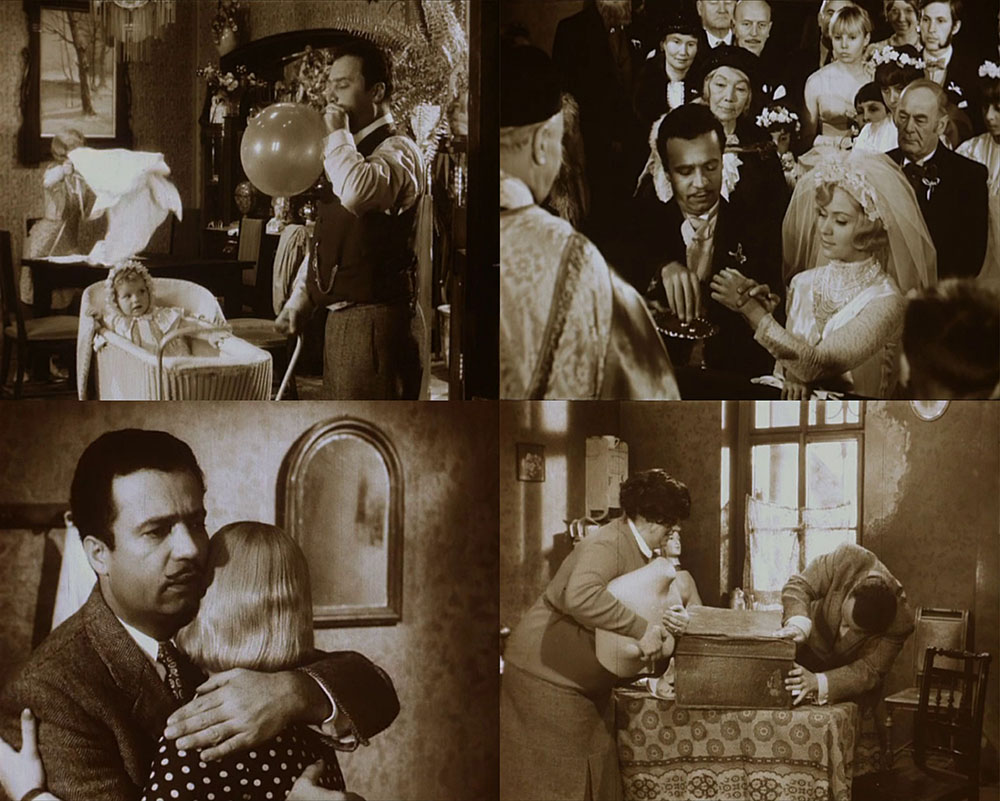
The love-triangle between Frydrych, Julie and Ptáček forms the bulk of the story, and also the basis for much of the film’s black humour. One of the hallmarks of the reversed biography is ironic reinterpretation, something that Amis makes a substantial meal of in his novel. In many cases it’s easier to do this with film than it is with words: a fight between Frydrych and Ptáček becomes an energetic “tidying up” of the apartment, with the cuckolded husband and the wife’s lover reassembling broken furniture and clearing away all the signs of destruction. Happy End is a long procession of these reversals, accompanied by Frydrych’s voiceover narration which persists in giving any tragic and difficult moments a positive gloss. Most of them, anyway. A substantial win at the racetrack becomes a negative incident when the events are played in reverse. But the loss of money is offset by Frydrych and Julie’s young daughter who pulls fresh banknotes out of an impromptu fire on the kitchen floor.
he2.jpg

For non-Czech speakers the humour and invention of Happy End is undermined by the effort required to keep up with the film’s frenetic pace (many of the scenes are speeded-up as well as running in reverse) while reading subtitles which reinterpret everything you’re seeing on the screen. My own viewing was further compromised by amateurish subtitles, but this is all the more reason to watch it again. Second Run have recently released Happy End as a region-free blu-ray with “new and improved English subtitle translation”. This is the second Lipský film I’ve watched to date (thanks, Jay!). I’ll be looking for more.

Previously on { feuilleton }
Art on film: Je t’aime, Je t’aime

Weekend links 125

cme.jpg

Coronal Mass Ejection from the surface of the Sun, August 31st, 2012.

• “Most of the main parts were recorded in a single day using Vangelis’s famous technique: try to play as many synths as possible at once.” Simon Drax on the prolific musical output of Zali Krishna. The new Krishna opus is Bremsstrahlung Sommerwind, free to download at the Internet Archive.

• The Northants International Comics Expo (N.I.C.E.) opens on September 22nd. Among the many attendees there will be Mr Alan Moore making his first convention appearance since 1987.

• “Isolated for one night in a boat overlooking the Thames, Geoff Dyer explores representations of reality through the lens of Joseph Conrad’s Heart of Darkness.”

Now seems the right time to revisit this secret archive of public broadcasting. It’s an antidote to the celebrity-led, format-driven nature of so many arts documentaries made today. It shows that it’s possible to produce TV that is both populist and experimental. And it also refutes the cliché that the 1970s was a decade only of crisis and downturn. “Feminism, political theatre, Ways of Seeing: I wasn’t thinking, ‘what a terrible time’. It was very dynamic, activist, political. Creatively it was very exciting. Yet all they show on those television retrospectives are episodes of Top of the Pops.”

Sukhdev Sandhu talks to Mike Dibb, the director of Ways of Seeing.

• From 1999: Colm Tóibín reviews A History of Gay Literature: The Male Tradition by Gregory Woods.

What We See: a song by Julia Holter & Nite Jewel with a film by Delaney Bishop & Jose Wolff.

Rick Poynor on The crash test dummy: from subcultural fringes to pop culture mainstream.

In his 1973 book on Joyce, Joysprick, Burgess made a provocative distinction between what he calls the “A” novelist and the “B” novelist: the A novelist is interested in plot, character and psychological insight, whereas the B novelist is interested, above all, in the play of words. The most famous B novel is Finnegans Wake, which Nabokov aptly described as “a cold pudding of a book, a persistent snore in the next room.” The B novel, as a genre, is now utterly defunct; and A Clockwork Orange may be its only long-term survivor.

Martin Amis on A Clockwork Orange, fifty years on. My old post about the film’s record shop scene continues to be one of the most popular pages here.

• Wild Boys: David Bowie and William Burroughs in 1974, hand-coloured by DB.

Alfred Kubin‘s illustrations for Haschisch (1902) by Oscar AH Schmitz.

• Revolution off: industrial ruins photographed by Thomas Jorion.

• Tetrahedra of Space: 22 pulp illustrations by Frank R. Paul.

The Blue Boy Studiolo: a Tumblr.

Marina Warner visits Hell.

• The art of Casey Weldon.

RainyMood.com

Third Stone From The Sun (1967) by The Jimi Hendrix Experience | Sunrise In The Third System (1971) by Tangerine Dream | 3rd From The Sun (1982) by Chrome.

Weekend links 117

lux1.jpg

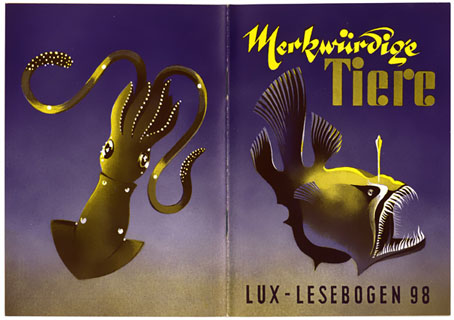
Illustration and design by Karlheinz Dobsky.

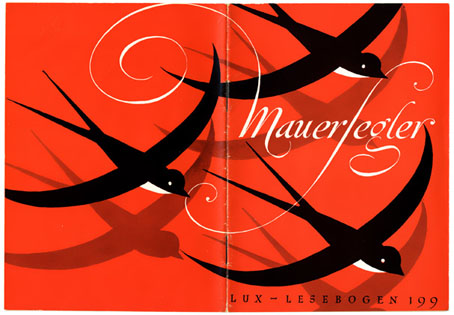
Above and below: samples from Die Lux-Lesebogen-Sammlung, an exhibition of booklets for young people published by Sebastian Lux from 1946–1964. All were designed and illustrated by Karlheinz Dobsky.

• At The American Scholar: “Vladimir Nabokov’s understanding of human nature anticipated the advances in psychology since his day,” says Nabokov biographer Brian Boyd, and An Unquenchable Gaiety of Mind: “On visits to Cambridge University late in life, Jorge Luis Borges offered revealing last thoughts about his reading and writing,” says George Watson.

• The British Library releases The Spoken Word: “A rare collection of recordings featuring the American writer William S Burroughs and the British-born artist Brion Gysin.” Related: Interzone – A William Burroughs Mix by Timewriter.

• Charting the Outlaws: Christopher Bram (again) talking to Frank Pizzoli about his recent study Eminent Outlaws: The Gay Writers Who Changed America.

• The BBC asks “Where are you on the global fat scale?” I’ve always been thin but was still surprised to find my BMI at the very bottom of the scale.

The “otherness” of Ballard, his mesmeric glazedness, is always attributed to the two years he spent in a Japanese internment camp in Shanghai (1943–45). That experience, I think, should be seen in combination, or in synergy, with the two years he spent dissecting cadavers as a medical student in Cambridge (1949–51). Again the dichotomy: as a man he was ebulliently social (and humorous), but as an artist he is fiercely solitary (and humourless). The outcome, in any event, is a genius for the perverse and the obsessional, realised in a prose style of hypnotically varied vowel sounds (its diction enriched by a wide range of technical vocabularies). In the end, the tensile strength of The Drowned World derives not from its action but from its poetry.

Martin Amis on The Drowned World by JG Ballard.

The Chickens and the Bulls: “The rise and incredible fall of a vicious extortion ring that preyed on prominent gay men in the 1960s.”

• It’s that Zone again: Jacob Mikanowski on Andrei Tarkovsky’s Stalker and Geoff Dyer’s Zona.

• Scans of the rare film programme for London screenings of Fritz Lang’s Metropolis.

lux2.jpg

Illustration and design by Karlheinz Dobsky.

• “The web is a Library of Babel that could go the way of the Library of Alexandria.

Fila Arcana: alchemy- and occult-themed embroidery by Mina Sewell Mancuso.

A Very Edgy Alice In A Very Weird Wonderland: illustrations by Pat Andrea.

Malka Spigel reveals a new track from her third solo album.

John Martin and the Theatre of Subversion.

Olafur Eliasson: Little Sun at Tate Modern.

• Meanwhile, back in 1972: Mahavishnu Orchestra live at the BBC (30 mins), and the complete performance of the MC5 on Beat Club (29 mins).

Nabokov book covers

nabokov1.jpg

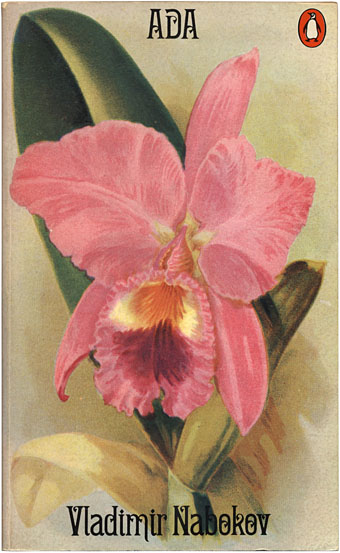
Flowers are the sexual organs of plants, which may have been what designer David Pelham had in mind when he created this cover for the Penguin debut of Nabokov’s densely-written and erotic novel, Ada in 1970. (Butterfly orchids also feature in the text, of course.) The Russian maestro has been unavoidable lately on account of the publication this week of his final, unfinished work, The Original of Laura. The design of the new book by Chip Kidd is slightly more daring than I’d have expected from something which the publisher will be hoping to sell in large quantities, and I’d love to know how much argument was required to push the cover through the marketing department. The contrast between boards and dust jacket is very satisfying and adds value to the book as artefact, a feature impossible to replicate in ebook terms even if this was an ordinary novel rather than sketches on index cards. If people want books to stay physical then smart design needs to be applied a lot more often.

nabokov2.jpg

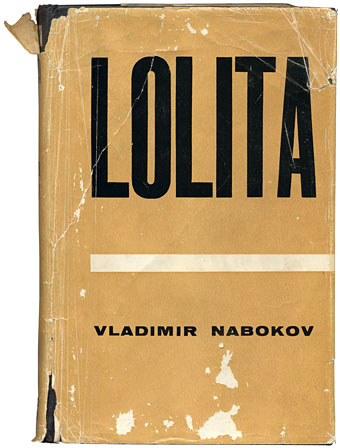
The ragged item above is my battered second edition of the original UK (Weidenfeld & Nicolson) printing of Lolita, now fifty years old and with a cover designed by Eric Ayers. There’s a more pristine copy on display at this comprehensive gallery of Lolita covers, fascinating viewing if you’re interested in seeing how the same book can be presented over 150 editions. From a drab beginning things quickly degenerate into outright salaciousness, a development which would no doubt have dismayed the author. That gallery link comes via Venus febriculosa who recently held a competition to redesign the cover; you can see the results here, many of which are a lot more inventive than the published editions.

Meanwhile, the advent of Nabokov’s final novel has meant that all of his works are being reissued by Vintage. Ace cover designer and art director John Gall was tasked with redesigning the corpus for which he assembled a team of designers and requested that they each fill a butterfly specimen box with material to suit their allotted title. You can see the gorgeous results here. And if that’s not enough Nabokov, you can read Martin Amis taking his favourite author to task over The Original of Laura here.

The inside story of Nabokov’s last work

Elsewhere on { feuilleton }
The book covers archive