Fantastic art from Pan Books

larkin_fantastic.jpg

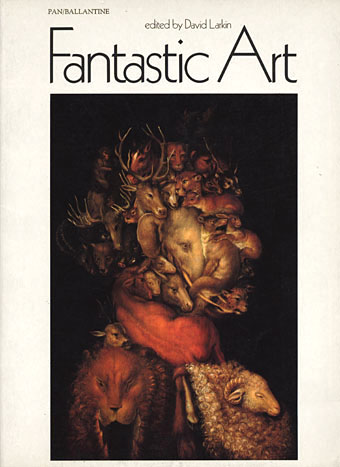
Fantastic Art (1973).
Cover: Earth by Arcimboldo.

I’d thought of writing something about this book series even before I started this blog since there’s very little information to be found about it online. I can’t compete with the serious Penguin-heads, and I’m not much of a dedicated book collector anyway, but I do have a decent collection of the art books that Pan/Ballantine published in the UK throughout the 1970s. The books were published simultaneously by Ballantine/Peacock Press in the US, and nearly all were edited by David Larkin, with Betty Ballantine overseeing the American editions. Two of the series, the Dalí and Magritte, were among the first art books I owned. Over the years I’ve gradually accumulated most of the set, and I always look for their distinctive white spines in secondhand shops.

The Pan books were a uniform size, approximately A4 (297 x 210 mm), with a single picture on each recto page surrounded by generous margins. The reproductions were excellent, printed on quality paper, and all featured specially-commissioned introductions (JG Ballard for the Dalí book) with those pages printed on textured sheets. Each book was beautifully designed, the opening pages and introductions often featuring black-and-white vignettes if the artists in question produced line drawings. David Larkin’s focus was on art that tended to the fantastic, visionary or imaginative, something that was in vogue throughout the Seventies after psychedelic art had ransacked the Victorian and Edwardian eras for inspiration a few years earlier. Aubrey Beardsley had been rediscovered in the mid-Sixties (turning up on the cover of Sgt. Pepper) and underground magazines such as Oz and IT helped create a renewed interest in art that would look good when you were stoned or tripping. The Pan books weren’t “head books” as such but its probably fair to say that the series was supported and made possible by the prevailing attitudes of the time.
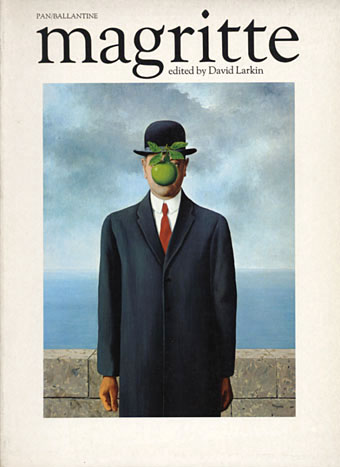
larkin_magritte.jpg

Magritte (1972).
Cover: The Son of Man.

As the series developed the format evolved away from fine art towards contemporary fantasy art, and as a result became less interesting for me, although the success of the Frank Frazetta books undoubtedly meant that this was the way the sales were going. The demand for the Ernst and Rousseau titles can be gauged by the remainder cut-outs on their covers. The final volumes (which I’ve never bought) featured artists such as Brian Froud (The Dark Crystal), Alan Lee (The Lord of the Rings) and others, with their Faeries, Giants, Castles and Gnomes books. I’m still missing a couple of the earlier numbers which I could now order online but that would spoil the game of letting chance deliver the goods, wouldn’t it?

Fantastic Art is easily my favourite, a great collection of visionary work through the ages beginning with Bosch and proceeding through Goya, John Martin, Richard Dadd, the Symbolists and the Surrealists to what was then contemporary work by artists such as Hundertwasser. This was one of the first of the series and seems to be the key volume in the way it provides an overview of the art that would follow.
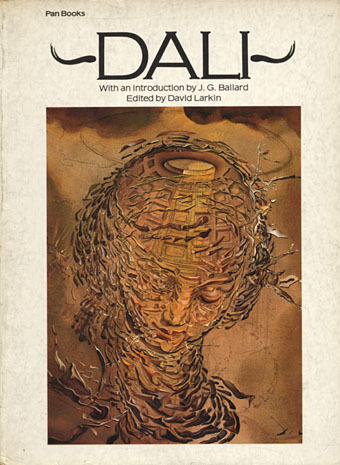
larkin_dali.jpg

Dali (1974).
Cover: Raphaelesque Head Exploding.

A great introduction by JG Ballard in this one, replete with the usual phrases about “the dark causeways of our spinal columns”.
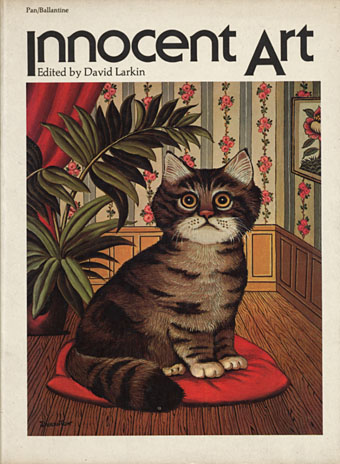
larkin_innocent.jpg

Innocent Art (1974).
Cover: Cat by André Duranton.

A collection of what used to be called naive painting, ie: work by unschooled “Sunday painters” such as Rousseau. Outsider art is the preferred term these days even though the work itself hasn’t always changed.
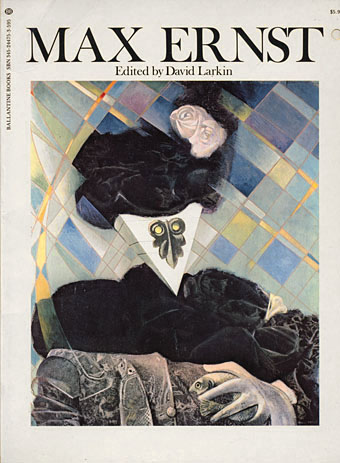
larkin_ernst.jpg

Max Ernst (1975).
Cover: Euclid.

Ernst’s later work in this book was the most abstract and experimental of the series. Europe After the Rain was printed across a fold-out sheet so that its full width could be displayed.
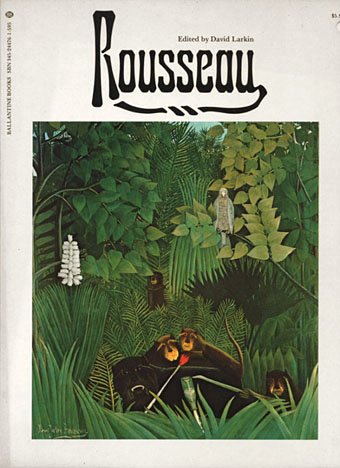
larkin_rousseau.jpg

Rousseau (1975).
Cover: The Merry Jesters.
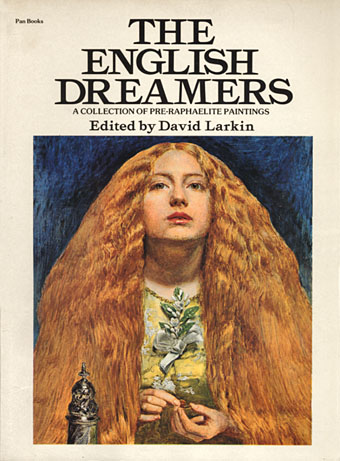
larkin_dreamers.jpg

The English Dreamers (1975).
Cover: The Bridesmaid by John Everett Millais.
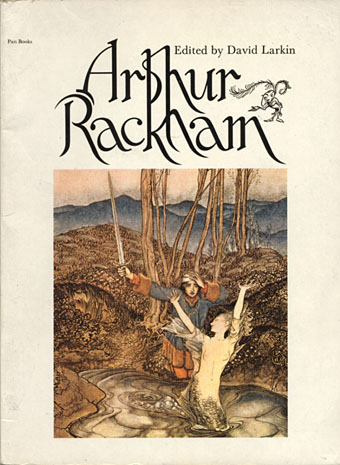
larkin_rackham.jpg

Arthur Rackham (1975).
Cover: Clerk Colville (from Some British Ballads).
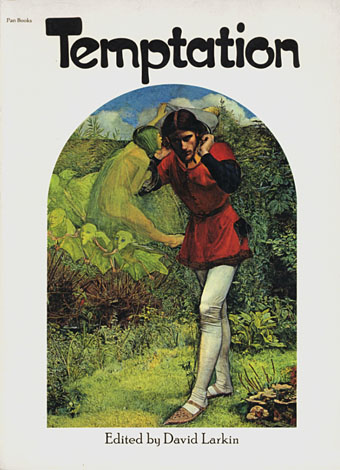
larkin_temptation.jpg

Temptation (1975).
Cover: Ferdinand Lured by Ariel by John Everett Millais.

An unusual collection with a wide range of pictures (Bosch, Alma-Tadema, Balthus). Mainly concerns sexual temptation for female bodies but also includes Biblical and other temptations.
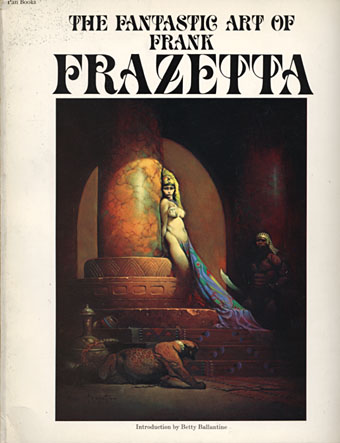
larkin_frazetta1.jpg

The Fantastic Art of Frank Frazetta (1975).
Cover: Egyptian Queen.

The book that launched a thousand metal albums. Volume One here was the first attempt to collect Frazetta’s work and was easily the most popular title of the series, going through many reprintings and prompting three follow-up volumes. Many of the reproductions are superior to their equivalents in Taschen’s later Icon collection. This was the first one I bought after the Surrealist books and, while I’ve never been a muscle obsessive, I couldn’t help but notice all the male flesh on display.
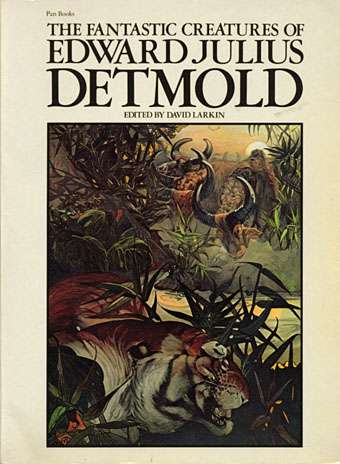
larkin_detmold.jpg

The Fantastic Creatures of Edward Julius Detmold (1976).
Cover: Shere Khan in the jungle (from The Jungle Book).
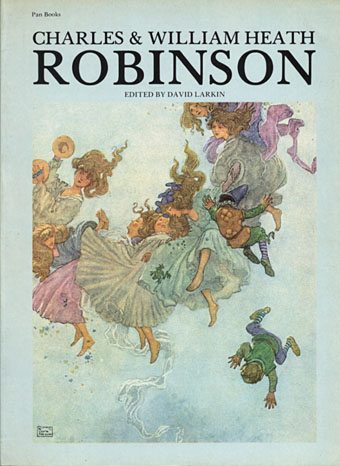
larkin_robinson.jpg

Charles and William Heath Robinson (1976).
Cover: Elfin Mount (from Hans Andersen’s Fairy Tales).

A collection of the Robinsons’ fairy tale paintings. A break from the format with a blue cover.
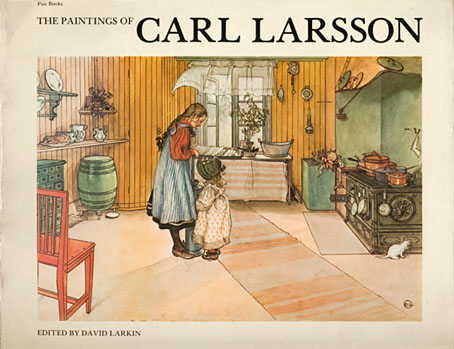
larkin_larsson.jpg

The Paintings of Carl Larsson (1976).
Cover: The Kitchen.

Another break with the format, the book being printed landscape to suit Larsson’s drawings and paintings. As with the Ernst book, a fold-out page was a special feature.
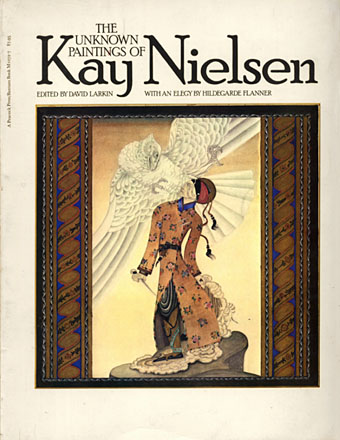
larkin_nielsen.jpg

The Unknown Paintings of Kay Nielsen (1977).
Cover: The Tale of the Third Dervish.

A collection of Nielsen’s work derived from Turkish and Persian miniatures.
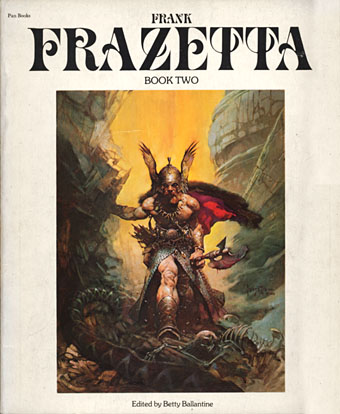
larkin_frazetta2.jpg

Frank Frazetta, Book Two (1977).
Cover: Dark Kingdom.
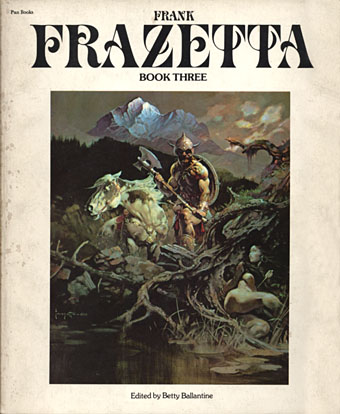
larkin_frazetta3.jpg

Frank Frazetta, Book Three (1978).
Cover painting: Nightwinds.
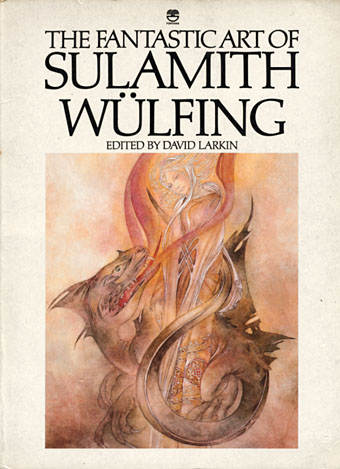
larkin_wulfing.jpg

The Fantastic Art of Sulamith Wülfing (1978).
Cover: The Big Dragon.

Part of the series but published by Fontana/Collins, not Pan.

Elsewhere on { feuilleton }
The fantastic art archive
The book covers archive
The illustrators archive

L’Amour Fou: Surrealism and Design

manray2.jpg

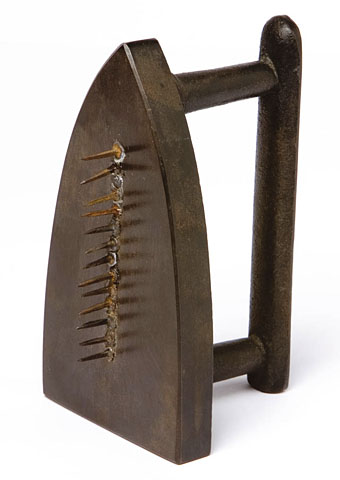
Cadeau Audace by Man Ray (1921).

L’amour fou by Robert Hughes
Fur teacups, wheelbarrow chairs, lip-shaped sofas … the fashion, furniture and jewellery created by the Surrealists were useless, unique, decadent and, above all, very sexy.

The Guardian, Saturday March 24th, 2007

THE VICTORIA AND Albert’s big show for this year, Surreal Things: Surrealism and Design, is—well, maybe we don’t much like the word “definitive”. But it’s certainly the first of its kind.

Everyone knows something about surrealism, the most popular art movement of the 20th century. The word has spread so far that people now say “surreal” when all they mean is “odd”, “totally weird” or “unexpected”. No doubt this would give heartburn to André Breton, the pope of the movement nearly a century ago, who took the title from his friend, the poet Guillaume Apollinaire, who had called his play The Breasts of Tiresias, “a surrealist drama”. But too late now. The term is many years out of its box and, through imprecision, has achieved something akin to eternal life. Surrealist painting and film, that is. In fact, some surrealist images have imprinted themselves so deeply and brightly on our ideas of visual imagery that we can’t imagine modern art (or, in fact, the idea of modernity itself) without them.

Think Salvador Dalí and his soft watches in The Persistence of Memory. Think Dalí again, in cahoots with Luis Buñuel, and the cut-throat razor slicing through the girl’s eye, as a sliver of cloud crosses the moon (actually, the eye belongs to a dead cow, but you never think this when you see their now venerable but forever fresh movie An Andalusian Dog, 1929). Think of photographer Man Ray’s fabulous Cadeau Audace (‘Risky Present’, 1921), the flatiron to whose sole a row of tacks was soldered, guaranteeing the destruction of any dress it would be used on. Think of Rene Magritte’s The Rape, that hauntingly concise pubic face, with nipples for eyes and the hairy triangle where the mouth should be. Think of the shock, the horniness, the rebellion, the unwavering focus on creative freedom, the obsessive efforts to discover the new in the old by disclosure of the hidden…

Continues here

Previously on { feuilleton }
The Surrealist Revolution
Surrealist Women
Las Pozas and Edward James
Surrealist cartomancy

Fantômas

fantomas1.jpg

fantomas2.jpg

fantomas3.jpg

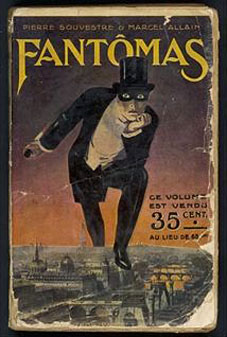
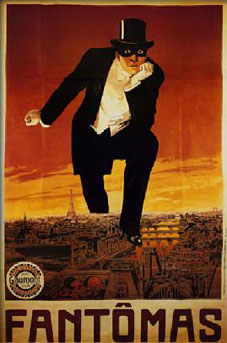
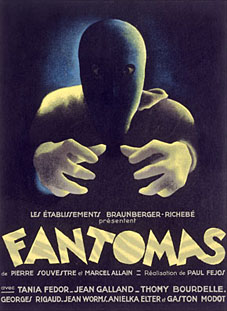
Fantômas was championed by the Parisian avant-garde, first by the young poets gathered around Guillaume Apollinaire, who, together with Max Jacob, founded a Société des Amis de Fantômas in 1913, and later by the surrealists. In July 1914, in the literary review Mercure de France, Apollinaire declared the imaginary richness of Fantômas unparalleled. The same month, in Apollinaire’s own review, Les Soirées de Paris, Maurice Raynal proclaimed Feuillade’s Fantômas saturated with genius. Over the next two decades, poets such as Blaise Cendrars (who called the series “The Aeneid of Modern Times”), Max Jacob, Jean Cocteau, and Robert Desnos, and painters such as Juan Gris, Yves Tanguy, and René Magritte, incorporated Fantômas motifs into their works. Pierre Prévert’s 1928 film, Paris la Belle, featured a Fantômas book cover in the closing sequence, and the Lord of Terror was adapted to the surrealist screen in Ernest Moerman’s 1936 film short, Mr. Fantômas, Chapitre 280,000. As the century progresses, Fantômas remained a minor source of artistic inspiration as the subject of cultural nostalgia.

Continued here.

The Surrealist Revolution

bunuel.jpg

The riddle of the rocks by Jonathan Jones
It was the art movement that shocked the world. It was sexy, weird and dangerous—and it’s still hugely influential today. Jonathan Jones travels to the coast of Spain to explore the landscape that inspired Salvador Dalí, the greatest surrealist of them all.

The Guardian, Monday March 5, 2007

I AM SCRAMBLING over the rocks that dominate the coastline of Cadaqués in north-east Spain. They look like crumbling chunks of bread floating on a soup of seawater. Surreal is a word we throw about easily today, almost a century after it was coined by the poet Guillaume Apollinaire. Yet if there is anywhere on earth you can still hope to put a precise and historical meaning on the “surreal” and “surrealism”, it is among these rocks. To scramble over them is to enter a world of distorted scale inhabited by tiny monsters. Armoured invertebrates crawl about on barely submerged formations. I reach into the water for a shell and the orange pincers of a hermit crab flick my fingers away.

The entire history of surrealism—from the collages of Max Ernst to Salvador Dalí’s Lobster Telephone—can be read in these igneous formations, just as surely as they unfold the geological history of Catalonia.

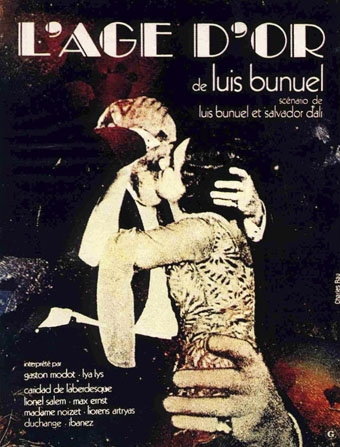
I sit down on a jagged ridge. What if I fell? Would they find a skeleton looking just like the bones of the four dead bishops in L’Age d’Or, the surrealist film Luis Buñuel shot here in 1930?

Buñuel had been shown these rocks by his college friend Dalí years earlier. It was here they had scripted their infamous film Un Chien Andalou. Dalí came from Figueras, on the Ampurdán plain beyond the mountains that enclose Cadaqués, and spent his childhood summers here, exploring the rock pools and being cruel to the sea creatures. In most people’s eyes, this is a beautiful Mediterranean setting. It certainly looked lovely to Dalí’s close friend, the poet Federico García Lorca, when Dalí brought him here in the 1920s: in his Ode to Salvador Dalí, Lorca lyrically praises the moon reflected in the calm, wide bay…

Continues here.

Previously on { feuilleton }
The persistence of DNA
Salvador Dalí’s apocalyptic happening
The music of Igor Wakhévitch
Dalí Atomicus
Las Pozas and Edward James
Impressions de la Haute Mongolie

Taxandria, or Raoul Servais meets Paul Delvaux

delvaux.jpg

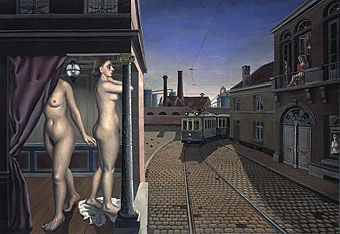
La Rue du Tramway (1938) by Paul Delvaux.

Taxandria (1994) is a feature-length fantasy film by Belgian animator Raoul Servais that’s received little attention outside his native country, possibly because it failed in the marketplace and has been deemed too weird or uncommercial to export. You only have to compare the export version of Harry Kümel’s Malpertuis with his original cut to see how inventive Belgian films are treated by US distributors.

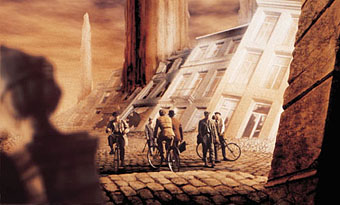
taxandria1.jpg

Servais had previously made an acclaimed animated short, Harpya, using a combination of live actors and painted backgrounds. Taxandria elaborates on this process (called Servaisgraphy by its inventor) using settings designed by one of my favourite comic artists François Schuiten, creator (with Benoît Peeters) of Les Cités Obscures. Taxandria intrigues for a third reason, the inspiration of Surrealist master Paul Delvaux whose paintings served as the origin of the project. And it also contains a remarkable detail in the screenplay credit for Alain Robbe-Grillet, a man better known for making Last Year at Marienbad with Alain Resnais, and the kind of fierce intellectual one imagines would usually run a mile from this kind of extravagant whimsy.

taxandria5.jpg

Continue reading “Taxandria, or Raoul Servais meets Paul Delvaux”