Weekend links 268

paul.jpg

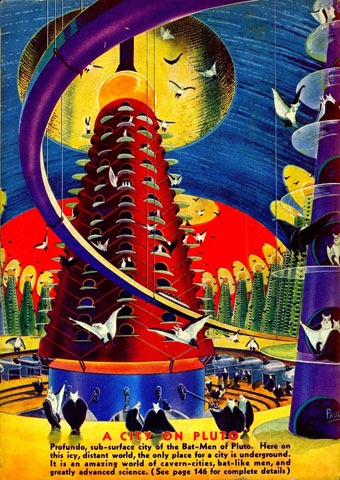
A City on Pluto (1940) by Frank R. Paul. Related: Paul’s predictions about life on other planets.

23 Skidoo’s Peel Session from September 16th, 1981. Only 18 minutes of music but I’m thrilled for its being unique material that’s never been given an official release. There are many more Peel Sessions at the uploader’s channel, not all of which were reissued on the Strange Fruit label. Download favourites in their as-broadcast form (some with John Peel’s introductions) before they vanish or get blocked like the 1981 Cabaret Voltaire session. Related: Wikipedia’s list of Peel Sessions.

• Mixes of the week comprise two collections by Jon Dale of strange and beguiling Italian music: The Prevarications Of The Sky Against The Earth and La Verifica Incerta; the Summer Window Mix (“telly detritus, new-not-new synth nonsense & off-colour pop oddities”) by Moon Wiring Club; and Secret Thirteen Mix 158 by Haunter Records.

• “Hello, this is David Bowie. It’s a bit grey out today but I’ve got some Perrier water, and I’ve got a bunch of records…” Two hours of the Thin White Duke playing favourite music on BBC Radio One, 20th May, 1979.

Some of Vidal’s guests were writers, not exactly his favorite group. “Writers are the only people who are reviewed by people of their own kind,” Vidal said in an interview. “And their own kind can often be reasonably generous—if you stay in your category. I don’t. I do many different things rather better than most people do one thing. And envy is the central fact of American life.”

Frank Pizzoli reviews Sympathy for the Devil: Four Decades of Friendship with Gore Vidal by Michael Mewshaw

• Yair Elazar Glotman’s new album, Études, conjures “bone-rattling resonance, thick, alien-like atmospheres, and percussive fragments”. Stream it in full here.

• London’s Lost Department Store of the Swinging Sixties: Inge Oosterhoff on the splendours of Biba.

• It’s that Ungeziefer again: Richard T. Kelly on 100 years of The Metamorphosis by Franz Kafka.

• The History of Creepy Dolls: Linda Rodriguez McRobbie explores the uncanny valley.

• At Dangerous Minds: Matt Groening tells the story of The Residents in 1979.

• The NYT collects NASA’s photos from the New Horizons Pluto flyby.

The Museum of Imaginary Musical Instruments

Written on the Body: tattoos in cinema

The Doll’s House (1981) by Landscape | Voodoo Dolly (1981) by Siouxsie and the Banshees | Devils Doll Baby (1986) by Sonny Sharrock
Weekend links 125

cme.jpg

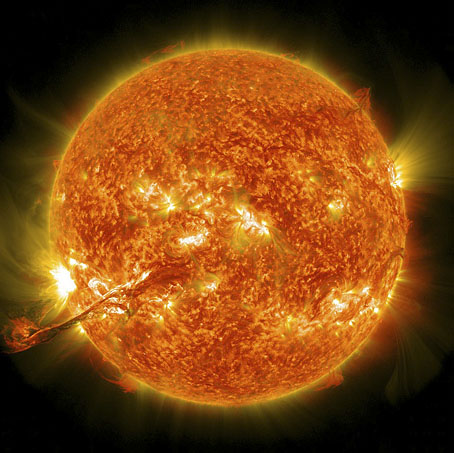
Coronal Mass Ejection from the surface of the Sun, August 31st, 2012.

• “Most of the main parts were recorded in a single day using Vangelis’s famous technique: try to play as many synths as possible at once.” Simon Drax on the prolific musical output of Zali Krishna. The new Krishna opus is Bremsstrahlung Sommerwind, free to download at the Internet Archive.

• The Northants International Comics Expo (N.I.C.E.) opens on September 22nd. Among the many attendees there will be Mr Alan Moore making his first convention appearance since 1987.

• “Isolated for one night in a boat overlooking the Thames, Geoff Dyer explores representations of reality through the lens of Joseph Conrad’s Heart of Darkness.”

Now seems the right time to revisit this secret archive of public broadcasting. It’s an antidote to the celebrity-led, format-driven nature of so many arts documentaries made today. It shows that it’s possible to produce TV that is both populist and experimental. And it also refutes the cliché that the 1970s was a decade only of crisis and downturn. “Feminism, political theatre, Ways of Seeing: I wasn’t thinking, ‘what a terrible time’. It was very dynamic, activist, political. Creatively it was very exciting. Yet all they show on those television retrospectives are episodes of Top of the Pops.”

Sukhdev Sandhu talks to Mike Dibb, the director of Ways of Seeing.

• From 1999: Colm Tóibín reviews A History of Gay Literature: The Male Tradition by Gregory Woods.

What We See: a song by Julia Holter & Nite Jewel with a film by Delaney Bishop & Jose Wolff.

Rick Poynor on The crash test dummy: from subcultural fringes to pop culture mainstream.

In his 1973 book on Joyce, Joysprick, Burgess made a provocative distinction between what he calls the “A” novelist and the “B” novelist: the A novelist is interested in plot, character and psychological insight, whereas the B novelist is interested, above all, in the play of words. The most famous B novel is Finnegans Wake, which Nabokov aptly described as “a cold pudding of a book, a persistent snore in the next room.” The B novel, as a genre, is now utterly defunct; and A Clockwork Orange may be its only long-term survivor.

Martin Amis on A Clockwork Orange, fifty years on. My old post about the film’s record shop scene continues to be one of the most popular pages here.

• Wild Boys: David Bowie and William Burroughs in 1974, hand-coloured by DB.

Alfred Kubin‘s illustrations for Haschisch (1902) by Oscar AH Schmitz.

• Revolution off: industrial ruins photographed by Thomas Jorion.

• Tetrahedra of Space: 22 pulp illustrations by Frank R. Paul.

The Blue Boy Studiolo: a Tumblr.

Marina Warner visits Hell.

• The art of Casey Weldon.

RainyMood.com

Third Stone From The Sun (1967) by The Jimi Hendrix Experience | Sunrise In The Third System (1971) by Tangerine Dream | 3rd From The Sun (1982) by Chrome.

The City of the Singing Flame

cas1.jpg

Wonder Stories, July 1931. Illustration by Frank R. Paul.

Looking over Bruce Pennington’s artwork this week sent me back to some of my Clark Ashton Smith paperbacks, many of which sport Pennington covers. One of my favourite Smith stories, The City of the Singing Flame, is also one of his finest pieces, and a story that Harlan Ellison has often referred to as his favourite work of imaginative fiction.

cas2.jpg

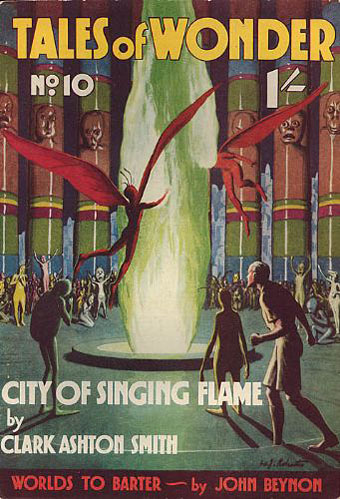
Tales of Wonder, Spring 1940. Illustration by WJ Roberts.

The story as it’s known today was originally a shorter piece, The City of the Singing Flame, followed by a sequel, Beyond the Singing Flame; both stories were published in Wonder Stories magazine in July and November of 1931, then as one in Arkham House’s CAS collection Out of Space and Time in 1942. The two-in-one story is now the definitive version.

Smith’s tale concerns the discovery of a dimensional portal somewhere in the Sierras. Beyond this there lies a path leading through an otherworldly landscape to a colossal city peopled by a race of mute giants. A temple at the heart of the city protects the prodigious green flame of the title, an eerie and alluring presence whose siren call draws creatures from adjacent worlds who prostrate themselves before the flame before immolating themselves in its fire. A narrator, Philip Hastane, give us details of diary entries from a friend who discovered the portal, and who subsequently has to decide whether to resist the lure of the mysterious flame or follow the other creatures into the fire. More than this would be unfair to divulge if you’ve never read Smith’s remarkable piece of fiction.

Continue reading “The City of the Singing Flame”