Weekend links 700

demorgan.jpg

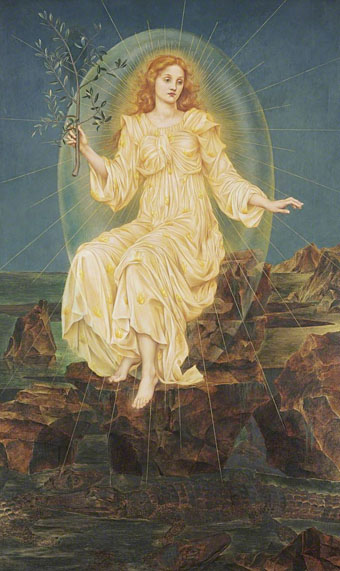
Lux in Tenebris (1895) by Evelyn De Morgan.

• “NASA celebrates the worm logo designer, Richard Danne“. Until I read this story (and this one) I wasn’t aware that the NASA logos were known as The Meatball and The Worm.

The Red Shoes: behind the scenes of the classic Powell and Pressburger film – in pictures. Related: Kings of the movies: Martin Scorsese on Powell & Pressburger.

• The 700th weekend post happens to arrive on Alan Moore’s 70th birthday. Many happy returns to the Northampton Magus.

Fundamentally, we face a choice. Either:

• it’s a coincidence that, of all the possible values that the finely tuned constants of physics may have had, they just happen to have the right values for life;

or:

• the constants have those values because they are right for life.

The former option is wildly improbable; on a conservative estimate, the odds of getting finely tuned constants by chance is less than 1 in 10-136. The latter option amounts to a belief that something at the fundamental level of reality is directed towards the emergence of life. I call this kind of fundamental goal-directedness ‘cosmic purpose’.

As a society, we’re somewhat in denial about fine-tuning, because it doesn’t fit with the picture of science we’ve got used to. It’s a bit like in the 16th century when we started getting evidence that our Earth wasn’t in the centre of the universe, and people struggled to accept it because it didn’t fit with the picture of the universe they’d got used to. Nowadays, we scoff at our ancestors’ inability to follow the evidence where it leads. But every generation absorbs a worldview it can’t see beyond. I believe we’re in a similar situation now with respect to the mounting evidence for cosmic purpose. We’re ignoring what is lying in plain view because it doesn’t fit with the version of reality we’ve got used to. Future generations will mock us for our intransigence.

Philip Goff, professor in philosophy at Durham University, making an argument for cosmic purpose

• At Spoon & Tamago: Exploring Japanese Hell through art from the 12th to 19th century.

• New music: Turning The Prism by Ben Frost, and Sanctuary Of Desire by Steve Roach.

• Mix of the week is DreamScenes – November 2023 at Ambientblog.

• DJ Food looks at Tomi Ungerer’s Electric Circus posters.

• At Dennis Cooper’s: Alain Resnais Day.

Strange Flowers visits the Villa Stuck.

Diet Of Worms (1979) by This Heat | Opera Of Worms (1981) by Van Kaye & Ignit| Wormhole (2002) by Cliff Martinez
Weekend links 696

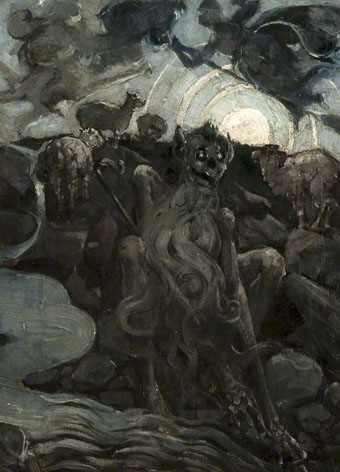
hornel.jpg

The Brownie of Blednoch (1889) by Edward Atkinson Hornel.

• “None of the theatrics of most films are available in Bresson, because in some ways Bresson’s characters, along with Dreyer’s and Cassavetes’s are the most inscrutable in motion pictures—maybe since their creators are the best believers in suggestion.” Greg Gerke explores the later films of Robert Bresson.

Iizuna Fair is a short animated film by Sumito Sakakibara that will be viewable at Vimeo for the next few months.

• Occult scholar Mitch Horowitz returns to the Aquarium Drunkard podcast for a wide-ranging discussion.

Marty [Scorsese] went to the Edinburgh Film Festival in 1974 to collect an award for Alice Doesn’t Live Here Anymore. They asked him who he wanted to present it to him, and he said Michael Powell. They had no idea who he was. No one did, but I found an American doing publicity for Kubrick’s 2001 who knew where he was. He introduced Michael to Marty at a lunch where Marty bombarded Michael with questions about how he did this and how he did that. Michael writes in his autobiography that the blood started to run in his veins again, it had been so long that he and Emeric had been living in oblivion.

Marty brought Michael to America, where we had already started working on Raging Bull. Marty had been educating me about Powell and Pressburger’s films, sending me home with VHSs. I had fallen in love with them, and then he said that Michael Powell was coming for dinner one night and asked if I would like to meet him. That’s how we met and eventually became involved, all thanks to Marty.

Thelma Schoonmaker remembering her husband, Michael Powell, and discussing the ongoing restoration of his films. Good to hear that plans are afoot to resurrect Gone to Earth

Whole Earth Index is a near-complete archive of the Whole Earth Catalog and its related publications.

• At the Daily Heller: David Byrd, the East Coast’s psychedelic poster man.

• See the winners of the Nikon 2023 Photomicrography Competition.

• New music: Golden Feelings by Better Weather.

Mikrostruktury (1963) by Wlodzimierz Kotonski | La Chasse Aux Microbes (1977) by Michael Bundt | Microscopic (1995) by Gas

A theme for maniacs

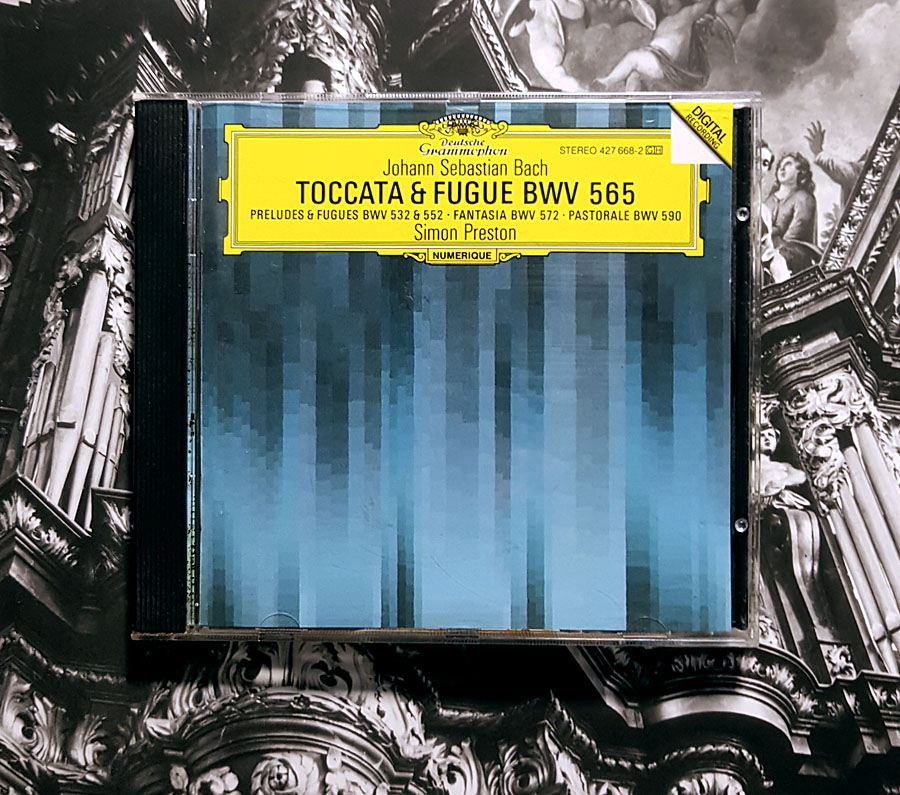
bach.jpg

The theme in question.

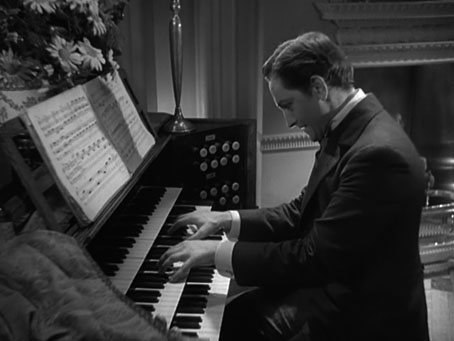
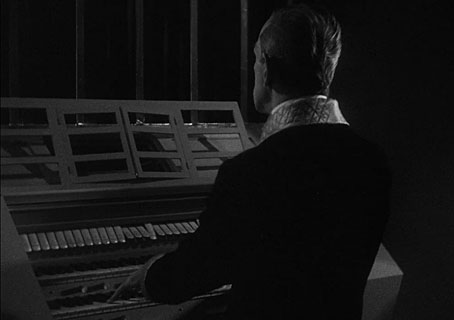
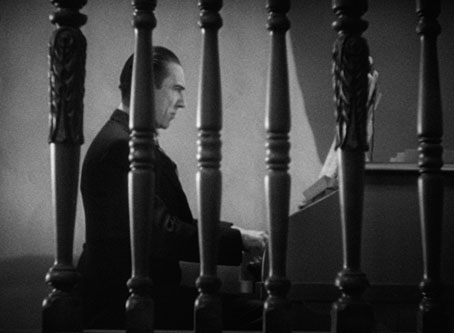
When did the first few bars of Bach’s Toccata and Fugue in D Minor BWV 565 become a signifier of an unhinged personality, and thereby a horror cliché? The question was raised by my film viewing in the run-up to Halloween following a return visit to The Black Cat, Edgar G. Ulmer’s Universal oddity. Ulmer’s film is the best of a trio of Universal horrors packaged by Eureka in a double-disc set, part of the company’s ongoing programme to reissue obscure films starring Boris Karloff and Bela Lugosi. The three films in the set—Murders in the Rue Morgue (1932), The Black Cat (1934) and The Raven (1935)—all star Lugosi, with Karloff co-starring in The Black Cat and The Raven. The Bach piece was impossible to ignore after watching all three films together. In The Black Cat we see a villainous Karloff regaling a potential victim with a performance of Toccata and Fugue on his home organ. Bela Lugosi does the same in The Raven, where he portrays an equally villainous but much more demented doctor obsessed with the writings of Edgar Allan Poe. The Universal horror films have been the source of many cinematic clichés of which this is a further example, even if the use of Toccata and Fugue to signify villainy or madness predates The Black Cat.

Wikipedia’s incomplete list of the composition’s cinematic appearances states that Toccata and Fugue was already a theatrical cliché by the early 1930s but offers no evidence for the claim. It’s likely there were silent films using the piece for their scores when so much silent orchestration borrows from pre-existing classical music. But silent films, today as in the past, can be scored in many different ways, the score isn’t always permanently attached to the film. The one silent film that you might expect to use the Bach piece, the 1925 version of The Phantom of the Opera, has a fine score by Carl Davis in its restored form, but no Toccata and Fugue. A brief history of the cinematic life of the piece would go something like this…

jekyll.jpg

Dr Jekyll and Mr Hyde (1931)
Rouben Mamoulian’s excellent adaptation opens with a view through the eyes of Dr Jekyll (Frederic March) playing another Bach piece on the organ; prior to this the film’s titles had been scored with an orchestral arrangement of Toccata and Fugue. An hour later the composition returns when Jekyll plays an extract from the fugue section, an ominous sign despite his joy at his impending marriage.

blackcat.jpg

The Black Cat (1934)
Despite the title, this one has nothing at all to do with Edgar Allan Poe. Instead of another spurious adaptation we get Boris Karloff as Hjalmar Poelzig, cinema’s only Satanist architect. The character is a bizarre amalgam of Aleister Crowley and Hans Poelzig, a German architect who designed the sets for Paul Wegener’s third and best Golem film.

raven.jpg

The Raven (1935)
This one does at least contain a number of Poe references. Lugosi is a brilliant doctor who also happens to be a homicidal maniac, his Poe obsession having led him to fill the secret rooms in his house with torture devices.

canterbury.jpg

A Canterbury Tale (1944)
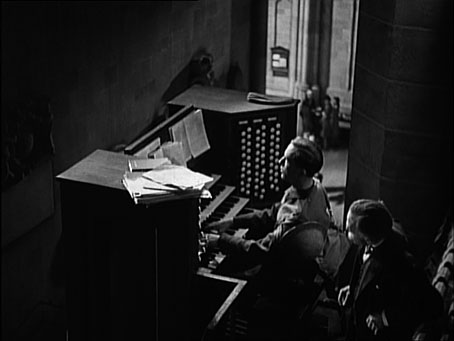
Not a horror film but included here because Powell & Pressburger’s war-time drama is about the last time you find the Bach piece being used in an unironic manner, intended to evoke religious awe rather than madness or doom. Prior to this the piece had also been used to soundtrack an abstract animation by Mary Ellen Bute, Synchromy No. 4: Escape (1938), two years before Disney did something very similar in Fantasia. In A Canterbury Tale Dennis Price is a conscripted cinema organist finally arrived at Canterbury Cathedral prior to being shipped to the front. Before he leaves, the cathedral organist allows him to play the music for the departure service which in turn allows us to hear Bach’s piece illustrating views of genuine Gothic grandeur.

sunset.jpg

Sunset Boulevard (1950)
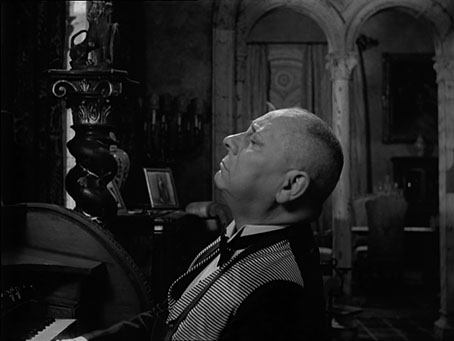
Its fitting that the self-conscious use of Toccata and Fugue begins with a supremely self-conscious film. Billy Wilder’s masterpiece isn’t a horror film either but it is a full-blown Gothic drama, being narrated by a dead man whose first encounter with the mentally fragile Norma Desmond sees him being mistaken for an undertaker. The Bach piece is played by Desmond’s butler, Max, a washed-up film director portrayed by a genuine (and genuinely great) washed-up film director, Erich von Stroheim. Max may not be a maniac but his employer (and ex-wife) is certainly unhinged, while Stroheim himself was notorious in his directing days for his megalomania, overspending lavishly and refusing to compromise with the studios over the editing of his films. (The first cut of his mutilated epic, Greed, ran over nine hours.) Since the 1925 Phantom of the Opera was mentioned earlier, it’s worth noting that Norma Desmond’s boat-shaped bed is the same prop that appears in the silent Phantom’s underground lair.

Continue reading “A theme for maniacs”

Weekend links 620

varo

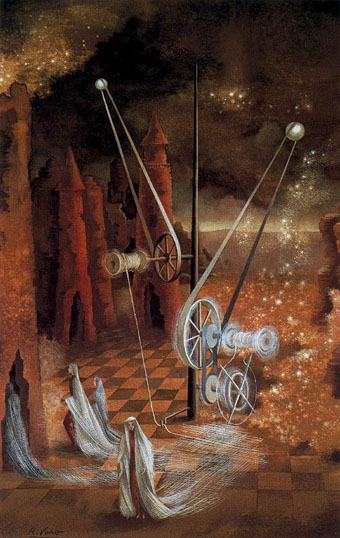
Premonition (1953) by Remedios Varo.

• “Classical mythology, Arcadian idylls, occult speculation, and an interest in cultural curiosities coexisted in the grotto, allowing for the playful exploration of a new tension emerging between Nature and Artifice.” Laura Tradii explores the artificial grottoes of the Renaissance and beyond.

• “Some of the symbols and signs seem like bridges to nowhere, and perhaps Nabokov was lovingly teasing our endless quest to find patterns and generate meaning.” David M. Rubin on writing a response to a Nabokov short story.

• New music: “KMRU & Aho Ssan erupt in post-apocalyptic extremity with Resurgence“. I did the layout for this latest release on the Subtext label but I still haven’t got round to updating my web pages so you’ll have to take my word for it.

• Powell & Pressburger’s Black Narcissus “unleashes a level of eroticism that’s surprising for 1940s British cinema,” says Adam Scovell.

• “Premonitions are impossible, and they come true all the time.” Fiona Sturges reviews The Premonitions Bureau by Sam Knight.

• Between Hell and Paradise: paintings by Hieronymus Bosch and his followers at the Museum of Fine Arts, Budapest.

• At The Collector: Olivia Barrett on the Voodoo Queens of New Orleans.

• Steven Heller’s font of the month is Astronef Super.

• Mix of the week: Isolatedmix 118 by Pan American.

TMP-01 Vintage Synth TV Series from Benge.

• Vale, A Year In The Country.

Premonition (1979) by Simple Minds | Premonition (1980) by Cabaret Voltaire | Premonition (Giant Empty Iron Vessel) (1987) by David Sylvian & Holger Czukay

Weekend links 596

hoshiyama.jpg

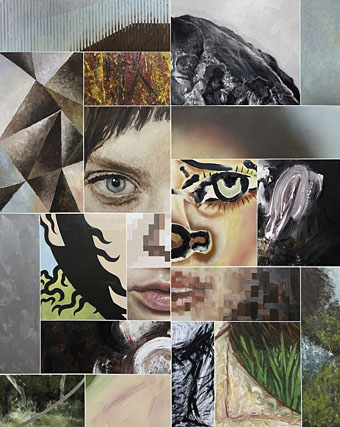
Jam III (2021) by Kotaro Hoshiyama.

• “Powell and Pressburger are peerless in realizing what Orson Welles would term plotless scenes—extra bits that ostensibly do not advance the story, but are a story unto themselves, and aggregate such that they’re vital to how we understand the characters who are living the story.” Colin Fleming says thanks for the Archers.

• A short promo for The Incal: The Movie. Hmm, okay. A film that adapted all 300 pages of the original story without changing anything or trying to explain away the weirdness would be worth seeing. But I doubt that’s what this will be. Read the book.

• “If a single word distills the New Wave aesthetic, it’s plastic…ironically flaunted artificiality became a leitmotif of the era.” Simon Reynolds reviews Reversing Into the Future: New Wave Graphics 1977–1990 by Andrew Krivine.

• Mixes of the week: a mix by Princess Diana Of Wales (not that one) for The Wire, and At The Outer Marker Part I, a Grateful Dead Twilight Zone mix by David Colohan.

The Bloomingdale Story: read the never-before published Patricia Highsmith draft that would become Carol (aka The Price of Salt).

• At Spoon & Tamago: Multiple panels form collaged portraits painted by Kotaro Hoshiyama.

• New music: Pyroclasts F (excerpt) by Sunn O))), and Loop return with Halo.

• At Dennis Cooper’s: William E. Jones Day.

Plastic Bamboo (1978) by Ryuichi Sakamoto | Barock-Plastik (2000) by Stereolab | Black Plastic (2002) by Ladytron