Weekend links 455

brocken.jpg

• At Expanding Mind: Tarot expert Mary Greer talks with Erik Davis about Tarot artist Pamela Colman Smith, the Golden Dawn, the art of illustration, Jung’s active imagination, Smith’s musical visions, and the recent study of Smith’s life and work, Pamela Colman Smith: the Untold Story.

• Almost five years have passed since the last album from Earth (if you discount the Bug vs. Earth collaboration Concrete Desert) but the band will release a new album, Full Upon Her Burning Lips, in May. Cats On The Briar is a taster.

Charles Bramesco on Sergei Bondarchuk’s astonishing 7-hour adaptation of War and Peace. I watched the whole thing last weekend: all superlatives are justified.

• The History of the Future: James Conway on leaving Australia for a life in Berlin and publishing. Related: Where is Rixdorf?

• At Spoon & Tamago: Keisuke Aiso‘s artworks, including the Ubume sculpture that became the face of the Momo Challenge hoax.

• Mixes of the week: Secret Thirteen Mix 282 by Tourist Gaze, and Big Sister’s Scratchy Singles Vol 1 by radioShirley.

Alexander Rose on the 26,000-Year Astronomical Monument Hidden in Plain Sight.

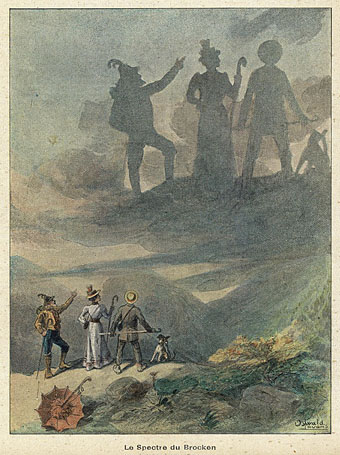
Rebecca Cole and Janise Elie go in search of the Brocken spectre on Burley Moor.

M. John Harrison: Critical Essays, edited by Rhys Williams and Mark Bould.

Forest of Resonating Lamps – One Stroke, Cherry Blossoms by teamLab.

• Tour de France: Jonathan Meades selects 13 exercise-bike Classics.

• At Greydogtales: The Cthulhu Mythos for Beginners.

The Black Tower (1987), a short film by John Smith.

• At Dennis Cooper’s: Jean Rollin Day.

Ishmael Reed doesn’t like Hamilton.

Babylonian Tower (1982) by Minimal Compact | The Tower (Black Advance) (2007) by Mordant Music | The Tower (Empty Fortress) (2007) by Mordant Music
Weekend links 436

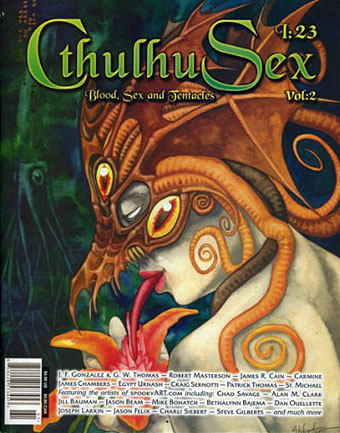
cthulhusex.jpg

Cover for the now-defunct Cthulhu Sex magazine, volume 2, no. 23. Art by Chad Savage.

• Revising Lovecraft: The Mutant Mythos by Paul StJohn Mackintosh. Mackintosh was interviewed at Greydogtales in 2016 where he made a point that certainly chimes with my experience: “…the English-speaking genre community seems to have far more trouble with certain sexual themes than the mainstream literary community does, especially in Europe. […] A pity, because, for example, if H P Lovecraft’s worldview did owe much to sexual repression, then more mature engagement with that could really benefit the whole cosmic horror genre.”

• At Expanding Mind: Occultist and Aleister Crowley biographer Richard Kaczynski talks with Erik Davis about Jack Parsons, the “method of science,” the Agape Lodge, the women of Thelema, and the pluses and minuses of the Strange Angel TV series.

The Tell-Tale Heart (1953) is a short adaptation of the Poe story directed by JB Williams, and featuring Stanley Baker as the author. The film had been lost for 50 years but may now be seen on the BFI website.

• From July but more suited to the end of October: Paul Karasik on The Addams Family Secret: how a massive painting by Charles Addams wound up hidden away in a university library.

• Mixes of the week: Samhain Séance Seven: A Very Dark Place by The Ephemeral Man, Big Strings Attached, Oct. 2018 by Abigail Ward, and XLR8R Podcast 564 by Niagara.

• At Haute Macabre: Conjured from obscurity: lost, neglected and forgotten literature from Valancourt Books.

The Feathered Bough, a large-format collection of new fiction and art by Stephen J. Clark.

William Doyle on Music For Algorithms: in search of Eno’s ambient vision in a spotify era.

• The devils of our better nature: Daniel Felsenthal on Dennis Cooper and his new film.

Bone Mother, a short animated film by Dale Hayward & Sylvie Trouvé.

• “In Japan, the Kit Kat Isn’t Just a Chocolate. It’s an Obsession.”

Leigh Singer chooses 10 great films about the afterlife.

• “I am a haunted house,” says Sarah Chavez.

Psychedelitypes

Sex Voodoo Venus (1985) by Helios Creed | Sexy Boy (1998) by Air | Sex Magick (2002) by John Zorn

The Ingenious by Darius Hinks

hinks.jpg

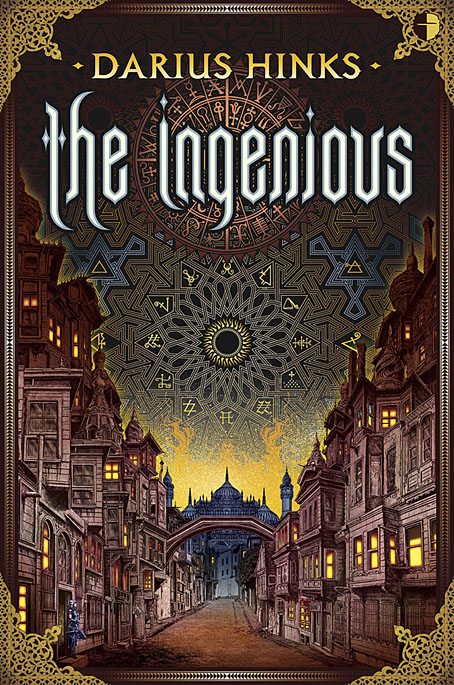
My latest cover for Angry Robot Books was revealed this week at the Barnes & Noble blog (where I talk a little about the design aspects) so here it is. The Ingenious is an alchemy-themed fantasy by Darius Hinks, the brief for which required a depiction of the city of Athanor, the central character, Isten, and some indication of the novel’s occult flavour:

Thousands of years ago, the city of Athanor was set adrift in time and space by alchemists called the “Curious Men.” Ever since, it has accumulated cultures, citizens and species into a vast, unmappable metropolis.

Isten and her gang of half-starved political exiles live off petty crime and gangland warfare in Athanor’s seediest alleys. Though they dream of returning home to lead a glorious revolution, Isten’s downward spiral drags them into a mire of addiction and violence. Isten must find a way to save the exiles and herself if they are ever to build a better, fairer world for the people of their distant homeland.

I was also asked to do something in the detailed drawing style of artists such as Philippe Druillet and Ian Miller, a challenge I was happy to accept with the proviso that both those artists are inimitable. As I say in the B&N post, I went in a Miller direction although I don’t know whether anyone would spot the influence. I was more overt years ago in some of my borrowings from Druillet whose aesthetics can be discerned in my poor artwork for Hawkwind and my much better artwork for The Call of Cthulhu. The background pattern was the kind of thing I often do where I spend hours working on something then cover it over, but more of the interlacing and symbolism (all genuine alchemical symbols) will be visible on the back of the book.

The Ingenious will be published on 9th February, 2019.

Previously on { feuilleton }
De Sphaera
Delineations
Musaeum Hermeticum
A triangular book about alchemy
Alembic and Ligier Richier
Atalanta Fugiens
Splendor Solis revisited
Laurie Lipton’s Splendor Solis
The Arms of the Art
Splendor Solis
Amphitheatrum Sapientiae Aeternae
Cabala, Speculum Artis Et Naturae In Alchymia
Digital alchemy

A view over Yuggoth

yuggoth2.jpg

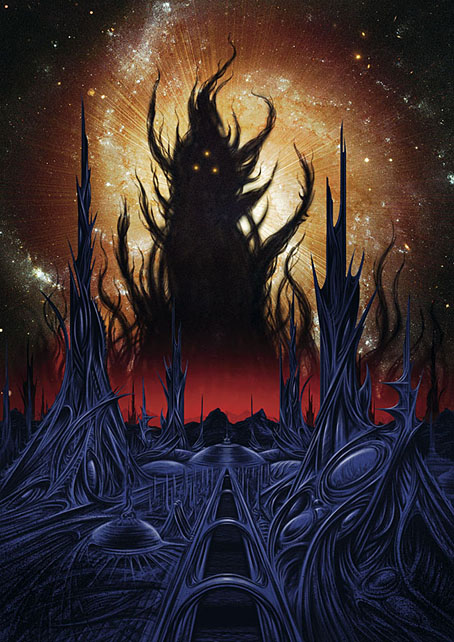
I mentioned in the post about the Sherlock Holmes illustrations that the next book from Editorial Alma featuring my work would be another Lovecraft collection. One of the illustrations in the new volume was of the planet Yuggoth, a world known to human beings as Pluto. In Lovecraft’s mythos Yuggoth has long been an outpost of advanced alien civilisations, particularly the fungoid crustaceans of The Whisperer in Darkness and the splendidly-titled sonnet sequence Fungi from Yuggoth. I’d broached this subject a couple of times in the past, first with a panel in my Haunter of the Dark comic strip (the Shining Trapezohedron is described as being brought to Earth from Yuggoth) then with a photocopy collage of Haeckel organisms for the first Starry Wisdom collection.

Yuggoth is one of several alien outposts in Lovecraft’s fiction, allied in its remoteness from humans with the underwater city of R’lyeh and the Antarctic city in At the Mountains of Madness. All these locations suggest exotic architecture so they’ve long been some of my favourite features in Lovecraft’s work, hence this new piece which I couldn’t resist doing after completing work on the Alma book. Since I acquired a Wacom tablet four years ago I’ve become so used to using it for line drawing that working with it now feels as natural as working with pens and inks. But digital painting was something I still didn’t feel happy with. This is mainly because the brush options in Photoshop are limitless, and one thing I’ve never liked with art materials is too much choice. When I was working with physical media I used to use a minimum of pens and brushes so what I really wanted from Photoshop was a single brush that would do what I wanted without having to swap tools all the time when working. This view of Yuggoth is the result of having finally settled (by chance, as it happened) on a brush that does everything I want without getting in the way. The drawing was completely improvised so as a composition it has some flaws; it could also have been developed a lot more to bring out highlights and details. But as an experimental piece it worked out well and also didn’t take too very long to do. When I have the time I’ll be doing more with this new brush.

Elsewhere on { feuilleton }
The Lovecraft archive

The Mystery of Picasso

picasso1.jpg

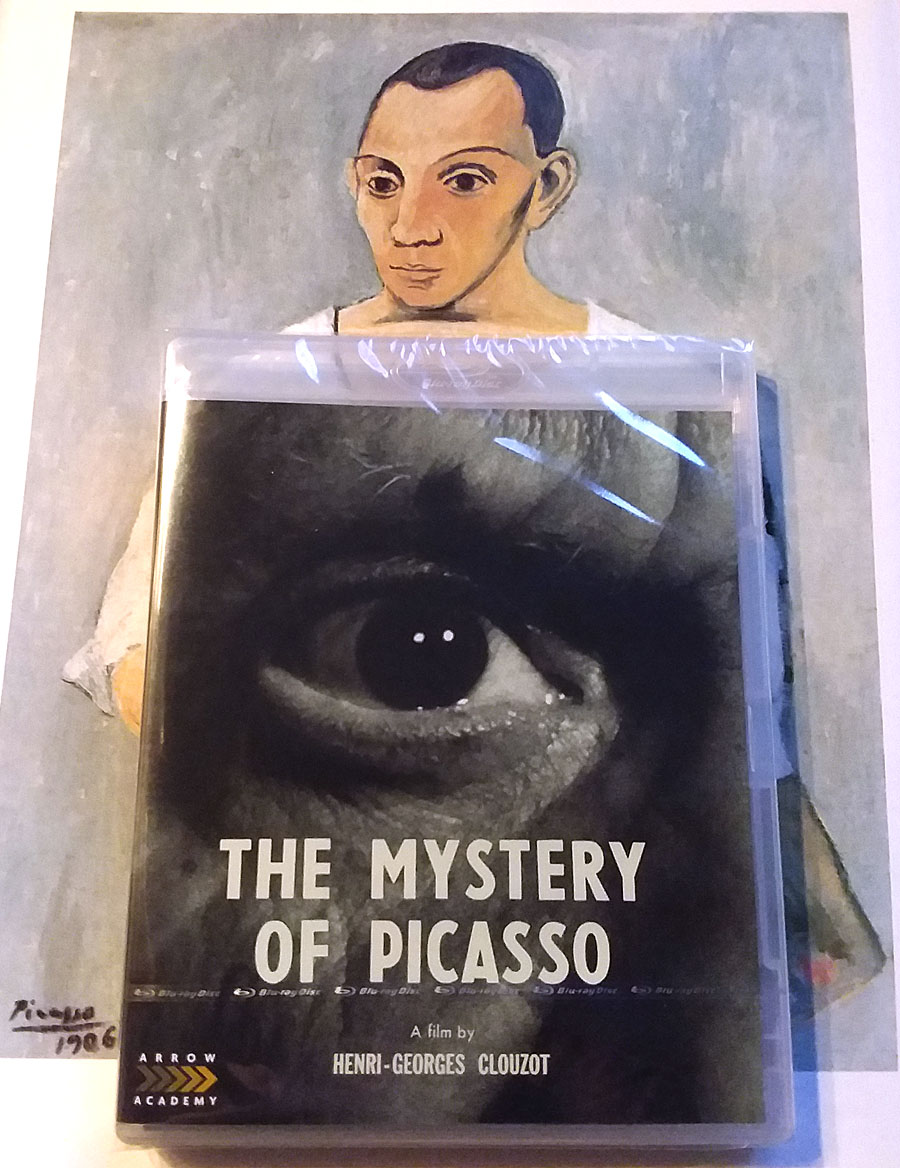
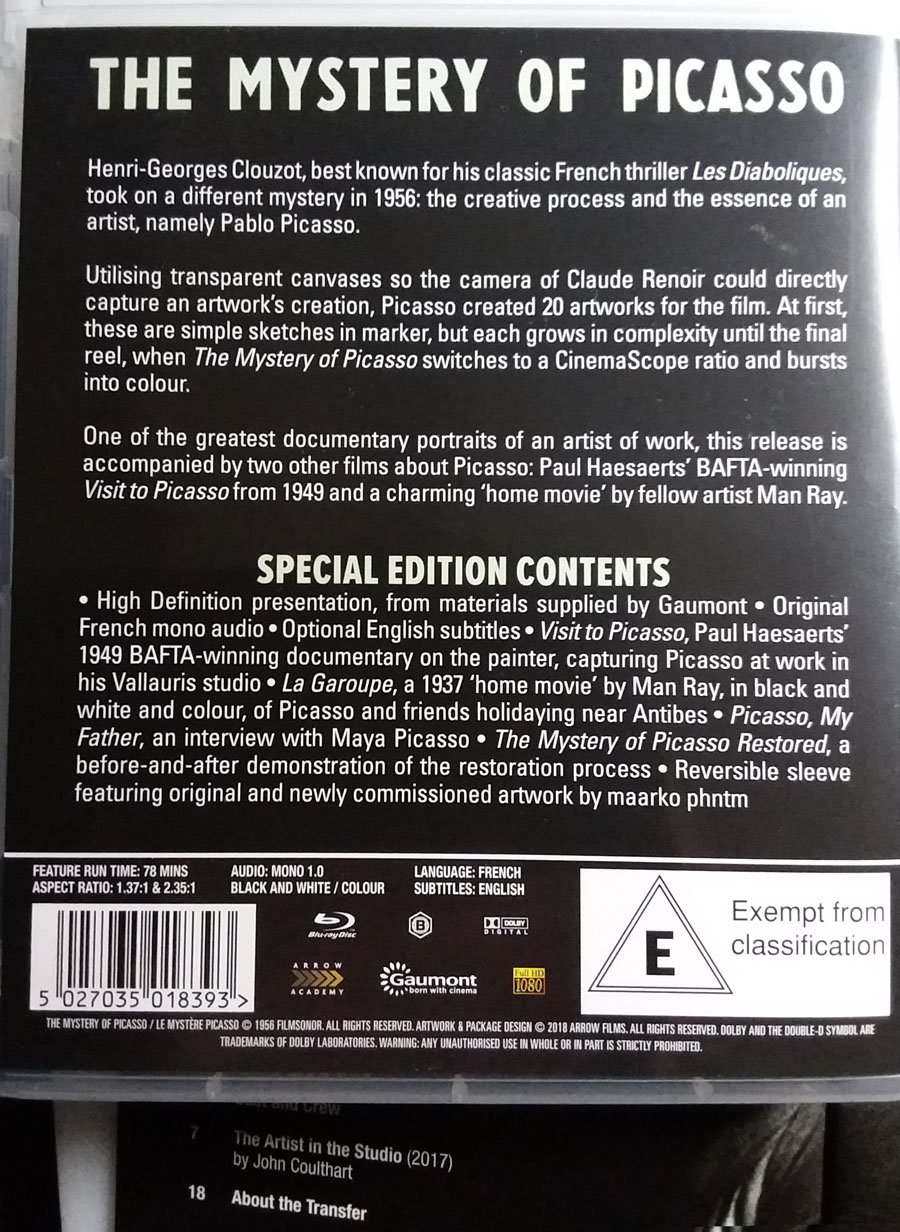
I mentioned late last year that I’d written the booklet notes for a forthcoming DVD/blu-ray of The Mystery of Picasso (1956) by Henri-Georges Clouzot, a film receiving its blu-ray premiere this month courtesy of Arrow Academy. The discs are now on sale (UK only, I’m afraid) either online or anywhere that stocks Arrow titles. (Fopp is my preferred outlet.) For those outside the UK, the restored film is also available on iTunes. Clouzot’s film was regarded as an oddity in the 1950s, the director being best known for outstanding thrillers like The Wages of Fear and Les Diaboliques. Today The Mystery of Picasso is regarded as one of the great films about art for the way it successfully captures Picasso in a decade when he was still fervently productive, despite being in his 70s.

picasso2.jpg

Almost all films of this type favour the documentary approach, usually with a camera and interviewer dogging the subject’s footsteps while showing little of the creative process. Picasso wouldn’t have participated in anything like this—he was appalled by a documentary he saw about Matisse—but Clouzot persuaded him that a film could be made showing him drawing and painting in a studio environment. This approach had precedence in Paul Haessarts’ short film from 1949 (included among the disc extras) which showed Picasso in his studio at Vallauris; the film ends with a series of paintings on glass of various animals and human figures. Clouzot expanded on Haessarts’ idea with the full range of film technology: time-lapse, black-and-white stock, colour stock and Cinemascope. The works Picasso creates for the camera aren’t his best—how could they be when they were being produced at speed in sweltering, time-constrained conditions? But the film is a miraculous portrait of an artist whose name is still universally recognised almost fifty years after his death. By chance or design, it’s also a partial portrait of Clouzot himself who appears in several of the shots to discuss new camera setups.

There’s no need for me to say more about the film when I discuss it at length in the booklet. For a review of the disc contents, there’s a substantial appraisal here. For more about Henri-Georges Clouzot I recommend the study by Christopher Lloyd which was invaluable for its details about the film’s production.

Previously on { feuilleton }
Picasso-esque
My pastiches
Cubist Cthulhu