Weekend links 535

beardsley.jpg

The Wagnerites (1894) by Aubrey Beardsley.

• “Part of my problem with influence is that the concept is too univocal; most of us are impacted by many others during our lifetimes, but often in oblique ways. So many of the most interesting bits of cultural transmission happen nonlinearly, via large groups of people, and in zigzag mutations. Assigning influence can also have the unintentional effect of stripping artists of their own originality and vision.” Geeta Dayal reviewing Wagnerism by Alex Ross.

• “Buñuel stubbornly refused to have any group affiliation whatsoever. Even though critics always tried to categorize him, he never wanted to explain the hidden meanings of any of his films and often denied that there were any.” Matt Hanson on the surreal banality of Luis Buñuel’s The Exterminating Angel.

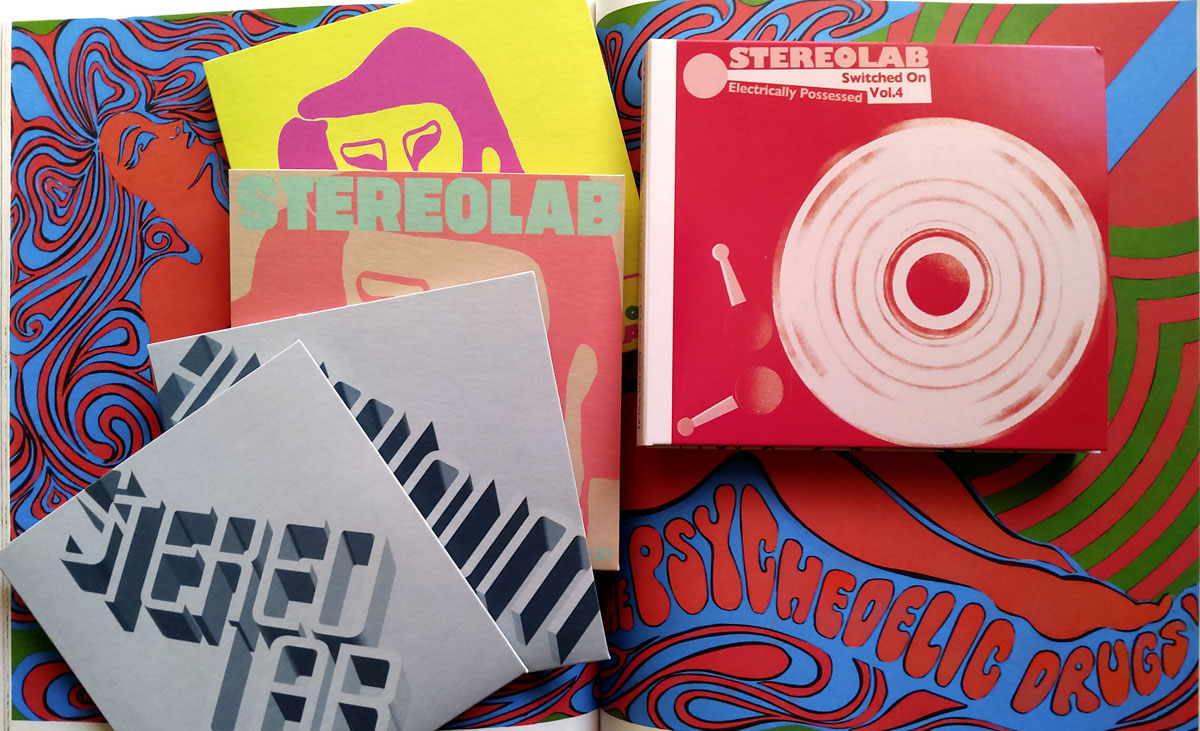
• Next month Soul Jazz release the fourth multi-disc compilation in their Deutsche Elektronische Musik series devoted to German music from the 1970s and 80s. The third collection was the weakest of the lot so I wasn’t expecting another but this one looks like it may be better.

James Balmont chooses the five best films by Kiyoshi Kurosawa, who he calls “cinema’s master of horror”. I’ve yet to see any of these so I can’t say whether the label is warranted or not.

• At Wormwoodiana: Mark Valentine in a two-part post here and here charts the emergence of an under-examined sub-genre, the metaphysical thriller.

• Power Spots: 13 artists choose favourite pieces of music by Jon Hassell. A surprising amount of interest in his first album, Vernal Equinox.

• At Spine: George Orwell’s Animal Farm receives new cover designs for its 75th anniversary.

• “Pierre Guyotat’s work is more relevant now than ever,” says Donatien Grau.

• Mix of the week: FACT mix 775 by Sarah Davachi.

May 24th by Matthew Cardinal.

• Ry Cooder with Jon Hassell & Jim Keltner: Video Drive-By (1993) | Goose And Lucky (1993) | Totally Boxed In (1993)

The Thousand Eyes of Dr Mabuse

mabuse1.jpg

Among the weekend’s viewing was the third and final film in Fritz Lang’s Mabuse cycle, The Thousand Eyes of Dr Mabuse (1960). This was also Lang’s final feature, made after his return to Germany in the late 1950s, and another film of his that for many years I knew only as an impossible-to-find title. I’d read about the Mabuse series in Lotte Eisner’s study of Lang’s career even before the name and character was co-opted by Propaganda for their first single in 1984, but the only films of Lang’s that ever used to appear on TV were the Hollywood features or, if you were lucky, a poor print of Metropolis. Mabuse was a source of fascination for the way the character connected the beginning and ends of the director’s career, as well as being a German take on the Moriarty-like super-criminal. The first film in the series, Dr Mabuse, the Gambler (1922), condenses the corruption of Weimar Germany into a potent physical icon, while the sequel, The Testament of Dr Mabuse (1933), reflects the fevered moment when real super-criminals were taking control of the nation. The Nazis were sufficiently discomforted by Testament to ban it shortly after its release.

mabuse2.jpg

Cornelius the psychic with insurance salesman Hieronymus B. Mistelzweig and police inspector Kras.

The Thousand Eyes of Dr Mabuse appeared just as new super-villains were emerging to oppose James Bond and his imitators. One of Bond’s early adversaries, Auric Goldfinger, was portrayed on screen by Gert Fröbe who appears here on the opposite side of the law as homicide inspector Kras. Fröbe’s tenacious policeman is one of the few fixed points in a plot filled with twists and deceptive identities. Assassinations and double-crosses are a staple of this type of thriller but Lang also gives us an early example of electronic surveillance in a contemporary setting, together with a séance that harks back to a similar scene in the first Mabuse film. The séance is an unusual touch in a story otherwise devoid of similar moments, prompted by the film’s most mysterious character, Cornelius the blind psychic. With an appearance reminiscent of the late Karl Lagerfeld, Cornelius is an overt throwback to Lang’s pre-war films, many of which hinted at the mystical or supernatural even when such hints seemed unnecessary; Rotwang, the robot-builder in Metropolis (played by the original screen Mabuse, Rudolph Klein-Rogge) is a mechanical genius who just happens to live in a house more suited to an alchemist, with a huge inverted pentagram on one of its walls. The sinister motives of Cornelius aren’t so baldly stated but his consulting room is lavishly decorated with astrological diagrams. The psychic, together with the criminals and the police inspector, create a problem common to films of this kind in which the more colourful characters generate greater interest for the viewer than do the romantic leads. After a succession of breathless opening scenes, Thousand Eyes sags a little while wealthy industrialist Henry Travers (Peter Van Eyck) is getting to know Marion Menil (Dawn Addams), a woman he rescues from a suicide attempt. The film also lacks the subtext of the earlier episodes, although Mabuse’s scheme turns out to be diabolical enough for any of James Bond’s Cold War enemies.

mabuse3.jpg

The séance.

Continue reading “The Thousand Eyes of Dr Mabuse”

Weekend links 534

hasui.jpg

Beautiful night – moon and stars, Miyajima Shrine (1928) by Hasui Kawase.

• One announcement I’d been hoping for since last summer was the news of a second box of Tangerine Dream albums to follow the excellent In Search Of Hades collection. The latter concentrated on the first phase of the group’s Virgin recordings, up to and including Force Majeure. This October will see the release of a new set, Pilots Of Purple Twilight, which explores the rest of the Virgin period when Johannes Schmoelling had joined Froese and Franke. Among the exclusive material will be a proper release of the soundtrack for Michael Mann’s The Keep (previously a scarce limited edition), together with the complete concert from the Dominion Theatre, London. Also out in October, Dark Entries will be releasing a further collection of recordings from the recently discovered tape archive of Patrick Cowley. The new album, Some Funkettes, will comprise unreleased cover versions, one of which, I Feel Love by Donna Summer, is a cult item of mine that Cowley later refashioned into a celebrated megamix.

• “Did you know that Video Killed The Radio Star was inspired by a JG Ballard story?” asks Molly Odintz. No, I didn’t.

Casey Rae on the strange (musical) world of William S. Burroughs. Previously: Seven Souls Resouled.

• “And now we are no longer slaves”: Scott McCulloch on Pierre Guyotat’s Eden Eden Eden at fifty.

• At Dennis Cooper’s: Frank Jaffe presents…Dario Argento and his world of bright coloured blood.

• At Wormwoodiana: The Serpent Calls. Mark Valentine on a mysterious musical instrument.

• At Spoon & Tamago: Long-Exposure Photographs of Torii Shrine Gates by Ronny Behnert.

• Mix of the week: mr.K’s Soundstripe vol 4 by radioShirley & mr.K.

• Rising sons: the radical photography of postwar Japan.

• The illicit 1980s nudes of Christopher Makos.

• RIP Diana Rigg.

Garden Of Eden (1971) by New Riders Of The Purple Sage | Ice Floes In Eden (1986) by Harold Budd | Eden (1988) by Talk Talk

Weekend links 533

calvino.jpg

Cover art by Domenico Gnoli, 1959.

• After decades of ignoring the output of Tangerine Dream it feels strange to be interested in the group once again; musicians you’re compelled to dismiss seldom manage to recapture your attention later on. Stranger still when the group itself is now completely detached from its origins following the death of founder Edgar Froese in 2015. But it was Froese’s departure, and with it the disappearance of many years of poor aesthetic choices, that helped renew my interest. At FACT the group take up the against-the-clock challenge in which musicians are given 10 minutes to create a new piece of music.

• “We were both working at Sounds at the time and we thought that instead of listening to these terrible ’80s records like Haircut 100 we’d go off and look for Montague Summers books, so off we went!” Savage Pencil (Edwin Pouncey) on his enthusiasm for Summers, Austin Spare and Louis Wain.

• At the Paris Review: Valerie Stivers bakes pies for Italo Calvino. I’d like to see someone create a series of dishes based on every location from Invisible Cities. Elsewhere there’s William N. Copley on Joseph Cornell: “No art historian ever prophesied the coming of the box.”

• On the experimental realism of an eccentric Russian Anglophile: “For Sigizmund Krzhizhanovsky, strangeness was a matter of perspective,” says Caryl Emerson.

Nova Reperta: John Boardley on a series of 16th-century prints showing new inventions.

• RIP David Graeber. From 2014: “What’s the point if we can’t have fun?

• “Damn your blood”: John Spurr on swearing in early modern English.

• At Wormwoodiana: Mark Valentine maps the esoteric in Britain, 1920.

• At Dennis Cooper’s: Seijun Suzuki Day.

Big Fun/Holly-wuud (Take 3) (1972) by Miles Davis | Funtime (1977) by Iggy Pop | Funny Time Of Year (2002) by Beth Gibbons and Rustin Man

Raoul Servais: Courts-Métrages

servais.jpg

“Courts-métrages”, the French term for short films, is one of those phrases like “bande dessinée” that I prefer to its English equivalent. Among the weekend’s viewing was this double-disc DVD release devoted to the animated films of the Belgian director Raoul Servais. Some of the films are very familiar and have been the subject of previous posts, but the set comprises 14 films in total, and includes many I’d not seen before. Like Jan Švankmajer, Servais is generally the writer/director of his films rather than the animator which accounts for the great variety of graphic styles, although both directors helped animate their early works. The Servais art styles range from the flat UPA-derived idiom of the 1950s, through a variety of drawing techniques, to the later films which deploy “Servaisgraphy”, a process that combines live action and animation with drawn or photographed backgrounds. The last two films in the collection use digital technology.

harpya.jpg

Harpya.

If there’s a common thread to this oeuvre it would be the Belgian brand of Surrealism, which might seem like a lazy comparison when so much animation can be described as superficially “surreal”. In the case of Servais, however, the connection is made explicit in Nocturnal Butterflies, a film dedicated to the Surrealist painter Paul Delvaux, whose paintings also inspired the director’s flawed feature film, Taxandria (1994). The Servais masterwork, Harpya, which won a Cannes Palme d’Or for best short film, is Surrealist to the tips of its feathers, a dark and absurd dream that’s a world away from his moralistic early works. One of the films I’d not seen before, November Diversion, resembles a Švankmajer live-action short, a wordless piece about a man trying to escape from an automobile cemetery. All the shorts have been restored by Cinematek, the Belgian film archive. I ordered my DVDs from Potemkine, Paris.

Contents
Disc 1: Harbour Lights (1960) / November Diversion (1962) / The False Note (1963) / Chromophobia (1965) / Sirene (1968) / Goldframe (1969) / To Speak or Not To Speak (1970) / Operation X-70 (1971) / Pegasus (1973) / Halewyn’s Song (1976) / Harpya (1979) / Nocturnal Butterflies (1998) / Atraksion (2001) / Tank (2015)
Disc 2: Servais (2018), a 60-minute documentary by Rudy Pinceel

Previously on { feuilleton }
Papillons de Nuit, a film by Raoul Servais
Sirene by Raoul Servais
Harpya by Raoul Servais
Taxandria, or Raoul Servais meets Paul Delvaux