Sredni Vashtar, 1981

sv1.jpg

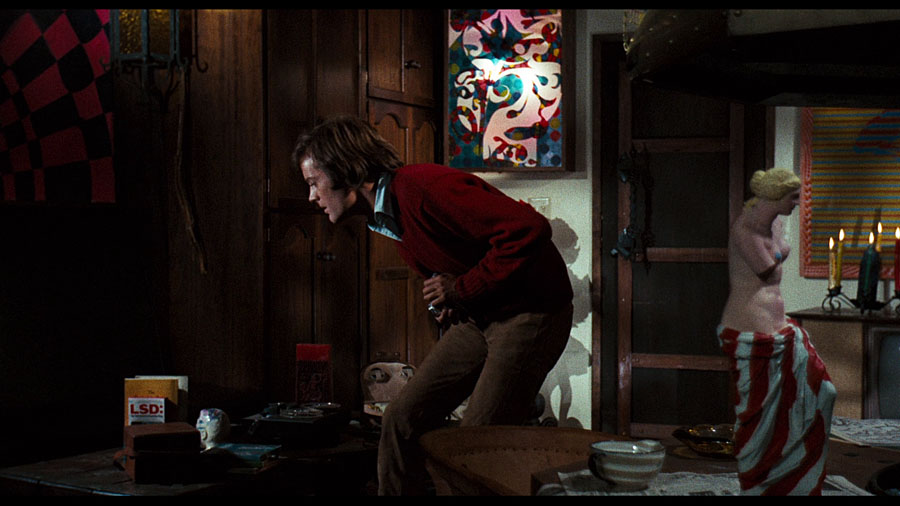
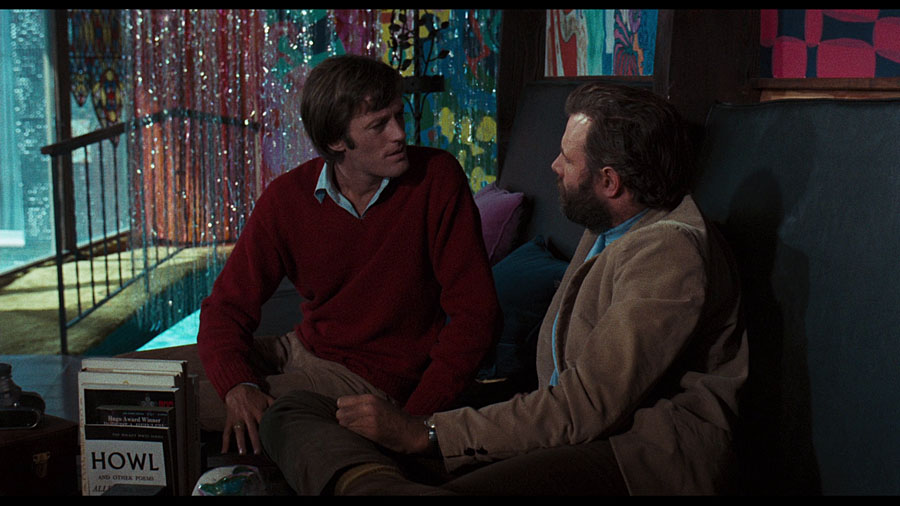
And speaking of Sredni Vashtar (see yesterday’s post)… Screenwriter and director Andrew Birkin has a YouTube channel where he recently posted his own adaptation of the Saki story, a 25-minute film I hadn’t seen before. Or at least I don’t remember seeing it before. Birkin’s note says that the film was made to accompany screenings of the third film in the Omen series, The Final Conflict, which he also wrote. I saw this at the cinema but don’t recall any short being shown with it (then again, I don’t recall much of The Final Conflict either). This must have been one of the last occasions when a short was commissioned to be shown with a first-run feature since the practice was discontinued soon after. Sredni Vashtar is a fitting companion for a horror film replete with sinister tragedies, but shorts and features weren’t always so well-matched. I saw Alien three times on its first run, and on each occasion had to sit through a documentary about the ongoing Mod revival. “Yes, yes, yes, you love your Parkas and Vespas but we’re here for the monsters and spaceships…”

sv2.jpg

Anyway, Birkin’s Sredni Vashtar is a superior adaptation of the story that’s all the more impressive when you read that it was shot in a mere five days. Saki’s tale is an unusual one for having a serious tone that sets it apart from the stories that surround it in the Chronicles of Clovis collection. The default Saki mode is one of cheerful flippancy whatever the subject may be, and it’s often the ironic distance between the events described and the offhand manner in which they’re related that makes his work so memorable. Sredni Vashtar‘s tale of an ailing boy’s revenge on an oppressive guardian seems to have been more heartfelt than many of his other entertainments. Alexander Puttnam, the son of film producer David Puttnam, plays the browbeaten Conradin, while Birkin’s mother, Judy Campbell, is the boy’s guardian aunt. Themes from Carl Orff’s Carmina Burana are put to good use, and would have helped tie the short to the Omen series, the first two of which were scored with Jerry Goldsmith’s thundering Latin chants. There’s also a fleeting reference to JM Barrie, whose life Birkin had dramatised for the BBC, while the film as a whole looks forward to the not-so-innocent childhood rituals that Birkin explored in his debut feature as director, The Cement Garden. Watch Sredni Vashtar here, and if you enjoy it do read the story as well.

Previously on { feuilleton }
Saki: The Improper Stories of HH Munro
The Chronicles of Clovis and other sarcastic delights

Jean Giraud record covers

moebius17.jpg

Disc design for Eight Day Journal (1998) by Sam Rivers / Tony Hymas.

Continuing an occasional series about artists or designers whose work has appeared on record sleeves. I’ve used the artist’s full name (or his Earth name, if you prefer) in the title of this one to distinguish Moebius the comic artist and illustrator from Dieter Moebius of Cluster, Harmonia, et al. As with Harry Clarke, it’s taken a long time for Discogs to compile a substantial collection of these covers, and the catalogue there is still incomplete thanks to a lack of credits on some of the sleeves. Unlike other artists whose cover work tends to be a repurposing of existing art many of the Giraud/Moebius covers were created for the albums on which they appear.

moebius01.jpg

7 Colts Pour Schmoll (1968) by Eddy Mitchell.

moebius02.jpg

An album by a prolific French rock’n’roller. Giraud (as he was credited here) was no doubt hired on the strength of his Blueberry strips.

moebius03.jpg

Blueberry (1973) by Dadi.

And speaking of Blueberry… Jean Giraud drew the adventures of Jean-Michel Charlier’s Western anti-hero for 15 years under the name “Gir”. The character was very popular in France, hence this spin-off single by Marcel Dadi.

moebius04.jpg

Dadi’s Folks (1973) by Marcel Dadi.

moebius05.jpg

Jazz Septet (1973) by Ogoun Ferraille.

moebius06.jpg

Are You Experienced / Axis: Bold As Love (1975) by Jimi Hendrix.

moebius07.jpg

A gatefold sleeve for a series of four reissues of the Hendrix catalogue on the Barclay label. The other covers were by Philippe Druillet, Jean Solé and an artist unidentified on the link above but it looks to me like the work of Philippe Caza. I’ve got most of the music but I’d buy these for the covers alone.

Continue reading “Jean Giraud record covers”

Arzak Rhapsody

arzak1.jpg

The first appearance of Arzach in Métal Hurlant, 1975.

Arzak (or Arzach, or Harzak, or Harzakc, etc) is one of the oldest of the comic characters created by Moebius, and an enduringly popular one even though the amount of pages devoted to the character is small. Moebius returned to Arzak sporadically after the first strips appeared in Métal Hurlant in 1975, where the first panel of the first story establishes the principal ingredients: the stern and resourceful explorer navigating an alien world on the back of a large white bird. Arzak’s flying companion is often described as a pterodactyl but it’s really a Moebius bird whose ancestors or cousins may be seen elsewhere in the Moebius-verse, notably the character of Deepo from The Incal.

arzak2.jpg

Arzak Rhapsody is a late entry in the Arzak mythos, a series of 4-minute animated films made for French TV in 2002, all of which were written by Moebius. The animation is crude when compared to René Laloux’s Moebius-designed Time Masters (1982), but the Moebius aesthetic is present throughout, from the desert landscapes of his early strips to the glowing crystals of his later work. The stories recycle moments from the comics, most of which concern Arzak evading one of the many lethal hazards presented by the flora and fauna of the place named in the animations as “Desert B”. All 14 episodes may be viewed here with the superfluous narration translated into English. Now when do we get to see Time Masters on blu-ray?

arzak3.jpg

Previously on { feuilleton }
The Captive, a film by René Laloux
The horror
Chute Libre science fiction
Heavy Metal, October 1979: The Lovecraft Special

Weekend links 548

aurora.jpg

The Aurora Borealis by Charles H. Whymper.

• “In 1829, when the celebrated Japanese artist Katsushika Hokusai was almost 70 years old, he created more than 100 drawings of a dazzling array of subjects: playful cats, serene landscapes, even severed heads. Hokusai’s fame continued to grow after his death in 1849, and the suite of small, elaborate drawings was last purchased a century later, at a Paris auction in 1948. Then it disappeared from the public eye.” The British Museum now has the drawings which may be seen here.

• The week in cover design: Emily Temple compares US and UK covers for the same books, while Vyki Hendy collects recent titles with objects as the main feature of the cover designs. One of my recent covers (which will appear here soon) is less minimal than these but also features an arrangement of objects.

• The compilation experts at Light In The Attic Records have put together another collection of obscure Japanese music. Somewhere Between: Mutant Pop, Electronic Minimalism & Shadow Sounds Of Japan 1980–1988 will be released in January.

“A Jamesian world is one of cursed artefacts, endlessly subsuming landscapes, forgotten manuscripts and tactile beings that punish the curious and intellectually arrogant.” Adam Scovell visits the grave of MR James.

• Dragons and Unicorns: John Boardley on the lost art of the Hieroglyphic Bible.

• I almost missed John Waters’ favourite films of the year.

• At Dennis Cooper’s: Sade’s Castle, Cardin’s House.

Northern lights photographer of the year.

Aurora Hominis (1970) by Beaver & Krause | Aurora (1971) by Tonto’s Expanding Head Band | Soft Aurora (1979) by Tod Dockstader

Weekend links 547

baade.jpg

Anti-Vanitas (2018) by Carrie Ann Baade.

• RIP Richard Corben, an artist whose work I wasn’t always keen on but whose enthusiasm for pulp weirdness and cosmic horror was matched by a pulp vitality of his own. Corben’s Den was the first story in the first issue of Heavy Metal, a strip in which Den’s ever-present penis provided some rare equality of nudity in American comics. Corben was also a lifelong Lovecraftian; his 1972 adaptation of The Rats in the Walls is one of the earliest Lovecraft-derived comic strips.

• “Wit was the great man’s defence. Once, crossing Leicester Square with a friend, he looked up and saw a cinema marquee advertising a new film: Michael Redgrave and Dirk Bogarde in The Sea Shall Not Have Them. Coward turned to his friend and said: ‘I don’t see why not. Everyone else has.'” Philip Hoare on Noël Coward’s private lives: the photographs that could have landed him in jail.

• The end of the year brings the lists: Strange Flowers’ Secret Satan, 2020 is a guide to a surfeit of delectable volumes, while at 3 Quarks Daily Dave Maier selects his favourite ambient music of the year.

It’s not an easy life, but for Layne it is better than the alternative. “There is a generation of writers who think that it is a perfectly acceptable thing to accumulate a couple of hundred thousand dollars in student loan debt and go write “takes”—contrary opinion on things like ‘Why Dogs Are Actually The Worst Pet.’” None of it is new, he says, “it’s what people were doing when Rome burned.” But it has left us worse off, he says.

“I feel like we are post-language now,” he says. “Things are more symbolic. The relationship between words and facts and objectivity and their impact seems to have separated to the point where most of the writing that I see, especially on something like Twitter, is by people baffled that people don’t get what they are trying to say. It’s depressing.”

Dominic Rushe on how Ken Layne created an alternative to clickbait in the desert

• “Underworlds, otherworlds, so many passageways on this earth to elsewheres, especially during these weeks of the year.” Nina MacLaughlin on The Shadows below the Shadows.

Dennis Cooper‘s favourite fiction, poetry, non-fiction, film, art, and internet of 2020. Thanks again for the link here!

• The week in strange worlds: The Strange World of Colossive Press, and The Strange World of Robbie Basho.

• The Images Wish To Speak: An interview with artist Carrie Ann Baade.

Jackson Arn on why so many filmmakers have paid homage to Pieter Bruegel.

Physicists nail down the “Magic Number” that shapes the Universe.

Dreams, Built By Hand

Shadow (1990) by Nusrat Fateh Ali Khan | Shadows (1994) by Pram | Shadow Of A Twisted Hand Across My House (2001) by I.E.M.