Eduardo Paolozzi’s Jet Age Compendium

paolozzi.jpg

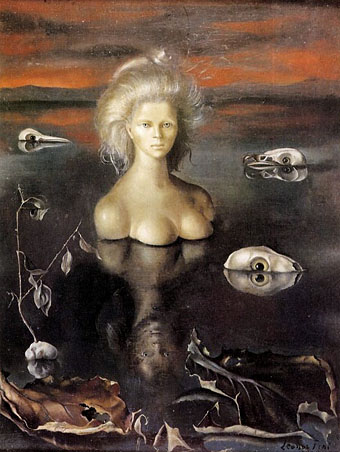
Detail from the cover of Ambit # 40, 1969.

A teenage enthusiasm for Pop Art meant I was familiar with the paintings and collages of Eduardo Paolozzi (1924–2005) long before I became aware of his association with sf magazine New Worlds, and his friendship with JG Ballard. Paolozzi was famously credited on the masthead of New Worlds as “Aeronautics Advisor”, a listing which impressed the relevant authorities when Brian Aldiss petitioned for an Arts Council grant and saved the magazine from collapse. Paolozzi’s work was featured in New Worlds now and then, and he provided a cover for issue 174, but it was to Ambit magazine one had to turn to see regular work by the artist.

paolozzi2.jpg

New Worlds #174, Aug 1967.

My favouritism towards New Worlds has always led me to see Ambit as NW-lite; frequent NW contributor JG Ballard was Ambit‘s fiction editor, and both stood to the side of the British literary scene, although Ambit editor Martin Bax didn’t share Michael Moorcock’s preference for pursuing generic or experimental means to Romantic or visionary ends. Quibbles aside, it’s good to see Paolozzi’s work for the magazine is now the subject of an exhibition, The Jet Age Compendium, at Raven Row, London, and also a book, The Jet Age Compendium: Paolozzi at Ambit from Four Corners Books. If you can’t see the former, the latter is priced £12.95 which strikes me as very reasonable.

The Jet Age Compendium runs until 1 November 2009. For an insight into the artist’s interests and attitudes, there’s a great Studio International interview here from 1971 with Paolozzi and Ballard talking to art critic Frank Whitford.

Previously on { feuilleton }
Sculptural collage: Eduardo Paolozzi
Revenant volumes: Bob Haberfield, New Worlds and others

Temples for Future Religions by François Garas

garas1.jpg

Temple à la Pensée, dédié à Beethoven, vue en cours de construction (1897).

Another artist discovered whilst searching for something quite unrelated. The Musée d’Orsay are custodians of this drawing by François Garas (1866–1925), and they also have the most substantial appraisal of his career.

François Garas remains a mysterious architect, whose artistic pantheon included Baudelaire and Edgar Allan Poe, as well as John Ruskin, Richard Wagner, Jean Carriès and Edouard Manet. He obtained his diploma in 1894, and until 1914 regularly exhibited utopian architectural projects at the Salon de la Société Nationale des Beaux Arts. His career started with the exhibition Architects’ Impressions in 1896 at the Le Barc de Bouteville gallery, alongside his fellow architects Henri Sauvage, Henry Provensal and Gabriel Guillemonat. This exhibition, accompanied by a rebellious booklet by the architect Frantz Jourdain, wanted to get rid of “the mental slavery produced by the exclusive study of Greek and Roman architecture, and by a knowledge of nothing but the Italian Renaissance”. This drawing featured in the exhibition; then it was seen again, the same year, in an exhibition by the Société Nationale des Beaux Arts, as part of a collection entitled Artists’ Interiors.

From 1897, Garas exhibited increasingly oneiric projects at the Salon – “temples for future religions”, dedicated to Beethoven, Wagner, Life, Death and Thought. While his companions from the early days were designing social housing, Garas continued along the same fanciful path, then disappeared from the architectural scene without any of his projects ever having been built.

garas3.jpg

Temple à la Pensée, dédié à Beethoven, vue perspective depuis l’arrière du temple (1897).

garas4.jpg

Temple à la Pensée, dédié à Beethoven, visions du temple, clair de lune (1900).

The museum has several pages of various plans and sketches for these Temples for Future Religions, and also some quasi-Gothic designs for “Artist’s interiors” which would benefit from being seen at a larger size. Among his other works are a series of very diffuse pastel studies which look more like Claude Monet drawing the ruins of Angkor than architectural designs.

garas2.jpg

Un temple pour les religions futures (1901).

Previously on { feuilleton }
Exposition Universelle publications
Exposition cornucopia
Return to the Exposition Universelle
The Palais Lumineux
Louis Bonnier’s exposition dreams
Exposition Universelle, 1900
The Palais du Trocadéro
The Evanescent City

The art of George Barbier, 1882–1932

barbier1.jpg

Les Chansons de Bilitis (1922).

I’ve posted examples of George Barbier’s Art Deco drawings before but online examples of his work outside the world of fashion illustration have been difficult to find. The Bunka Women’s University Library corrects that with a collection of high-quality scans which include a book about the artist, George Barbier, Étude Critique (1929) by Jean?Louis Vaudoyer. There’s also his adaptation of the Sapphic classic by Pierre Loüys, Les Chansons de Bilitis, from 1922. The drawings there lack the customary ardour of other adaptations but they’re marvellously elegant nonetheless, with some beautiful page designs.

Note: these books can’t be linked to individually, you need to follow the links from “Art Deco illustrated books” in their site menu.

barbier2.jpg

Nijinsky (1913).

barbier3.jpg

Poèmes en Prose (1928).

Elsewhere on { feuilleton }
The illustrators archive

Previously on { feuilleton }
The Decorative Age
Images of Nijinsky

Design as virus 10: Victor Moscoso

india.jpg

Continuing an occasional series.

A recent post at A Journey Round My Skull is a stylish series of Indian book jackets from 1964 to 1984. These impress partly for the way they rework western design approaches, and they consequently look very different from the florid visuals one might (lazily) expect of Indian cover design. Western culture borrowed more than enough from India in the 1960s, from clothes to music, so it only seems right that the sub-continent should be free to take something back.

luna.jpg

Luna Toon by Victor Moscoso (1968).

Will at A Journey Round My Skull mentions the above cover design as reminding him of this Krautrock bible, The Crack in the Cosmic Egg, a book which happens to be a favourite repository of musical obsession. The cover reminded me more of the weirdly abstract comic strips created by artist and graphic designer Victor Moscoso for the early run of Zap Comix in the late Sixties. Moscoso was one of the most graphically revolutionary of the West Coast poster artists, and his approach to comics looks surprisingly fresh today next to the work of fellow artists like Robert Crumb. Those limitless vistas go back to Giorgio de Chirico but it was Salvador Dalí who made deserts raked by evening shadows reflect interior landscapes of his own, and it was Dalí’s immense popularity that in turn popularised that endless plane as a stage for surreal events. Moscoso borrows from the Surrealists and comic artists like George Herriman as much as he borrows from Disney; in his posters he was one of many artists taking motifs or whole designs from Art Nouveau. Our Indian egg may well be an original work but the first example in Will’s post is a very Saul Bass-like hand, so I’m guessing that the designers of these books were looking around for inspiration. And that eye-in-a-hand? Moscoso had done that as well.

neon.jpg

Blues Project Poster by Victor Moscoso (1967).

While we’re discussing Victor Moscoso, it’s convenient to draw attention to a slight mystery connecting his poster art and the great album cover designer, Barney Bubbles. The poster above was one of a number that Moscoso made incorporating Victorian or Edwardian photographs, and two at least of these use antique erotica as their central image.

ritual.jpg

Space Ritual interior, design by Barney Bubbles (1973).

This particular photo always stands out for me. The woman is familiar to anyone who’s seen the interior of the fold-out sleeve Barney Bubbles created for Hawkwind’s Space Ritual album in 1973. Barney spent some time in San Francisco in the late Sixties and was undoubtedly familiar with Moscoso’s work, as he was with all the great designs coming from the West Coast at that time. What surprises me is that he should have somehow found the same image to use as Moscoso did. Was there a popular book of Edwardian erotica which everyone was familiar with? Did he ask Moscoso where he’d found the photo? Did he find it by chance? Barney Bubbles experts don’t know the answer (I’ve asked) and the question is in any case a rather trivial one. But I’m still curious… As early porn photos go it’s a particularly fine one and I’d like to know whether there are more like it and where it came from. Needless to say, if anyone knows more about this, please leave a comment.

Previously on { feuilleton }
Design as virus 9: Mondrian fashions
Design as virus 8: Keep Calm and Carry On
Design as virus 7: eyes and triangles
Design as virus 6: Cassandre
Design as virus 5: Gideon Glaser
Design as virus 4: Metamorphoses
Design as virus 3: the sincerest form of flattery
Design as virus 2: album covers
Design as virus 1: Victorian borders

Antonin Mercié’s David

david1.jpg

David (c.1872).

I’d marked out this statue as a suitable addition to the burgeoning men with swords archive some time ago but it took the discovery of a piece of writing to prompt this post. Antonin Mercié’s statue of David resides today in the Musée d’Orsay, Paris, but I managed to miss it on my visit there. Judging by the photos it’s situated at the end of the main hall near Rodin’s enormous Gates of Hell, and it was the Rodin which claimed my attention that day. It’s also the case that the D’Orsay hall (formerly a railway station) is such a cavernous space that free-standing works such as this lose their impact, they’d look far better in smaller rooms.

At the late 1870s, Antonin Mercié incarnated the young generation of French sculptors who, without breaking away from the traditional canons, wanted to make their figures more vibrant. He sought to combine the skilled composition and lively modelling seen in the great models of the Florentine Renaissance: hence the sweeping curves of the arm extended by the movement of the sword, the bent knee, and the graceful movement of this David. A spectator walking round it can appreciate the way the planes gradually modulate the space. Mercié carved himself an original path between modern classicism and explicit realism. (More.)

david2.jpg

You tend to find with many nude sculptures of the 19th century that the original is the naked one while the copies have gained additional items of clothing. This is the case with Mercié’s David whose replicas like the one above from the University of Copenhagen has a wrap around his waist. It’s the nude condition of the Paris statue that lends a frisson to a piece of writing by French author Patrick Drevet which may be fiction or may be reportage. An Angel at Orsay describes an elaborate game of homoerotic voyeurism as the narrator wanders through the museum and stops by Mercié’s David when he spots a student boy sketching the statue. Drevet’s piece is a sustained reverie inspired by his act of studying the student who studies the statue in turn and then becomes engaged by another student boy, the latter deliberately placing himself on view gazing at the statue and hoping (so the narrator surmises) to be sketched himself. A meagre précis like this fails to do Drevet’s piece any justice, it really needs to be read in its entirety. I found it in the Penguin Book of International Gay Writing (1995), and it may well be available in a collection of the author’s work. It’s certainly enough to make me want to read more of Drevet’s writing.

Elsewhere on { feuilleton }
The men with swords archive

Previously on { feuilleton }
Behold the (naked) man