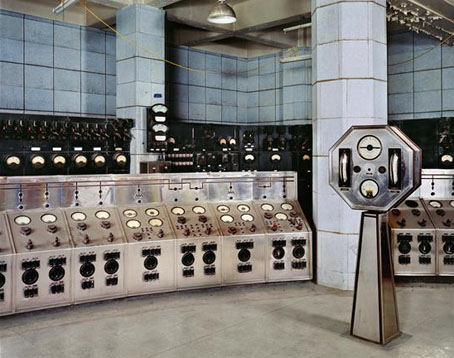
Battersea Power Station

battersea.jpg

A photograph of the control room of Battersea Power Station, London, by Michael Collins, one of a series which will shortly be on display at the Royal Institute of British Architects.

The images show Battersea Power Station as what Collins describes as a “twentieth century ruined castle” – a building that was built to last, with a high quality structure and interior, including Art Deco walls and ceilings.

Giles Gilbert Scott’s enormous temple of heavy industry continues to sit decaying on the banks of the Thames while property developers come and go. The latest of these, Real Estate Opportunities, has fallen into debt which means proposals to develop the site are once again on hold. A part of me likes the idea of the building sitting there unused and purposeless year after year, like some vast Steampunk Stonehenge; Giles Gilbert Scott’s other Thames-side power station, Bankside, was successfully transformed as Tate Modern, but we know from various proposals that the fate of Battersea, whether as theme park or shopping centre, is likely to be a lot less edifying.
quark1.jpg

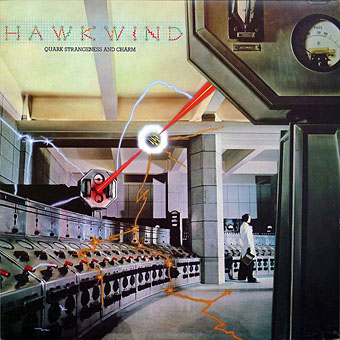
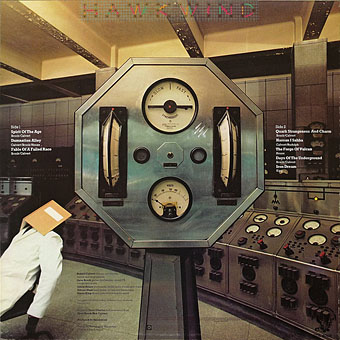
It took redevelopment to transform Bankside from temple of industry to temple of culture but Battersea’s unmistakable presence has a powerful cultural history of its own. Everyone knows the Hipgnosis sleeve design for Pink Floyd’s Animals (1977); less familiar is the photos of the control room which Hipgnosis used for Hawkwind’s Quark, Strangeness and Charm the same year. I tend to prefer the back cover of this sleeve to the front; that octagonal readout device is more interesting than the rather unconvincing sparks and exchanges of energy. And speaking of energy, my former employers are still active, unlike the rancorous Floyd.
quark2.jpg

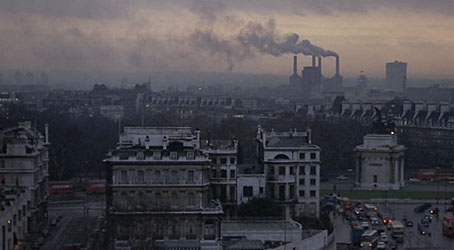
There’s a page here listing other uses of the power station, including its many film appearances which date back to the 1930s. That list mentions the control room’s use as a background for the “Find the Fish” sequence in Monty Python’s The Meaning of Life (1983) but they omit an earlier Monty Python appearance when you briefly see the building in operation during And Now for Something Completely Different (1971). It was closed down a few years later. So here it is, then, belching fumes over west London on a profoundly gloomy winter afternoon.
battersea2.jpg

Elsewhere on { feuilleton }
The album covers archive

Previously on { feuilleton }
The Sonic Assassins
The Bradbury Building: Looking Backward from the Future
The Studio & Studio International

studio1.jpg

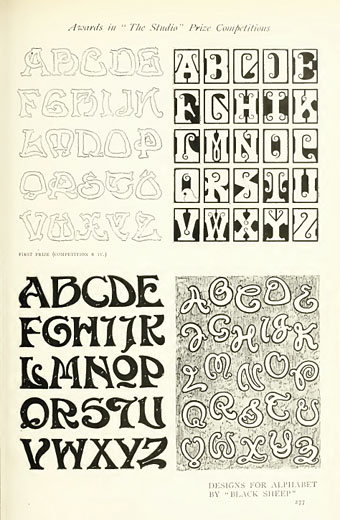
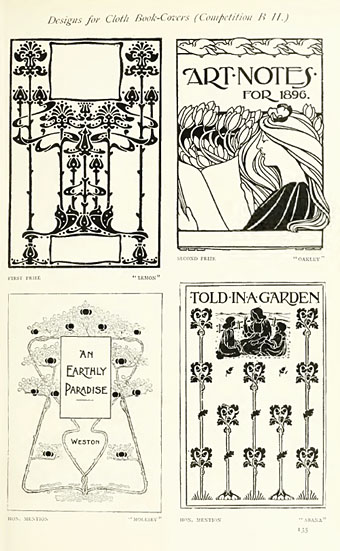
Back in February I posted some pictures from a 1971 collection of Art Nouveau illustration and design, some of which were competition entries from The Studio magazine. The Studio, which later became the long-running Studio International, can be seen from issue 11 onwards at the Internet Archive now that they’ve started uploading Google’s book scans. I’ve only looked at one of these so far, Volume 11–13 which runs over 850 pages and so takes some time to go through, as do all these rather unwieldy PDF books. The issues are missing their covers and so aren’t dated but would appear to be from around 1896 to 1898, one of the final entries being a memorial piece for Aubrey Beardsley who died that year; The Studio was the magazine which had introduced Beardsley to the public only five years earlier.

studio2.jpg

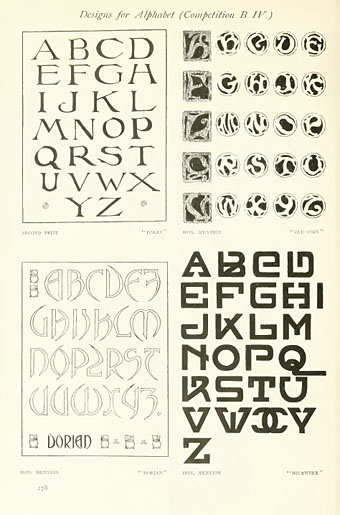
The Studio ran regular competitions among its readers and the examples shown here are from some of those. I especially like these type designs; dare we assume that the “Dorian” design below is named after Dorian Gray? As a whole the magazine is an odd mix of very dull Victorian art of the landscapes and artisans type, with occasional flares of interest when they devote a feature to the emerging Art Nouveau style or profile a Symbolist artist such as Giovanni Segantini.

studio3.jpg

A note for anyone wishing to download Google scans from the Internet Archive: some of the PDF links lead you to a Google page where they’re trying to sell you an e-text or get you to buy a book. To see the available files you need to click “All Files: HTTP”.

Previously on { feuilleton }
The Great God Pan
Art Nouveau illustration
Jugend Magazine

William S Burroughs: A Man Within

ticket.jpg

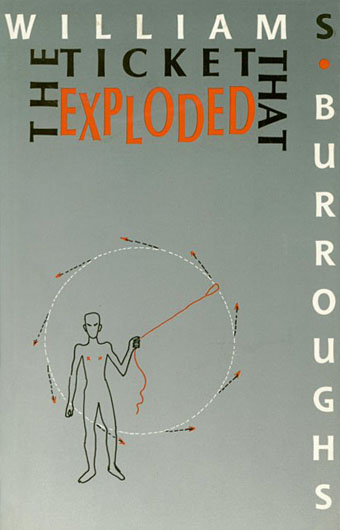
The Ticket that Exploded. Cover design by Thomi Wroblowski for a John Calder edition, 1985.

William S Burroughs: A Man Within is a feature-length documentary by Yony Leyser, and is, so the makers say, the first posthumous documentary about the always essential writer. Howard Brookner’s 1983 film, Burroughs, is probably definitive where the biography is concerned since Brookner was fortunate to get most of the key surviving Beats, family members, and allies while they were still around. Leyser’s trailer looks interesting, however (I’m hoping the film isn’t merely a parade of celebrities and soundbites), and it’s things like this which pass on the message of Burroughs’ continued importance to a new generation.

The film features never before seen footage of William S. Burroughs, as well as exclusive interviews with his closest friends and colleagues including John Waters, Genesis P-Orridge, Laurie Anderson, Peter Weller, David Cronenberg, Iggy Pop, Gus Van Sant, Sonic Youth, Anne Waldman, George Condo, Hal Willner, James Grauerholz, Amiri Baraka, Jello Biafra, V. Vale, David Ohle, Wayne Propst, Dr. William Ayers, Diane DiPrima, Donovan, Dean Ripa (the world’s largest poisonous snake collector), and many others, with narration by actor Peter Weller, and soundtrack by Sonic Youth. 

Release is slated for later this year. Meanwhile, there’s another trailer on YouTube for a Burroughs’-inspired short, The Japanese Sandman, based on WSB’s quest for the drug yage in the jungles of Panama. For an explanation of the title, consult the Reality Studio.

Elsewhere on { feuilleton }
The William Burroughs archive